


-> Here you will find results, report (press release), media coverage, nominations, partners, prize draw winners, survey prizes, Statute of the Medal of the Year Award, Medalist anthem
-> previous years: Medal of the Year 2023 (english), Medal of the Year 2022 (only in Slovak)
Schedule:
15.4.2025 – accepting nominations (closed)
– 1.9-15.9.2025 – online public voting (closed)
– 5.9.-6.9.2025 – presentation of nominated medals in Prague at the Sběratel collector fair – the largest collectors’ fair in Central and Eastern Europes
– 25.9.2025 – award ceremony of the Medal of the Year 2024 (Thurzov dom, Stredoslovenské múzeum, Banská Bystricca)
– After 25.9.2025 – publication of the poll winners
– 18.10.2025 – presentation of medals at the FIDEM World Congress and Medal Exhibition XXXVIII FIDEM Munich 2025
Subject to change, watch the website/information channels
Thank you for your interest in the Medal of the Year poll, which is intended not only for friends, lovers, and supporters of medals and plaques, but also for the wider public.
The Medallist Club, o.z. is organising another, already the third annual Medal of the Year award for you.
Slovak medal production was again very interesting in 2024 and will certainly attract not only collectors and interested members of the public, but also a wider audience, not only in Slovakia.
Qualification criteria for nominated medals:
- the medal was issued/created in 2024,
- by a Slovak author or made in Slovakia or with a Slovak theme,
- multiple identical pieces were created (by striking/minting, casting, …)
- dimensions min. 37 mm and max. 200 mm in one dimension,
- it is not a coin (legal tender with currency and denomination on the presented surface),
- a table medal (not hanging on a ribbon)
-> If you are interested in becoming a partner of Medal of the Year, e.g. contributing prizes to the poll, helping with promotion and media coverage, or otherwise helping or contributing, or supporting our activities and Slovak medal making in any other way, please contact us.
You can also support us by purchasing this high-quality polo shirt with the Medal Club logo embroidered on it (short/long sleeves):

Thank you! Medailérsky klub, non-profit organisation
PARTNERS
We thank for cooperation, providing information and nominations:
Central Slovak Museum, Banská Bystrica (PhDr. Marcel Pecník, Director), Slovak Numismatic Society at the Slovak Academy of Sciences – Banská Bystrica branch (Ing. Michal Dóša, Chairman; JUDr. Milan Kolkus, Vice-Chairman; Mgr. Igor Potančok, Secretary)
Mincovňa Kremnica (Kremnica Mint), state-owned enterprise (Ms. Mgr. Ivana Koreňová, Head of the Marketing Department of Kremnica Mint); Czech mint SK, s.r.o. (Ms. Ľudmila Fülöpová, branch manager); Slovak Teachers’ Choir – winner of the Alexander Dubček State Prize (Mr. Ing. Ivan Šóš PhD., choir archive administrator and advertising manager); Slovak Numismatic Society at the Slovak Academy of Sciences – Martin branch; Slovak Numismatic Society at the Slovak Academy of Sciences – Považská Bystrica branch; Slovak Numismatic Society at the Slovak Academy of Sciences – Humenné branch; FIDEM – Fédération internationale de la médaille d’art / International Art Medal Federation (Mr. Philip Attwood, president of FIDEM; editor of The Medal, Vice President of the British Art Medal Society (BAMS), former Chief Curator of The British Museum, Department of Money and Medals and Mr. David Weidgenannt, Konservator, Staatliche Münzsammlung, München – organizers of the World Medal Congress and Exhibition of Modern Art Medals XXXVIII FIDEM Munich 2025); Slovak University of Technology in Bratislava (Prof. Ing. Katarína Gajdošová, PhD. Vice-Dean for External Relations and Cooperation with Industry)
Partners for promotion and media:
aktuality.sk – the most widely read news website in Slovakia; Sběratel collector fair – the largest collectors’ fair in Central and Eastern Europe (Mr. Jindřich Jirásek, Director); Slovak Design Center (Mgr. art. Maroš Schmidt, Director); TV LUX, s.r.o.; Burza mincí (JUDr. Radim Václavík) (a collector’s website since 2009 focused mainly on coins and medals, but also featuring blogs and discussions); Zberateľ sk – a collector’s group on Facebook with over 14,000 members (if, for example, you are not satisfied with the prize you won in the Medal of the Year poll, you can offer it for sale in this group at a fixed price or auction, where you will get the market price; you can also buy numismatic or other collectibles here or get advice on the value or identification of your coin, medal, or other collectible from other members of the group); National Bank of Slovakia; Kremnica Mint, state-owned enterprise
38 interesting prizes with a total value of €1,300 were provided by:
Czech mint SK, s.r.o. (Ms. Ľudmila Fülöpová, branch manager); Kremnica Mint, state-owned enterprise (Ms. Mgr. Ivana Koreňová, Head of the Marketing Department of Kremnica Mint); EURONUMIS s.r.o. – seller of numismatic material – brick-and-mortar stores in Žilina and Bratislava, online store (Mr. Stanislav Pekár, owner, director); Numizmatika Kremnica s.r.o. (Mr. Drahomír Zobek); Osobnosti století s.r.o. (Mr. Mgr. Jiří Kuča, managing director); Medailérsky klub, o.z..; National Bank of Slovakia (Mr. RNDr. Dušan Jurčák, executive director of risk management, settlement of banking operations, payment systems and cash, member of the banking council)
Thank you!
The partners listed above did not contribute any financial support, only the aforementioned support and prizes for the survey; everything else is organized and paid for by the civic association itself.
RESULTS
Medal of the Year 2024
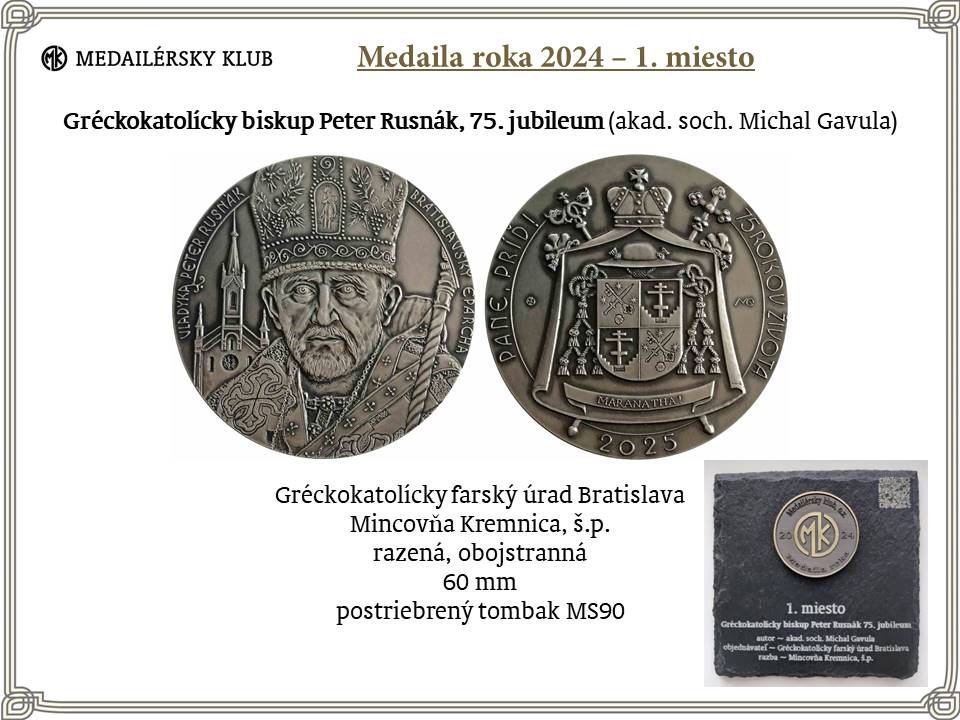
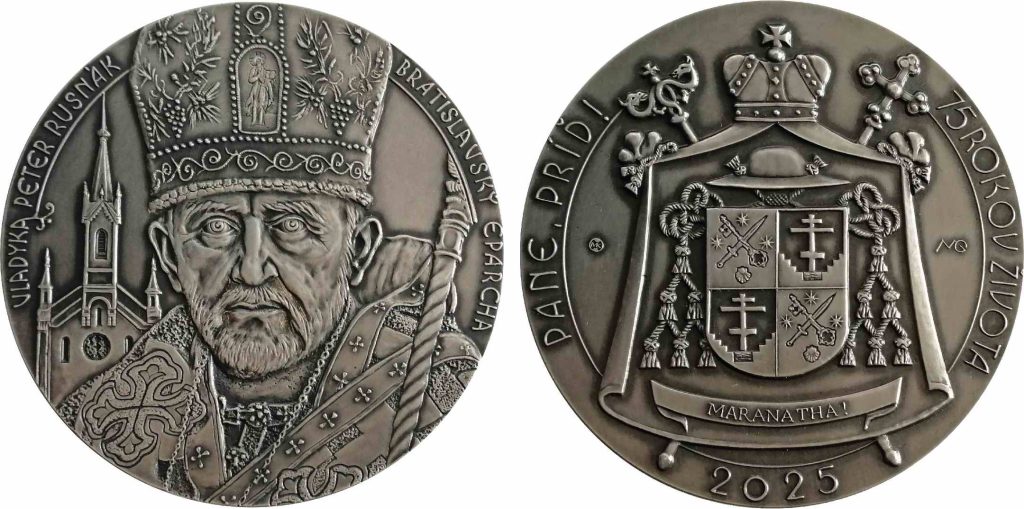
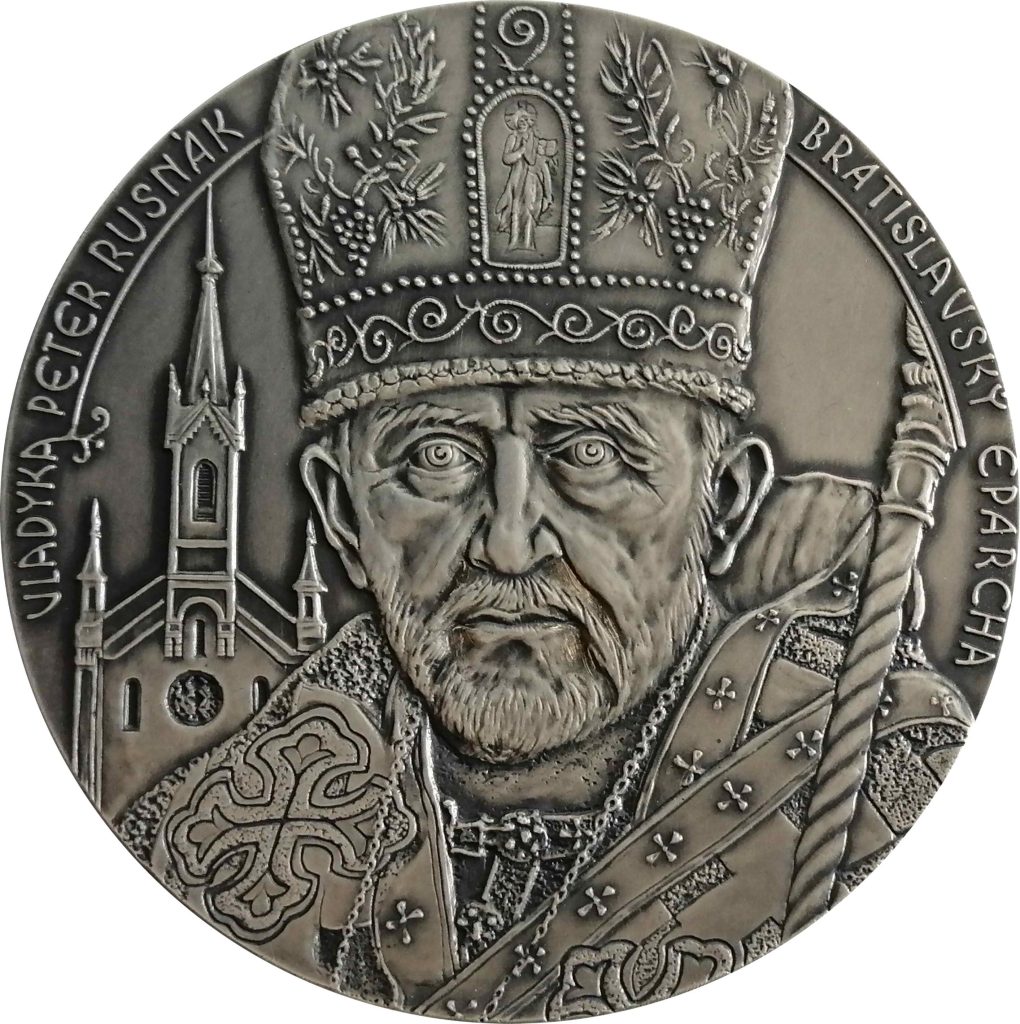
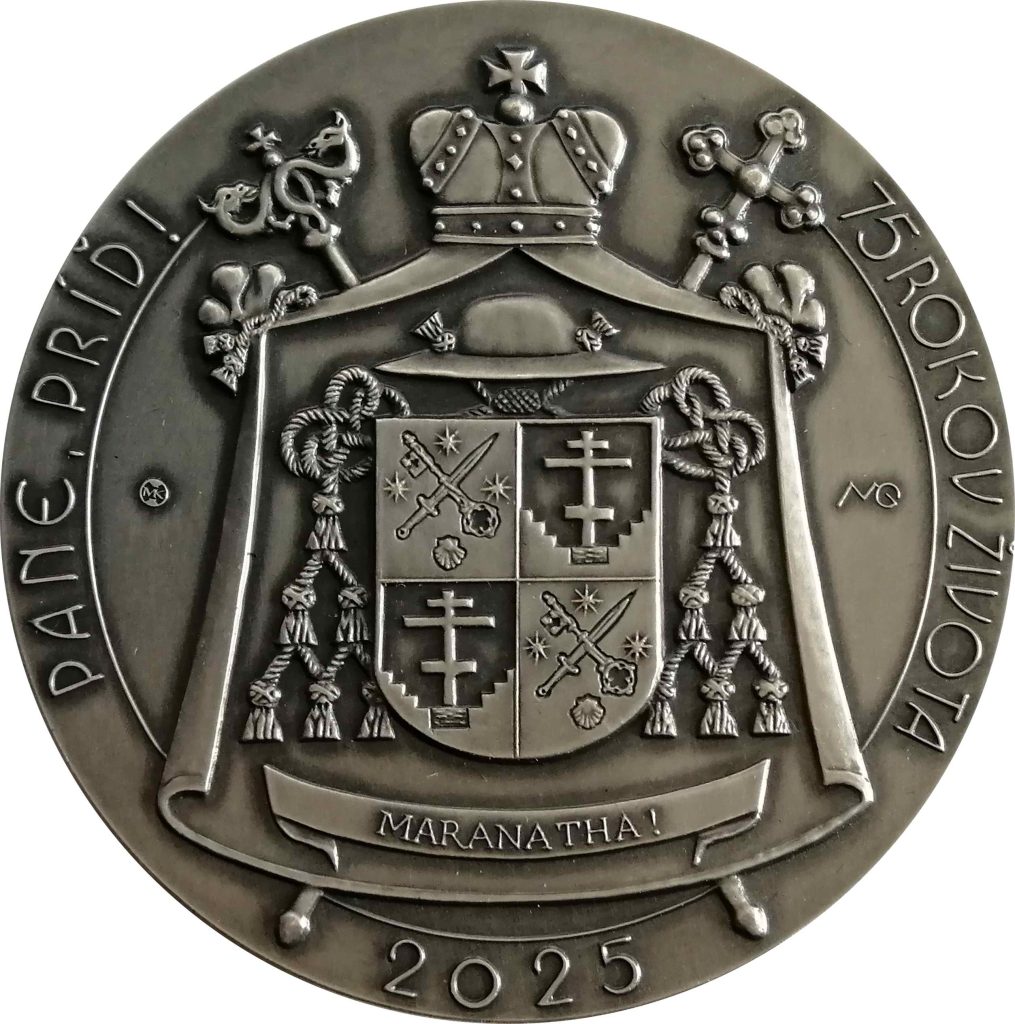
1st place: Greek Catholic Bishop Peter Rusnák, 75th anniversary (academic sculptor Michal Gavula)
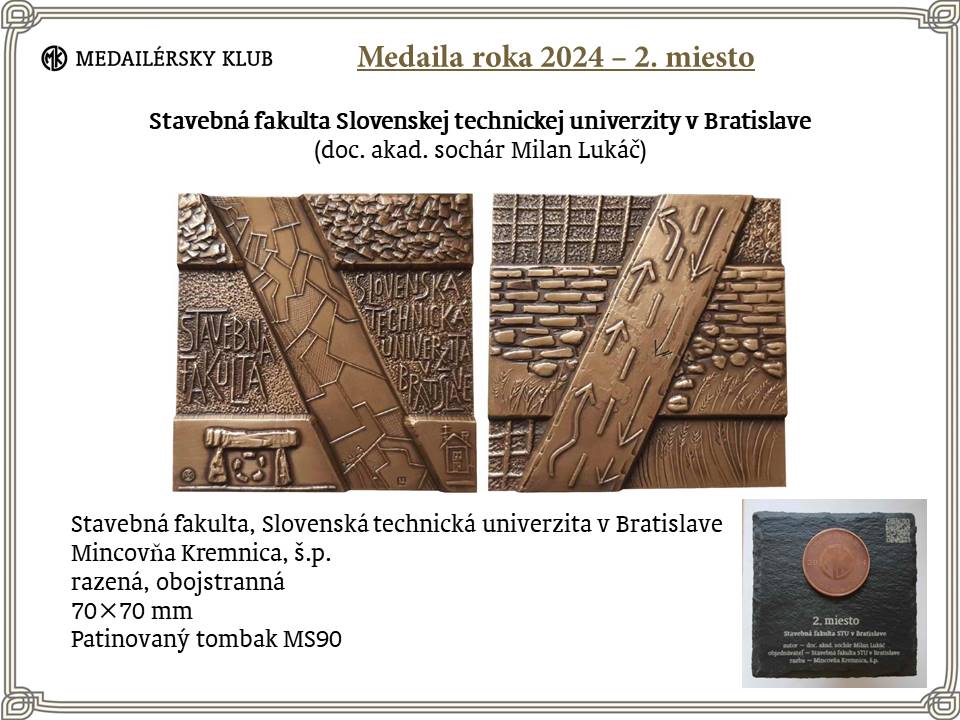
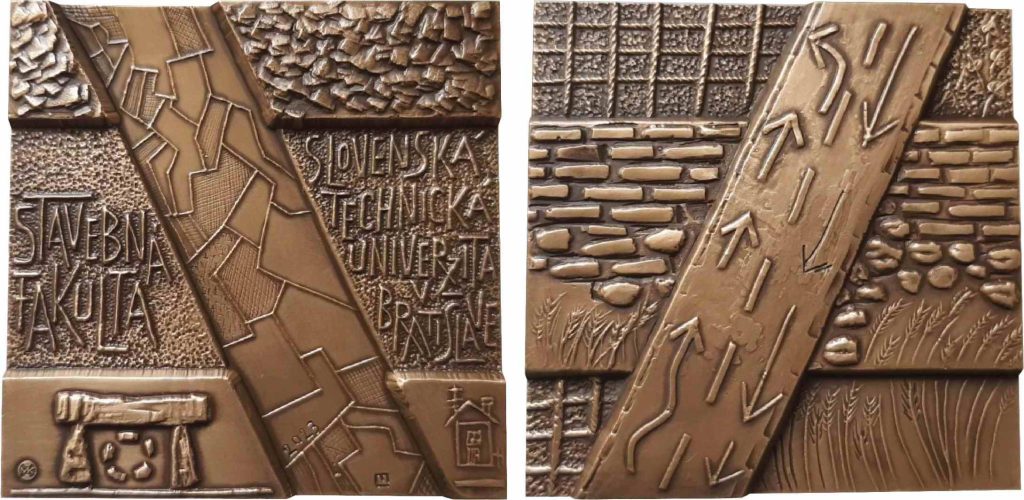
2nd place: Faculty of Civil Engineering, Slovak University of Technology in Bratislava (doc. akad. sculptor Milan Lukáč)
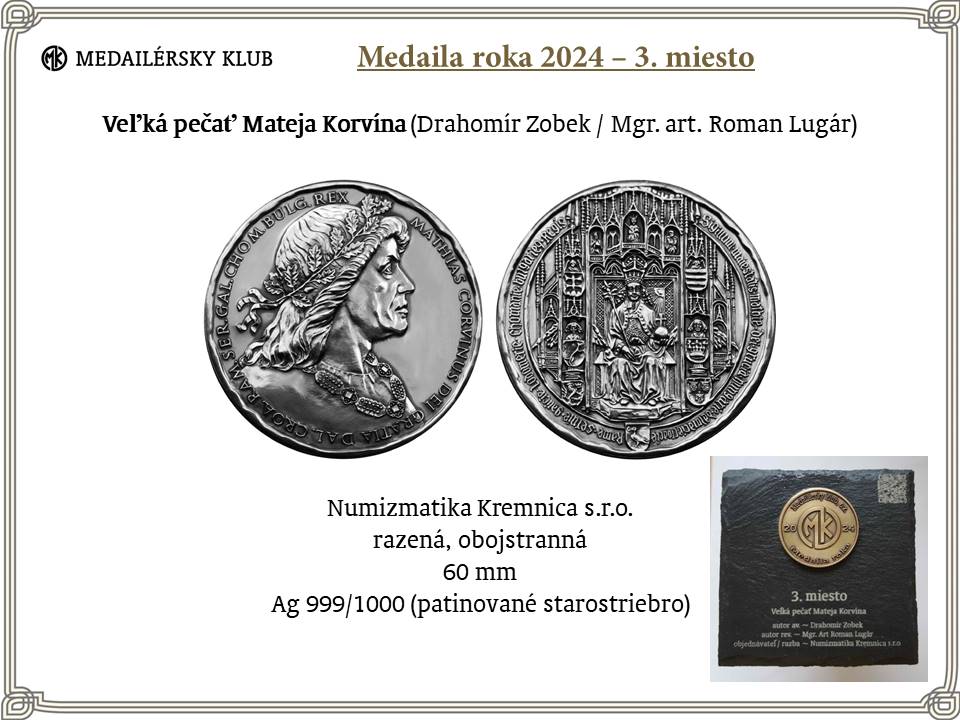
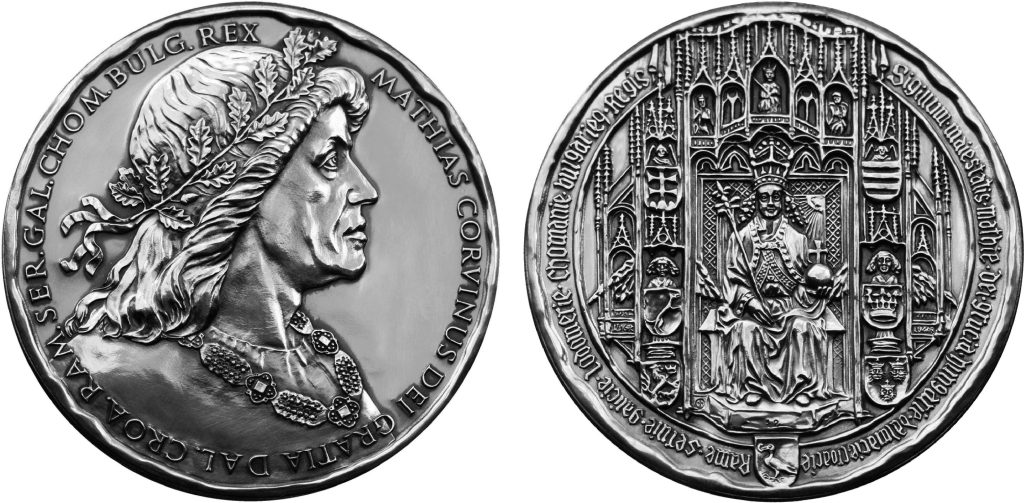
3rd place: The Great Seal of Matthias Corvinus (Drahomír Zobek / Mgr. art. Roman Lugár)
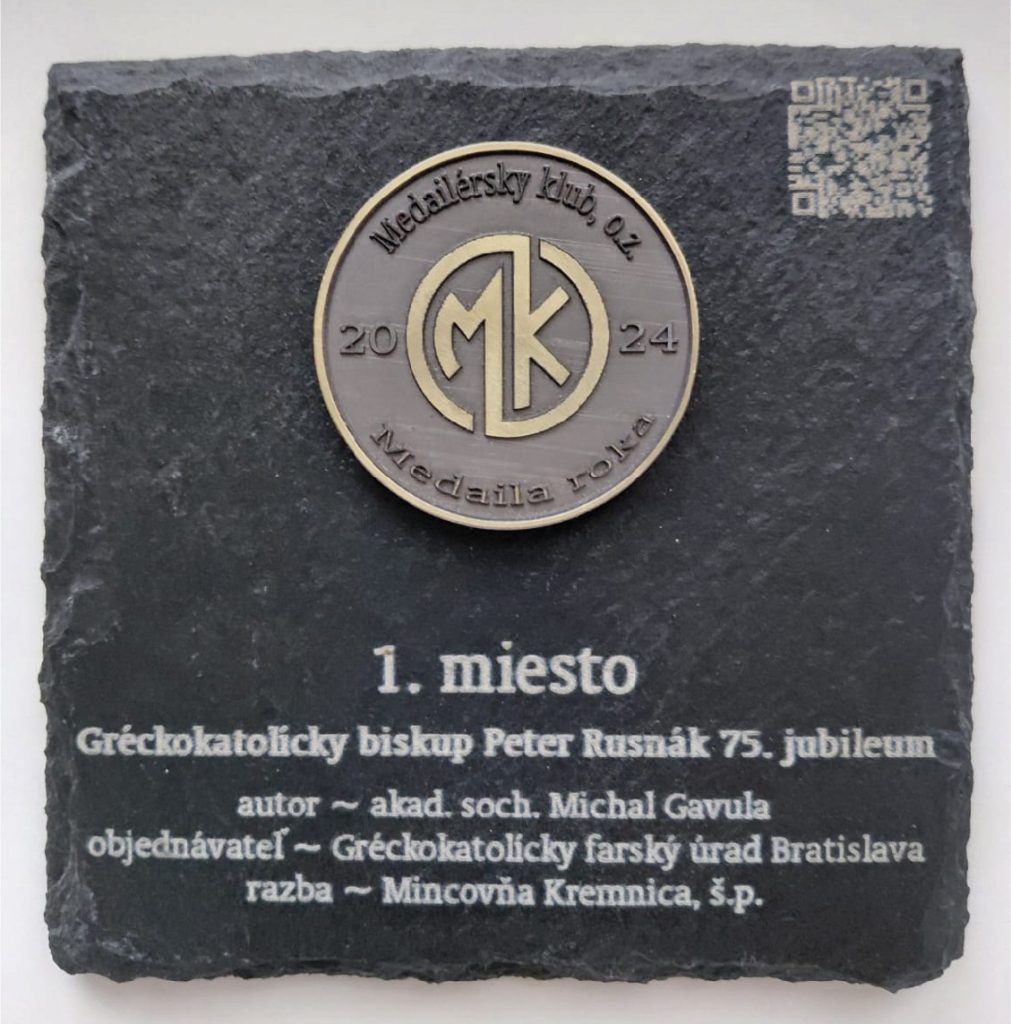
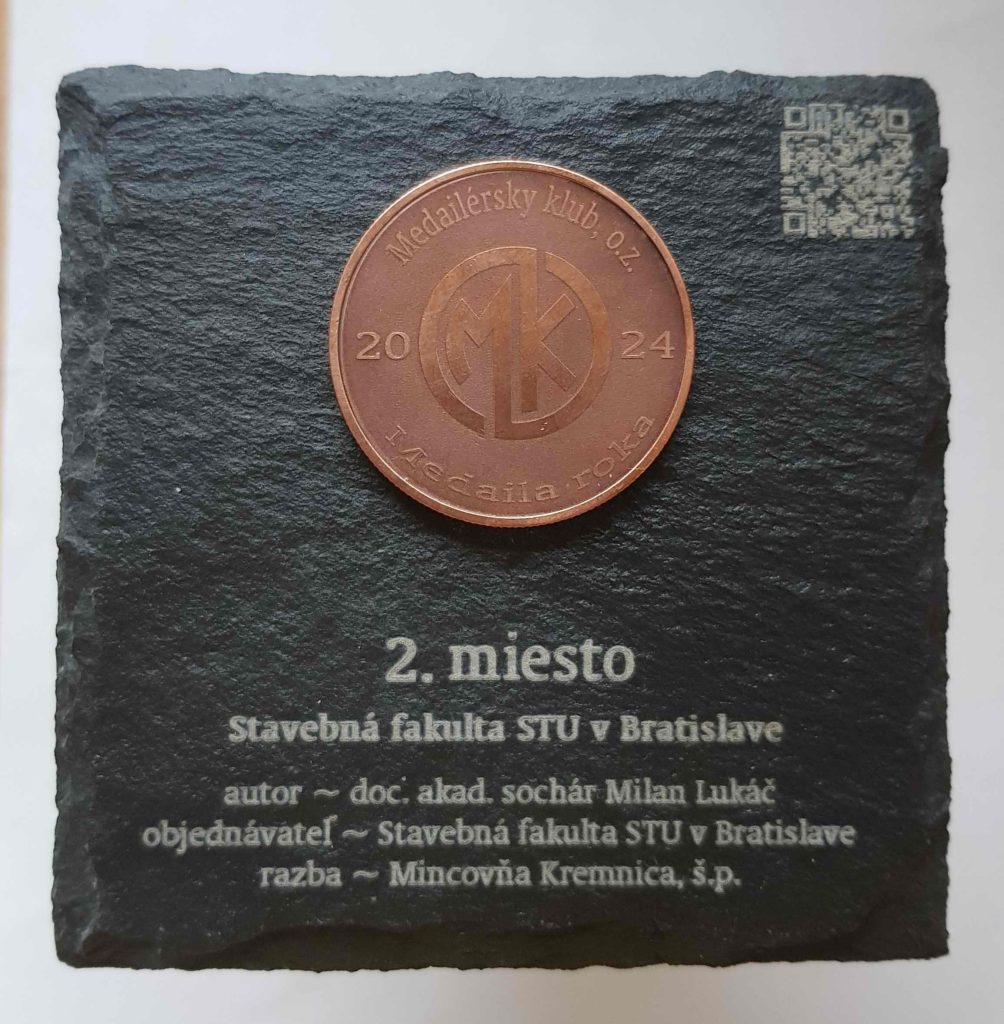
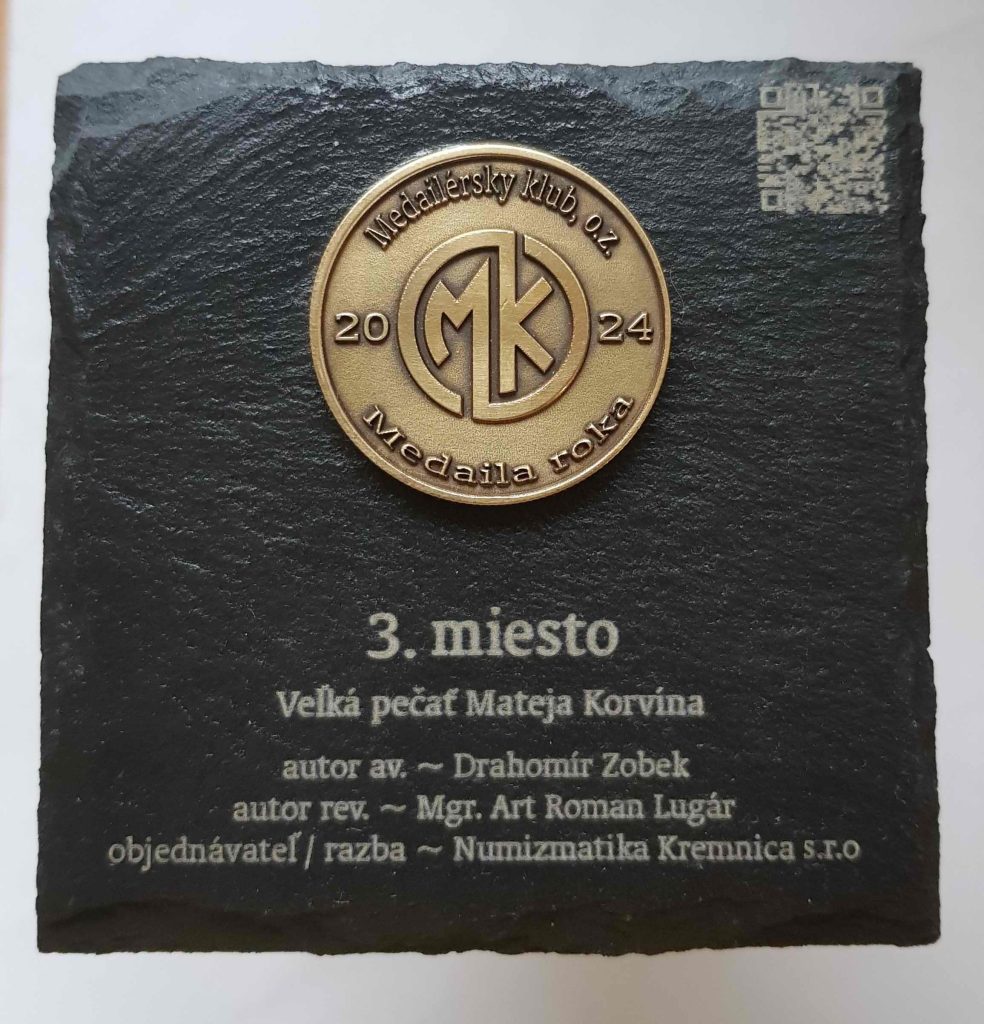
Prizes for 1st-3rd place: 40 mm medal on a slate base
(made by Ján Baranovič)
Results of the public vote/poll
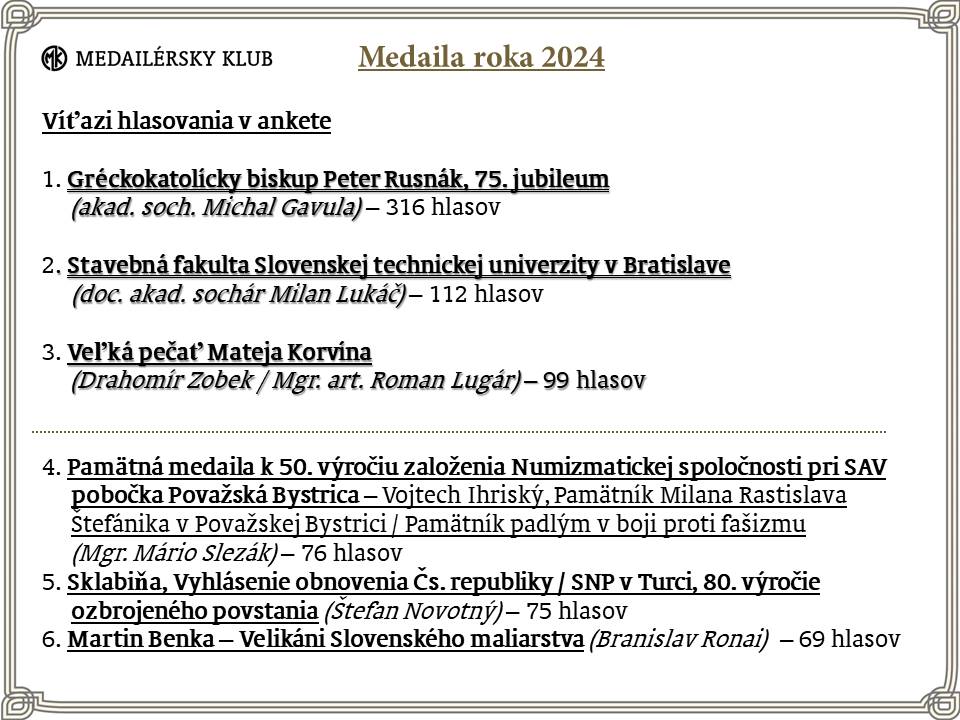
A total of 1,224 votes from 852 voters (each voter could vote for multiple medals) determined the following medal rankings:
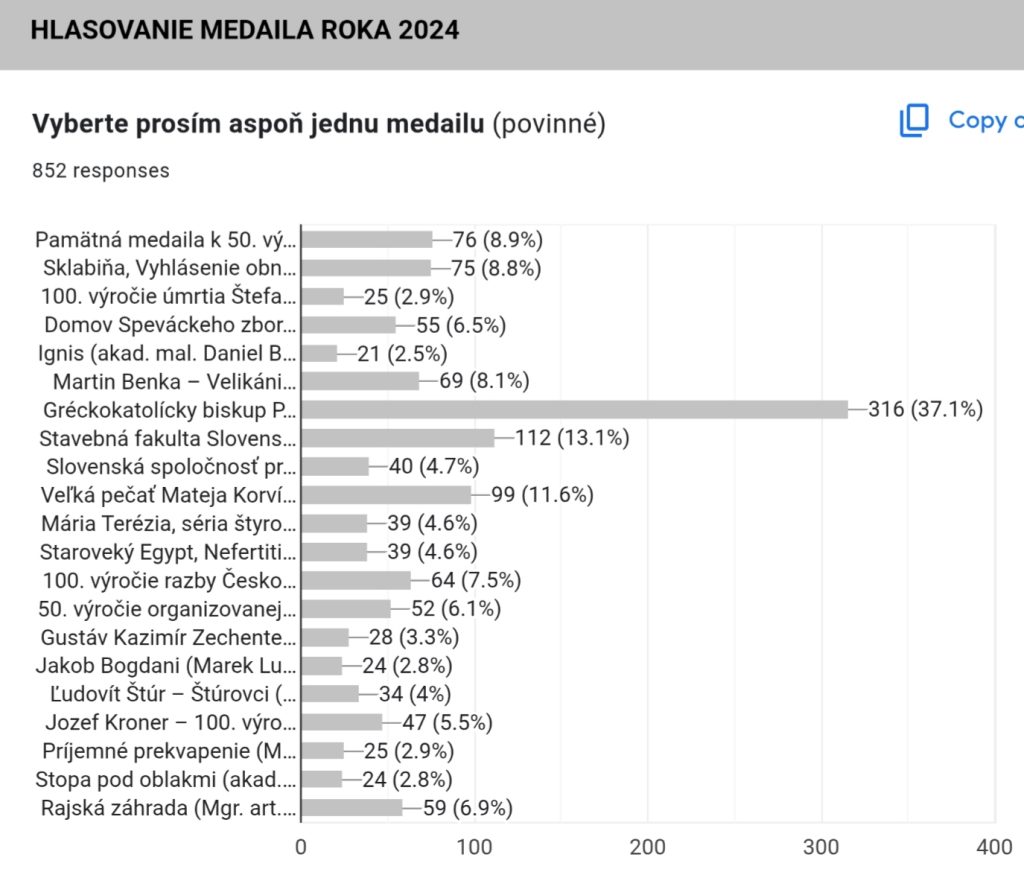
1. Greek Catholic Bishop Peter Rusnák, 75th anniversary (academic sculptor Michal Gavula) – 316 votes
2. Faculty of Civil Engineering, Slovak University of Technology in Bratislava (doc. akad. sculptor Milan Lukáč) – 112 votes
3. The Great Seal of Matthias Corvinus (Drahomír Zobek / Mgr. art. Roman Lugár) – 99 votes
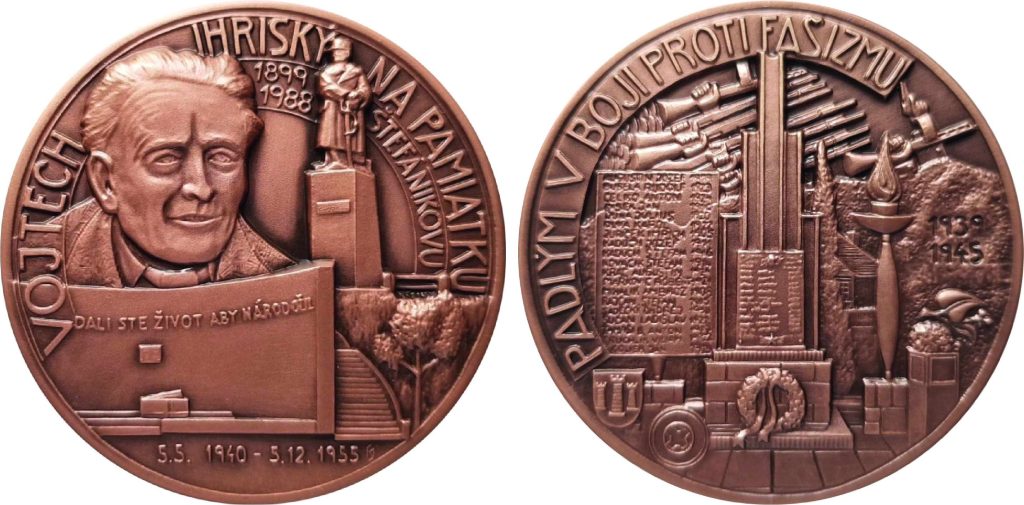
4. Commemorative medal for the 50th anniversary of the founding of the Numismatic Society at the Slovak Academy of Sciences, Považská Bystrica branch – Vojtech Ihriský, Milan Rastislav Štefánik Memorial in Považská Bystrica / Memorial to those who fell in the fight against fascism (Mgr. Mário Slezák) – 76 votes
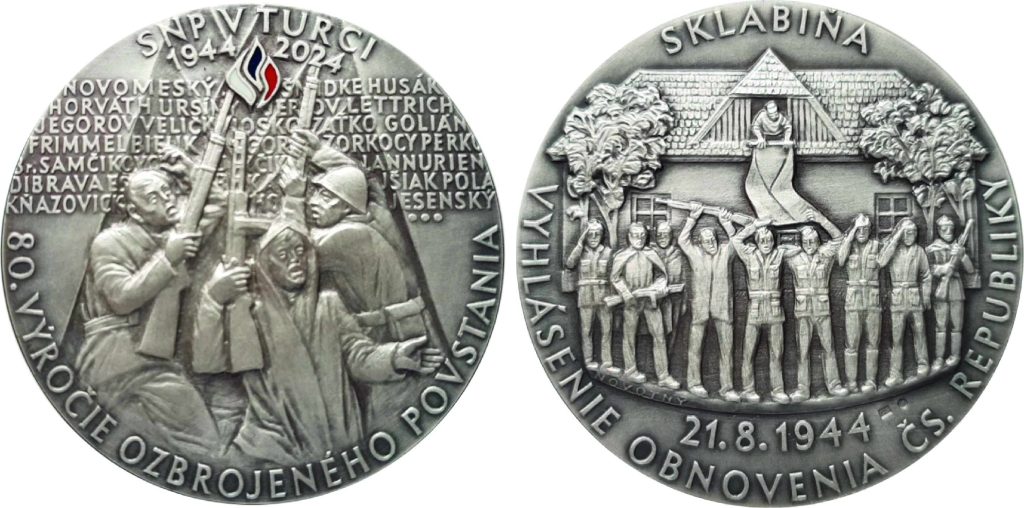
5. Sklabiňa, Declaration of the Restoration of the Czechoslovak Republic / SNP in Turiec, 80th anniversary of the armed uprising (Štefan Novotný) – 75 votes
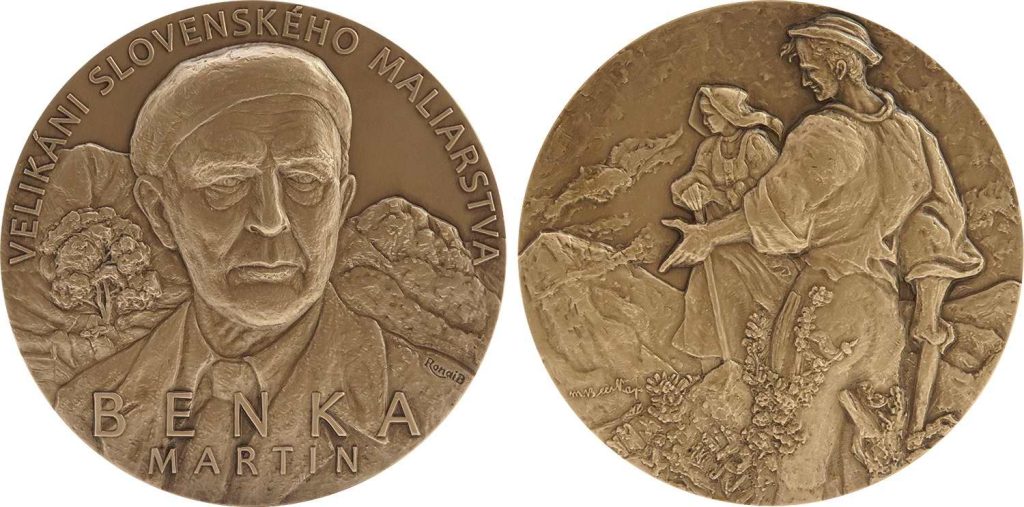
6. Martin Benka – Greats of Slovak Painting (Branislav Ronai) – 69 votes
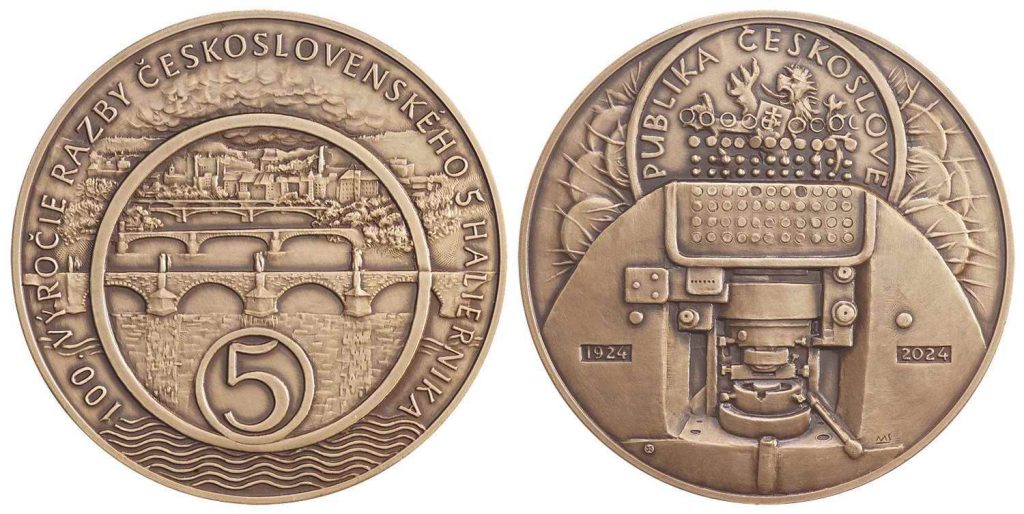
7. 100th anniversary of the minting of the Czechoslovak 5-halier coin from 1924 (Mgr. art. Martin Sabol) – 64 votes
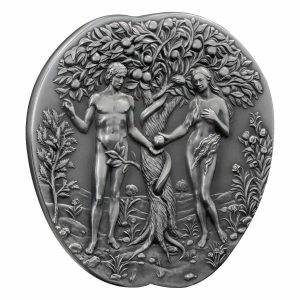
8. Garden of Eden (Mgr. art. Miroslav Hric, ArtD.) – 59 votes
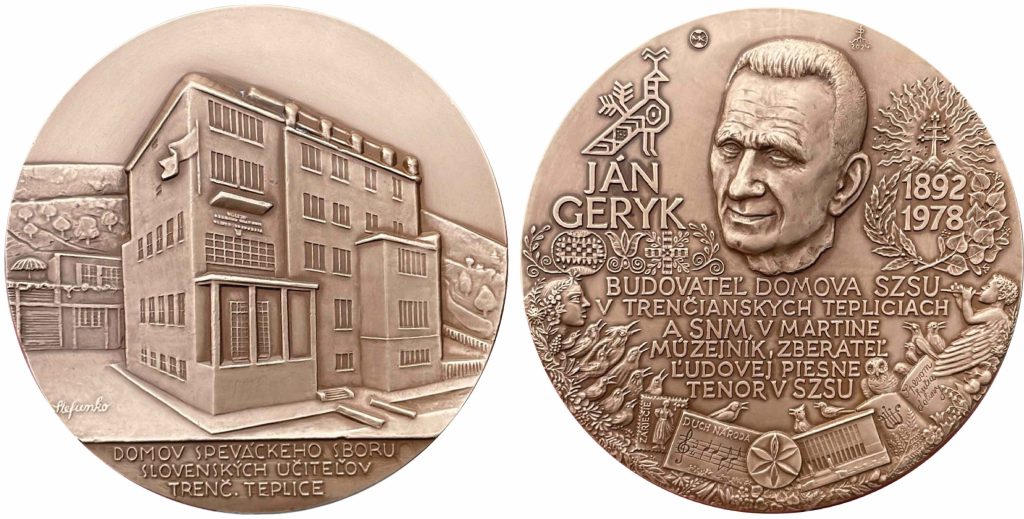
9. Home of the Slovak Teachers’ Choir (SZSU) / Ján Geryk (academic sculptor Prof. Fraňo Štefunko / academic sculptor Marián Polonský) – 55 votes
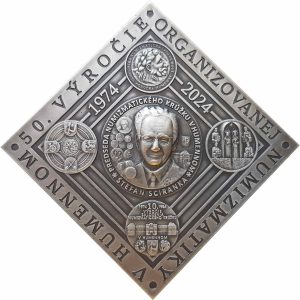
10. 50th anniversary of organized numismatics in Humenné 1974-2024, Štefan Sciranka, (first) chairman of the numismatic club in Humenné (Mgr. art. Tomáš Tulis, Wiliam Schiffer) – 52 votes
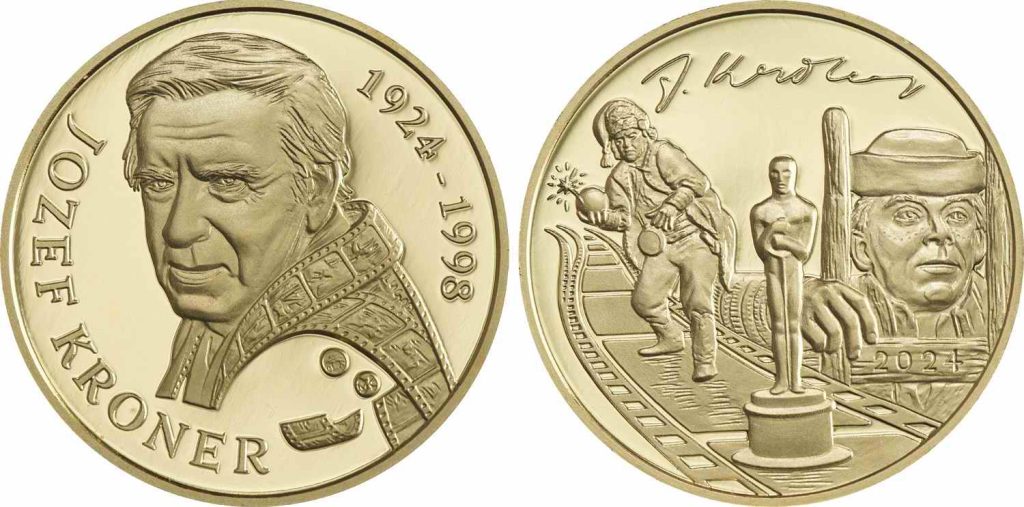
11. Jozef Kroner – 100th anniversary of his birth (Mgr. art. Roman Lugár) – 47 votes
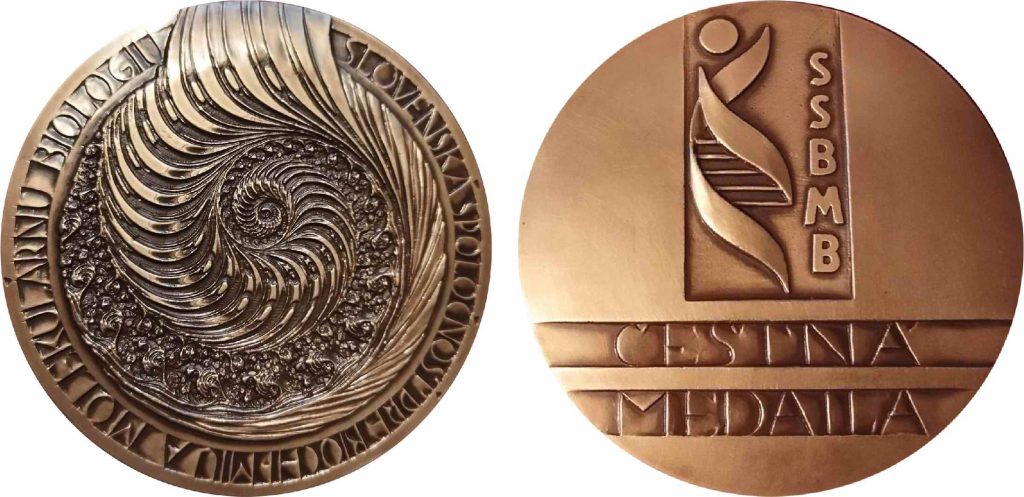
12. Slovak Society for Biochemistry and Molecular Biology (SSBMB), Medal of Honor (academic sculptor Miloš Vavro) – 40 votes
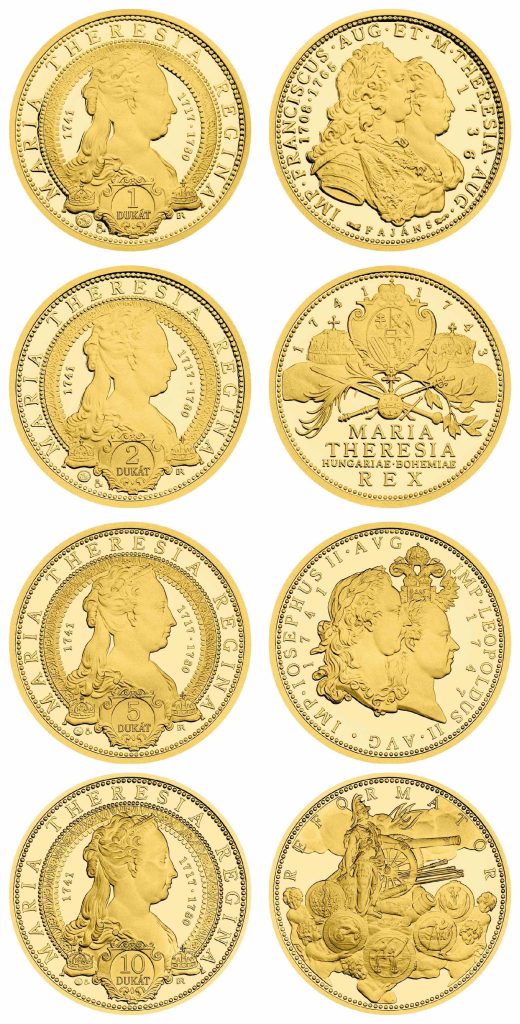
13. Maria Theresa, series of four ducat medals (Branislav Ronai) – 39 votes
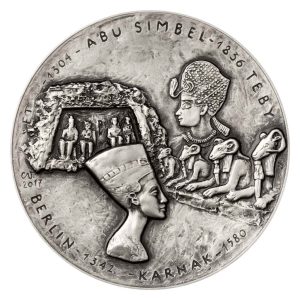
13. Ancient Egypt, Nefertiti – Treasures of Ancient Civilizations VII. (academic sculptor Ľudmila Cvengrošová) – 39 votes
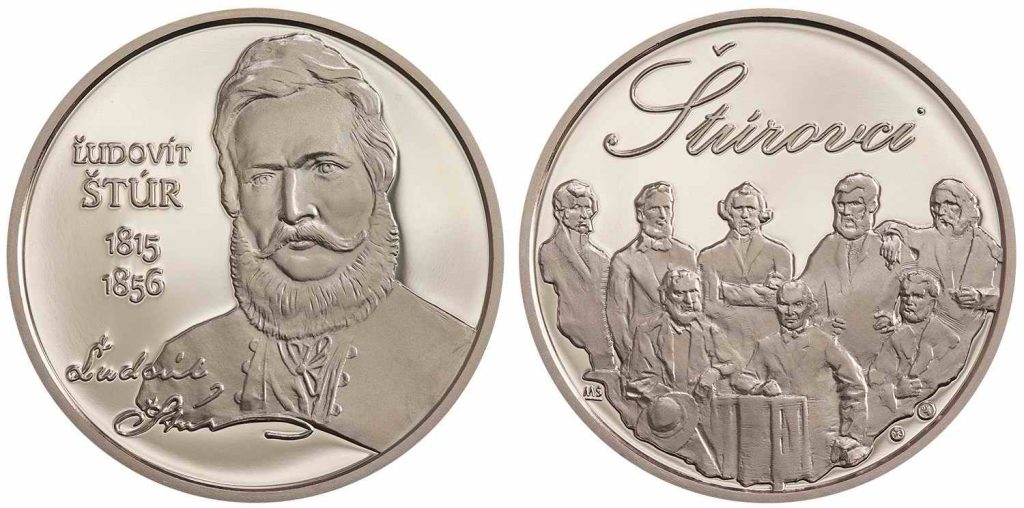
15. Ľudovít Štúr – Štúrovci (Mgr. art. Martin Sabol) – 34 votes
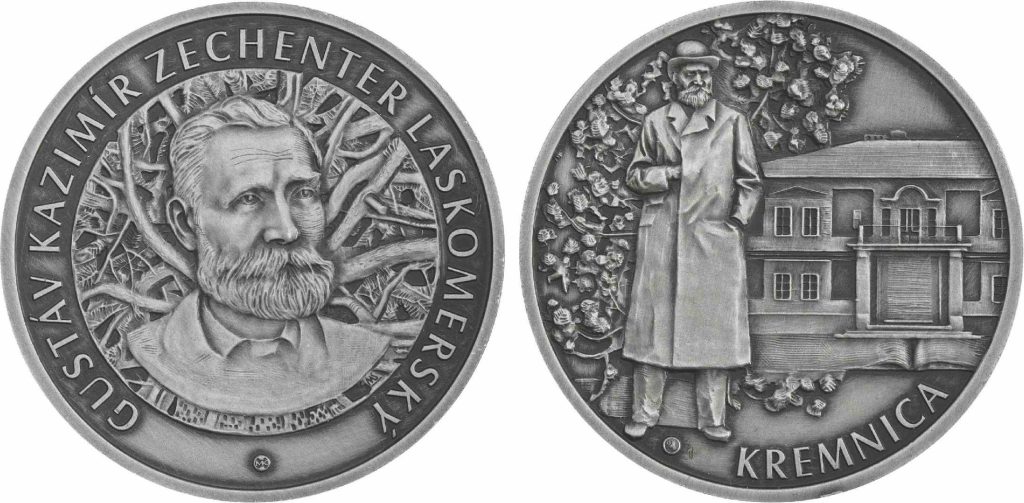
16. Gustáv Kazimír Zechenter Laskomerský – Personalities of Slovak Towns (Mgr. art. Martin Sabol) – 28 votes
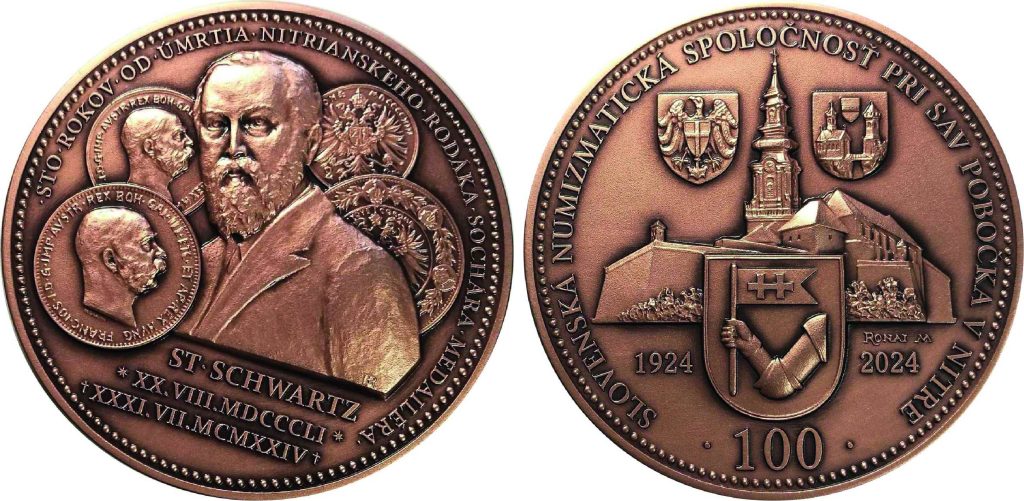
17. 100th anniversary of the death of Štefan Schwartz (Branislav Ronai / Miroslav Ronai) – 25 votes
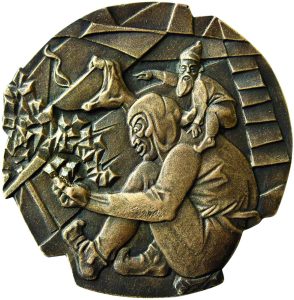
17. A Pleasant Surprise (Mária Poldaufová) – 25 votes
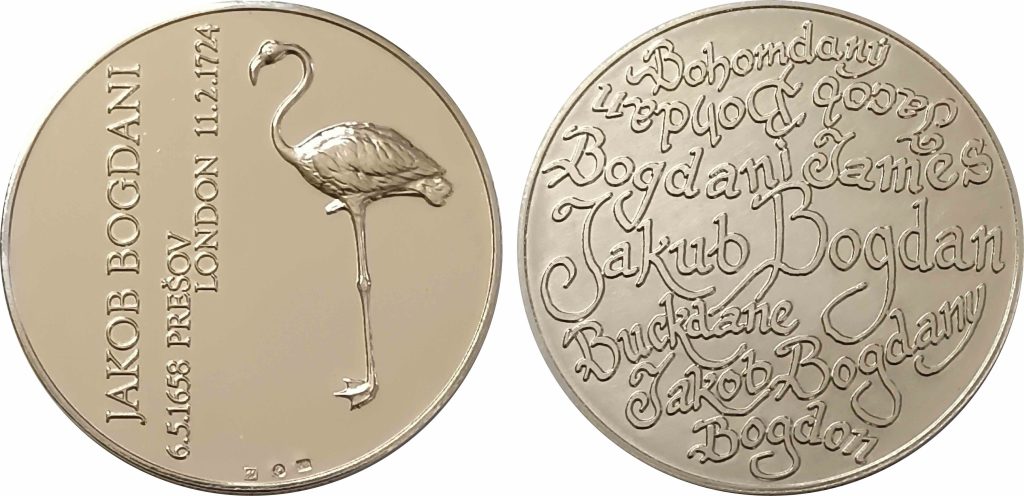
19. Jakob Bogdani (Marek Lukáč, Master of Arts) – 24 votes
19. Footprint Under the Clouds (academic sculptor Alojz Drahoš, PhD.) – 24 votes
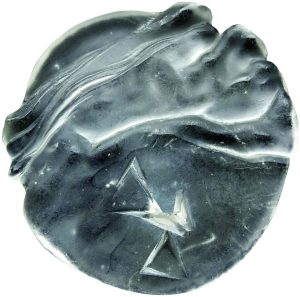
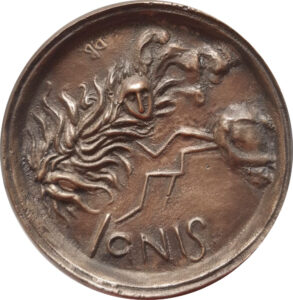
21. Ignis (academic painter Daniel Brunovský) – 21 votes
REPORT (PRESS RELEASE)
Slovakia has chosen its new Medal of the Year 2024
A few weeks ago, we presented the nominated medals in the ongoing Medal of the Year 2024 poll, where everyone could choose medals and win one of 38 beautiful and valuable prizes.
And now we know the results. The voting public chose in an online poll, but also through ballots at the largest collector’s fair in Central and Eastern Europe, Sběratel collector fair in Prague, where the medals were also showed.
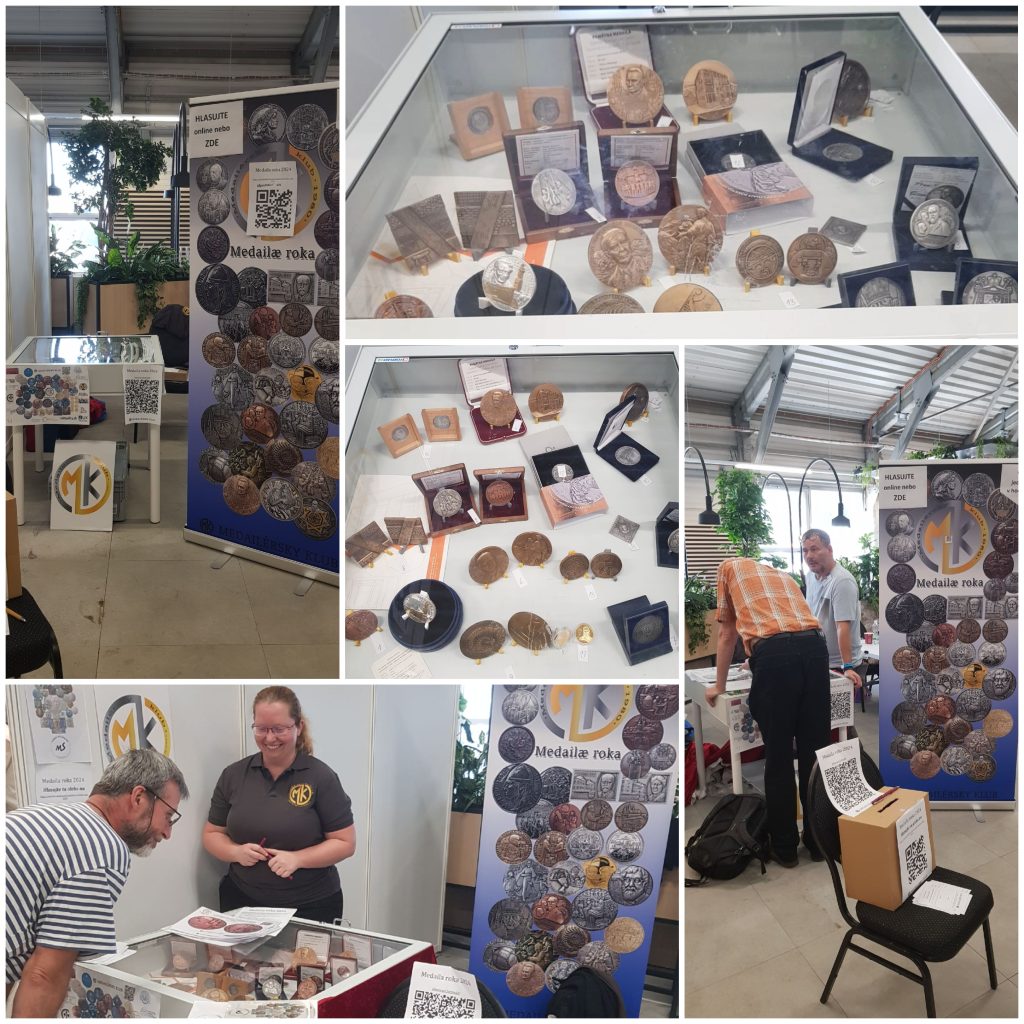
The choice was not easy, as each medal was more beautiful and interesting than the next. Therefore, everyone could vote for several medals from different themes, styles, or metals according to their taste.
The silver-plated medal, which is beautiful, artistically perfect, and dedicated to a shepherd, won first place in the Medal of the Year competition. A shepherd who has served his faithful his entire life. They accepted him as their own and love him so much that they chose this medal as the Medal of the Year by a large margin. We are talking about Greek Catholic Bishop Peter Rusnák of the Bratislava Eparchy, for whom decided to create a medal for his 75th anniversary and thus express his gratitude academic sculptor Michal Gavula (1954), whom we already know from last year’s medal dedicated to beloved Saint Mother Teresa of Calcutta, who visited Slovakia in 1990. Master Gavula created a medal from his heart, which many believers took for themselves and, by casting their votes, symbolically returned to their father bishop what he has given them throughout his life. Hope, words of encouragement, and love. And that is very valuable and appreciated in today’s hectic times, full of worldly possessions and the pursuit of them as supposed values. Humanity is what makes us human. Especially in these uncertain times of emerging artificial intelligence.
Second place went to a medal dedicated to those who are also indispensable to our society – civil engineers. It is actually a plaque, as it has a other shape than round. And this bronze plaque from the Faculty of Civil Engineering of the Slovak University of Technology in Bratislava is square in shape and its content corresponds exactly to what this university prepares future civil engineers for in life: it depicts a megalithic structure as a symbol of the beginnings of construction, together with technical solutions and planning in contrast to the real infrastructure in the landscape, such as roads, masonry, water, and greenery. It is an accurate representation of the disciplines of civil engineering: geology and materials, statics and structures, architecture and urbanism, transport and water structures, landscape and environmental relations. It was created by doc. akad. sculptor Milan Lukáč (1962), court medallist of the Faculty of Civil Engineering of the Slovak University of Technology, for which he has created several medals and plaques. These are awarded to individuals, institutions, and organizations as a tribute and expression of gratitude for their merits, but also as recognition of extraordinary achievements or lifetime work in the field of education, the development of science and practice, the support of faculty activities, and the promotion of the faculty’s good name. The author also works at the Faculty of Architecture and Design of the same university as the head of the Department of Fine Arts and Multimedia.
Third place went to a historical medal in silver and gold depicting the historical Great Seal of Matthias Corvinus and his contemporary portrait. Matthias Corvinus came from the Hunyadi dynasty. He was King of Hungary and Croatia, Duke of Austria, and also claimed the title of King of Bohemia. In 1465, he founded the Universitas Istropolitana in Bratislava (now Slovakia, than Pressburg/Pozsony/Prešporok in the Kingdom of Hungary – Uhorské kráľovstvo, in many western languages is Hungary synonym for Magyarország-Land of Magyars as we know it today, but Hungary was for about a millennium a multiethnical kingdom /Magyars, Slovaks, Croats, Romanians, etc./), despite from the second half of 19th century strongly magyarised by the ruling Magyars-Hungarians) and, 15 years later, the University of Pest (now part of Budapest, Hungary). During his reign, the country experienced economic and cultural prosperity. Ideas of humanism and the Renaissance penetrated the Hungarian kingdom during his reign. According to legend, the people called him the “Good King.” He liked to visit peasants and the poor to find out how the people in his kingdom lived. Sometimes he dressed as a beggar, other times as a peasant or craftsman, and thus he ruled his kingdom. He did not want to listen only to the words of rich lords; he wanted to know how ordinary people really lived.
The author of the portrait on the front and the manufacturer of the medal is the well-known Kremnica medallist and coin designer Drahomír Zobek, the “father” of the Slovak koruna – the designer of the Slovak circulation coins from 1993, as well as the reverse side of the 10 Kčs Czechoslovak koruna coin featuring M. R. Štefánik from 1991 and the Slovak side of the 1, 2 and 5 cent euro coins. The reverse side with the seal itself was masterfully designed by Roman Lugár, a medallist at the Kremnica Mint. The medal thematically follows on from last year’s Maria Theresa on the Great Seal and her coronation ceremony.
The award ceremony of this year’s winners took place on Thursday, September 25, 2025, in the beautiful historic building of the Thurzov House of the Central Slovakian Museum in Banská Bystrica, located directly on the central medieval square, with the participation of the medal designers, their ordering customers, and medals admirers.
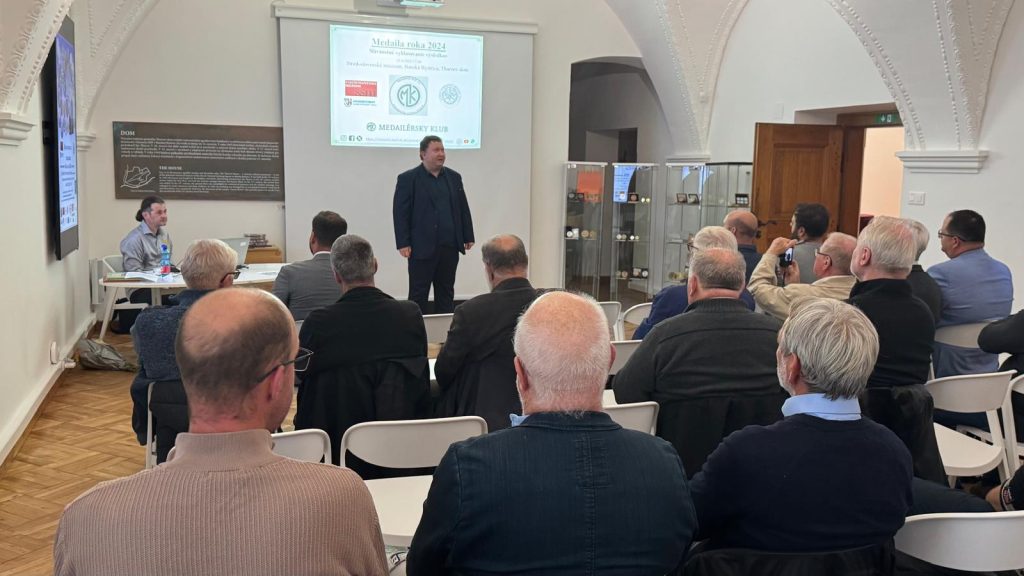
Fig. Medal of the Year 2024 – Speech by Mr. Marcel Pecník, Director of the Central Slovakian Museum in Banská Bystrica (photo by Ján Baranovič)
Beside the showed medals and plaques, which competed for public favour in an online vote during the first two weeks of September, the Medalist anthem from Martin Zobek from Kremnica from the Tall Tunes project was also presented in a public premiere.
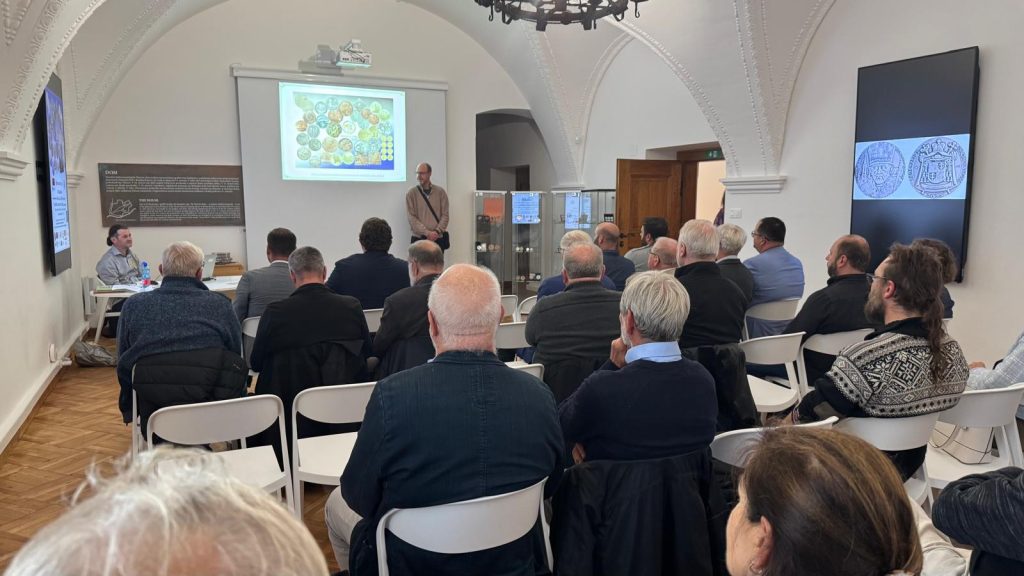
Fig. Medal of the Year 2024 – Medalist Anthem Martin Zobek (photo by Ján Baranovič)
1st place: Greek Catholic Bishop Peter Rusnák, 75th anniversary (academic sculptor Michal Gavula)
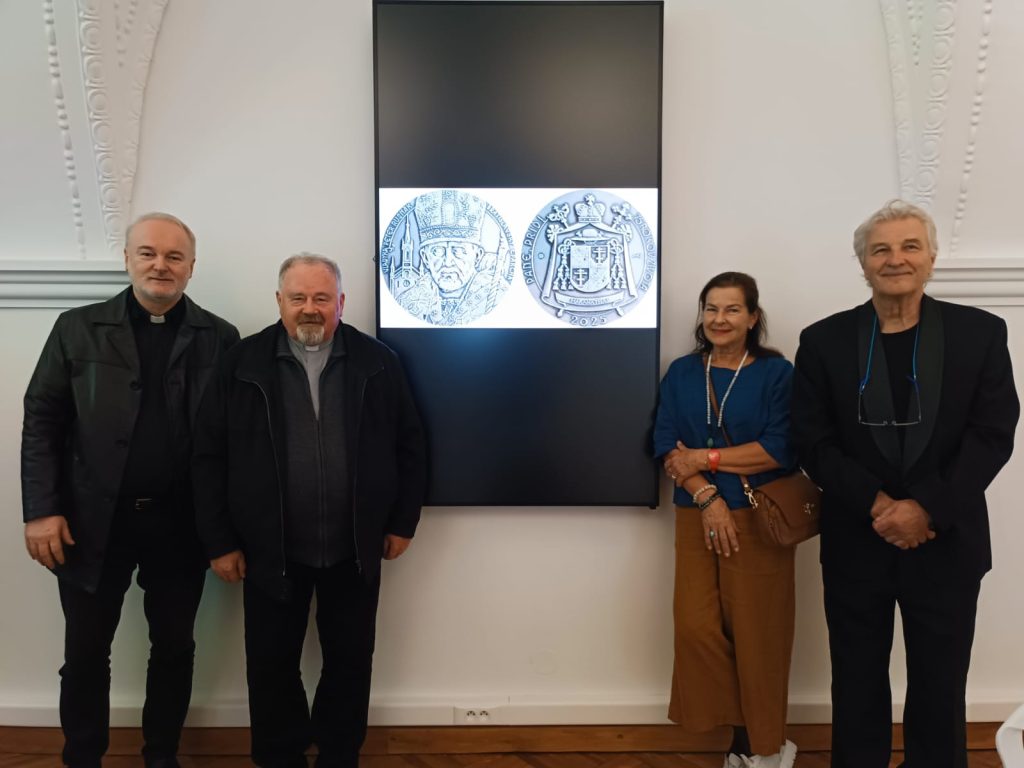
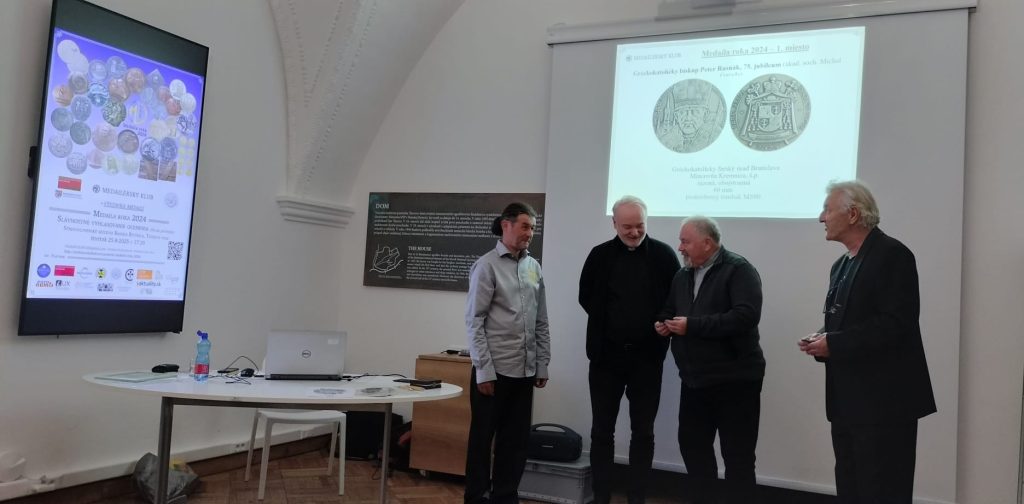
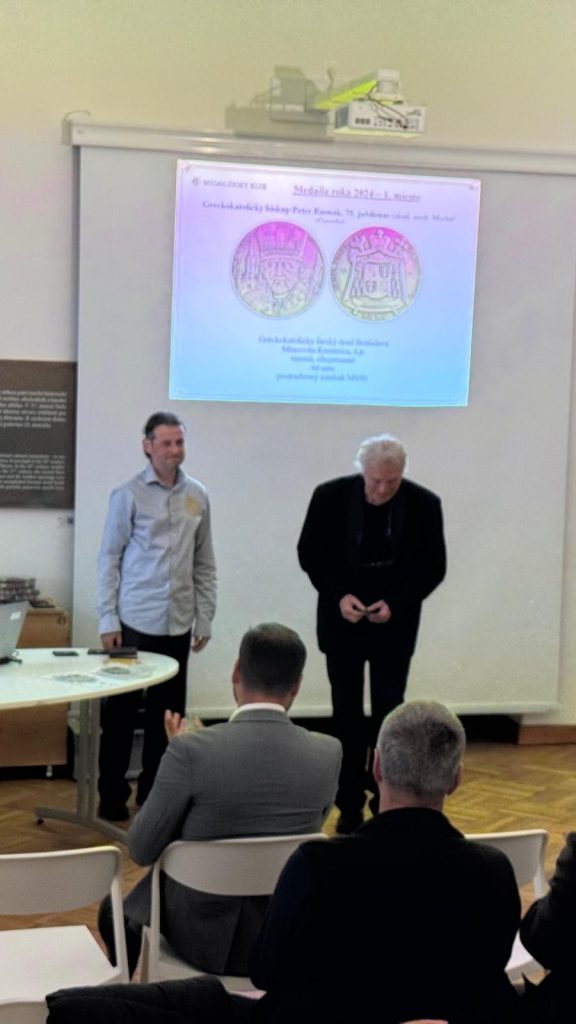
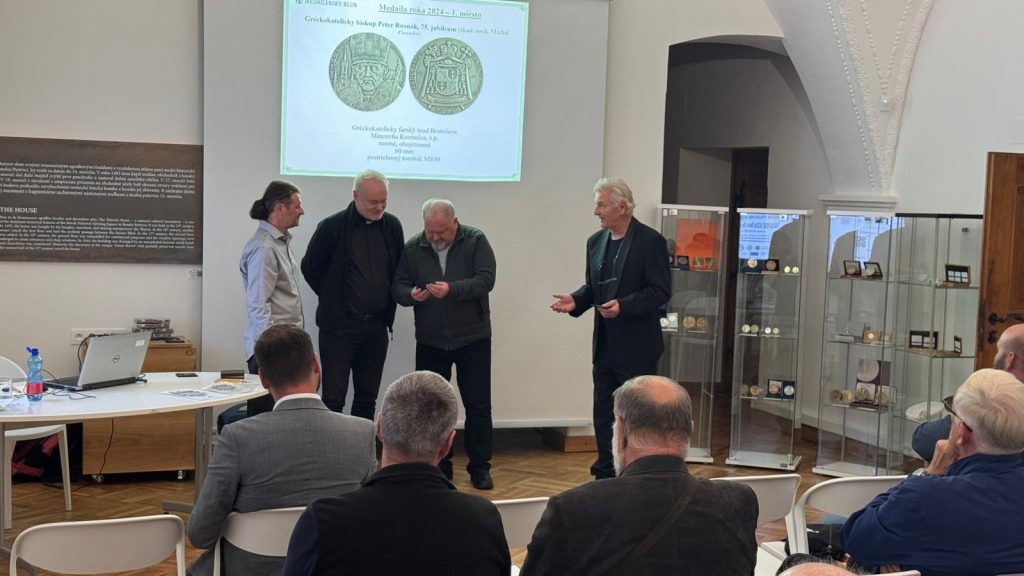
Fig. Medal of the Year 2024 – 1st Place Author Michal Gavula with his wife and representatives of the Greek Catholic Eparchy of Bratislava, Mgr. Vladimír Skyba, Vicar General, and Mgr. Peter Sabol, Chancellor (photo by Ján Baranovič, Igor Potančok)
2nd place: Faculty of Civil Engineering, Slovak University of Technology in Bratislava (doc. akad. sculptor Milan Lukáč)
3rd place: The Great Seal of Matthias Corvinus (Drahomír Zobek / Mgr. art. Roman Lugár)
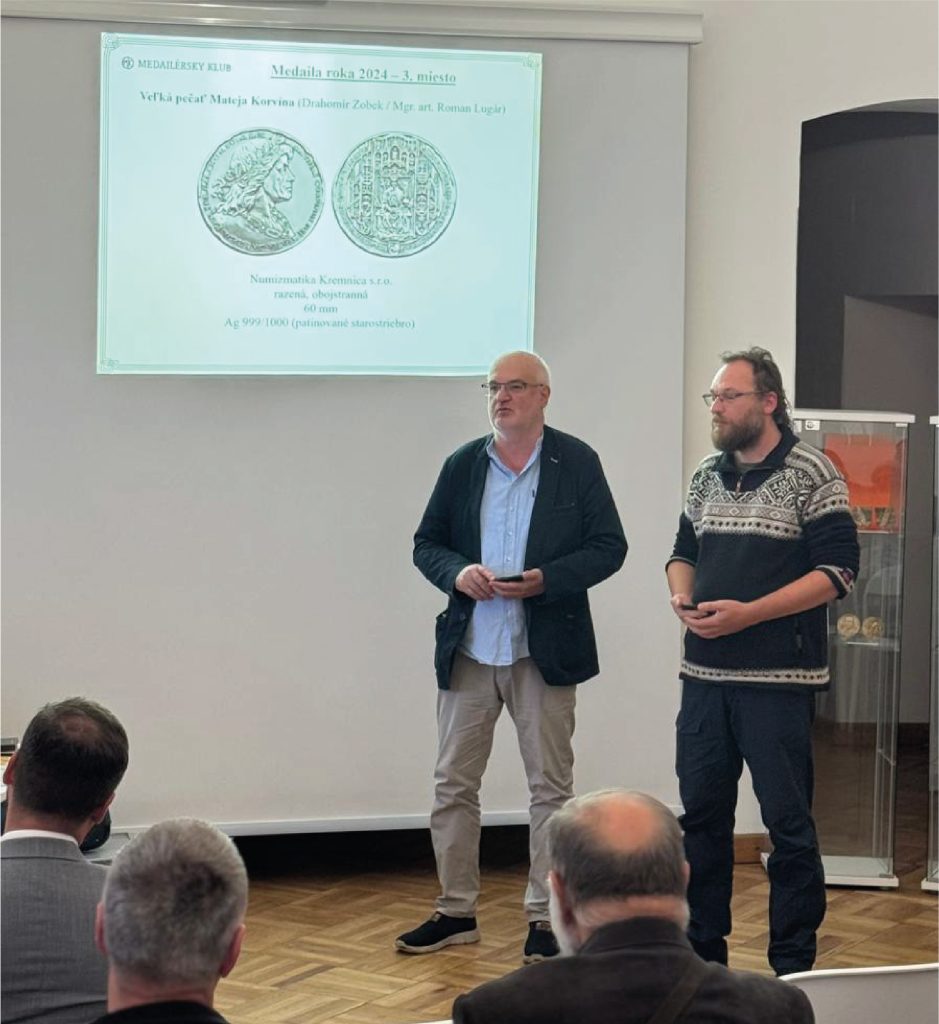
Fig. Medal of the Year 2024 – 3rd place: Drahomír Zobek / Mgr. art. Roman Lugár (photo by Ján Baranovič)
Awards for merit in the field of medal making were also presented to academic sculptor Milan Struhárik on the occasion of his 90th birthday, and to Milan Kožuch, a prominent Kremnica medallist who studied at the Secondary School of Applied Arts in Bratislava, and Branislav Ronai on his 40th birthday, another Kremnica coin and medal designer, son of another prominent figure in Kremnica medallic art and coin designer Miroslav Ronai. Despite his younger age, Branislav has already created countless beautiful medals, which everyone has probably seen. This year, he had three irons in the fire, from copper and tombac to silver and gold, one of which he created together with his father.
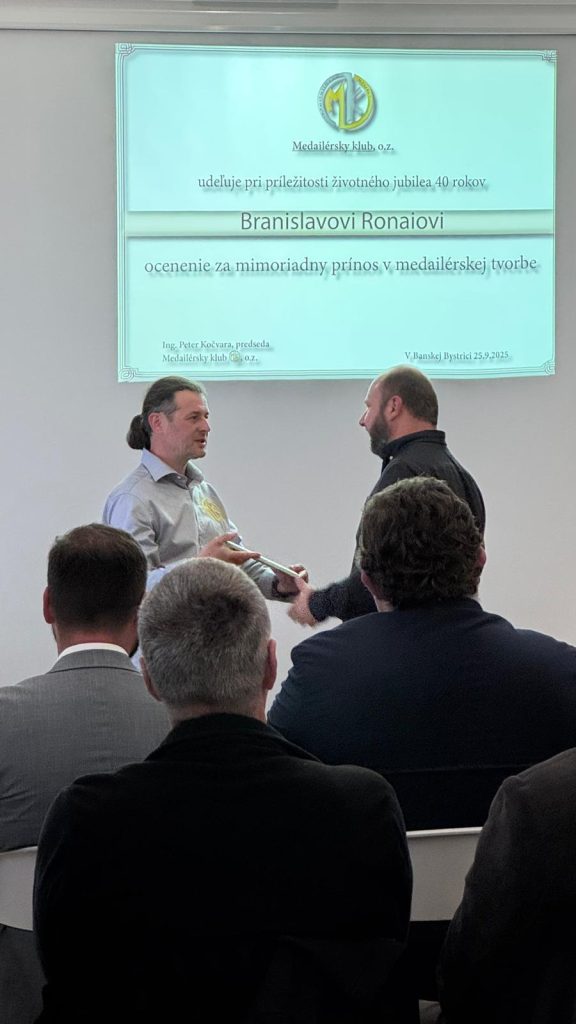
Fig. Medal of the Year 2024: Award to Branislav Ronai (photo by Ján Baranovič)
The Beekeeping Heritage medal by Milan Kožuch was Medal of the Year 2023 in the previous year. It was issued by the Secondary Vocational School under Bános, Banská Bystrica and the Slovak Numismatic Society at the Slovak Academy of Sciences – Banská Bystrica branch.
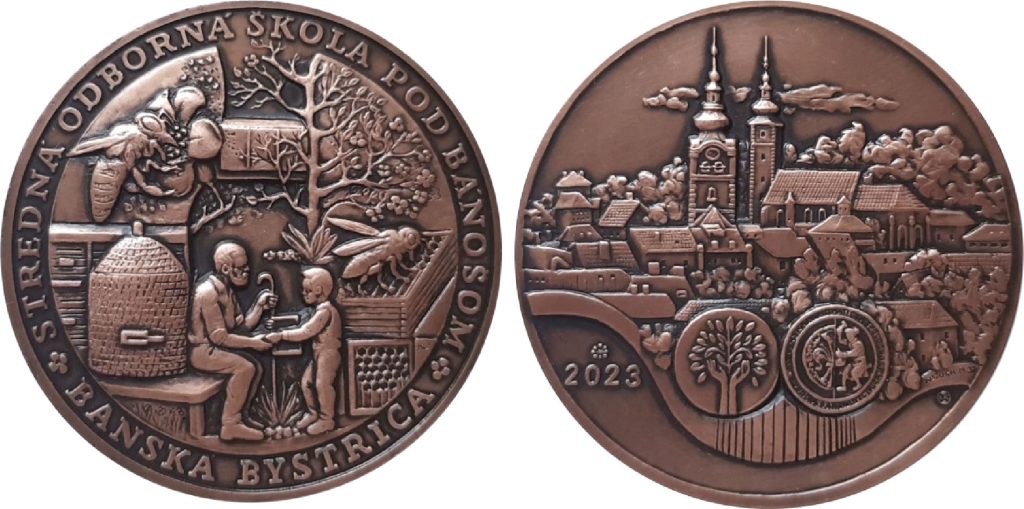
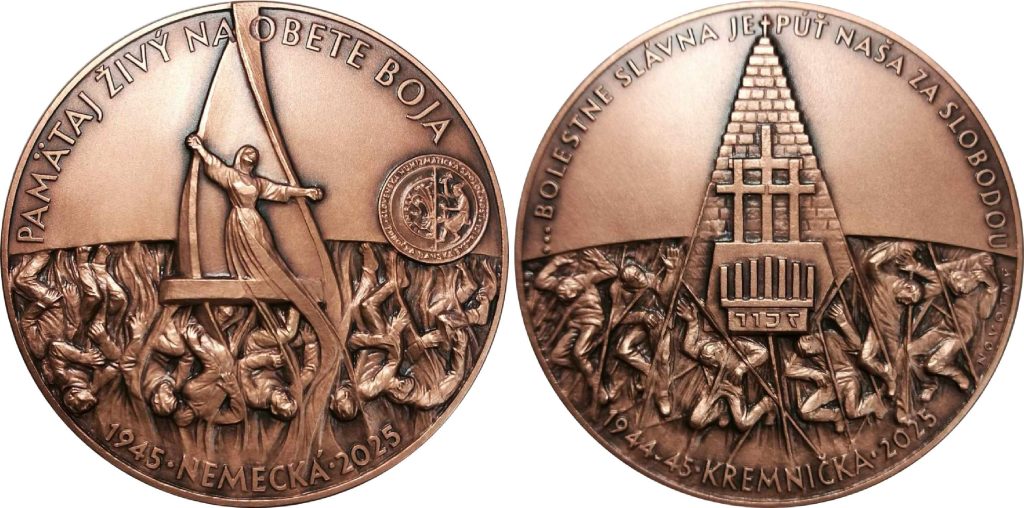
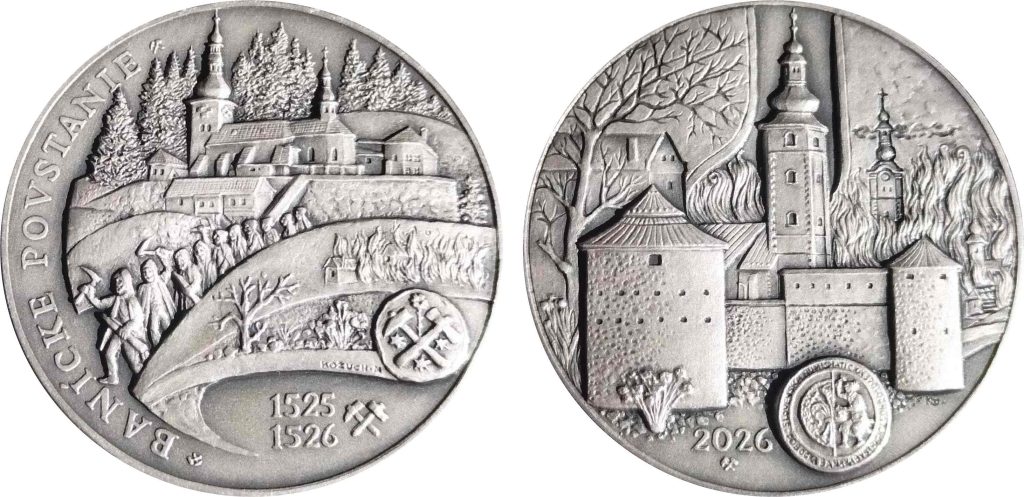
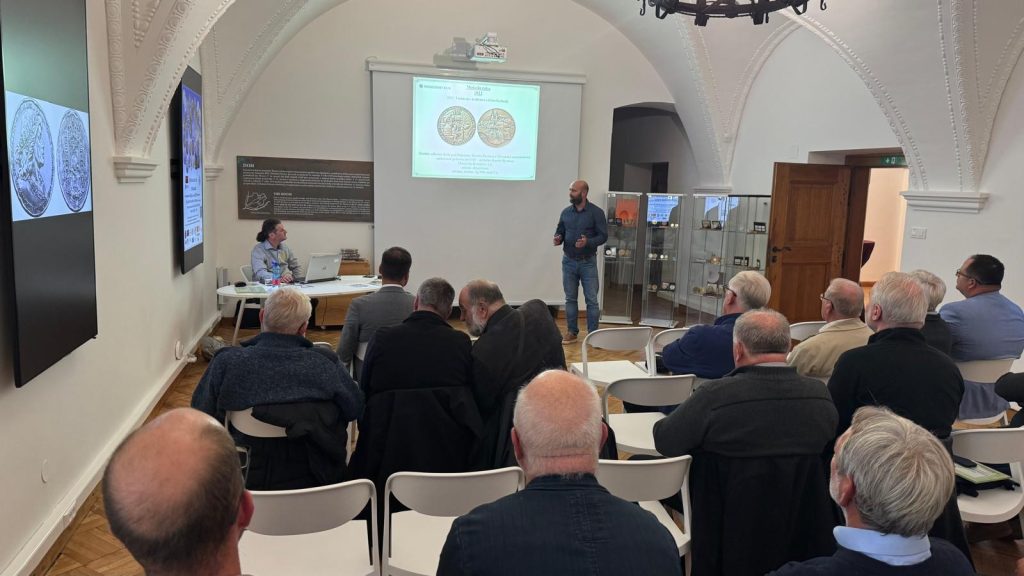
Fig. Michal Dóša, Chairman of the Slovak Numismatic Society, branch of the Slovak Academy of Sciences – Banská Bystrica branch (photo by Ján Baranovič, medals by Peter Kočvara and Milan Kolkus)
Organized numismatists from Banská Bystrica also presented their latest medals dedicated to Banská Bystrica at the award ceremony on their home turf. In 2025, it will be 80 years since the tragic events in Kremnička and Nemecká by the Kremnica medallist Štefan Novotný (who also participated with a medal this year, Sklabiňa, Declaration of the Restoration of the Czechoslovak Republic / 80th anniversary of the SNP in Turiec) and a medal in preparation for 2026, Miners’ Uprising – 500th anniversary, again by Milan Kožuch.
Individual branches of the numismatic society throughout Slovakia issue medals related to their city or region, commemorating important events or personalities. The fact that they are among the most active in the field of medal making is also evidenced by the fact that this year, out of a total of 21 medals and plaques, they had as many as 5 medals related to Považská Bystrica, Martin, Prešov, Humenné, and Nitra. They do their city great honor and promote it far beyond its borders, throughout Slovakia and abroad, and therefore deserve greater attention from the representatives of their cities and local media. They do this out of enthusiasm, in their free time, and selflessly for their city.
The youngest awarded medalist was the aforementioned Branislav Ronai, who had just turned 40 and was a graduate of the School of Applied Arts in Kremnica. This school has educated virtually all of Kremnica’s medalists and coin designers over the past 50 years and has been a source of medalists and engravers for the Kremnica Mint, founded in 1328, which will soon celebrate its magnificent 700th anniversary of continuous operation and is undoubtedly our national treasure and famous throughout the world. However, in 2011, this school, founded in 1966, came under the ownership of a foreign private founder, who was unable to finance it, and so in 2023, after 57 years, it ceased operations, leaving Slovakia with virtually no future in medal making, thus jeopardizing our traditions and very strong position in the world of medal making.
However, the director of the culture department of the Banská Bystrica Self-Governing Region, Mgr. Peter Černek, who himself studied engraving at the School of Applied Arts in Hodruša -Hámre, and therefore the hopes for the future of Slovak medal making also lie with this school, as well as the Josef Vydra Private School of Applied Arts in Bratislava and the Academy of Fine Arts in Bratislava, which, however, do not seem to devote themselves to these traditional forms of art.
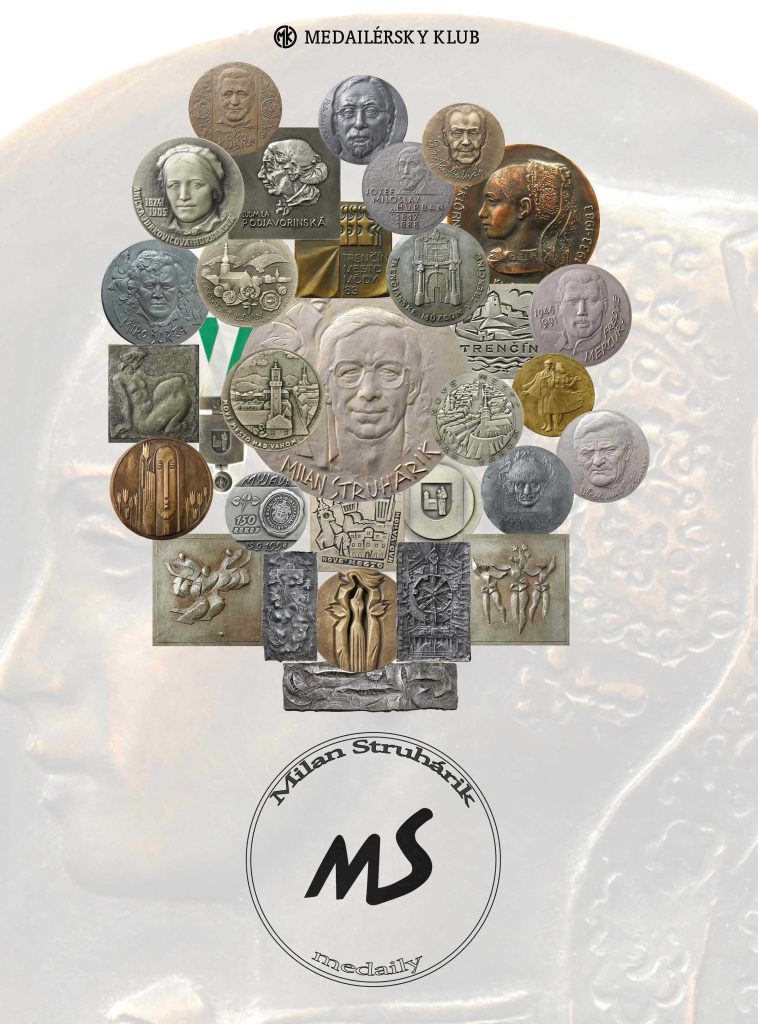
It was also publicly presented to those in attendance the publication “Milan Struhárik medals“, a catalog of medals and selected works from the bronze and wood sculptures of the popular Nové Mesto sculptor Milan Struhárik (1935), who also received an award for his contributions to the field of medal making. He is particularly renowned for his unique approach to wood, which he considers his most important artistic medium. Although he devoted himself to medal making only occasionally, he created dozens of remarkable medals dedicated mainly to his region and its personalities, which, however, transcend it in their significance, and it is precisely this publication that aims to map and bring his exceptional medal work to the public.
Struhárik was born in Nové Mesto nad Váhom, studied at the College of Applied Arts in Bratislava in the woodcarving department, then from 1955 to 1961 at the Academy of Arts, Architecture and Design in Prague in the studio of applied sculpture. However, he spent his entire professional artistic life in his native Nové Mesto nad Váhom, devoting himself to teaching and sculpting, as well as medal making. After returning to his hometown after studying in Prague, he founded the art department at the local Folk School of Art, today the Juraj Kréna Elementary Art School in Nové Mesto nad Váhom, where he educated many artistic personalities working at home and abroad, who still come together today as part of the art initiative Returns to Nové Mesto nad Váhom, which, after 40 years, has grown to 70 exhibiting members with a connection to this town in its anniversary year of 2024. He was also the initiator of the establishment of the Peter Matejka Gallery in Nové Mesto nad Váhom (2006) and was involved in the founding of the M. A. Bazovský Gallery in Trenčín.
A big thanks to Ms. Ľudmila Fülöpová from the Czech Mint SK
Without Ms. Fülöpová, this award ceremony and all the ones before it wouldn’t have happened. She’s also been a supporter of the Medal of the Year award from the start and is really into medal making. Thanks a ton!
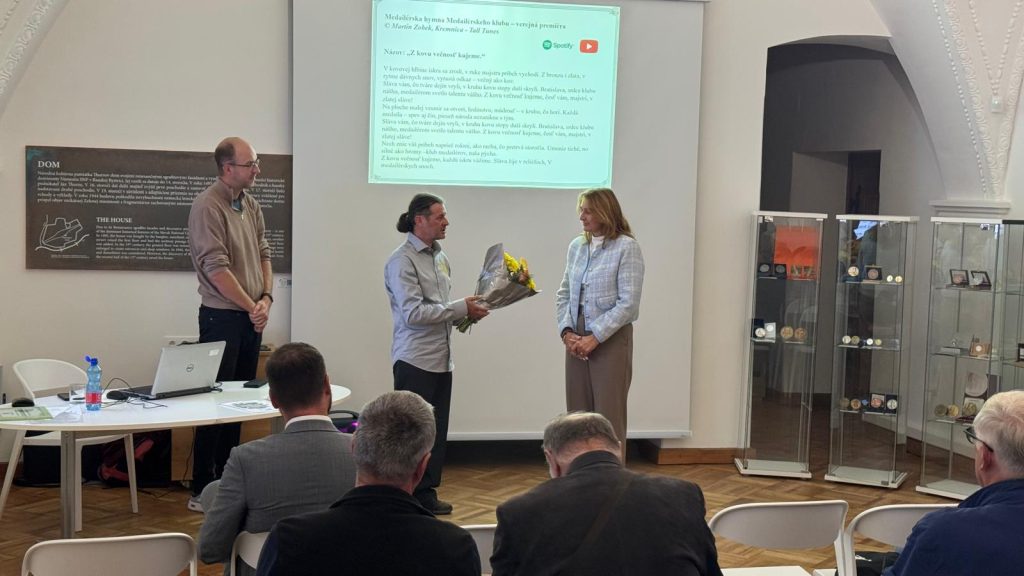
Fig. Medal of the Year 2024 – Thanks to Ms. Ľudmila Fülöpová from the Czech Mint SK (photo by Ján Baranovič)
In addition to the aforementioned medal exhibition at the Sběratel collector fair in Prague, this year’s medals will also be on display on October 18 in Munich, Germany, at the Medal Fair as part of the World Medal Congress and Exhibition of Modern Art Medals XXXVIII FIDEM Munich 2025.
In Slovakia, apart from one evening of the award ceremony in Banská Bystrica, which was only for invited guests, unfortunately, the medals were not exhibited at the large annual exhibition marking the 35th anniversary of the Association of Slovak Medalists at the Slovak Radio Gallery in Bratislava (September-October), nor for a few days during the voting, nor at the National Bank of Slovakia.
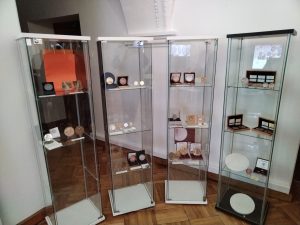
Fig. Medal of the Year 2024 – Exhibition of medals at the Central Slovakian Museum in Banská Bystrica (photo by Milan Kolkus)
Slovakia thus found the most beautiful medals of the year, as chosen by the people themselves in a poll, but all the medals in the competition are worthy of attention, all were created by renowned medallists and artists who, through their mastery and artistry, managed to fit an entire theme and story into such a small space on a piece of metal and in a low relief.
The most important thing, however, and this is also the essence of this poll, is that the medals were presented to the wider public, who were able to get to know them better and enjoy these small works of art, small in size but great in value and significance.
- September 25, 2025 – Award ceremony of the 2024 Medal of the Year poll (for invited guests only)
– Thurzov dom (house), Central Slovak Museum, Banská Bystrica
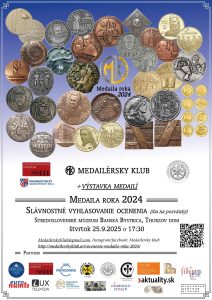
Tu si môžte pozrieť Powerpoint prezentáciu (13,5 MB):
The public premiere also featured the anthem of Medailérsky klub by Martin Zobek from Kremnica, the Tall Tunes project.
Title: “We forge eternity from metal.”
(3:07, mp3, 4,09 MB)
V kovovej hlbine iskra sa zrodí, v ruke majstra príbeh vychodí. Z bronzu i zlata, v rytme dávnych snov, vyrastá odkaz – večný ako kov.
Sláva vám, čo tváre dejín vryli, v kruhu kovu stopy duší skryli. Bratislava, srdce klubu nášho, medailérom svetlo talentu vášho. Z kovu večnosť kujeme, česť vám, majstri, v zlatej sláve!
Na ploche malej vesmír sa otvorí, hrdinstvo, múdrosť – v kruhu, čo horí. Každá medaila – spev aj čin, pieseň národa nezanikne s tým.
Sláva vám, čo tváre dejín vryli, v kruhu kovu stopy duší skryli. Bratislava, srdce klubu nášho, medailérom svetlo talentu vášho. Z kovu večnosť kujeme, česť vám, majstri, v zlatej sláve!
Nech znie váš príbeh naprieč rokmi, ako razba, čo pretrvá storočia. Umenie tiché, no silné ako hromy –klub medailérov, naša pýcha.
Z kovu večnosť kujeme, každú iskru vážime. Sláva žije v reliéfoch, V medailérskych snoch.
© Martin Zobek, Kremnica – Tall Tunes (Spotify, Youtube)
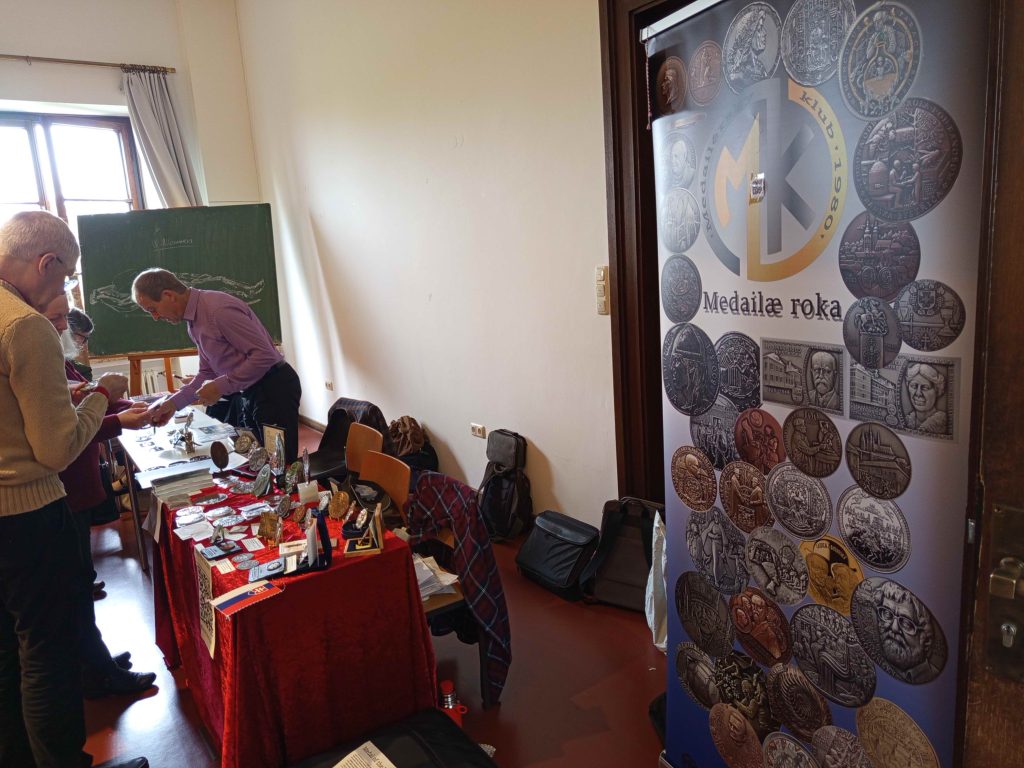
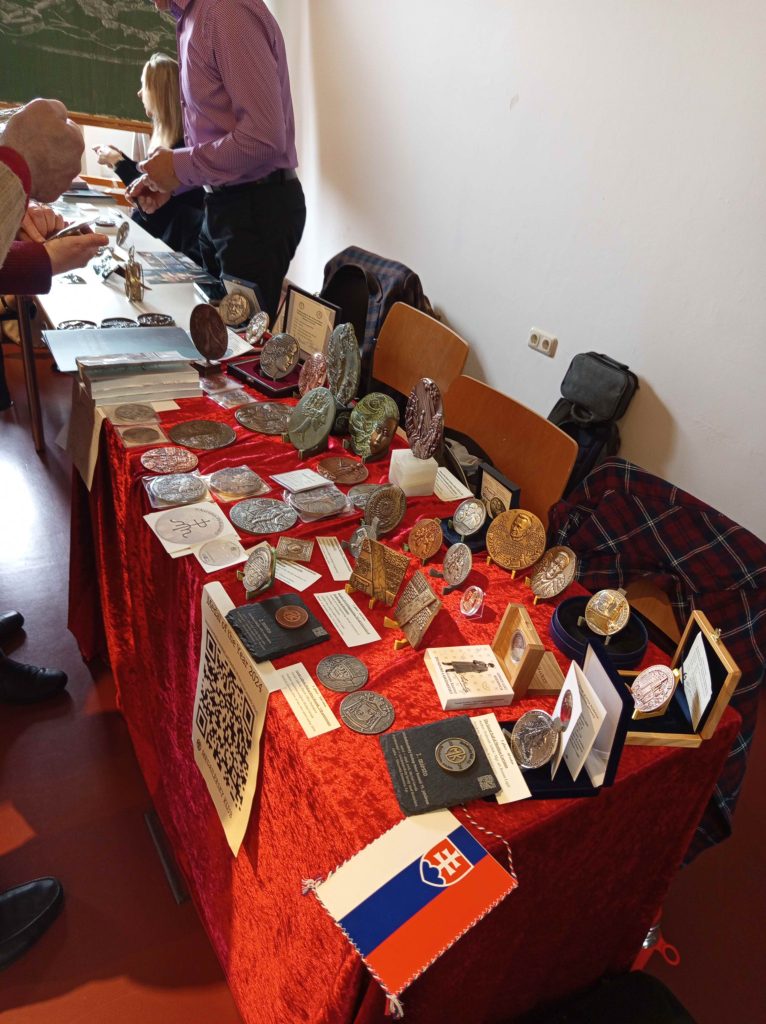
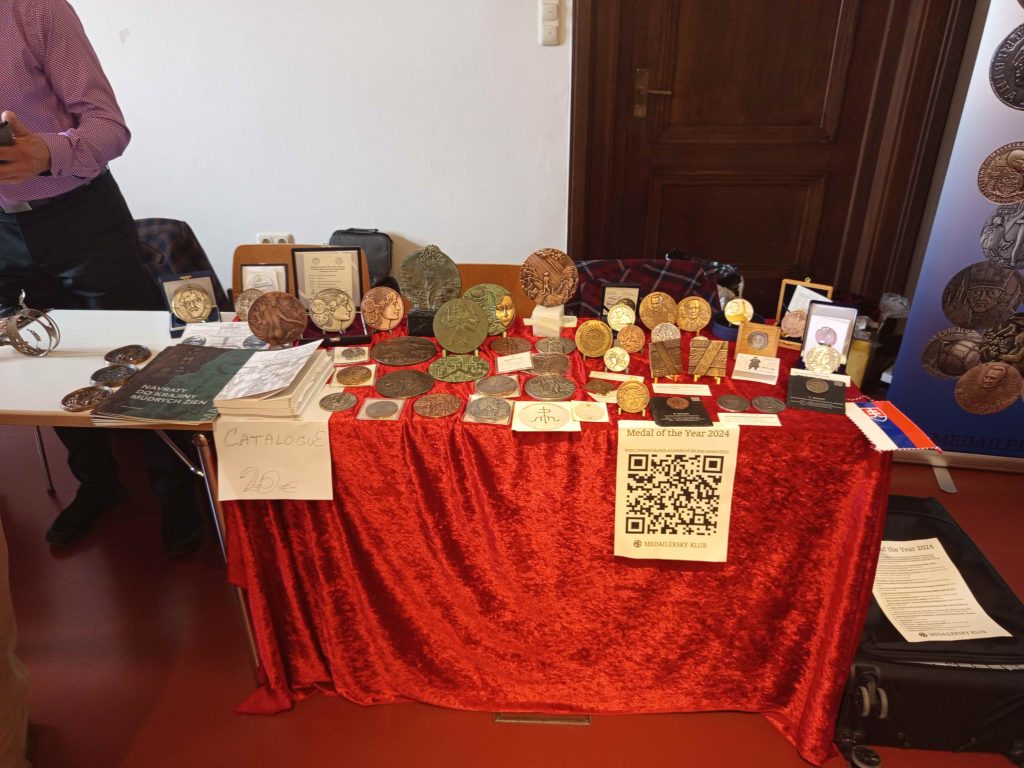
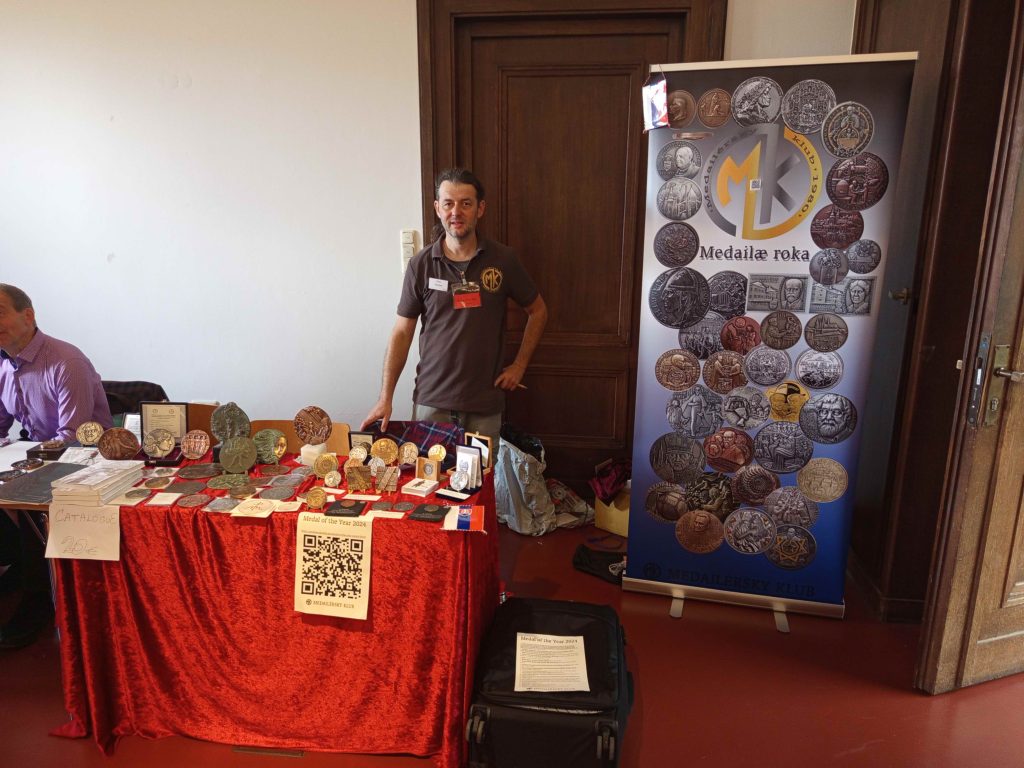
- September 5-6, 2025 – Presentation of nominated medals in Prague at the collector fair Sběratel
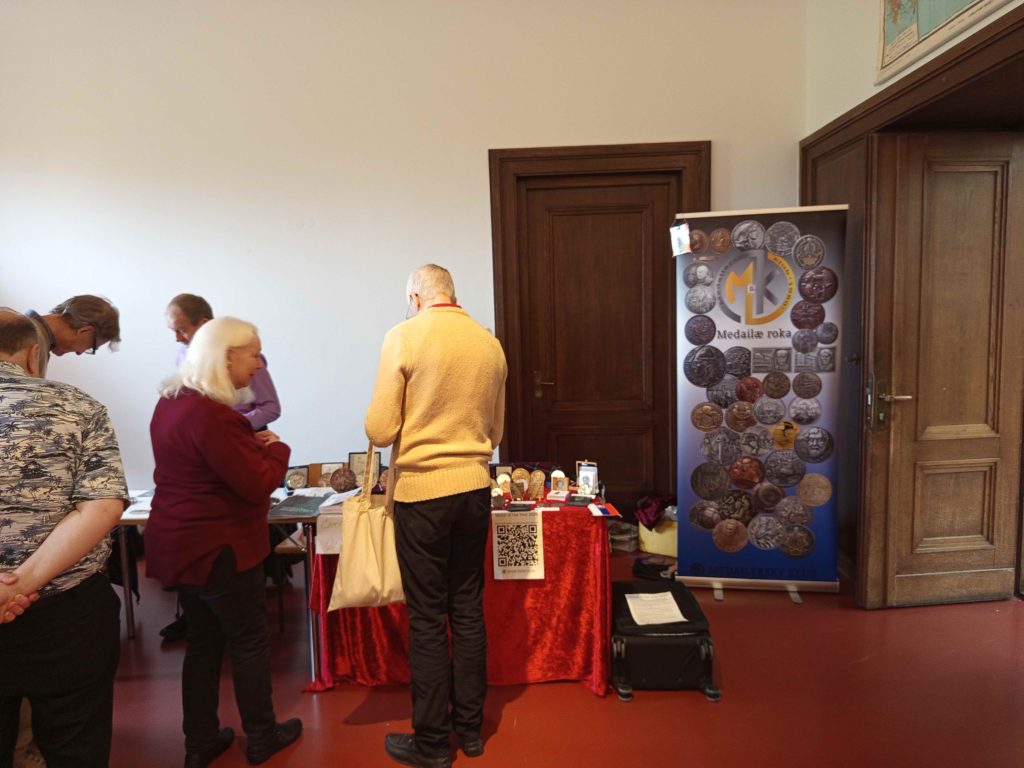
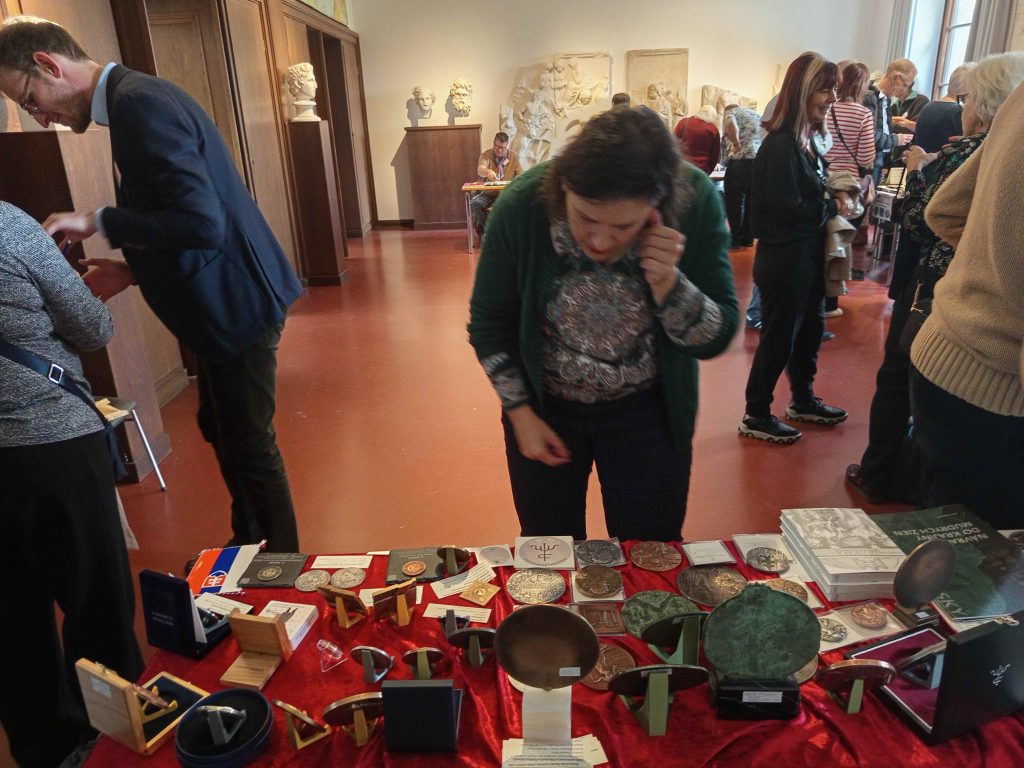
On Friday and Saturday, September 5-6, 2025, we had the opportunity to present the medals nominated for the 2024 Medal of the Year award at the collector fair Sběratel in Prague, the largest collector’s fair in the Central and Eastern Europe, for which we would like to thank the organizer, Mr. Jindřich Jirásek, director of the event.
In addition to the standard option of online voting in the poll, visitors to the fair were also able to vote using ballot papers, where they could see the medals in person, talk about them, and ask any questions they had. On both days of the fair, there was considerable interest in the Slovak medals among the Czech public, for which we are very grateful!!
- 18.10.2025 – Presentation of nominated medals in Munich at the Medal Fair as part of the World Medal Congress and Exhibition of Modern Art Medals XXXVIII FIDEM Munich 2025 (detailed report soon)
-> Invitation for World Medal Congress and Exhibition of Modern Art Medals XXXVIII FIDEM Munich 2025
A total of approximately 500 medals from 28 countries have been submitted (14 medals from Slovakia, 4 from Czechia).
The biennial international medal congress, combined with an exhibition and the FIDEM Grand Prix awards ceremony, will take place in Munich, Bavaria, in 2025 – Congress: October 15-18, 2025, at the Zentralinstitut für Kunstgeschichte (Central Institute for Art History) and exhibition: October 15, 2025-January 16, 2026 at the Staatliche Antikensammlungen (State Antique Collection in Munich, home to the largest antique collections in Germany) – Königsplatz 1, 80333 München, Germany.
More info on the FIDEM website
At the same time, the Bavarian Numismatic Society’s exhibition “Mit Sammleraugen: Die Schönste Medaille!” (Through the Eyes of a Collector: The Most Beautiful Medal!) is running until May 17, 2026 at the Staatliche Münzsammlung München (State Coin Collection, Munich, over 300,000 collectible coins, medals, and banknotes – Königsplatz 1, 80333 Munich, Germany), where 75 selected medals from antiquity to the present day from various countries are on display. It can be visited together with the permanent exhibition of the world’s most important medals since the Renaissance.
MEDIA COVERAGE
(sberatel.info, 12.11.2025) – NEWS FROM THE WORLD OF COLLECTORS



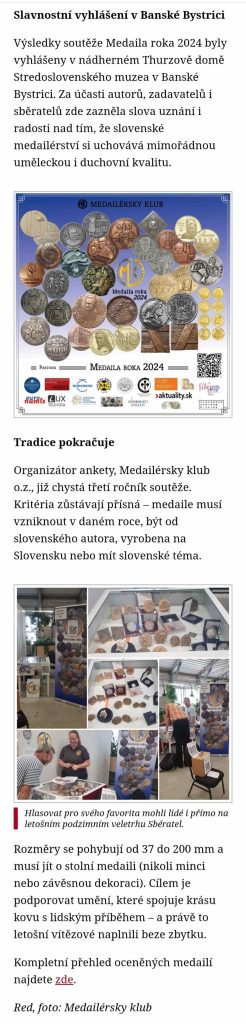
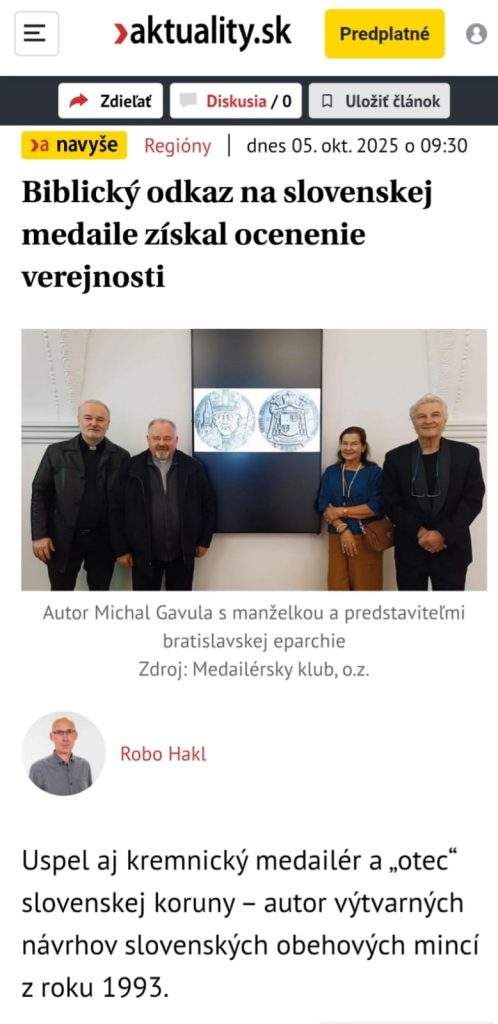
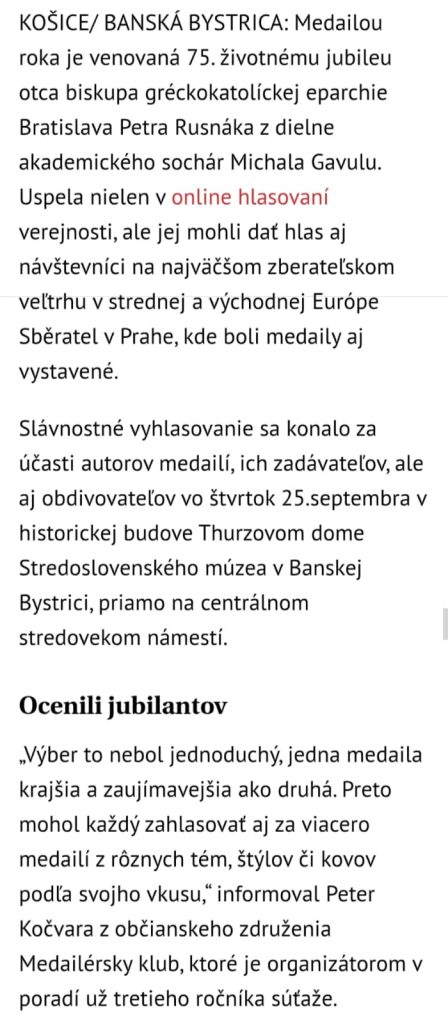
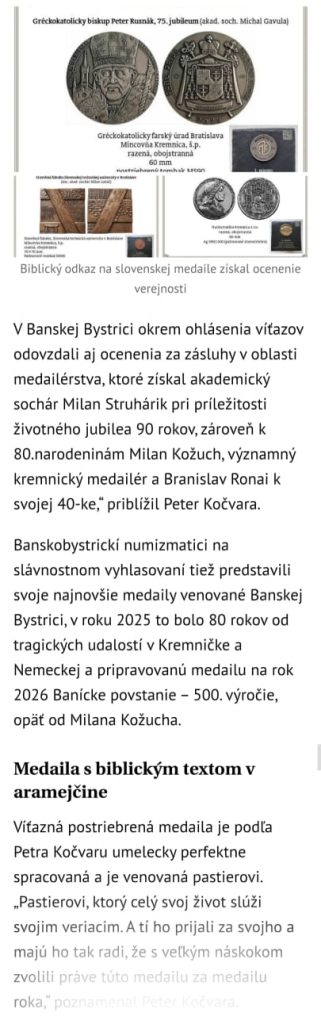
- Biblical reference on Slovak medal wins public award
(aktuality.sk, October 5, 2025)
-> aktuality.sk – the most widely read independent news website in Slovakia
- Christian TV Lux, program Doma je doma (At home is at home), topic: Art and Life
Guests: academic sculptor Michal Gavula (author of the winning medal Greek Catholic Bishop Peter Rusnák, 75th anniversary), Peter Kočvara (Medailérsky klub, o.z.)
(host Jana Trávničková (news director), camera Jaroslav Fraňo. Broadcast live on September 9, 2025, at 5:40 p.m., duration: 22:15, total length of the program 45:19, interview within the program 00:14-22:29)
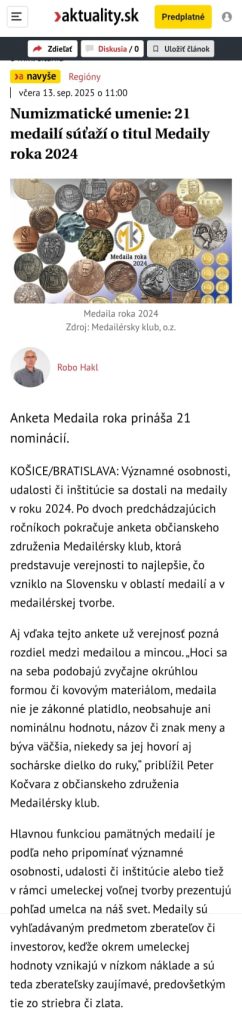
- Numismatic art: 21 medals compete for the title of Medal of the Year 2024
(aktuality.sk, September 13, 2025)
-> aktuality.sk – the most widely read independent news website in Slovakia
NOMINATIONS
– Sklabiňa, Declaration of the Restoration of the Czechoslovak Republic / SNP in Turiec, 80th anniversary of the armed uprising (Štefan Novotný)
– 100th anniversary of the death of Štefan Schwartz (Branislav Ronai / Miroslav Ronai)
– Home of the Slovak Teachers’ Choir (SZSU) / Ján Geryk (academic sculptor Prof. Fraňo Štefunko / academic sculptor Marián Polonský)
– Ignis (academic painter Daniel Brunovský)
– Martin Benka – Greats of Slovak Painting (Branislav Ronai)
– Greek Catholic Bishop Peter Rusnák, 75th anniversary (academic sculptor Michal Gavula)
– Faculty of Civil Engineering, Slovak University of Technology in Bratislava (doc. akad. sculptor Milan Lukáč)
– Slovak Society for Biochemistry and Molecular Biology (SSBMB), Medal of Honor (academic sculptor Miloš Vavro)
– The Great Seal of Matthias Corvinus (Drahomír Zobek / Mgr. art. Roman Lugár)
– Maria Theresa, series of four ducat medals (Branislav Ronai)
– Ancient Egypt, Nefertiti – Treasures of Ancient Civilizations VII. (academic sculptor Ľudmila Cvengrošová)
– 100th anniversary of the minting of the Czechoslovak 5-halier coin from 1924 (Mgr. art. Martin Sabol)
– 50th anniversary of organized numismatics in Humenné 1974-2024, Štefan Sciranka, (first) chairman of the numismatic club in Humenné (Mgr. art. Tomáš Tulis, Wiliam Schiffer)
– Gustáv Kazimír Zechenter Laskomerský – Personalities of Slovak Towns (Mgr. art. Martin Sabol)
– Jakob Bogdani (Marek Lukáč, Master of Arts)
– Ľudovít Štúr – Štúrovci (Mgr. art. Martin Sabol)
– Jozef Kroner – 100th anniversary of his birth (Mgr. art. Roman Lugár)
– A Pleasant Surprise (Mária Poldaufová)
– Footprint Under the Clouds (academic sculptor Alojz Drahoš, PhD.)
– Garden of Eden (Mgr. art. Miroslav Hric, ArtD.)
Nominations in detail
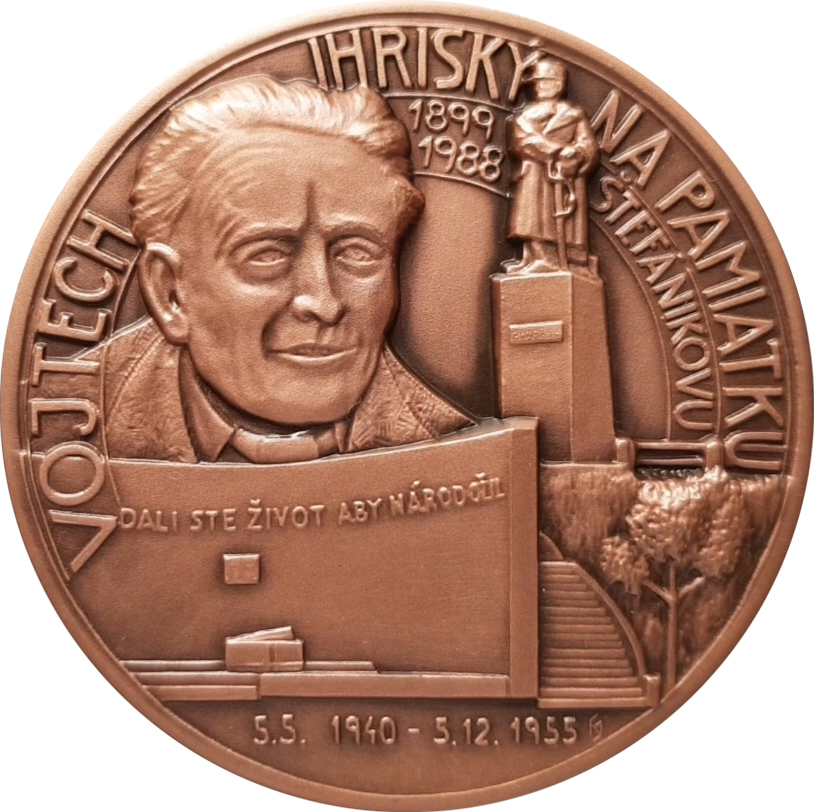
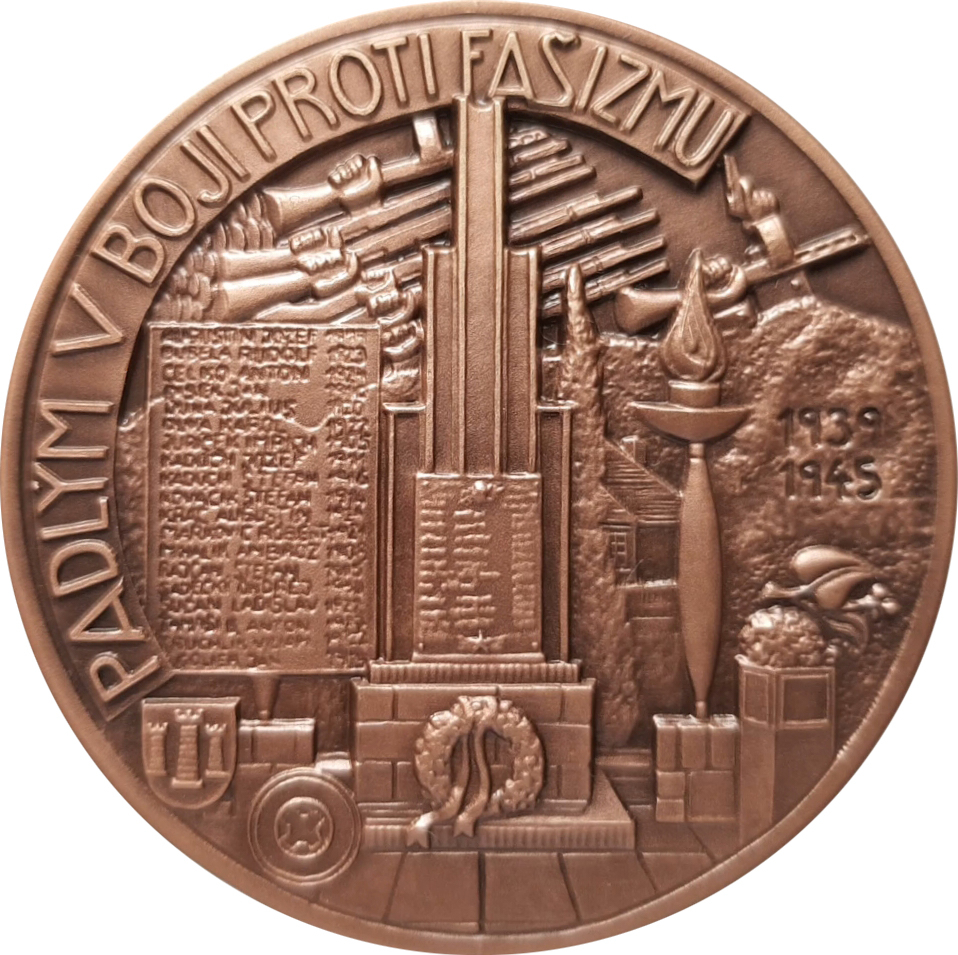
– Commemorative medal for the 50th anniversary of the founding of the Numismatic Society at the Slovak Academy of Sciences, Považská Bystrica branch – Vojtech Ihriský, Milan Rastislav Štefánik Memorial in Považská Bystrica / Memorial to those who fell in the fight against fascism (Mgr. Mário Slezák)
Slovak Numismatic Society at the Slovak Academy of Sciences – branch Považská Bystrica
Castax Slovakia, s.r.o., Trenčín
struck, two-sided
60 mm
silver Ag 999/1000 – 45 pcs, numbered, 129 g
copper Cu – 55 pcs, numbered;
selectively gilded silver Ag 999/1000 – EA (author’s edition), 9+1 pcs, numbered on the edge 1/10, 140 g
Medal commemorating the 50th anniversary of the founding of the Numismatic Society at the Slovak Academy of Sciences – Považská Bystrica branch (client), CASTAX SLOVAKIA s.r.o. (production), struck medal with a diameter of 60 mm, struck in silver with a purity of 999/1000, 45 pieces (numbered), weight 129 g and and in copper, patinated, 55 pieces (unnumbered). Author’s edition EA 9 pieces, diameter 60 mm, selectively gold plated silver with a purity of 999/1000 and a weight of 140 g. Numbering marked on the edge 1/9.
The inscription on the edge Slovak Numismatic Society at the Slovak Academy of Sciences – branch Považská Bystrica.
Concept:
The medal is dedicated to two different monuments that no longer exist in Považská Bystrica.
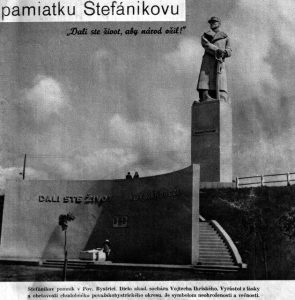
The obverse of the medal depicts a portrait of Vojtech Ihriský and a monument to General Milan Rastislav Štefánik.
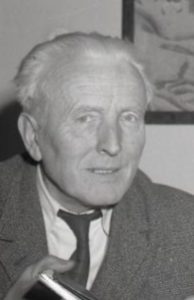
In the upper left half of the medal, the name of the monument’s creator, VOJTECH IHRISKÝ, is inscribed in a semicircle, along with the years of his birth (1899) and death (1988). On the right side is the inscription: IN MEMORY OF ŠTEFÁNIK. At the bottom of the medal is the date of the statue’s unveiling and the date of its removal (May 5, 1940 – December 5, 1955).
The statue without the pedestal measured 9 m, and together with the pedestal it was 18.65 m high. It was the largest statue in Slovakia and one of the largest statues in Europe. It weighed around 150 tons (of which the pedestal weighed 50 tons) and was made up of several pieces of sandstone joined together with concrete mortar, with a segmented inscription reading: YOU GAVE YOUR LIFE SO THAT THE NATION MIGHT LIVE (without a comma).
The author’s signature is located at the bottom of the obverse.
The idea to erect a monument to General Milan Rastislav Štefánik in Považská Bystrica was born in the 1930s. Academic sculptor Vojtech P. Ihriský learned of this and contacted the district chief at the time, offering his help in designing this magnificent work. In April 1935, he presented his design, which was accepted.
After February 1948, following the change in political circumstances, memory of Štefánik became undesirable, and various reasons for removing it were sought. The decision to demolish the monument was made in 1955. The reasons were primarily public and political, as well as unspecified security concerns. For example, due to complaints from the local flying club based in Orlovo, which was controlled by the communist party. Allegedly for the safety of aircraft landing and taking off from the nearby airport.
The removal of the statue had been planned for more than two years before its demolition. The content of some of the files literally defames the personality of M. R. Štefánik. Štefánik was described, for example, as: “…an enemy of the working people, who was a fierce enemy of communism and the Soviet Union and therefore must be removed…”.
When Vojtech Ihriský heard that they wanted to demolish the statue, he decided to dismantle it, transport it, and store it. This did not happen. Before his letter reached the authorities, the statue was demolished. This took place on December 5, 1955.Považská Bystrica thus lost a rarity that it could have been proud of to this day.
Today, a Slovak National Uprising (SNP) memorial stands on this site, which was again signed by V. P. Ihriský.
However, a smaller version of the head from this statue of M. R. Štefánik can still be found in Zvolenská Slatina today. The bronze bust was installed in 1939 in front of the building of the then town school, now the municipal office in Zvolenská Slatina, on the occasion of the 20th anniversary of Štefánik’s death. It remained in its original location until the early 1970s. Later, it was removed, and years later, people found it discarded in a local chicken coop. It was not until the early 1990s that it was renovated and placed in the hallway of the local elementary school. Since 2020, it has been back in its original location, and an epoxy cast of it has been made for the school.
This is all that remains of M. R. Štefánik and his statue in Považská Bystrica.
The reverse side of the medal depicts a memorial dedicated to the workers of Považské strojárne in Považská Bystrica, heroes who fell in battle at the end of World War II.
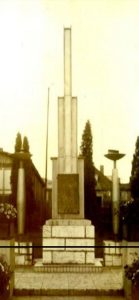
In the foreground to the left of the memorial is a plaque with the names of the fallen and their years of birth. On the right in the background is the silhouette of Manín Hill with the dates of World War II, 1939–1945.On the left side of the medal, there is a semicircular inscription TO THOSE WHO FELL IN THE FIGHT AGAINST FASCISM. Above the inscription is the coat of arms of the town of Považská Bystrica and the logo of Považské strojárne. Above the memorial in the background is a symbolic representation of the resistance against fascism in the form of rifles. This memorial was also removed around 2000.It was built in 1954 and stood in the park in front of the Community Center, and is now replaced by the Slovak National Uprising (SNP) memorial in the park near the Orlov Bridge.
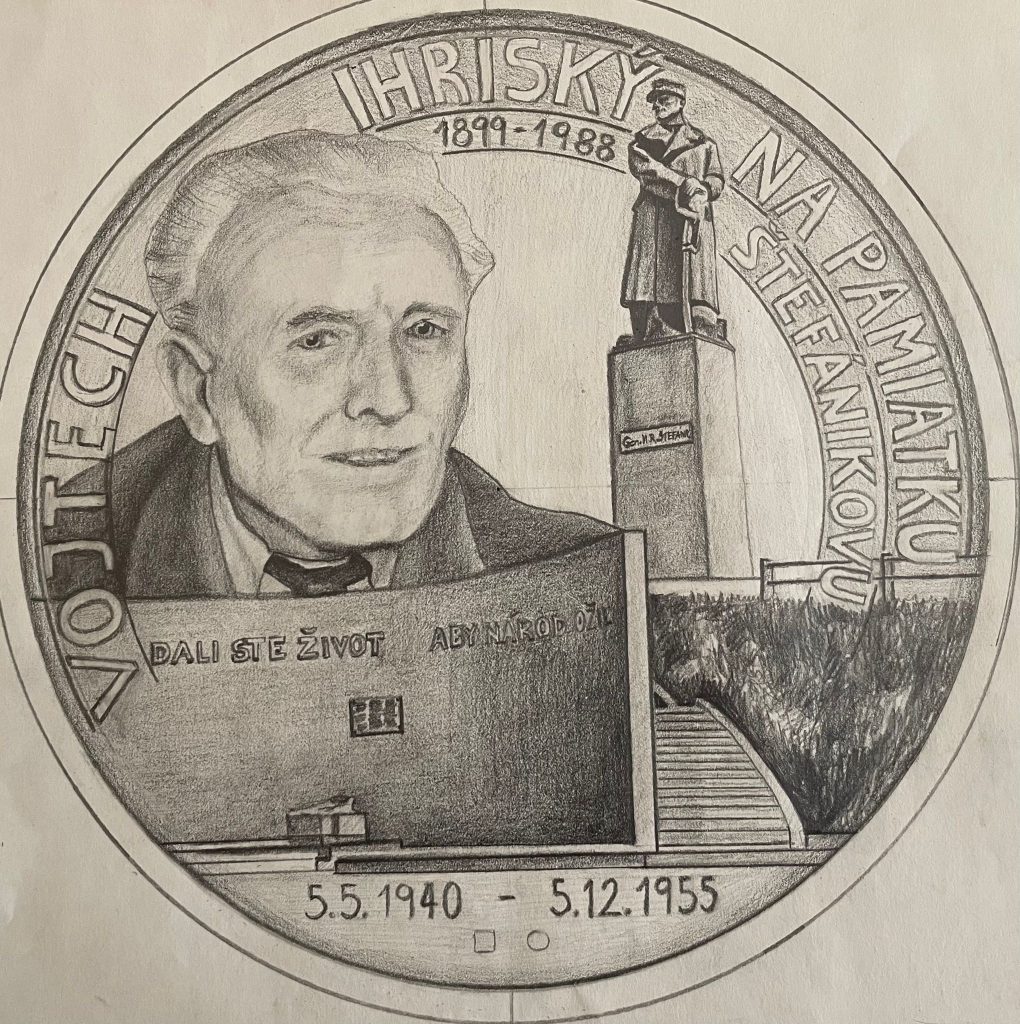
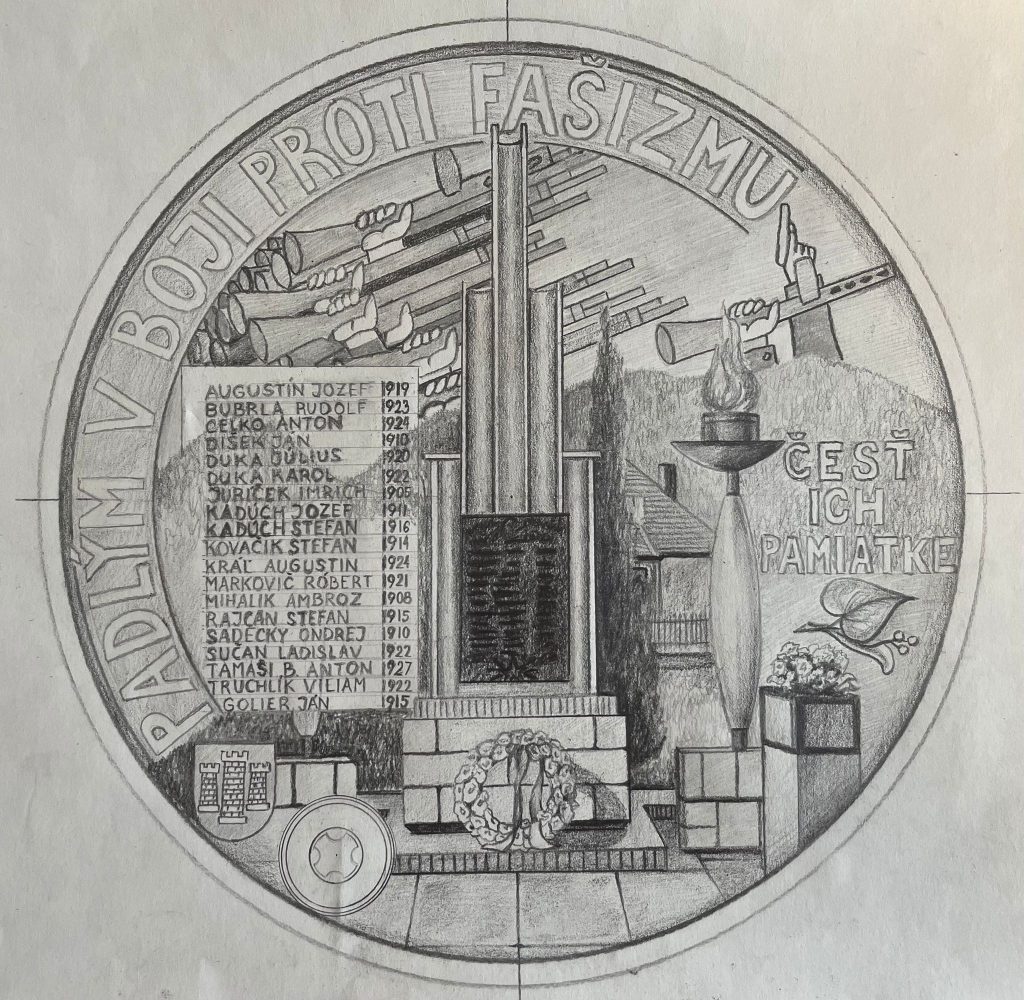
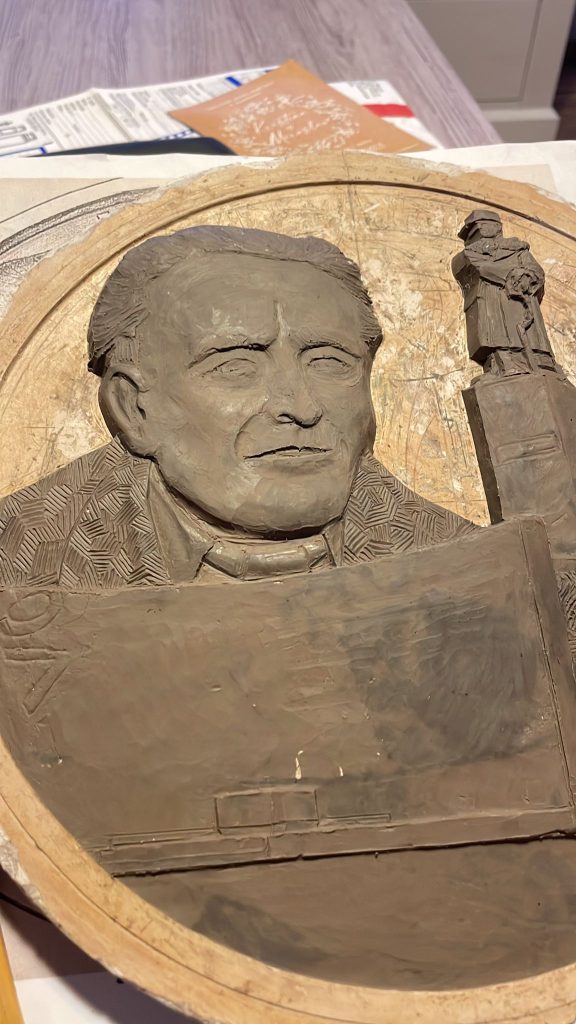
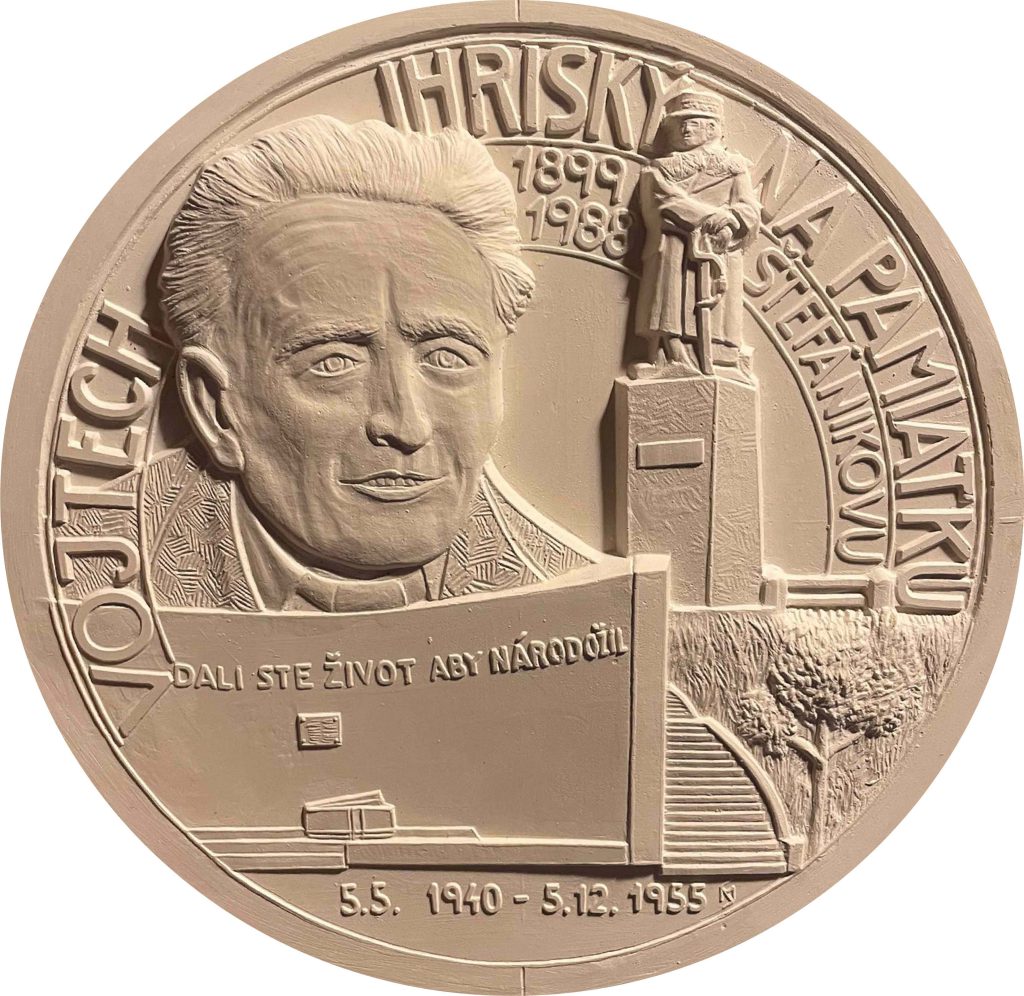
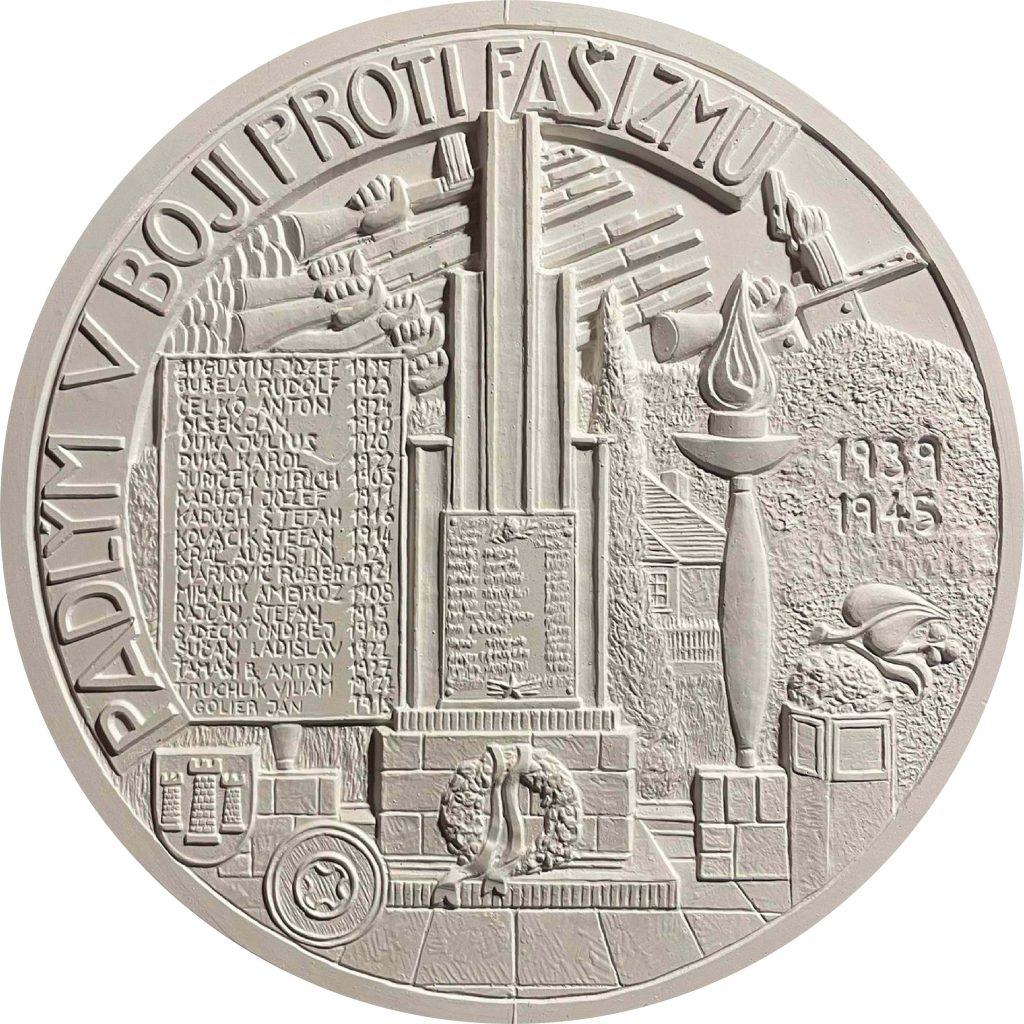
Photo: Peter Kočvara/Medailérsky klub (medal), internet (historical photo), Mário Slezák (model); text: Mário Slezák, Peter Kočvara
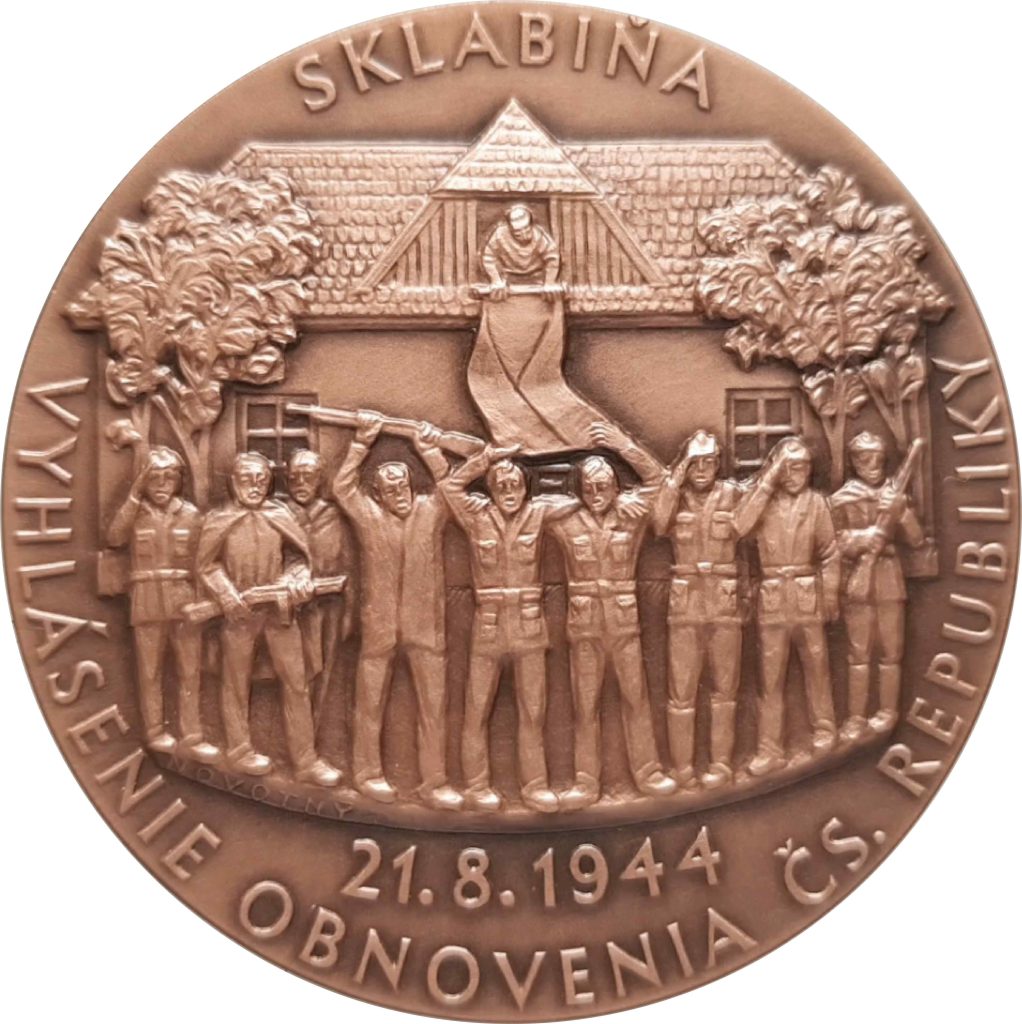
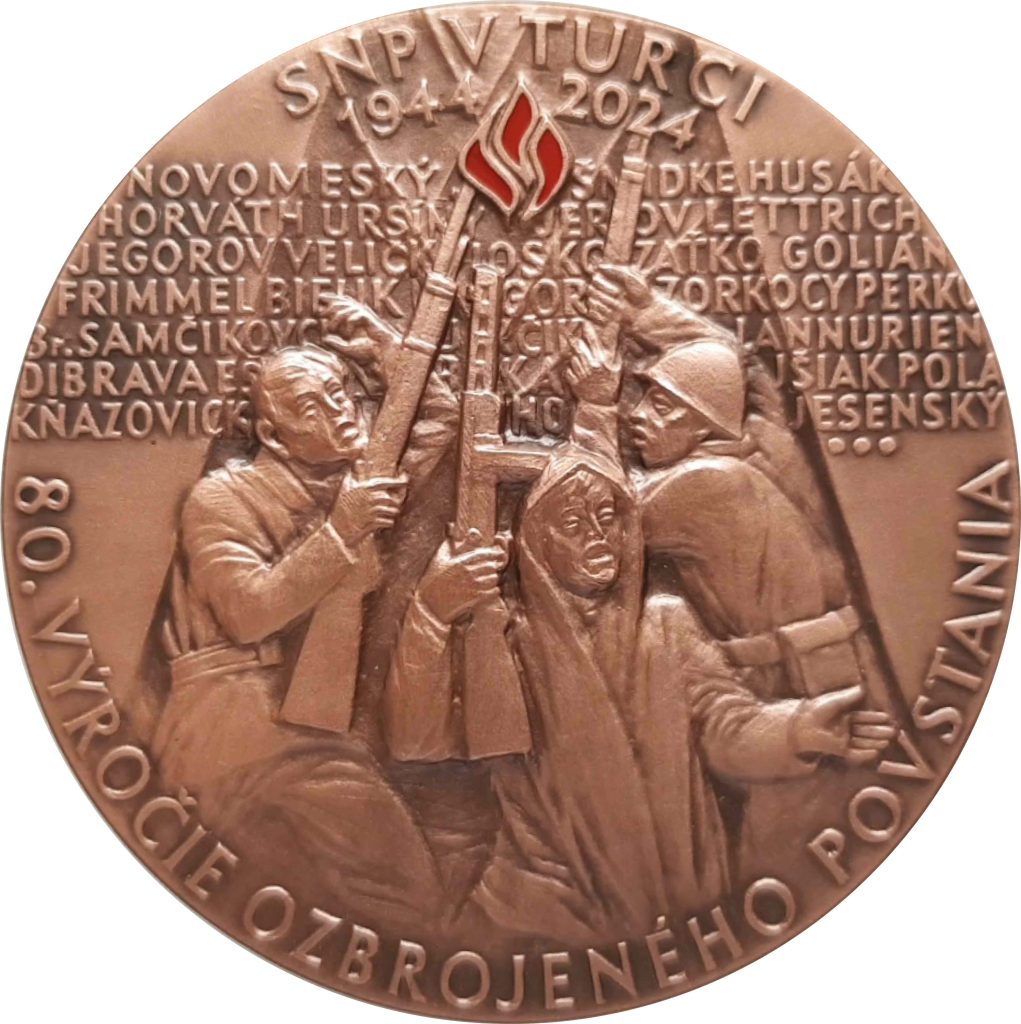
– Sklabiňa, Declaration of the Restoration of the Czechoslovak Republic / SNP in Turiec, 80th anniversary of the armed uprising (Štefan Novotný)
Slovak Numismatic Society at the Slovak Academy of Sciences – branch Martin
Castax Slovakia, s.r.o., Trenčín
struck, two-sided
60 mm
Silver Ag 999 (partly coloured), 100 g – 68 ks, numbered; copper Cu (partly coloured) – 85 ks, unnumbered
The central motif on the obverse of the medal in the upper part is a depiction of the Samčík brothers’ house in the village of Sklabiňa. The flag of the Czechoslovak Republic is displayed from the mansard roof of the house. In the center of the medal are depicted partisans from Velička’s unit, below which is the date 21.8.1944, when the restoration of the Czechoslovak Republic was solemnly proclaimed and the village of Sklabiňa was declared the first free village. These events are described around the edges of the medal.
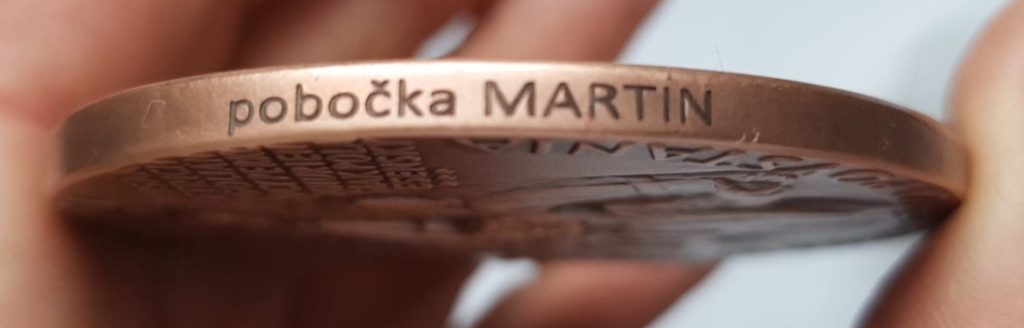
The reverse side of the medal is dominated by figures of partisans with weapons, above which are the names of people who played a significant role in the preparation, organization, and management of the Slovak National Uprising. The texts “SNP v Turci, 1944-2024” (Slovak National Uprising in Turiec, 1944-2024) and “80. výročie ozbrojeného povstania” (80th anniversary of the armed uprising) are highlighted around the circumference of the medal. The text “Slovenská numizmatická spoločnosť pri SAV, pobočka Martin, rok 2024” (Slovak Numismatic Society at the Slovak Academy of Sciences, Martin branch, 2024) is embossed on the edge of the medal.
Slovak National Uprising in Turiec
The Slovak National Uprising is a phenomenon in the modern history of Czechoslovakia and especially Slovakia. 80. The 80th anniversary of the armed resistance of the Slovak nation against the German occupiers is a time to reflect and remember those who laid down their lives in this struggle.
The Turiec region played an irreplaceable and significant role in the uprising, starting with the secret meeting in Čremošné in 1943 and the formation of the first partisan groups that year in Bystrička near Martin. There is no village in Turiec that was not involved in the uprising in August 1944.However, the village of Sklabiňa and other villages bearing the proud name “Partisan Village” have a special place here.
The main headquarters of the SNP in Turiec and the headquarters of the partisan brigades were concentrated in Sklabiňa:
the 1st Czechoslovak Brigade of M. R. Štefánik, the Jegorov Partisan Brigade, the 1st Czechoslovak Brigade of J. V. Stalin,
the 2nd Czechoslovak Brigade of M. R. Štefánik, and other partisan units.
One event that is less well known but significant nonetheless took place on August 21, 1944, eight days before the uprising began on August 29. On this day, Velička’s partisans entered Sklabiňa and the Czechoslovak flag was ceremoniously raised on the attic of the Samčík brothers’ house. The soldiers, residents, and partisans of various nationalities who were present listened to the ceremonial speech of the Revolutionary National Committee in Sklabiňa, which declared the restoration of the Czechoslovak Republic and Sklabiňa as the first free municipality. It was the first time in five years that the Czechoslovak flag had been publicly displayed.
Several military units distinguished themselves in the fighting against the German fascists – members of the Assault Vehicle Regiment from Martin, partisan and gendarmerie units, and especially the inhabitants of the towns and villages of Turiec. The list of fighting and fallen inhabitants of Turiec is very long. This medal from the Slovak Numismatic Society – Martin branch is dedicated to all of them as a sign of respect and gratitude.
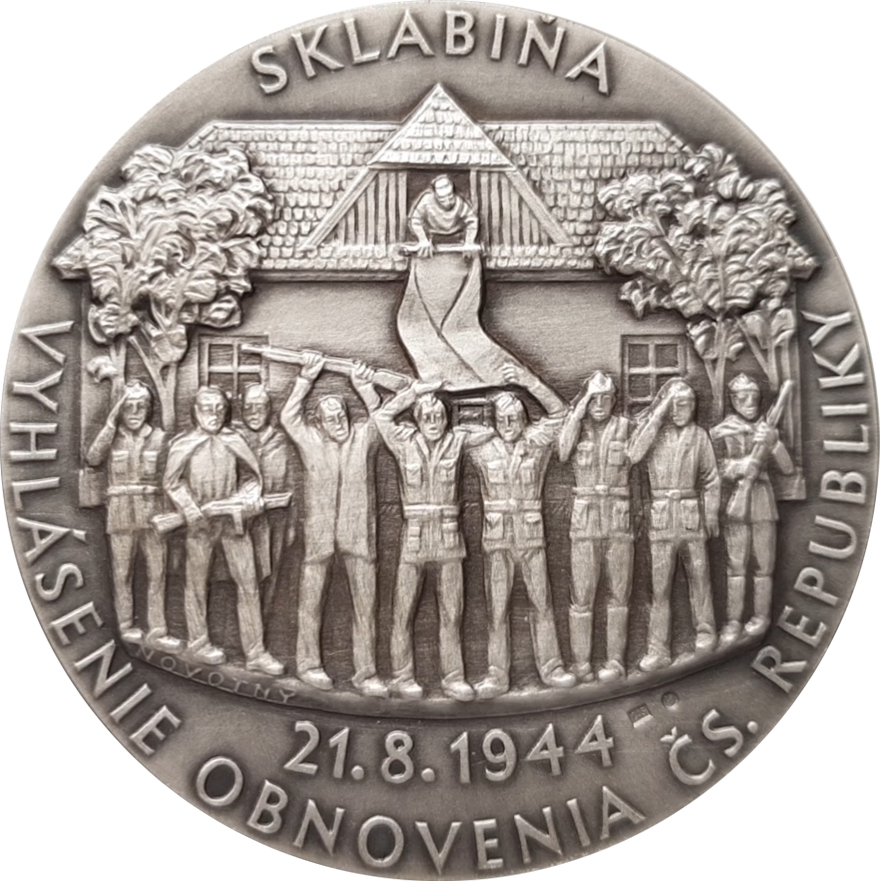
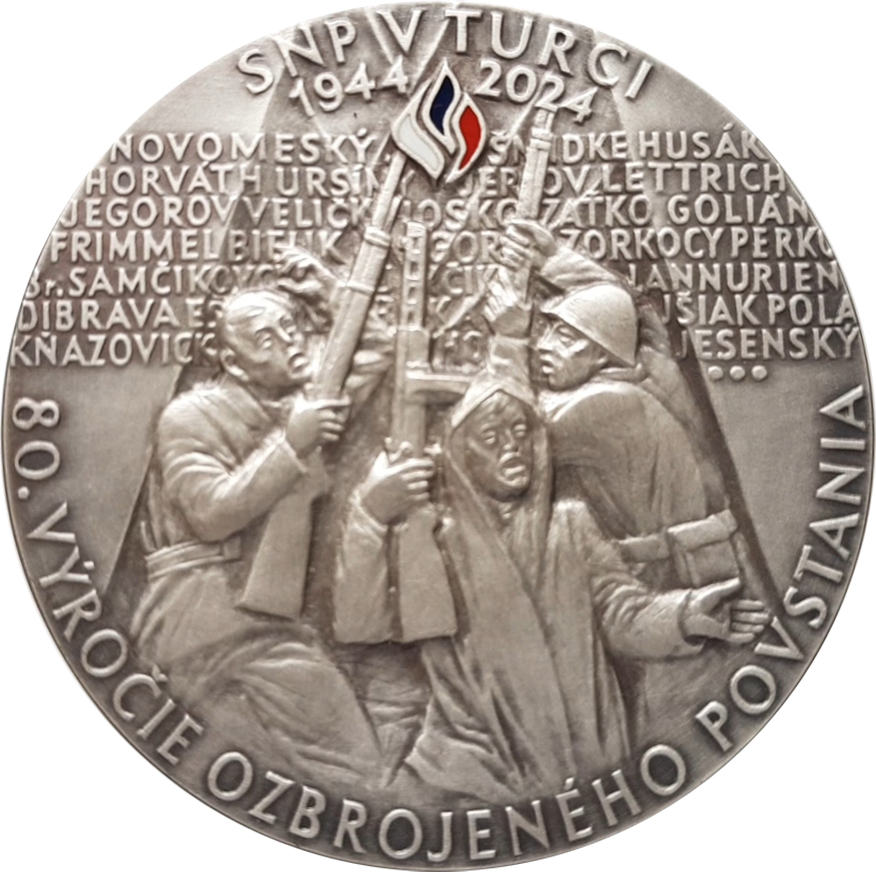
Photo: Peter Kočvara/Medailérsky klub; text: Ing. Vladimír Bullo (branch chairman), Ing. František Kelemen
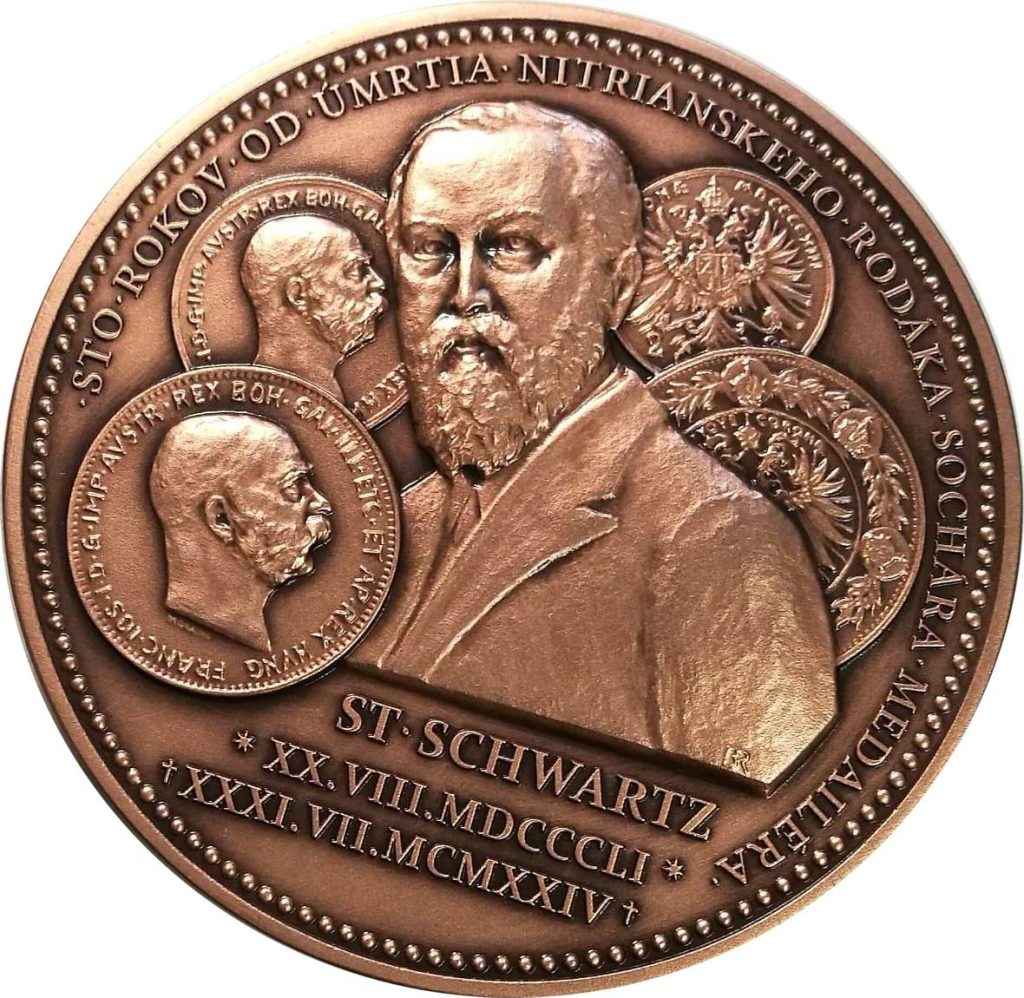
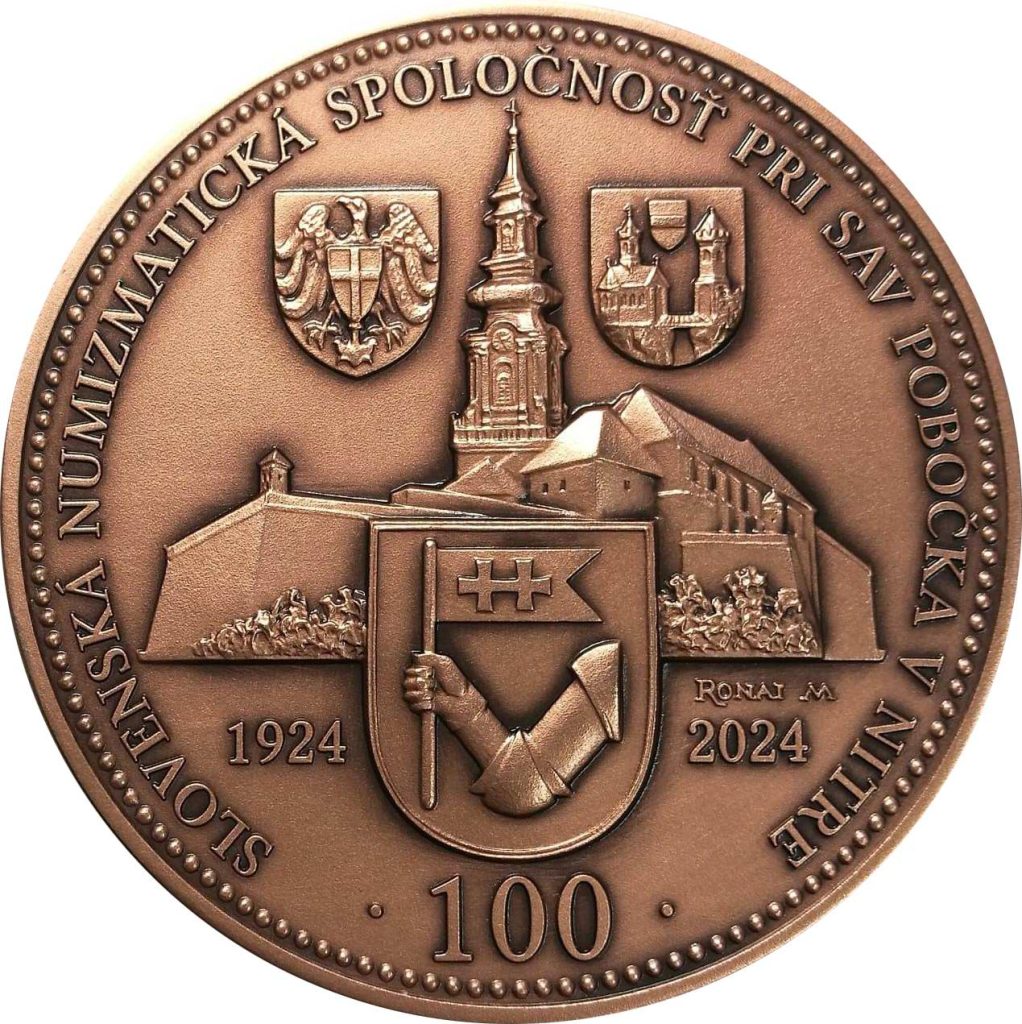
– 100th anniversary of the death of Štefan Schwartz (Branislav Ronai / Miroslav Ronai)
Slovak Numismatic Society at the Slovak Academy of Sciences – branch Nitra
Castax Slovakia, s.r.o., Trenčín
struck, two-sided
60 mm
silver Ag 999, 100 g – 60 pcs, numbered, copper Cu – 60 pcs, unnumbered
Author of the obverse Branislav Ronai (1985), author of the reverse Miroslav Ronai (1957) – father and son
Numismatists in Nitra commemorated the 100th anniversary of the death of Štefan Schwartz, a native of Nitra, who designed coins and medals in Vienna and participated in the creation of Austrian silver coins of 1 koruna, 5 crowns, as well as gold 10, 20, and 100 crowns featuring Emperor Franz Joseph I. The obverse side of the medal, depicting a portrait of Schwartz and the aforementioned silver 5-koruna and gold 20-koruna coins, was designed by Branislav Ronai (1985), a medallist at the Kremnica Mint, while the reverse side, featuring Nitra Castle and the city’s coat of arms, was designed by his father Miroslav Ronai (1957), a well known Kremnica coin and medal designer.
Photo and text: Peter Kočvara/Medailérsky klub
– Home of the Slovak Teachers’ Choir (SZSU) / Ján Geryk (academic sculptor Prof. Fraňo Štefunko / academic sculptor Marián Polonský)
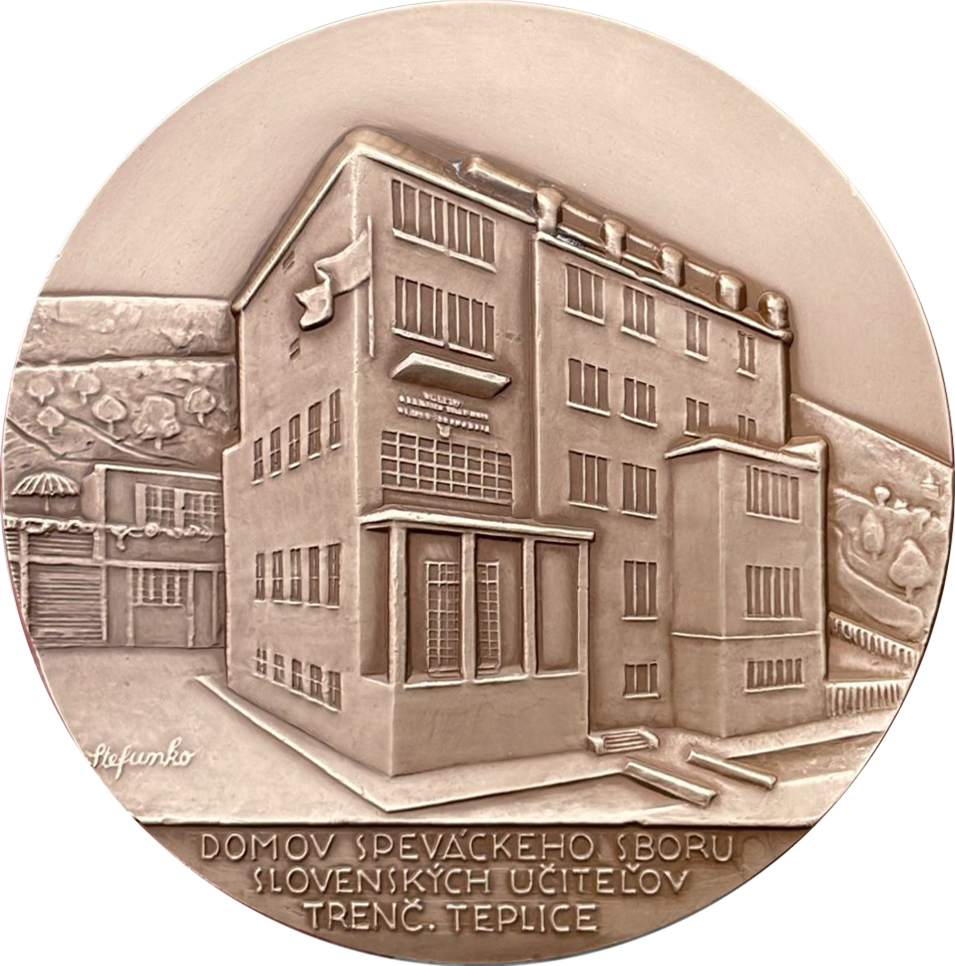
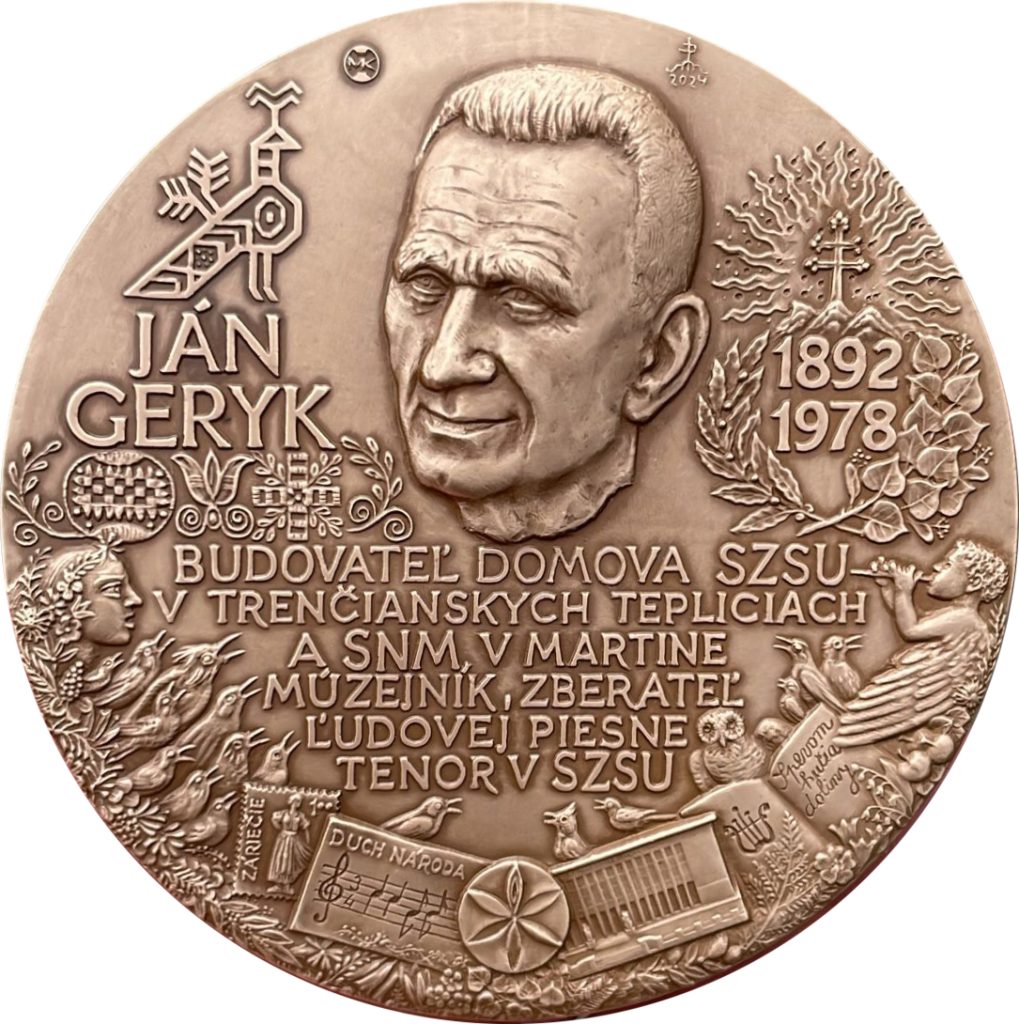
Spevácky zbor slovenských učiteľov (Slovak Teachers’ Choir)
Struck by: Mincovňa Kremnica (Kremnica Mint), state-owned enterprise, 2025
Author: academic sculptor prof. Fraňo Štefunko, 1933 / academic sculptor Marián Polonský, 2024
Struck, two-sided
Material: patinated tombac MS90
Diamater: 90 mm
Weight: ~460 g (tombac)
Mintage: regular edition 150 pcs, numbered
Author’s edition EA, numbered and marked with the author’s hallmarks on the edge – copper Cu – 10 pcs (~460 g); silver-plated patinated tombac MS90 – 10 pcs (~460 g); patinated silver Ag 999/1000 – 3 pcs (~570 g).
The author of the obverse is academic sculptor Prof. Fraňo Štefunko (1903-1974). In 1933, the 30-year-old Fraňo Štefunko created this unique work for the newly built Home of the Slovak Teachers’ Choir – SSSU (note: the name used at the time, instead of today’s zbor, the term sbor was used until the 1968 Codification of Standard Slovak).
The year 1933 is linked to the preparation of the issue of a badge for the opening of the SZSU Home in Trenčianske Teplice. This is one of the first medal works by sculptor and medallist Fraňo Štefunko, who created a model of a round badge. The badge was not minted for unknown reasons. The Kremnica Mint has preserved data on the production of the die with a note that the badge was not minted. A plaster model with a diameter of 35 cm has been preserved at the SZSU Home. The model shows a detailed depiction of the building with the national flag flying in the left corner and the entire scenery in which it is built in the background. The author’s signature, Štefunko, is located at the bottom left. At the bottom, separated from the upper part with the building by a plastic line, there is a three-line inscription DOMOV SPEVÁCKEHO SBORU SLOVENSKÝCH UČITEĽOV TRENČ. TEPLICE (note: instead of today’s zbor, the term sbor was used untill the 1968 Codification of Standard Slovak).
In 2022, a reproduction of the plaster model was made and handed over to the Kremnica Mint for further processing into a unique medal, which took over 92 years to create and combines the obverse and reverse sides of two talented academics (teacher and student), academic sculptors and medallists Fraňo Štefunko and Marián Polonský.
-> The model of the obverse was discovered during the creation of a publication commemorating the 100th anniversary of the Home in the archives of the Slovak Teachers’ Choir by Ivan Šóš, archive administrator and advertising manager of the SZSU, based on clues from former Kremnica Mint archivist Peter Zoričák from the so-called Háma card index of the mint archive, when he was doing research for the publication. It was Ivan Šóš who had merit in the issuance of the medal after more than 90 years, supplemented by a reverse side by master Polonský. The medal was released together with the aforementioned epic publication Journey through the demanding, colorful, and turbulent life of the Slovak Teachers’ Choir Home 1933-2024 (Putovanie náročným, pestrým a pohnutým životom Domova Speváckeho zboru slovenských učiteľov 1933-2024), on which he worked for a good 10 years.
(A4, 212 pages, available also in PDF (16,8 MB))
The reverse side of the medal for the Slovak Teachers’ Choir Home was created in the studio of master Marián Polonský over a period of three years. The reverse side of the medal features numerous details related to Ján Geryk, the initiator of the construction of the SZSU Home, whose portrait dominates the reverse. In the center of the medal field, below the portrait, there is a six-line text: BUILDER OF THE SZSU HOME IN TRENČIANSKE TEPLICE AND SNM /Slovak National Museum/ IN MARTIN; MUSEUM CURATOR; COLLECTOR OF FOLK SONGS; TENOR IN SZSU. To the left of the portrait is the name JÁN GERYK, above which proudly stands a motif from a folk costume – a bird – symbolizing singing.
Under the name is a motif of an ornament from the folk costume of his native village of Záriečie. To the right of the portrait are the dates of his birth in 1892 and death in 1978. The laurel and linden wreath symbolizes gratitude for Geryk’s active life. Above the dates, bathed in sunlight, a folk-style double cross, symbolizing Slovakia, is placed on a triple hill (with relatively easily identifiable mountains). In the roundel of the lower half of the medal, there is a garland from which symbols of his lifelong activities emerge. In the center is a rose – a symbol of museology, created by relief and various intertwining petals. To the right of the rose is the Slovak National Museum building in Martin, which is an exact reproduction of another medal by Fraňo Štefunko from 1933. This brings the obverse and reverse into harmony, and thus Fraňo Štefunko is present twice on this medal. Further to the right is an open book – a songbook with the text of one of Geryk’s song collections, “Spevom hučte, doliny” (Sing, Valleys).
Above the book is an owl, which refers to his original profession as a teacher, and a textbook (a collection of folk songs) that is still used in schools today. Next to the collection of songs is a boy – an angel playing a whistle. To the left of the museum rosette is a reminder of Geryk’s activity in the Slovak Teachers’ Choir with the beginning of the musical notation (for tenor) of the musical symbol of the SZSU “The spirit of the nation lives in song“.
The medal also commemorates Geryk’s passion for philately, which focused on traditional costumes and folk symbols. The stamp depicts a girl named Helenka, whose grandparents, the Gajdošíkovci family, come from Záriečie, the birthplace of Ján Geryk, dressed in a typical Záriečie costume.
Medaila si pripomína aj Gerykovu filatelistickú vášeň, ktorá bola zameraná na kroje a ľudové symboly. Na známke je zobrazená dievčina Helenka, ktorej starí rodičia Gajdošíkovci pochádzajú zo Záriečia, rodiska Jána Geryka, oblečená v typickom Záriečskom kroji.
The stamp has a value of 100 and is humorously issued in the “republic” of Záriečie.
This is followed by a bird concert, joined by the singing of a girl whose wreath ends the left edge of the garland. The entire lower arc of the medal creates a unique concert, joined by the voices and instruments of all participants. This sound painting of the medal is audible to all perceptive eyes and ears. The garland consists of many plants and flowers from the birthplace of Ján Geryk, where apples are depicted under the wings of an angel as a symbol of the fertile fruit-growing region. Geryk also devoted great attention to the collection of medicinal plants and the description of their healing properties – a field of study he published in 1922.
The mark of the Kremnica Mintis located above the portrait on the left, and on the right is the signature of the author Marián Polonský and date 2024.
The edge of the medal bears the inscriptions: “© SPEVÁCKY ZBOR SLOVENSKÝCH UČITEĽOV” (Slovak Teachers’ Choir) and “MEDAILÉRSKY KLUB” (Medal Club), a star in the form of a rose separated from the inscription “SLOVENSKÁ REPUBLIKA” (Slovak Republic) and the numbering of 150 copies minted in tombac.
https://medailerskyklub.art/medaila-domov-szsu/
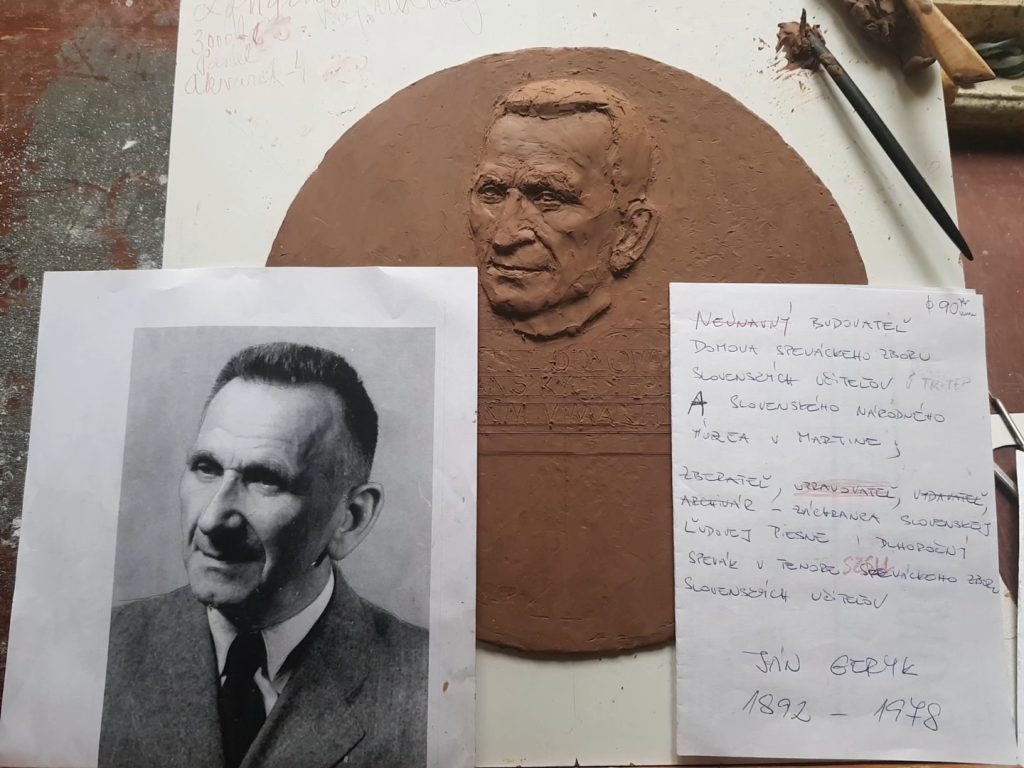
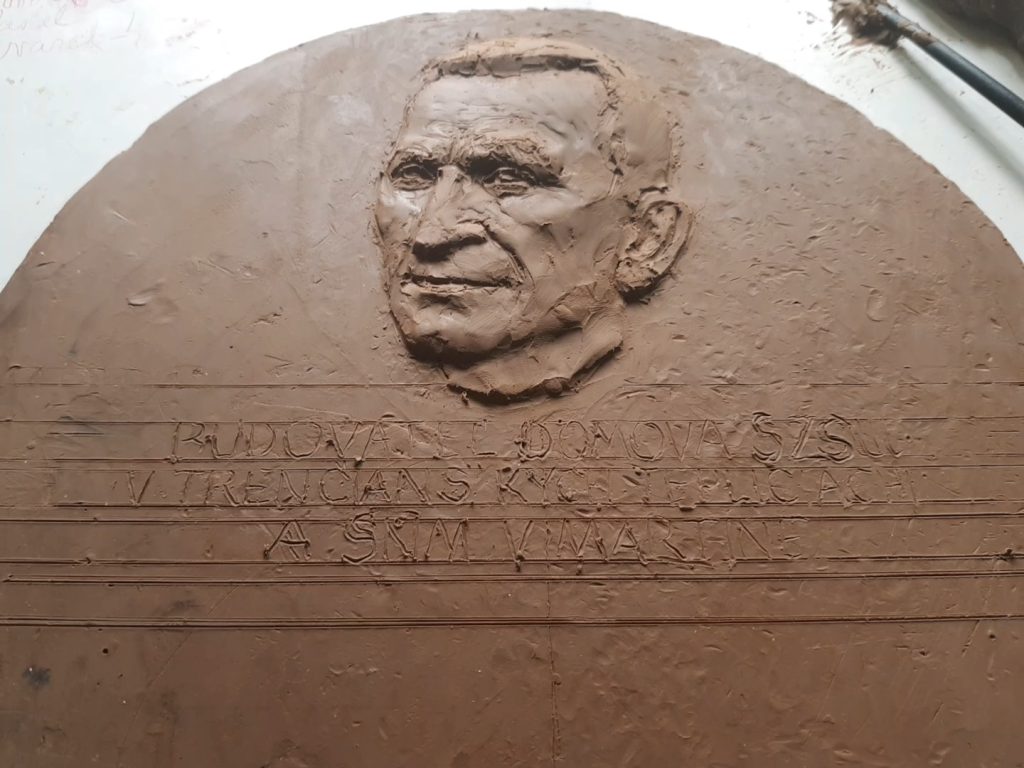
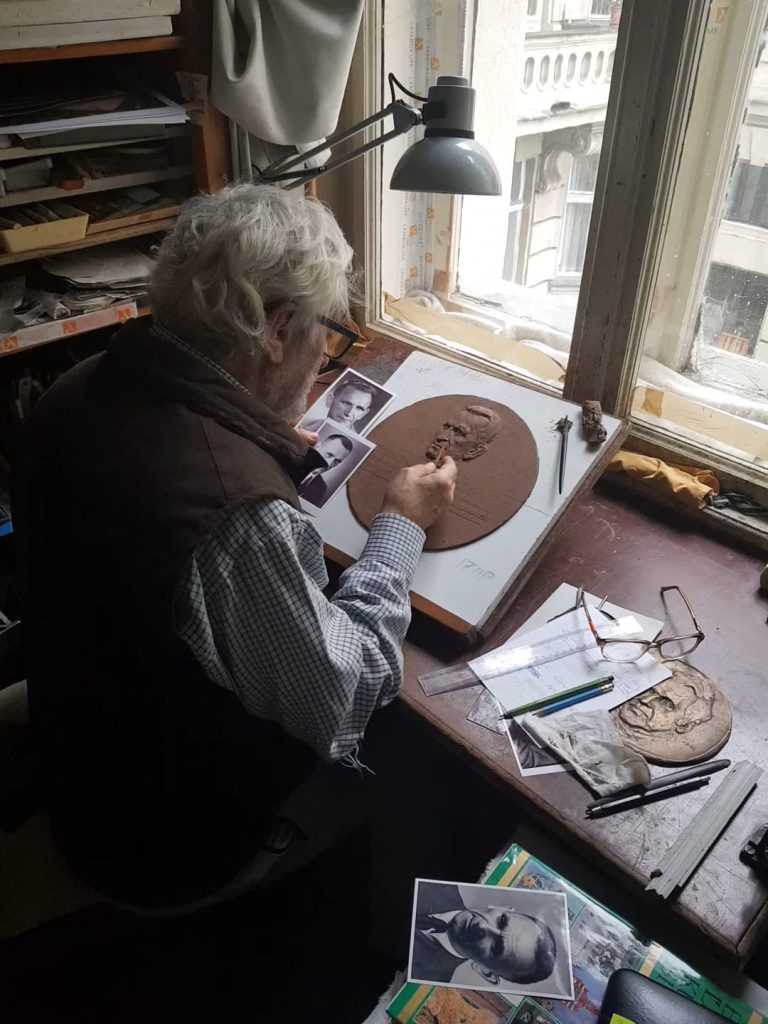
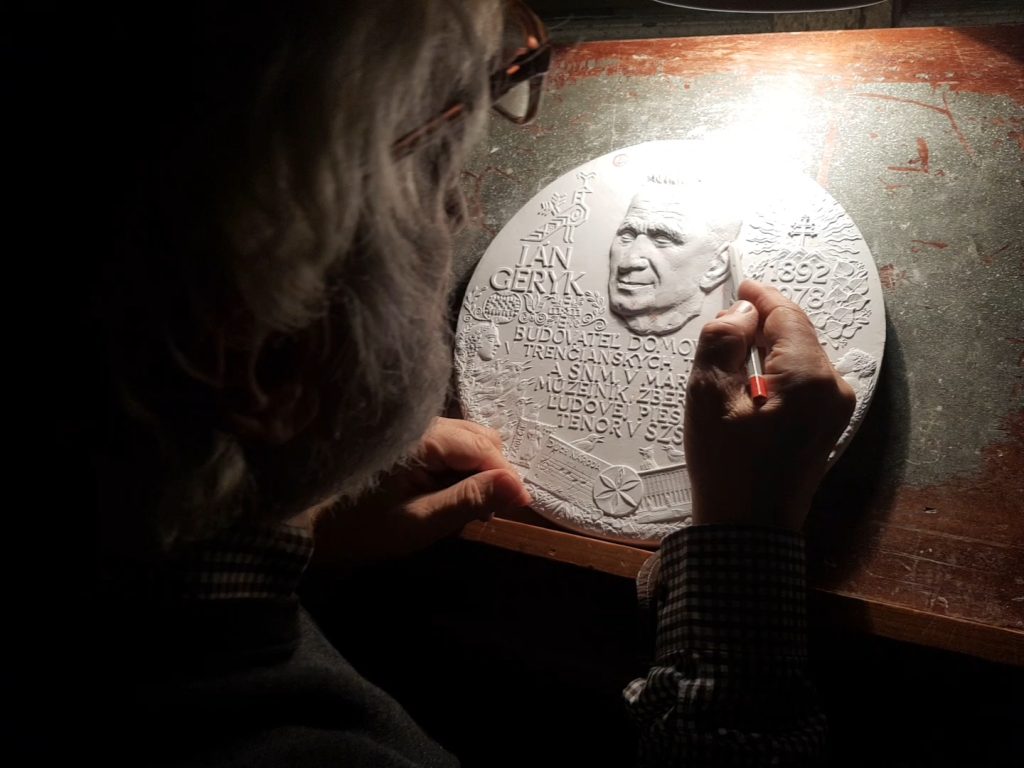
Photo: Peter Kočvara/Medailérsky klub
– Ignis (academic painter Daniel Brunovský)
cast bronze ~90-93 mm, cast silver ~60 mm – limit max. 20 pcs, numbered
-> video of the medal Ignis on Instagram
Medal from the cycle Elements (Aqua, Ignis, Terra).
Medal Aqua attented Medal of the Year 2024.
The Terra medal attented for Slovakia to the World Medal Congress and Exhibition of Modern Art Medals XXXVIII FIDEM Munich 2025.
Photo: Peter Kočvara/Medailérsky klub
– Martin Benka – Greats of Slovak Painting (Branislav Ronai)
Kremnica Mint, state-owned enterprise
struck, two-sided
80 mm
patinated tombac MS90
Mintage: regular edition – no limit; author’s edition EA – 5 pcs, numbered, with signature of the author
Weight: 306,7 g
https://www.mint.sk/eshop/mosadzna-medaila-velikani-slovenskeho-maliarstva-martin-benka
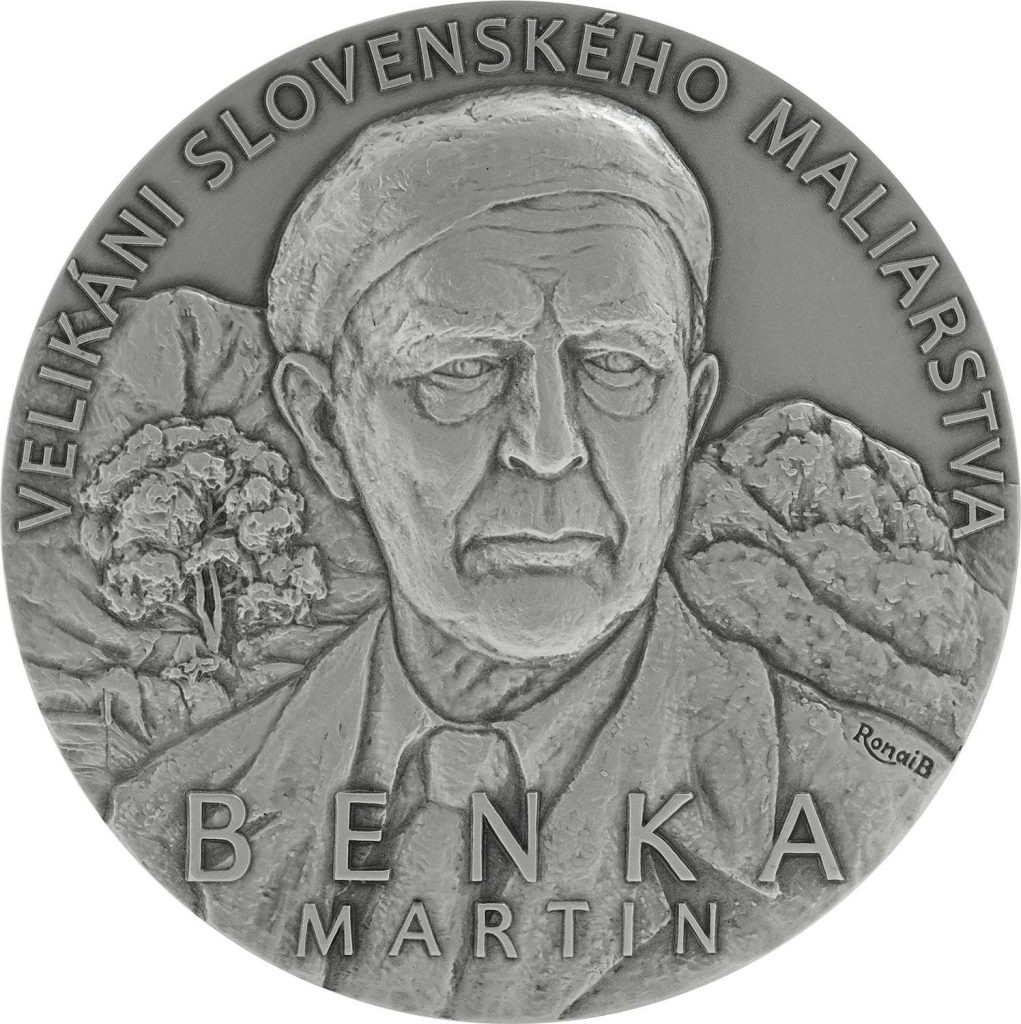
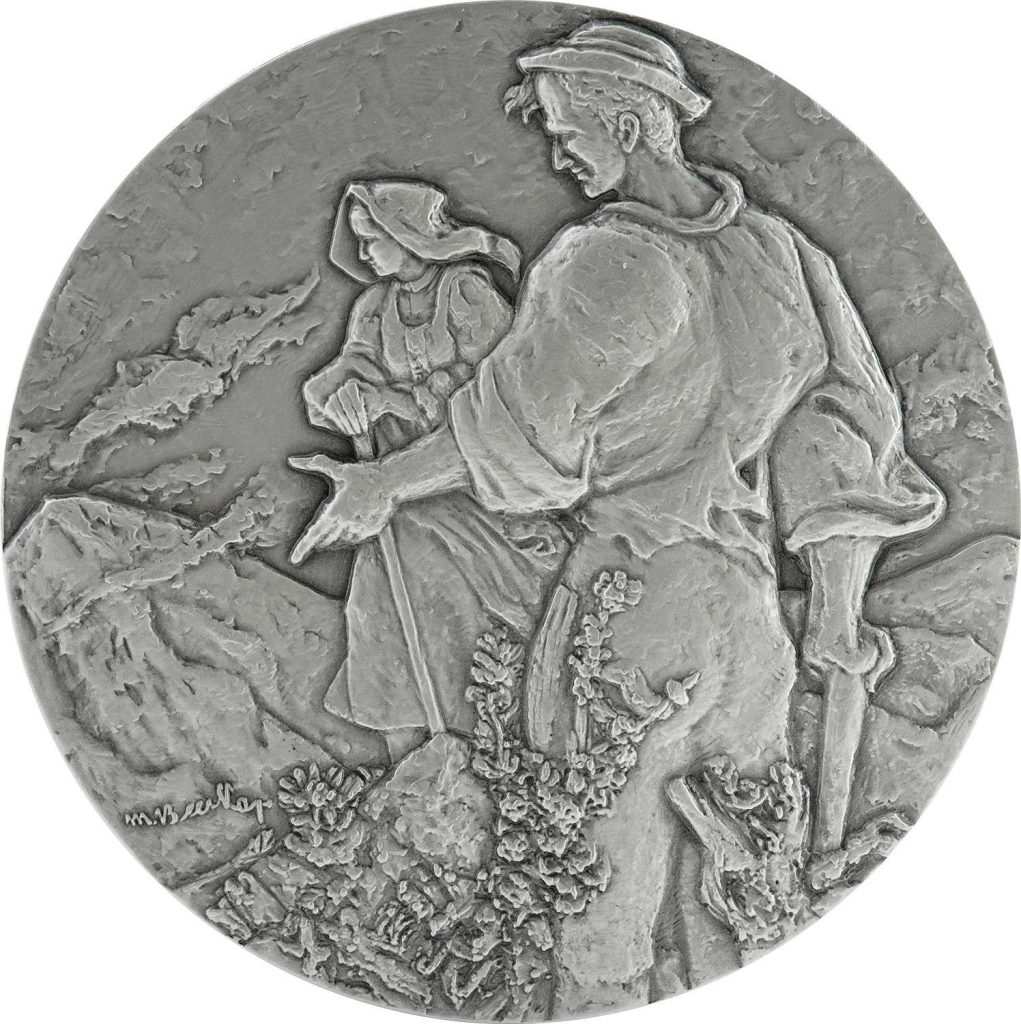
patinated silver Ag 999/1000
Weight: 369,3 g
Mintage: 100 pcs limited and numbered edition; author’s edition EA – 2 pcs, numbered, with signature of the author
https://www.mint.sk/eshop/strieborna-medaila-velikani-slovenskeho-maliarstva-martin-benka
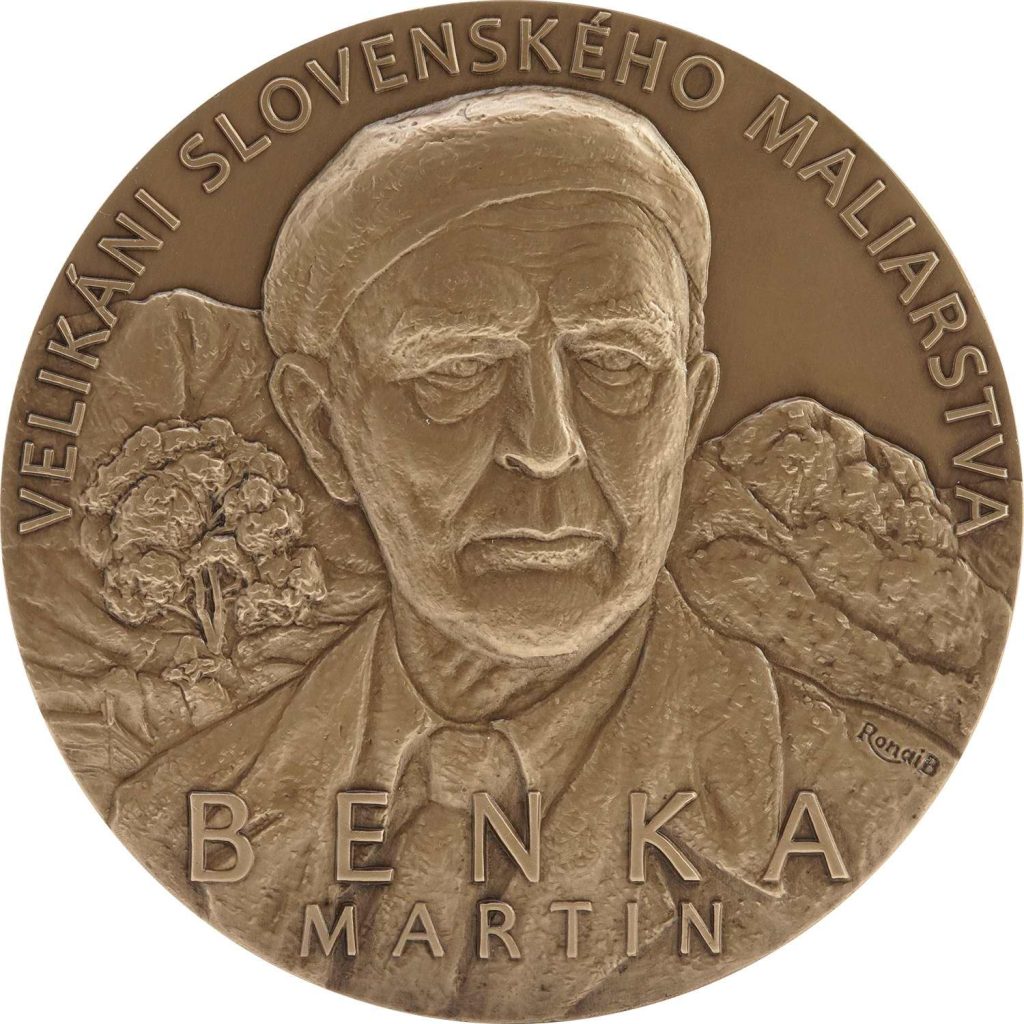
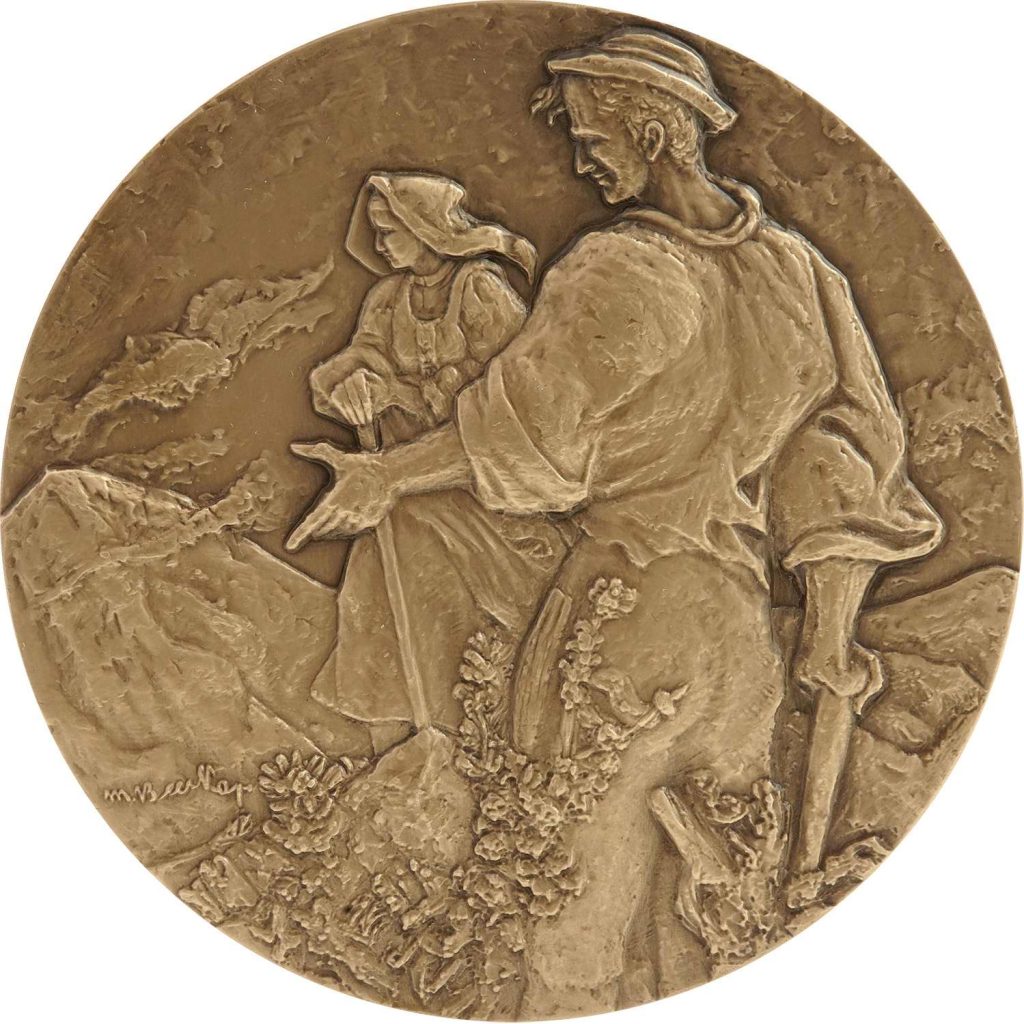
A series of commemorative medals introducing the most famous Slovak painters of all times. Medal from the edition – Greats of Slovak Painting with the motif of the founder of modern Slovak art, Martin Benka. He was born on September 1, 1888, in Kostolište. In addition to being an important Slovak painter, he was also involved in tapestry making, stage design, music, and violin making. His work was inspired by the landscape, as well as the beauty of the shapes and colors of folk art.
The obverse features a portrait of Benka, and the reverse features a reproduction of his work Ľudia a hory (People and Mountains), 1941
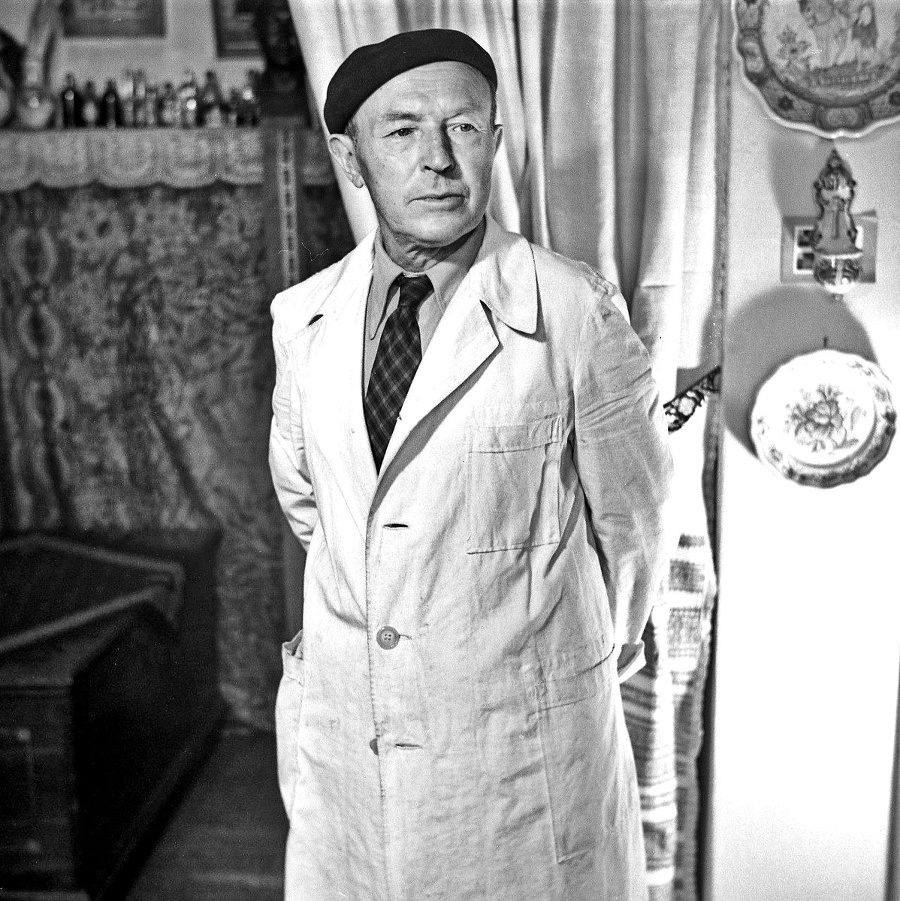
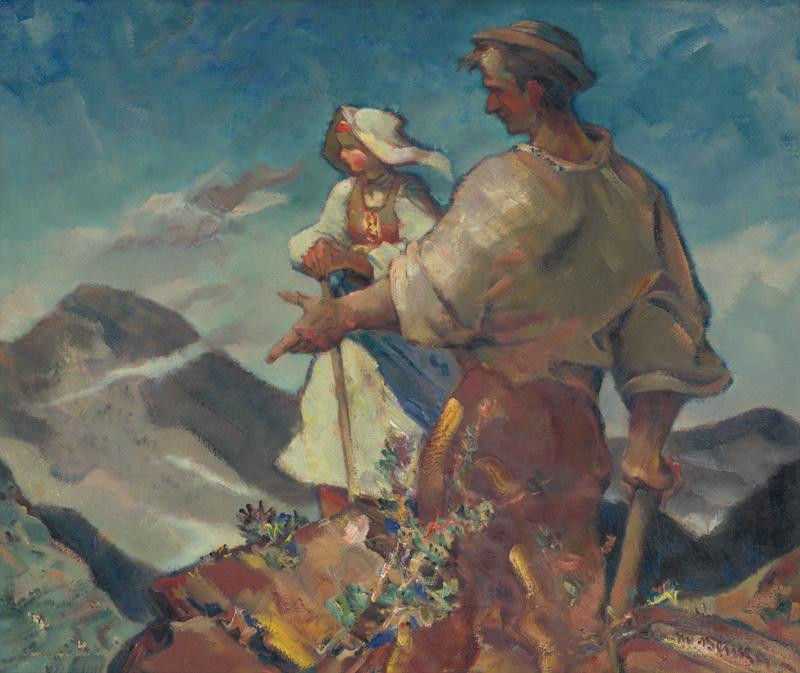
Foto: Peter Kočvara/Medailérsky klub, Slovak National Gallery
– Greek Catholic Bishop Peter Rusnák, 75th anniversary (academic sculptor Michal Gavula)
Greek Catholic Parish Office Bratislava
Kremnica Mint, state-owned enterprise
struck, two-sided
60 mm
silver-plated tombac MS90 – 14 pcs (2024)
The obverse of the medal features a dominant portrait of the bishop dressed in his bishop’s robes, in which he was enthroned in 2008 based on a decision by the Holy See in Rome. He wears a bishop’s mitre on his head and holds a bishop’s crozier in his hand. In the background is the Greek Catholic Cathedral in Bratislava, and around the edge is information about the medal.
The reverse side of the medal is dominated by his episcopal coat of arms, which features motifs from the Holy Scriptures, as well as the biblical text in Aramaic “MARANATHA!” (translated as COME, LORD!). Around the edge of the medal is the text 75 years of life and the year 2025, when he celebrates his 75th birthday.
Academic sculptor Michal Gavula (born March 13, 1954), winner of the 2027 Fra Angelico Artist Patron Award

In the photo with the medal of Saint Mother Teresa of Calcutta
1969-1973 School of Fine Arts in Bratislava Bratislava, stone carving (Juraj Gavula), 1973-1979 Academy of Fine Arts in Bratislava, Glass and Architecture (Cígler), author of several coins for Nation Bank of Slovakia (1999 – 200 Sk Slovak Philharmonic, 2000 – 200 Sk Juraj Fándly, 2005 – 5000 Sk Leopold I. (reverse), 2016 – 20 € Banská Bystrica Heritage Reserve)
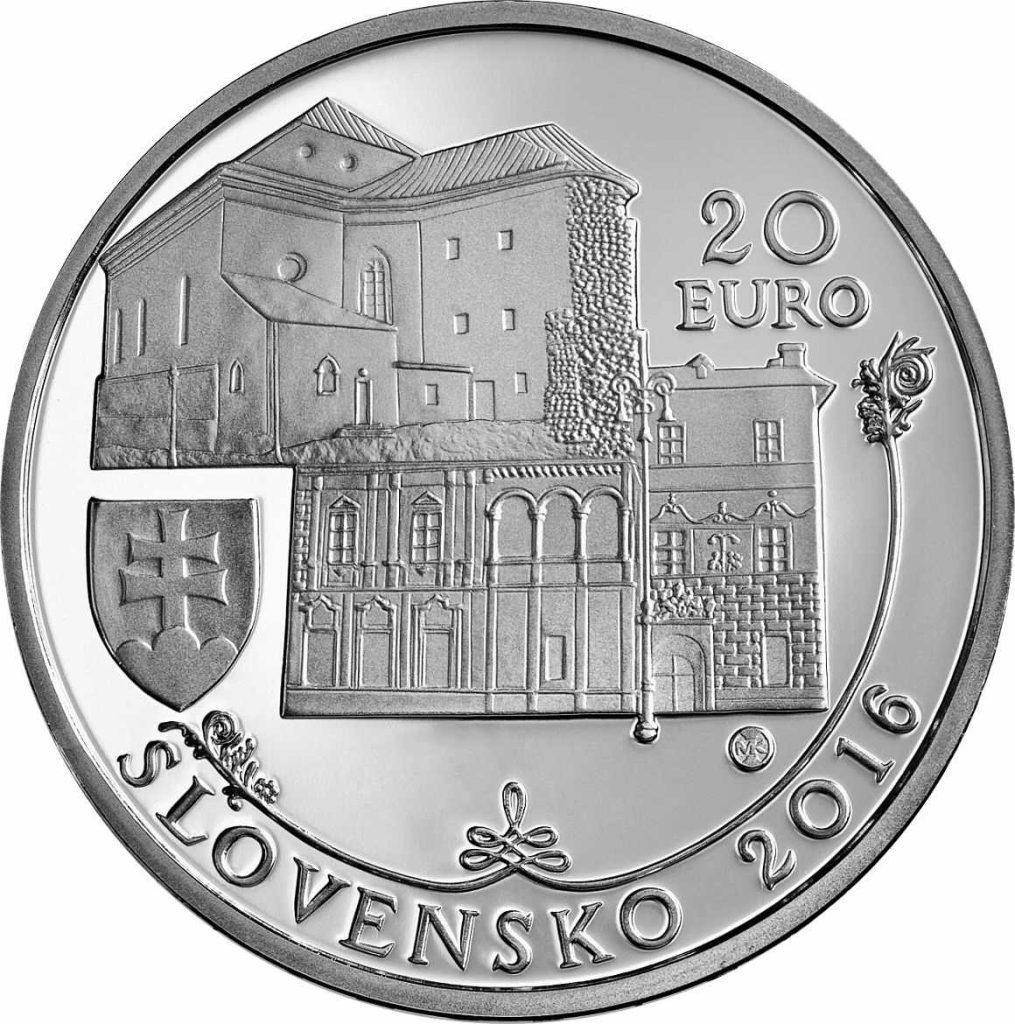
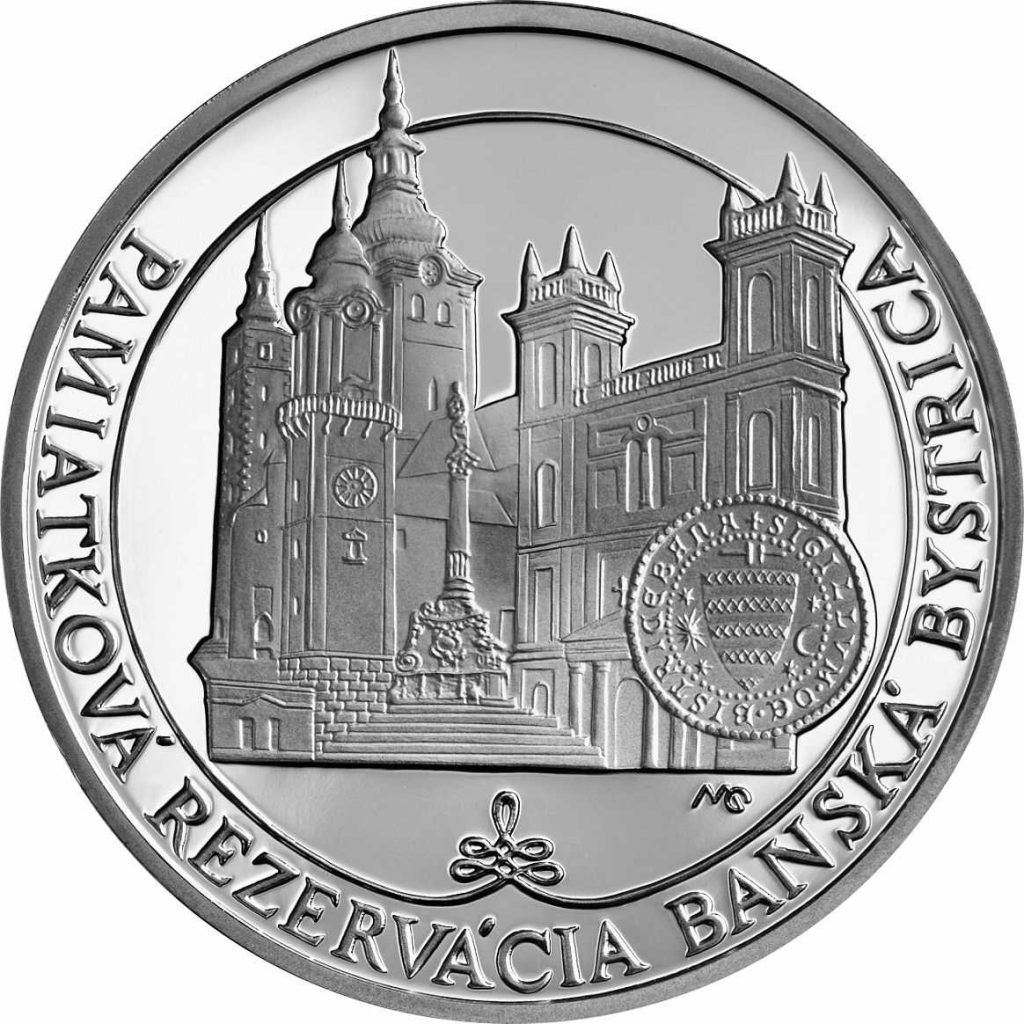
Photo: Peter Kočvara/Medailérsky klub, Katolícke noviny (Catholic Newspaper), National Bank of Slovakia
– Faculty of Civil Engineering, Slovak University of Technology in Bratislava (doc. akad. sculptor Milan Lukáč)
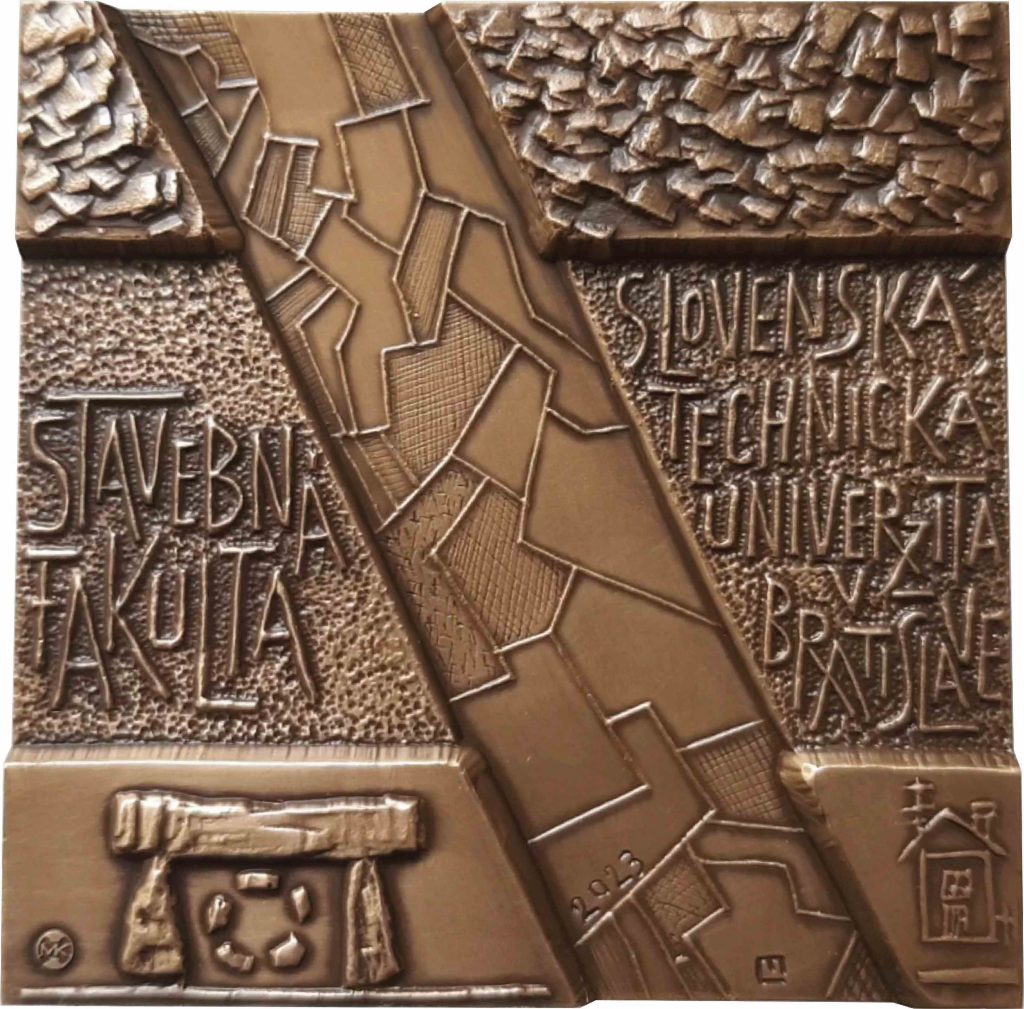
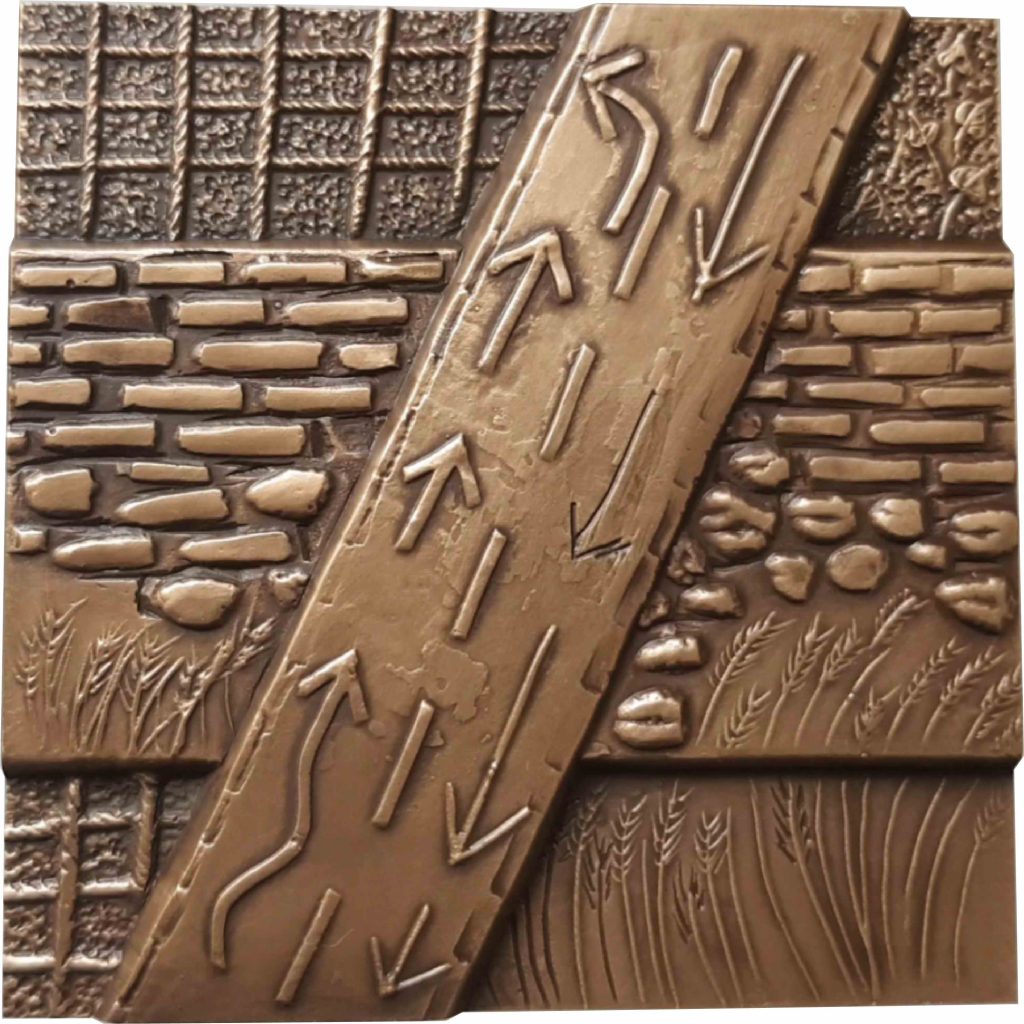

Faculty of Civil Engineering, Slovak University of Technology in Bratislava
Kremnica Mint, state-owned enterprise
struck, two-sided
70×70 mm
patinated tombac MS90 pcs – 100 pcs
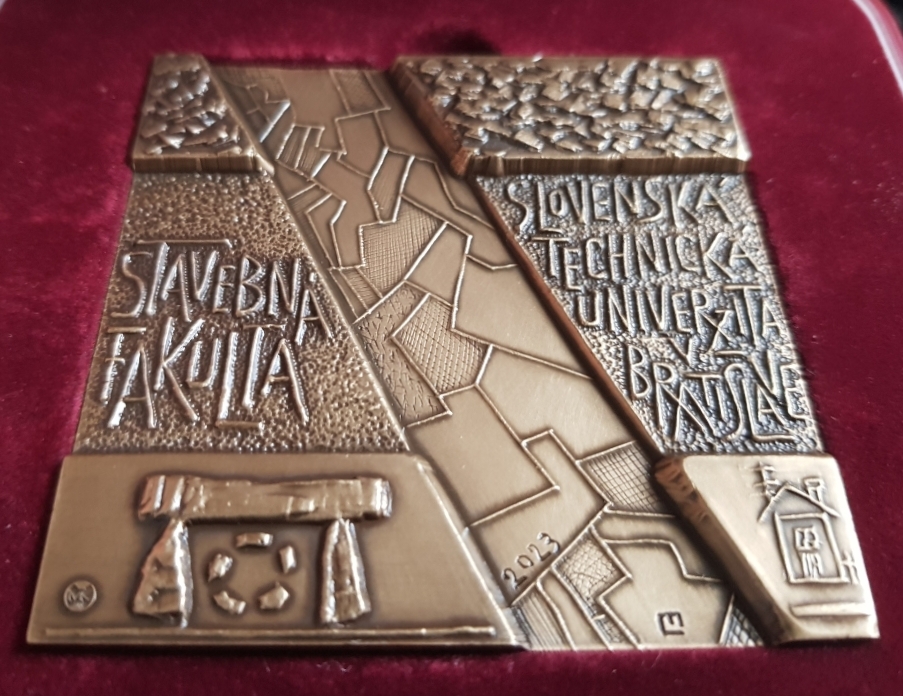
The bronze plaque of the Faculty of Civil Engineering of the Slovak University of Technology in Bratislava depicts a megalithic structure as a symbol of the beginnings of construction, together with technical solutions and planning in contrast to the real infrastructure in the landscape (roads, masonry, water, greenery). It is an accurate representation of the disciplines of civil engineering: geology and materials, statics and structures, architecture and urbanism, transport and water structures, landscape and environmental relations.
Docent academic sculptor Milan Lukáč is the court medalist of the Faculty of Civil Engineering of the Slovak University of Technology in Bratislava. He is the author of the Faculty of Civil Engineering Medal, which is awarded by the dean to individuals and institutions as a tribute and recognition of extraordinary achievements or lifetime work in the field of education, the development of science and knowledge, and the promotion and dissemination of the faculty’s good name. The proposal to award the “Faculty of Civil Engineering Medal” is approved by the Scientific Council of the Faculty of Civil Engineering of the Slovak University of Technology, to which it is submitted by the dean.
On this basis, the Faculty of Civil Engineering at STU asked him to design a plaque for the Faculty of Civil Engineering, which was to be distinguished mainly by its shape, but the basic motif was to remain unchanged. The dean awards the “Faculty of Civil Engineering Plaque,” as well as the “Academician Bella Plaque,” “Professor Chrobák Plaque,” “Professor Gál Plaque,” “Academician Dub Plaque,” and the “Academician Havelka Plaque” (all designed by Milan Lukáč), expressing his honor and gratitude to individuals, institutions, and organizations for their contributions to education, the development of science and practice, the support of the faculty’s activities in a specific field of study or as a whole, and the promotion of the faculty’s good name. The dean will discuss the proposal for awarding the plaque with the faculty management.
Doc. academic sculptor Milan Lukáč (* 29. 9.1962 Bojnice)
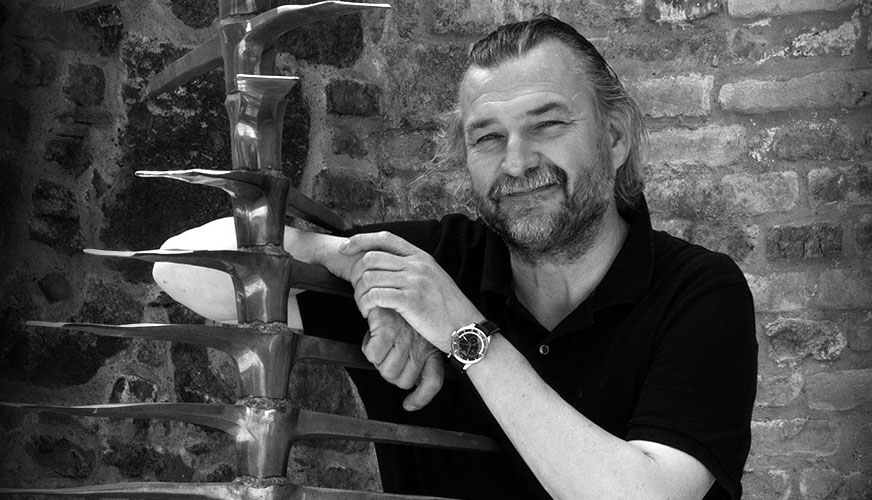
Sculptor, medallist, painter and university lecturer – head of the Department of Fine Arts and Multimedia at FAD STU (Faculty of Architecture and Design, Slovak University of Technology in Bratislava).
From 1981 to 1987, he studied at the Academy of Fine Arts (VŠVÚ) in Bratislava, in the sculpture department under Prof. Ján Kulich and Prof. Ladislav Snopko, and from 1985 to 1986 at the École Nationale Superieure des Beaux Arts in Paris under Prof. Jean Cardot.
In 1985, he received the Young Sculptor Award and in 1990 the Paul Louis Weiler Award, both awarded by the Académie des Beaux-Arts and the Institut de France in Paris. In 1988, he received the Martin Benka Award and in 1998 the “Prix Itinéraire” in Levallois near Paris.
In 1998 he was habilitated as an associate professor at the Academy of Fine Arts in the field of sculpture. Since 1990, he has been working as an associate professor at the Faculty of Architecture of the Slovak University of Technology in Bratislava (2006–2010 as head of the Department of Design, since 2011 as head of the Department of Fine Arts and Multimedia). He lives in Bratislava and devotes himself to monumental and chamber sculpture, relief, medals, drawing, and painting. He has had numerous exhibitions at home and abroad, as well as international presentations at world congresses and exhibitions of artistic medals organized by FIDEM (International Federation of Artistic Medalists).
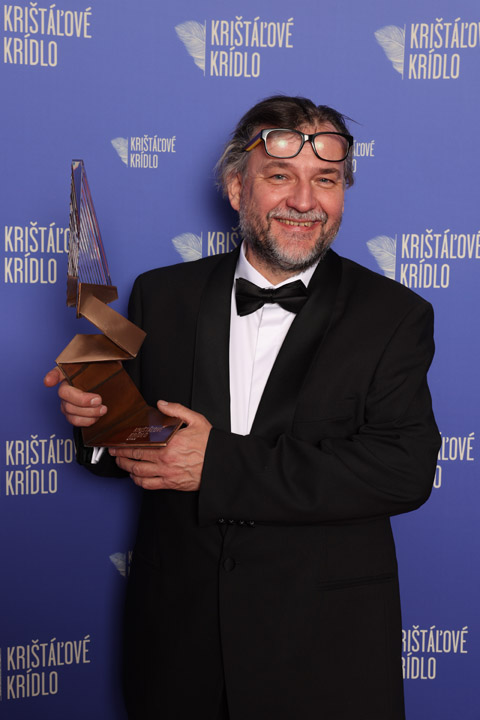
Laureate of the Crystal Wing Award for 2022 in the category of fine arts.
Other medals by Milan Lukáč for STU:
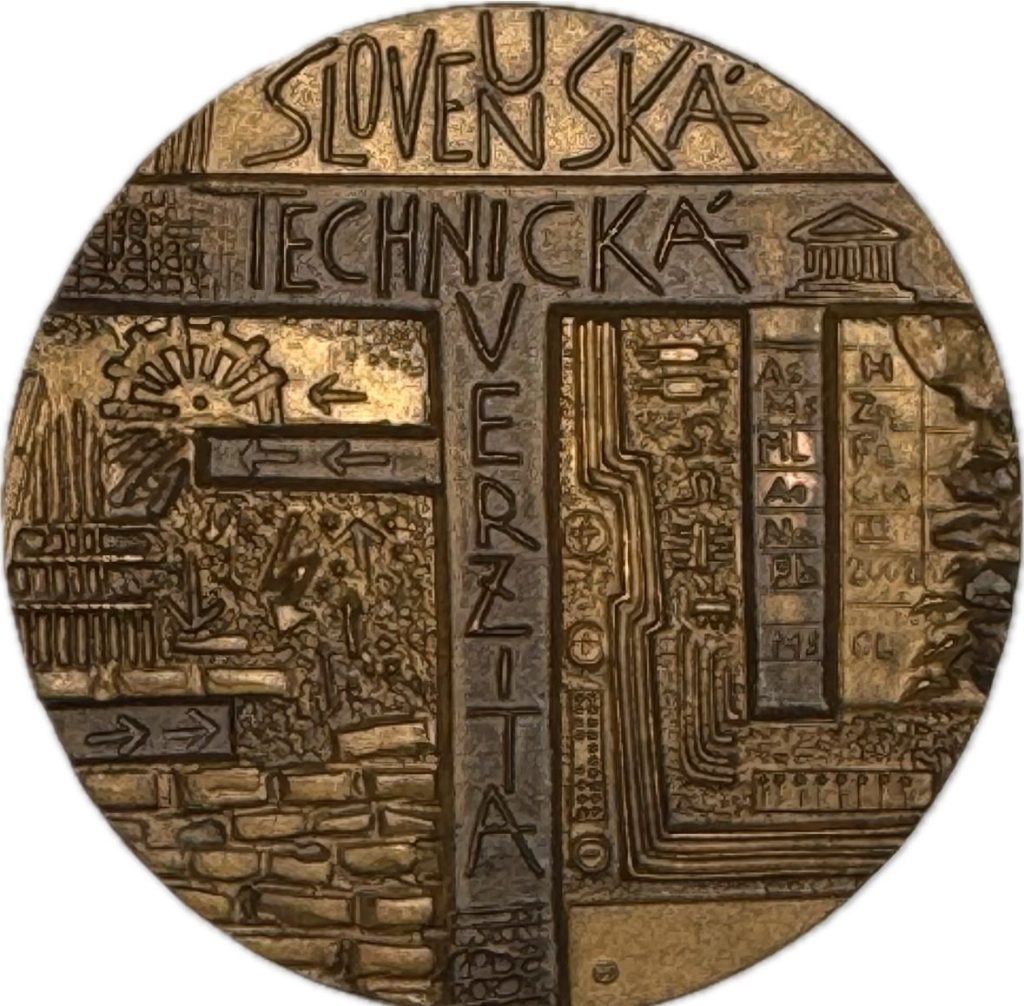
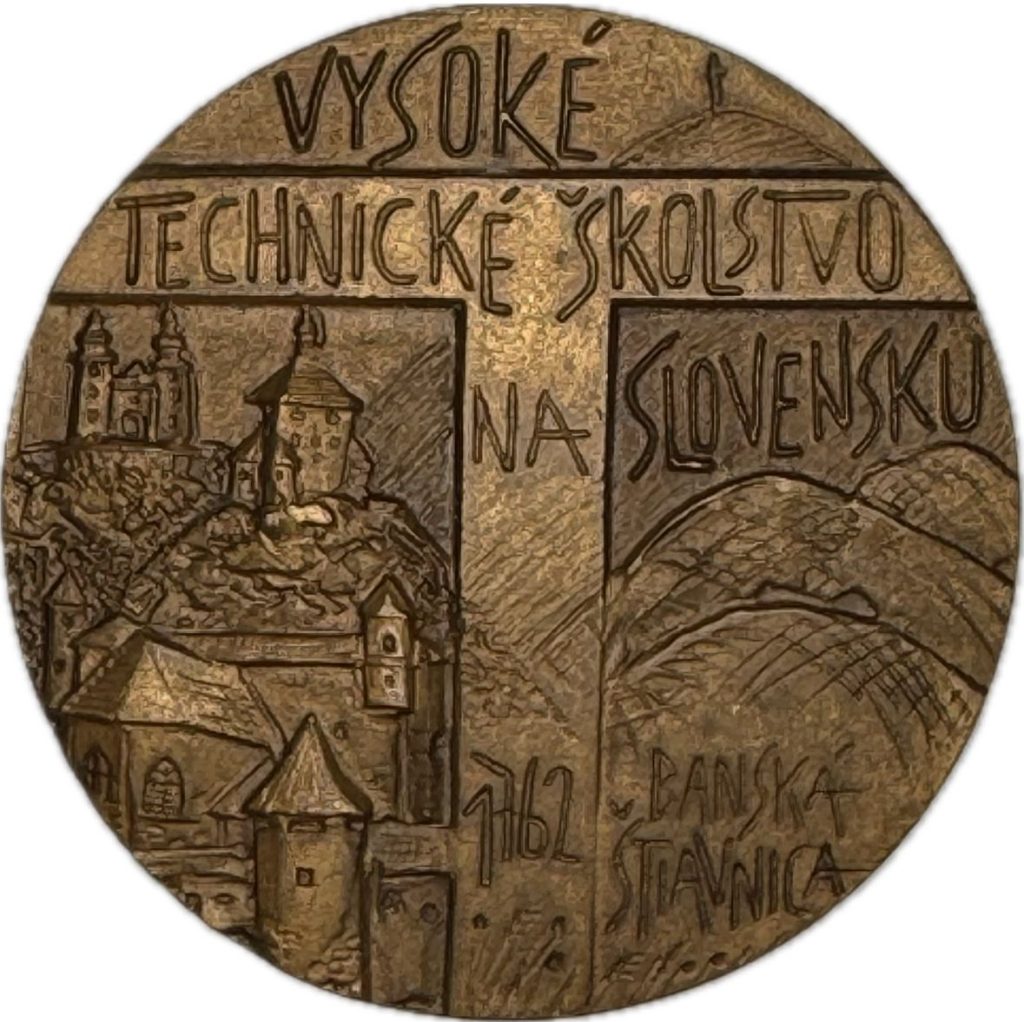
Slovak University of Technology / Higher Technical Education in Slovakia – 1762 Banská Štiavnica, 2002
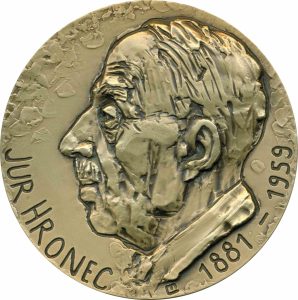
Juraj Hronec, first rector of STU, 2017, tombac, Ø 80 mm (obverse)
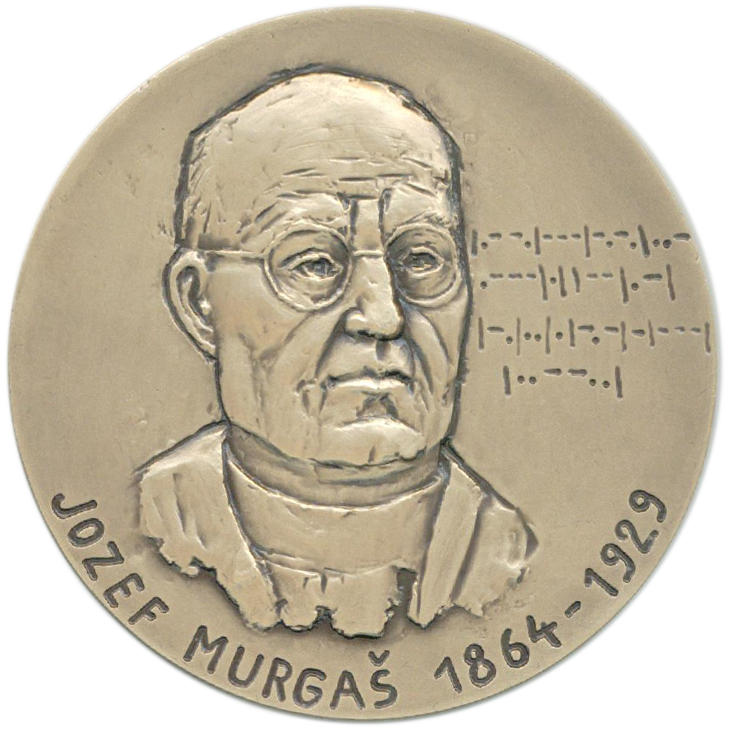
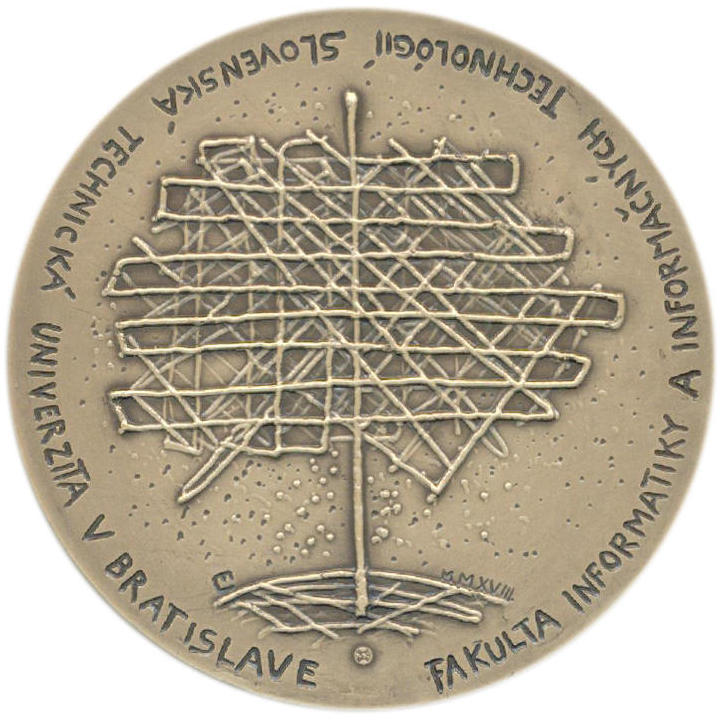
Jozef Murgaš, Faculty of Informatics and Information Technologies STU, 2018, tombac, Ø 60 mm
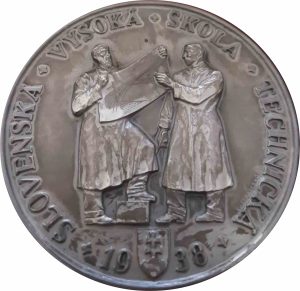
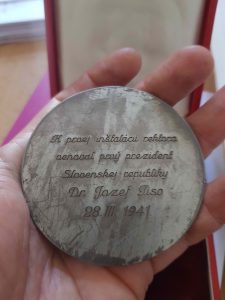
The first, now iconic silver medal of the Slovak school of higher technical education (SVŠT, founded in 1938) from 1940 (minted in 1941) by academic sculptor Ján Kostka on the occasion of the first installation of Rector A. Bugan by the President on March 30, 1941. (However, the first rector of SVŠT was J. Hronec).
Struck on March 17, 1941, Kremnica Mint, silver, 100 pieces
Some monumental sculptures by Milan Lukáč:
Memorial to Political Prisoners, Square of Victims of Communism – Žilina (1998)
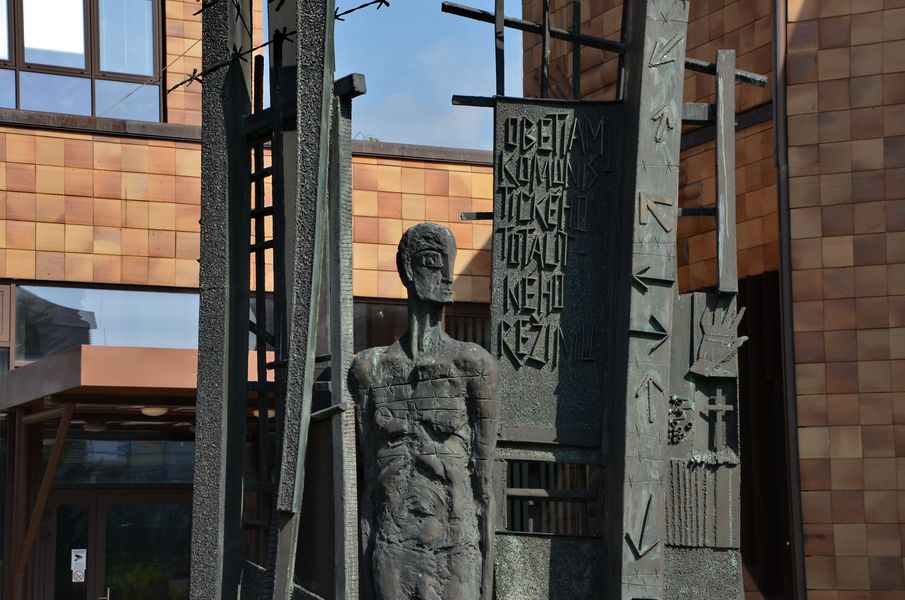
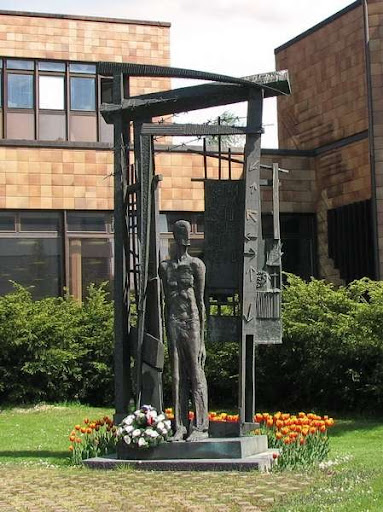
Holocaust Memorial, Bratislava (1997)
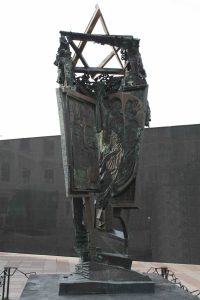
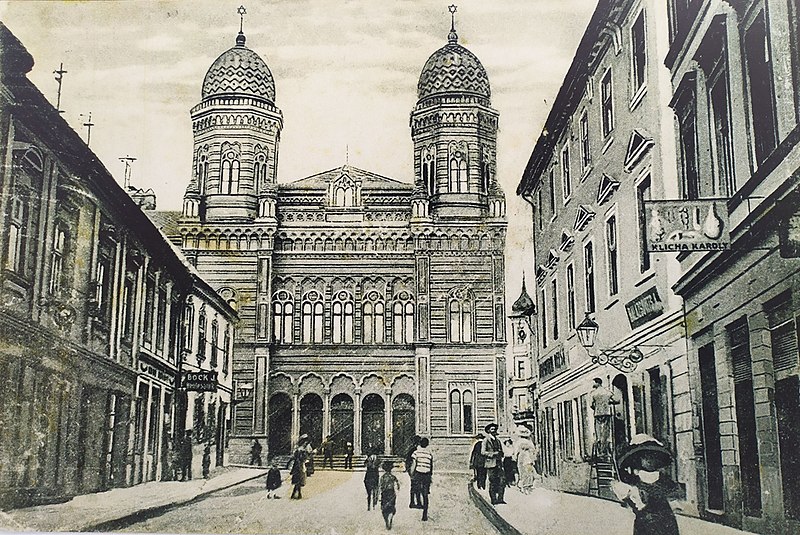
It stands on Rybné Square, on the site where the iconic Neological Synagogue originally stood. It is a symbol of the violent deportations of Jews to concentration camps, the abandonment of their homes, and ultimately the demolition of the entire Jewish quarter of Bratislava (known as Židovňa in extramural settlement). The Neological Synagogue itself (1893/1894-1969), standing in close proximity to the Catholic Cathedral of St. Martin, was for several decades a unique symbol of the coexistence of the two dominant religious groups in the originally linguistically mixed Prešporok (Pressburg/Poszony) and fell victim to the megalomaniacal urban planning projects of the communist regime when it had to make way for a four-lane road leading from the SNP (Slovak National Uprising) Bridge (1972) directly to the historic center below Bratislava Castle.
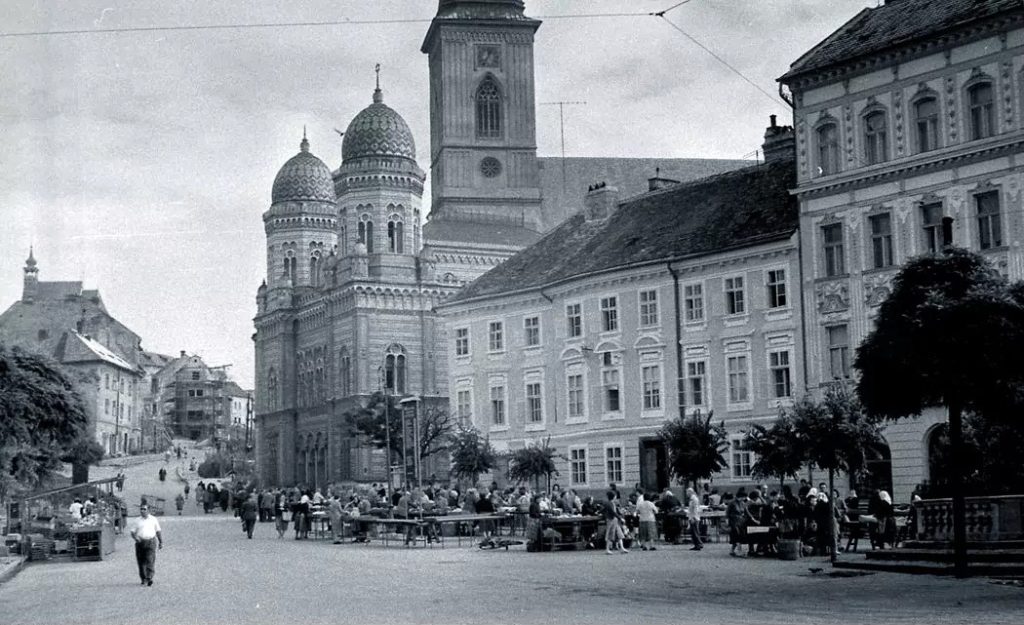
Iron Curtain Memorial, Devín (2008)
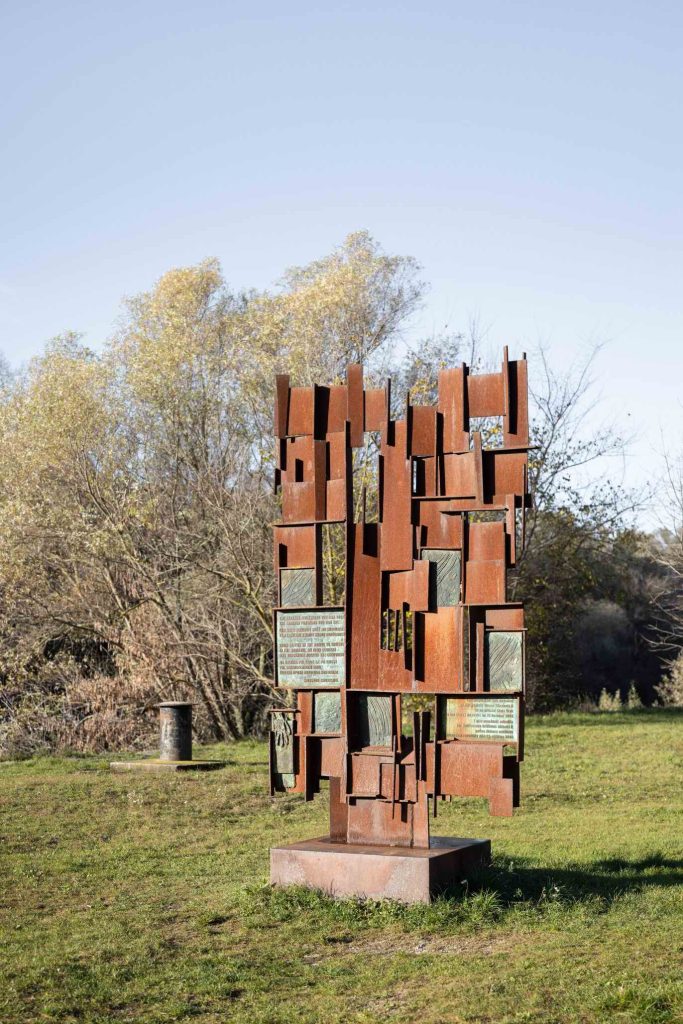
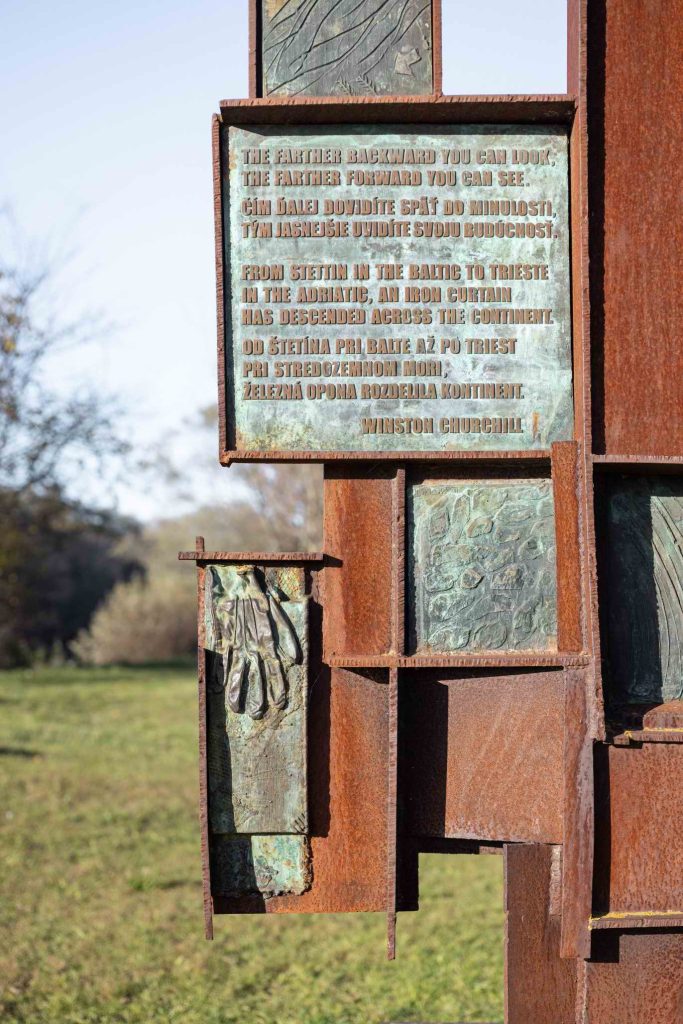
The Iron Curtain Memorial in Devín has an important place among the works created after November 1989 to permanently commemorate the victims, hundreds of people who died while attempting to cross from Czechoslovakia to the West through the heavily guarded and fortified border.
Milan Lukáč’s work was created in 2008 as part of the preparations for a special event, namely the visit of Queen Elizabeth II of Great Britain. The work was initiated by the British Embassy. The Queen personally unveiled the memorial during her official visit on October 23, 2008.
The object consists of iron plates and panels of various formats connected by welded iron profiles. On the iron panels there are several smaller patinated bronze plaques with inscriptions relating to the theme of the work and the memorable visit of Queen Elizabeth II.
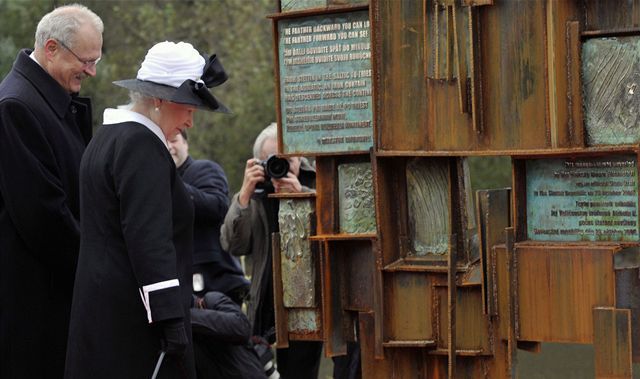
Photo: Peter Kočvara, AVE Gallery, Krištáľové krídlo (Crystal Wing), Monuments of Remembrance 1918-2018, Monuments of Remembrance 1918-2018, Pravda (The Queen unveiled the Iron Curtain Memorial at Devín Castle, 23.10.2008)
Text: Prof. Ing. Katarína Gajdošová, PhD. Vice-Dean for External Relations and Cooperation with Industry, Peter Kočvara, Wikipedia, Art of the City of Bratislava
– Slovak Society for Biochemistry and Molecular Biology (SSBMB), Medal of Honor (academic sculptor Miloš Vavro)
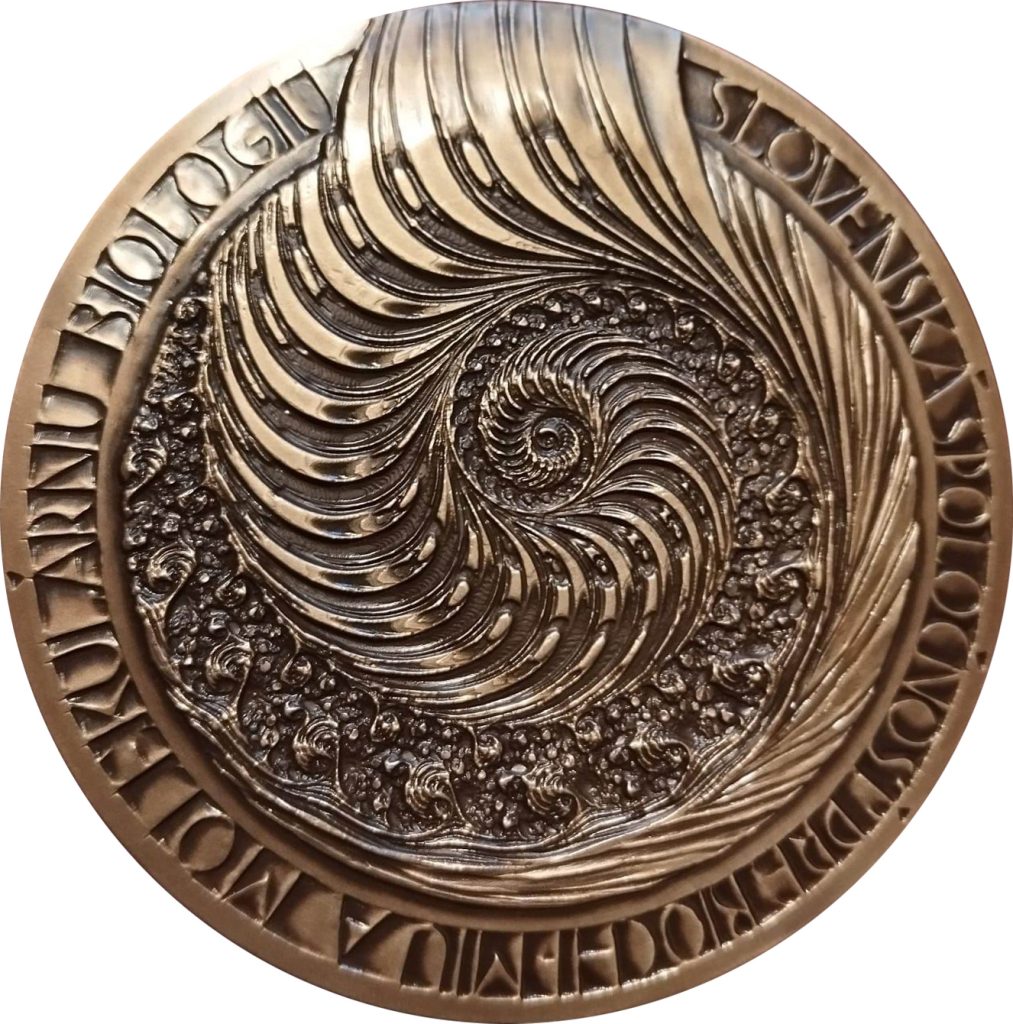
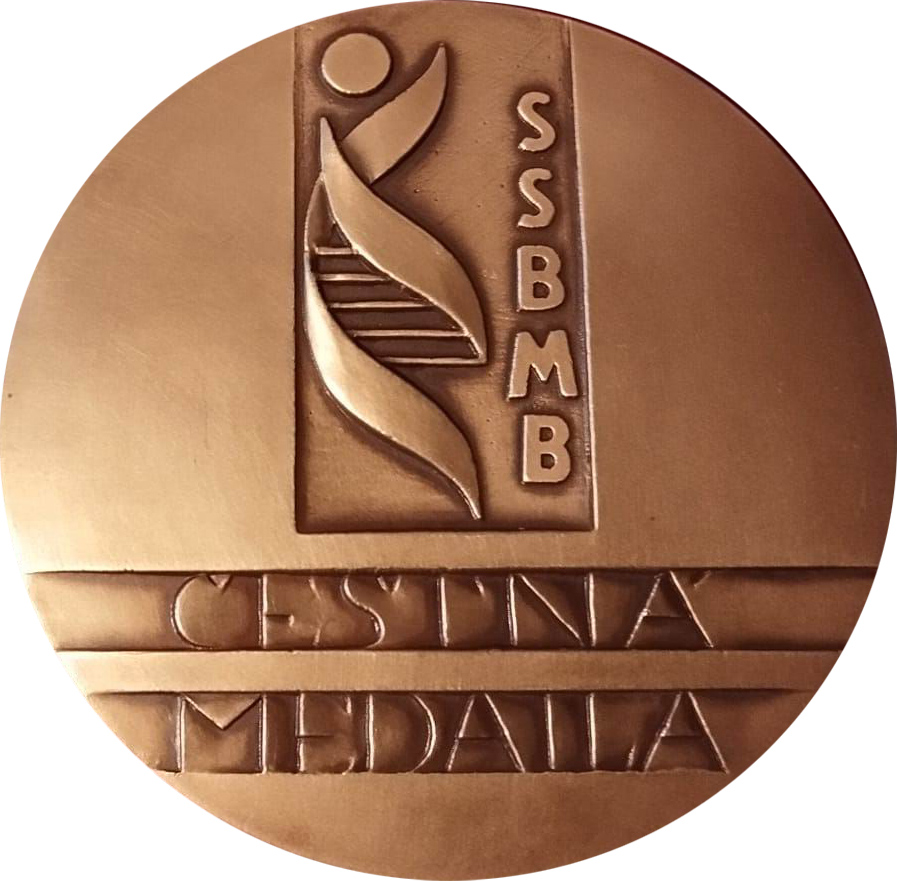
Slovak Society for Biochemistry and Molecular Biology (SSBMB)
Kremnica Mint, state-owned enterprise
struck, two-sided
80 mm patinated tombac MS90 pcs – 50 pcs
Acad. sculptor Miloš Vavro (* 29.03.1960 Trenčín), sculptor, medallist, restorer, designer.
Education: 1975-79 at Secondary School of Applied Arts Uherské Hradiště, Czechia (J. Habarta), 1981-87 Academy of Fine Arts in Bratislava (Prof. Ladislav Snopek, Prof. Ján Kulich).
He devotes himself to free sculpture and medal making, coin design, small sculpture, design, and restoration work. 1987 Award of the Rector of the Academy of Fine Arts in Bratislava. He lives and works in Bratislava.
Also noteworthy is the artist’s distinctive handwriting, which is also evident in his other medals, e.g. for the Slovak Numismatic Society, Trenčín branch. Other artists with their own unique handwriting include Prof. Pribiš and others.
Medals:
– Gen. Dr. Milan Rastislav Štefánik – scientist, aviator, statesman. To mark the 110th anniversary of his birth and in memory of a figure who contributed significantly to the creation of Czechoslovakia, the Slovak Numismatic Society, Trenčín branch, has issued 70 mm – silver-plated tombac MS90 (300 pcs), patinated tombac MS90 (100 pcs), 40 mm – patinated silver 900/1000 (125 pcs)
– Trenčín, 600 years since its elevation to a free royal town, issued by the Slovak Numismatic Society, Trenčín branch, 2012, 60 mm, patinated tombac MS90 (60 pcs)
Coins:
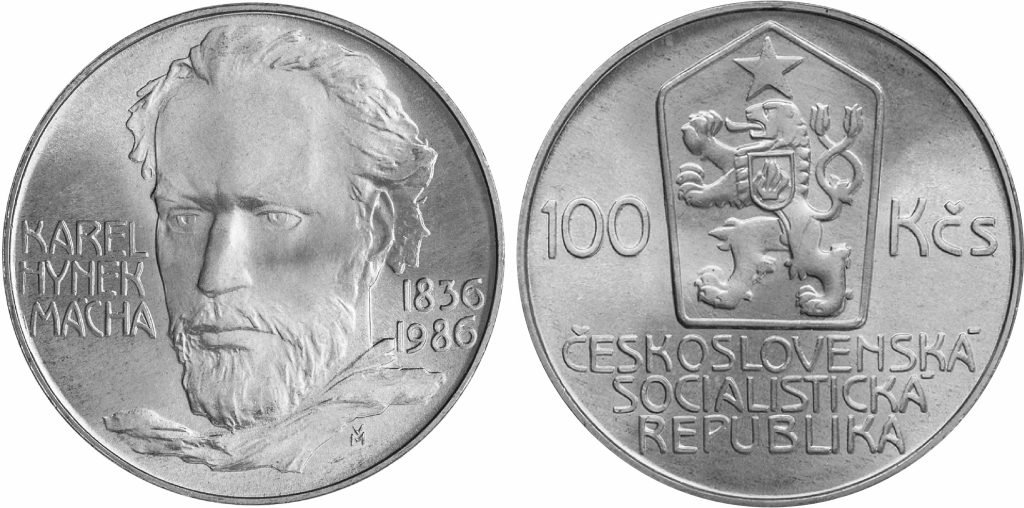
– 100 Kčs 1986 Karel Hynek Mácha, silver, 31 mm, 13 g;
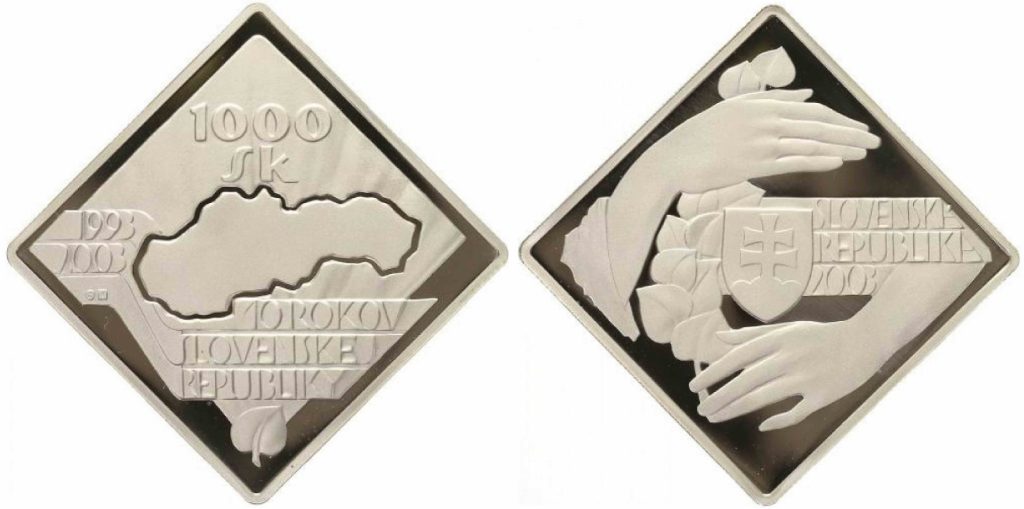
– 1000 Sk 2003 10 years of the Slovak Republic, silver Ag 999, 43.6 mm, 62.2 g, 10,000 pcs PROOF – in the shape of a clip;
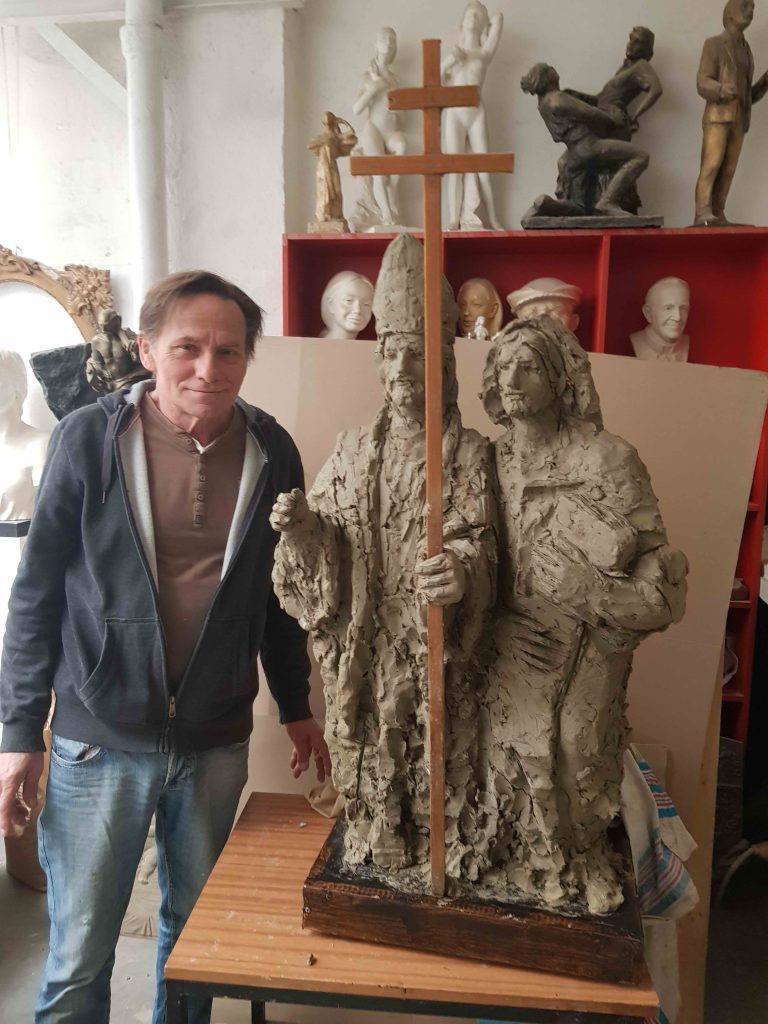
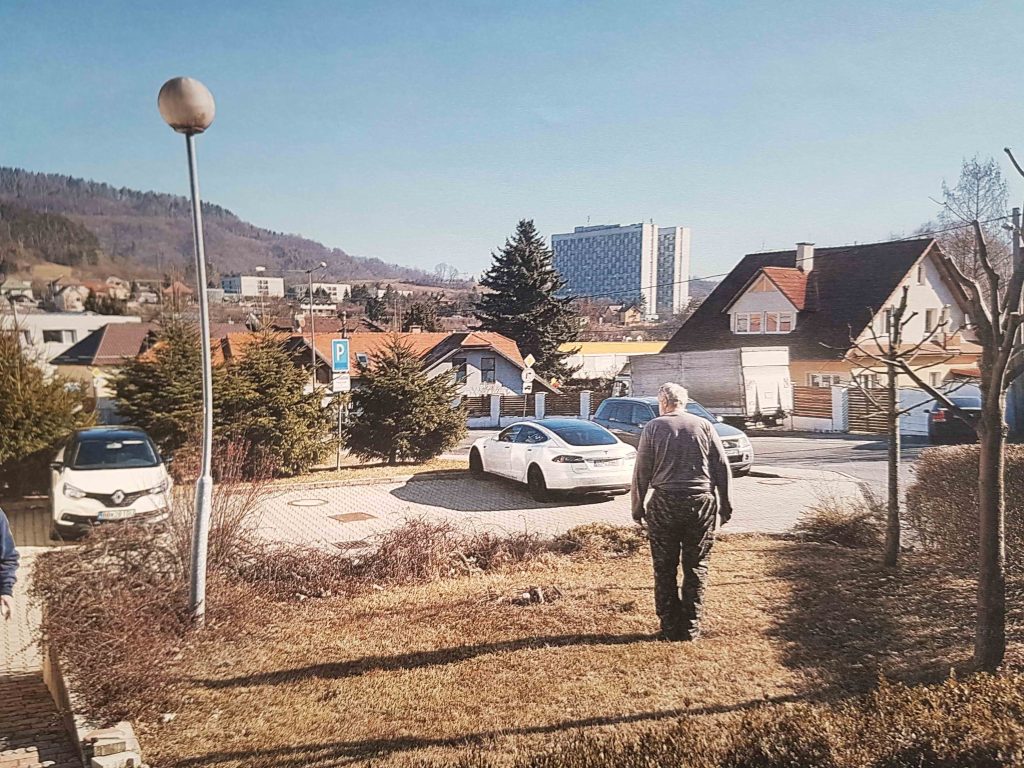
Sculpture of St. Cyril and Methodius (in the photo on the left, the author with a work-in-progress model; the actual sculpture will be appropriately enlarged), which will be placed in front of the Church of the Holy Spirit in the Podlavice district of Banská Bystrica (photo on the right – the F. D. Roosevelt University Hospital building can be seen in the background).
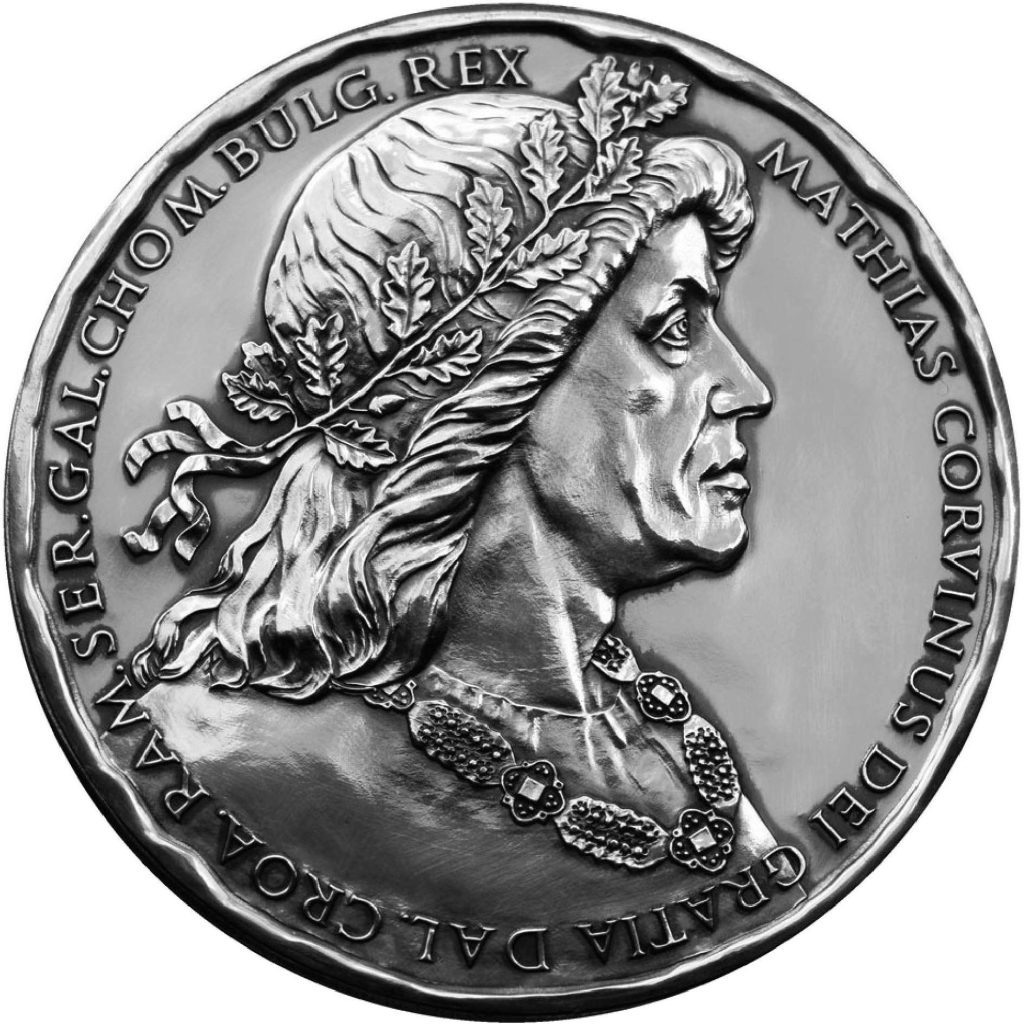
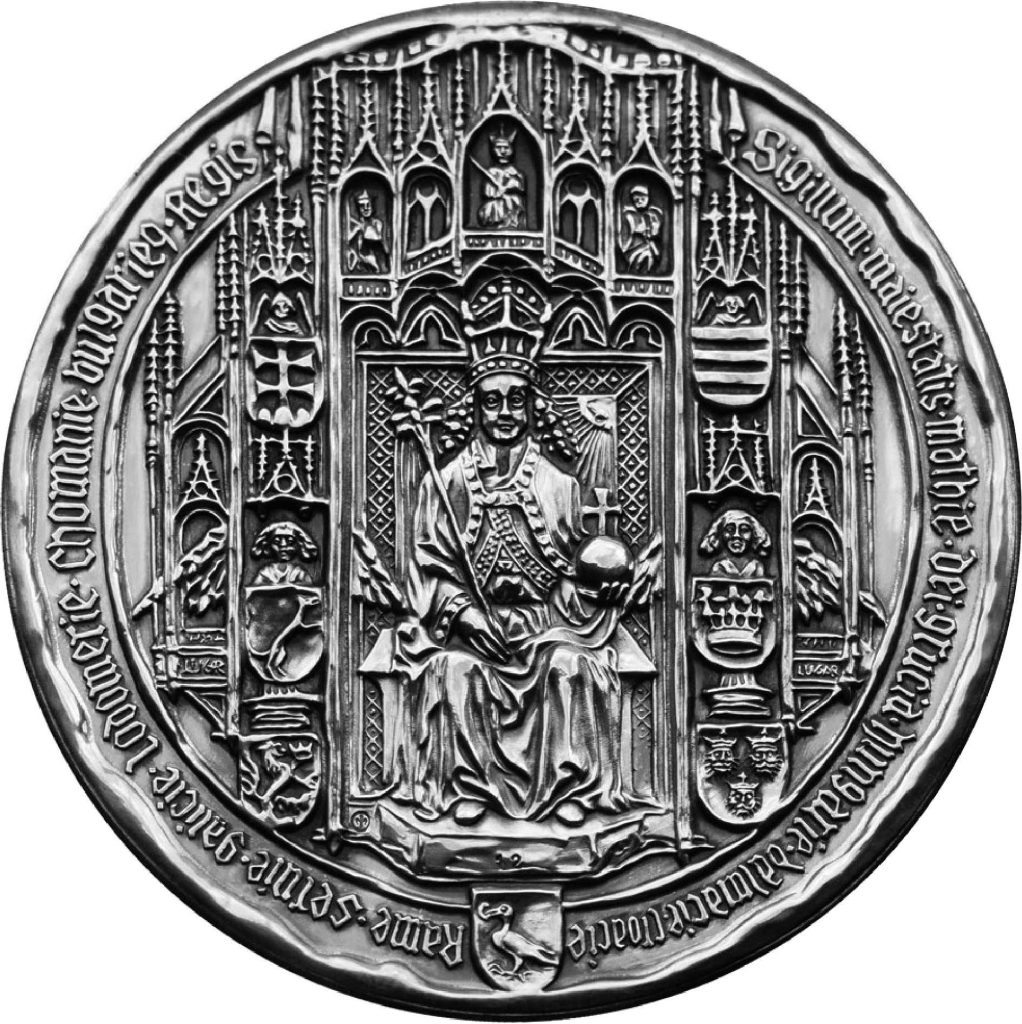
– The Great Seal of Matthias Corvinus (Drahomír Zobek / Mgr. art. Roman Lugár)
Numizmatika Kremnica s.r.o.
struck, two-sided
60 mm
Ag 999/1000 (patinated antique silver)
150 pcs
A silver medal depicting the historical Great Seal of Matthias Corvinus and his contemporary portrait, made of 999/1000 silver weighing 2 troy ounces (62 g) with an antique silver finish.
Matthias Corvinus came from the Hunyadi dynasty. He was King of Hungary and Croatia, Duke of Austria, and since 1469 also claimed the title of King of Bohemia. In 1465, he founded the Universitas Istropolitana in Bratislava (now Slovakia, than Pressburg/Pozsony/Prešporok in the Kingdom of Hungary – Uhorské kráľovstvo, in many western languages is Hungary synonym for Magyarországh-Land of Magyars as we know it today, but Hungary was for about a millennium a multiethnical kingdom /Magyars, Slovaks, Croats, Romanians, etc./), despite from the second half of 19th century strongly magyarised by the ruling Magyars-Hungarians) and, 1480 years later, the University of Pest (now part of Budapest, Hungary). During his reign, the country experienced economic and cultural prosperity. Ideas of humanism and the Renaissance penetrated the Hungarian kingdom during his reign.
Author:
Drahomír Zobek (obverse) – Numizmatika Kremnica s.r.o.
Mgr. art. Roman Lugár (reverse) – medallist at the Kremnica Mint
https://numizmat.sk/en/latest/great-seal-of-matej-corvinus-silver-medal
https://numizmat.sk/en/latest/great-seal-of-matthias-corvinus-silver-and-golden-medals-set
The antique silver effect is a special surface treatment in which the shining lustre of silver is preserved while the dark patina highlights the relief. For the desired effect, hand patination and polishing of each medal is more time-consuming and technically demanding.
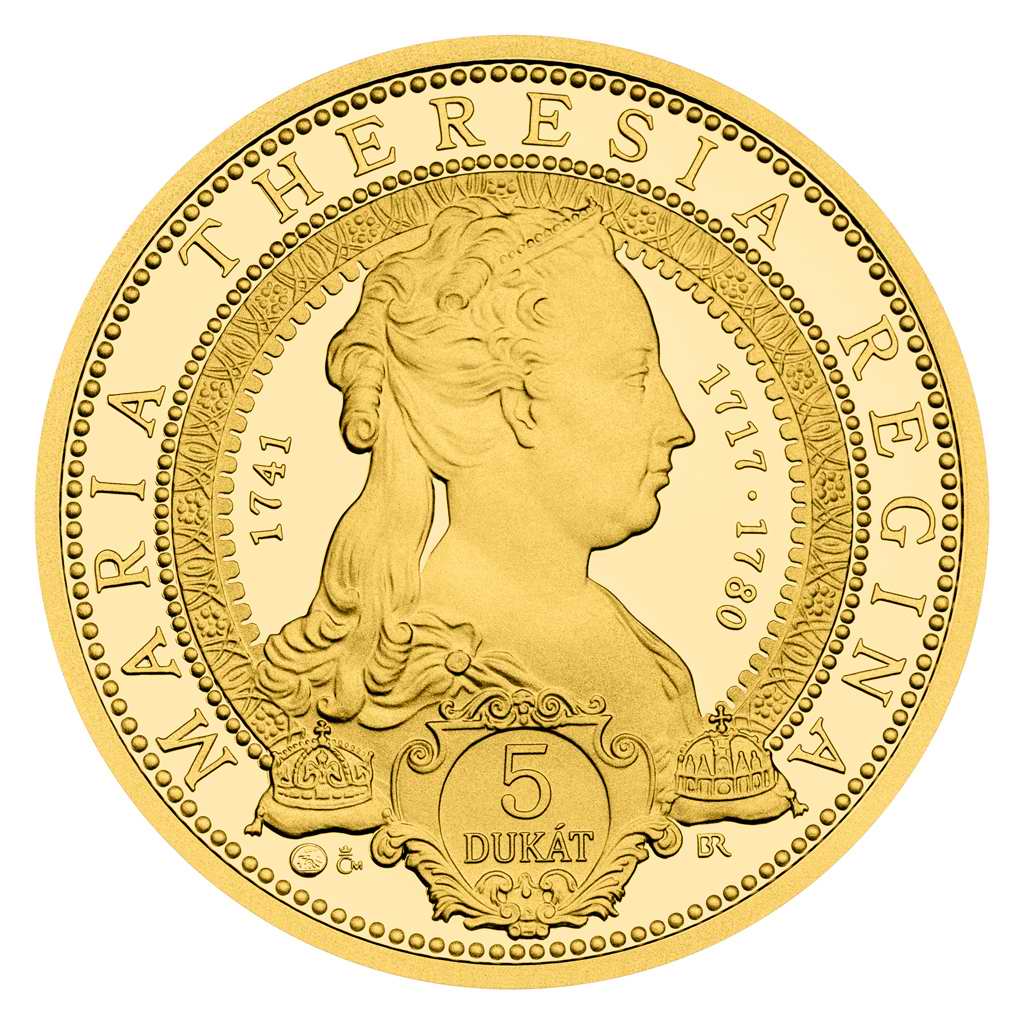
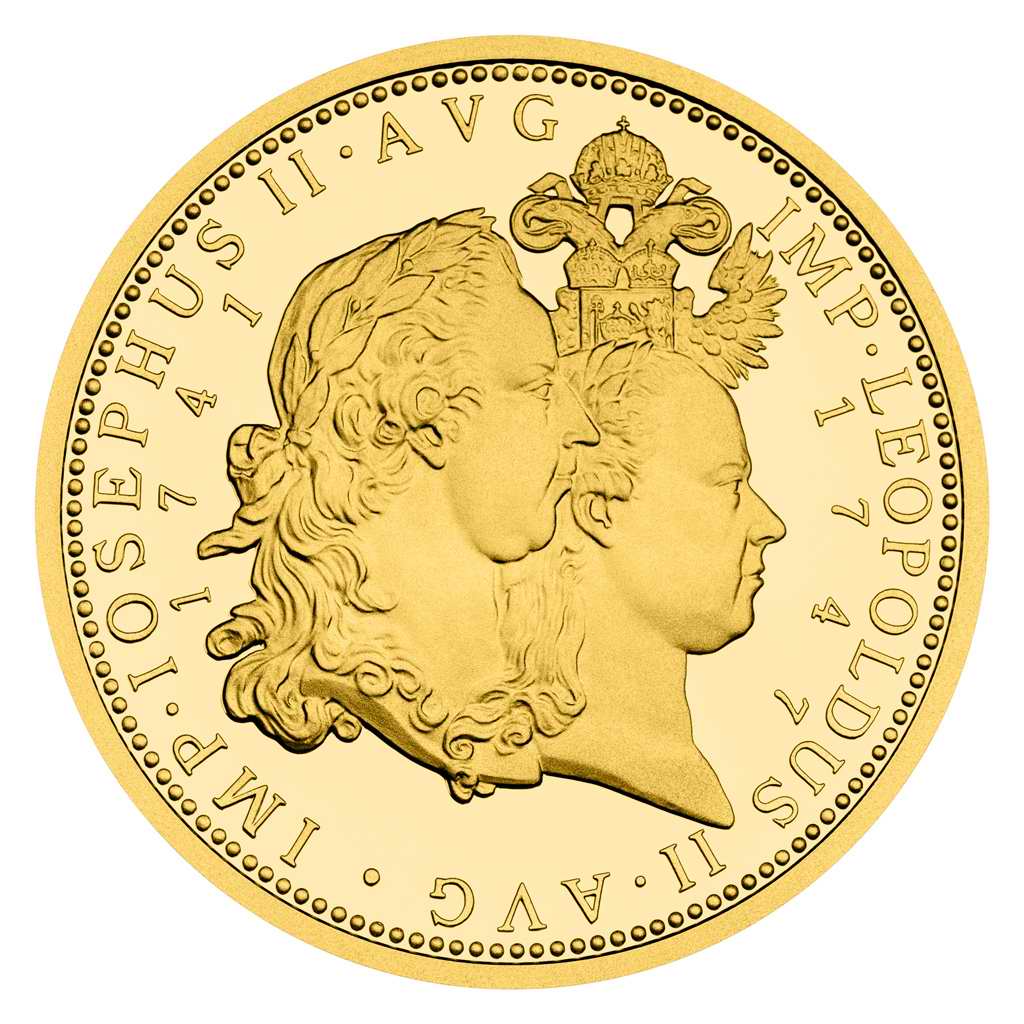
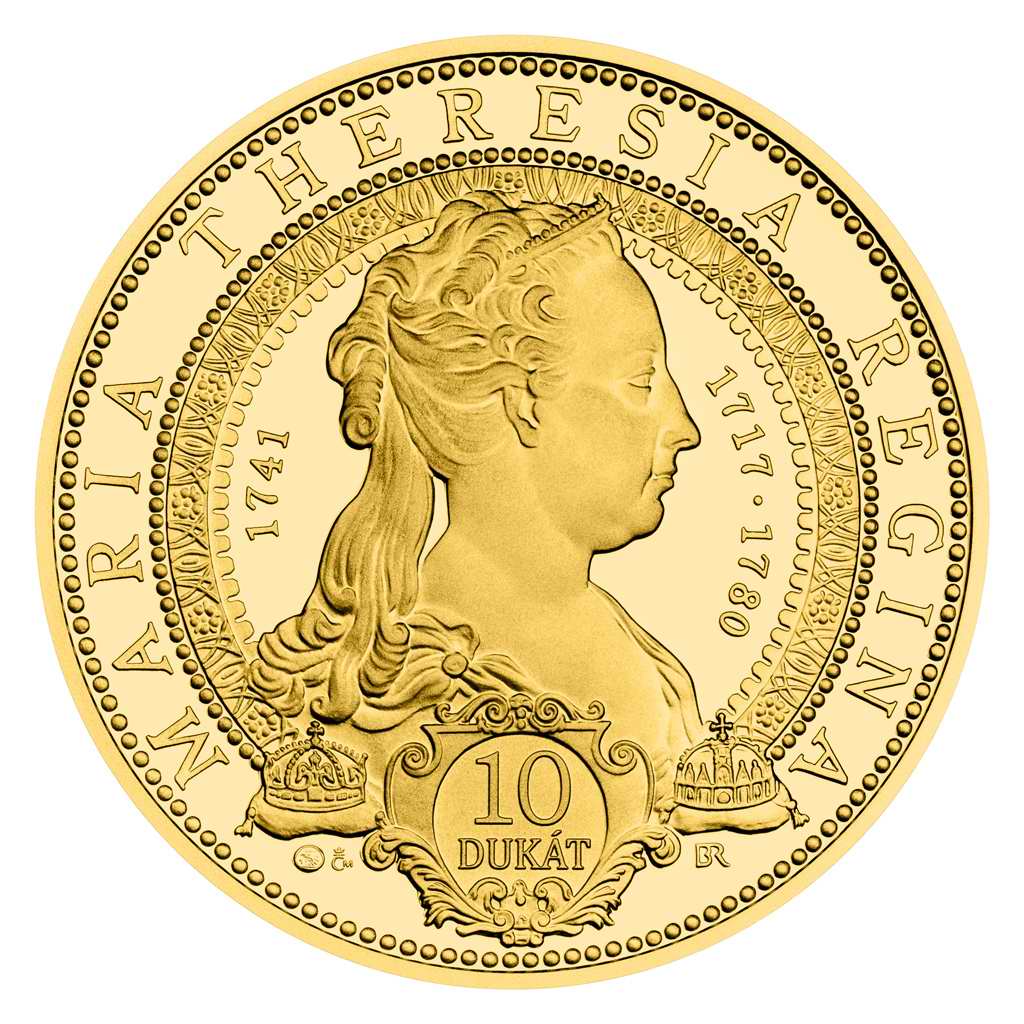
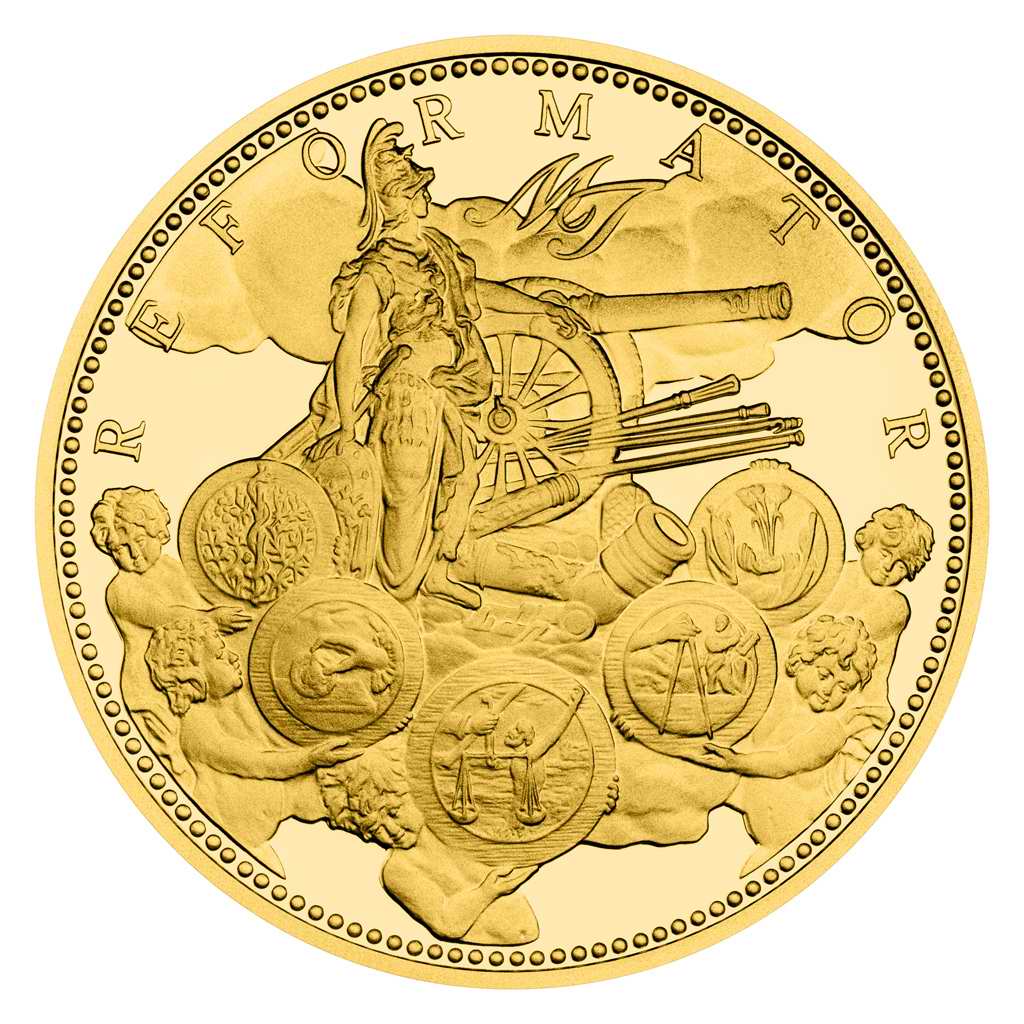
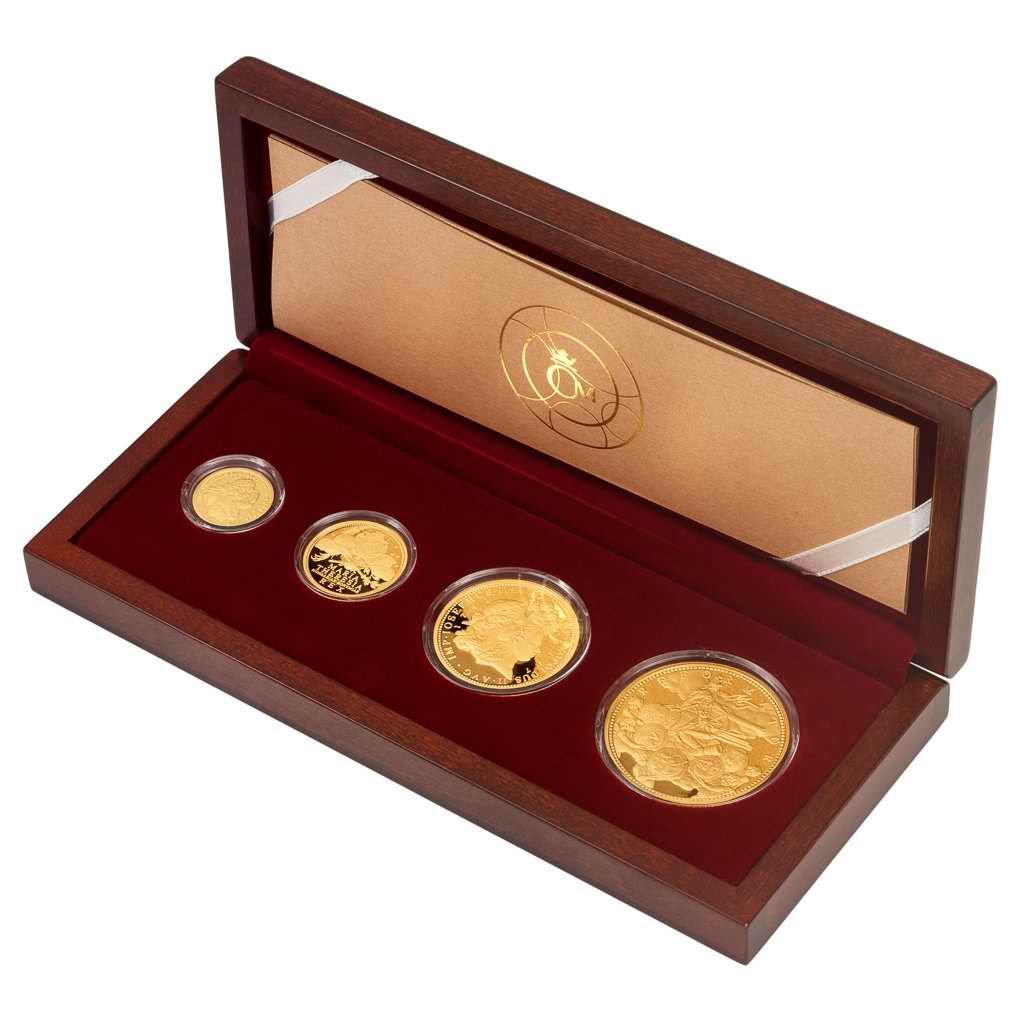
– Maria Theresa, series of four ducat medals (Branislav Ronai)
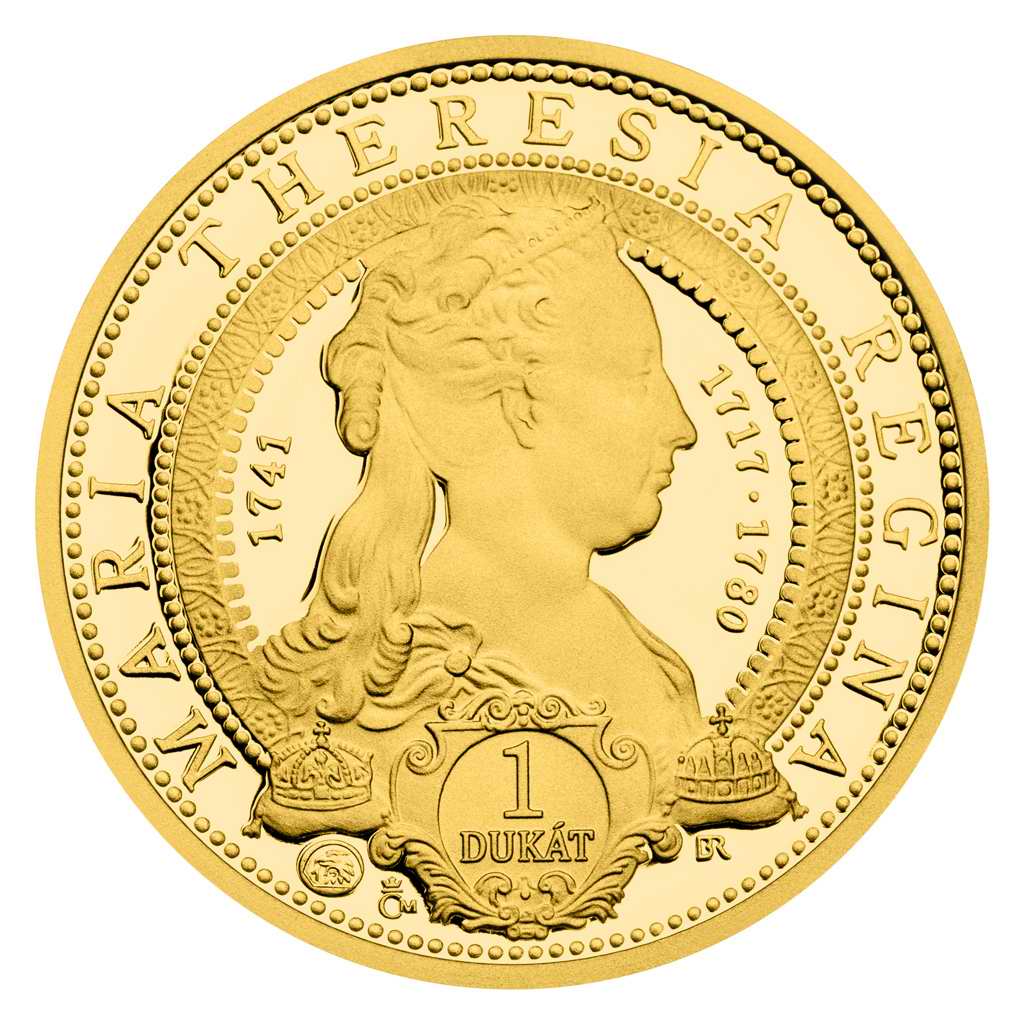
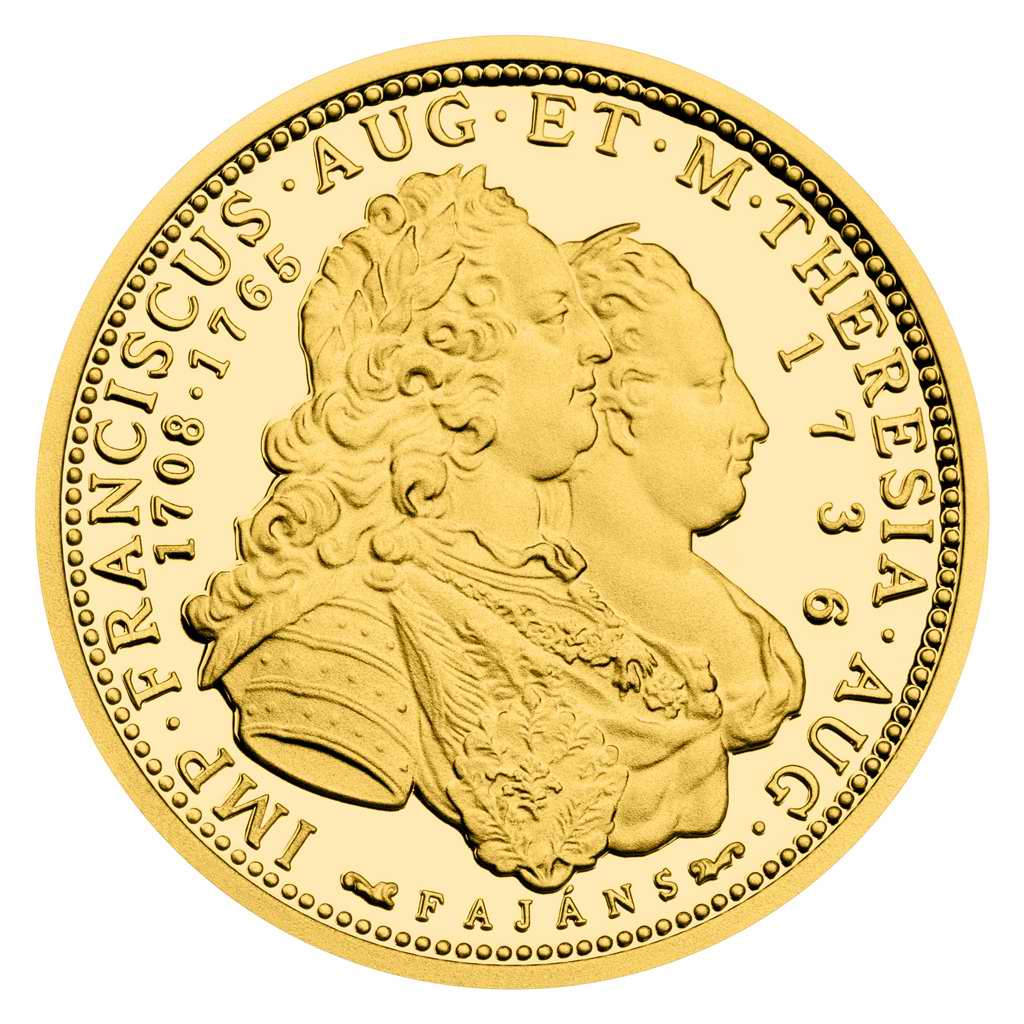
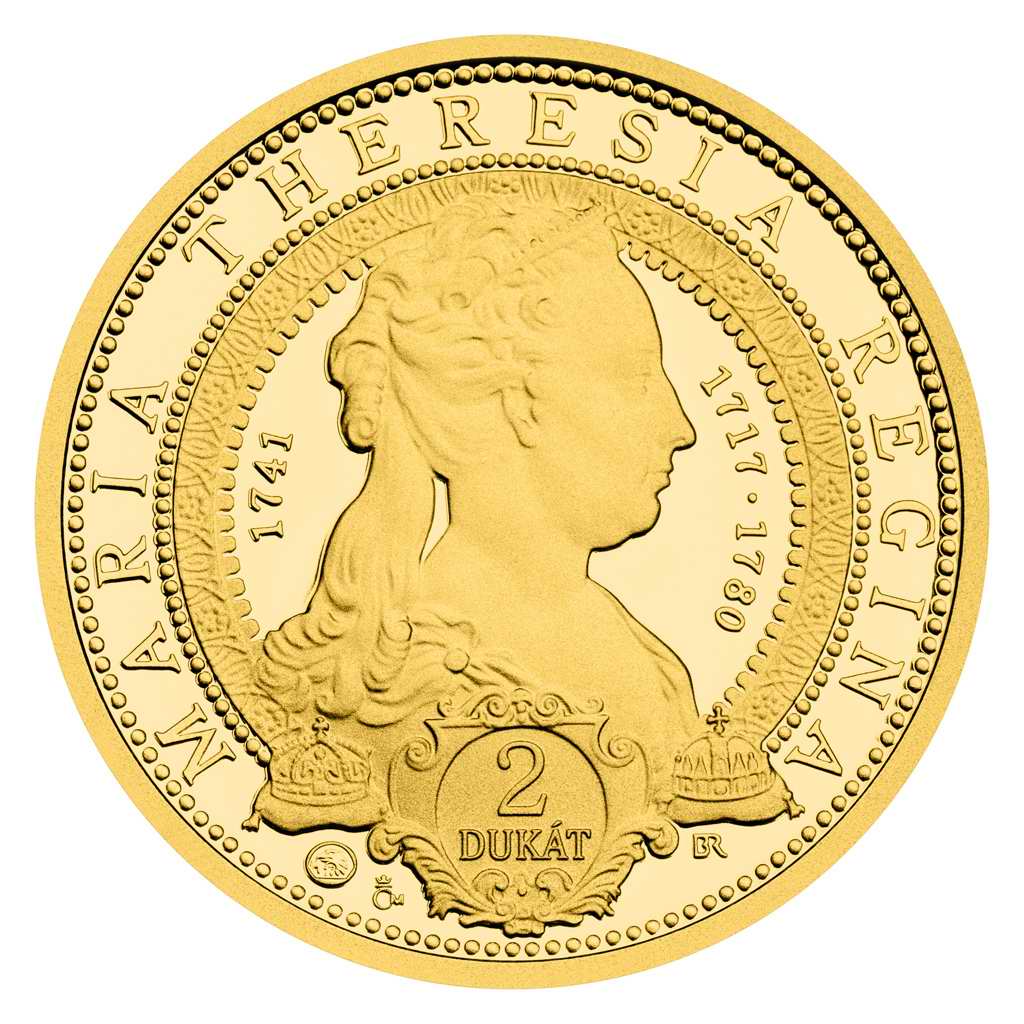
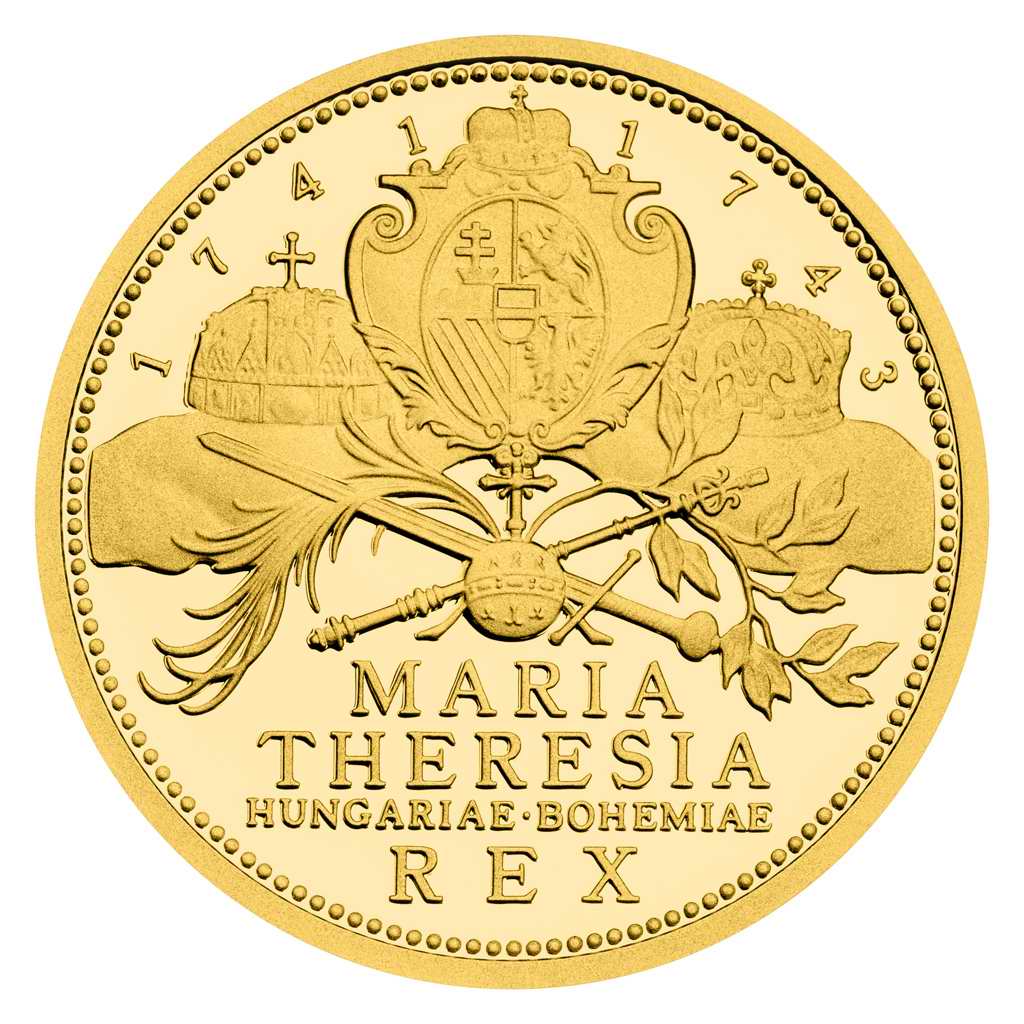
Czech mint
struck, two-sided
Gold 986, proof
80 sets
Ducat – Maria Theresa – wife – proof, 19.75 mm, 3.49 g, 100 pcs
Double ducat – Maria Theresa – ruler – proof, 25 mm, 6.98 g, 50 pcs
Five ducat – Maria Theresa – mother of two emperors – proof, 34 mm, 17.45 g, 50 pcs
Ten ducat – Maria Theresa – reformer – proof, 42 mm, 34.91 g, 42 pcs
In 2024, the Czech Mint issued its fourth Ducat series, intended primarily for Slovak collectors and investors. This comprehensive series of four gold ducat coins tells the story of Maria Theresa.
At the beginning of the 18th century, the situation in the Habsburg Empire looked bleak. Its head was Charles VI, the last living representative of an ancient dynasty, who fell into despair without the prospect of a male heir. The long-awaited heir to the throne came in 1717. It did not matter that she was a girl – her father placed all his hopes for the preservation of the dynasty and the future of the monarchy in her. He paved the way for the young monarch to ascend the throne by issuing a pragmatic sanction, but he could not prepare her for what would happen once she took her place. Power struggles broke out – the so-called Wars of the Austrian Succession – and everyone claimed her rightful position or at least a part of the indivisible state. Maria Theresa did not emerge victorious from this conflict, but it made her all the stronger. She surrounded herself with wise advisors and began to transform her country through unprecedented reforms in education, agriculture, finance, the military, and the judiciary. At her side stood the faithful Emperor of the Holy Roman Empire, Francis Stephen of Lorraine. Although Maria Theresa held the real power, her capable husband managed to emerge from her shadow and, with his business acumen, saved the state treasury from bankruptcy several times. The couple, who were equal partners, founded the Habsburg-Lorraine dynasty together. Thanks to the complex marriage policy she cultivated, Maria Theresa became the “mother-in-law of Europe.” She gave birth to sixteen children. Among her daughters, the French queen Marie Antoinette stood out. Two of her sons – the progressive but hot-headed Joseph II and the diplomatic Leopold II – went on to become enlightened emperors themselves. When Maria Theresa died, she had ruled her empire for forty years. She handed over a modern superpower to her successors and left behind a legacy that her male contemporaries could only dream of:
Ducat – Maria Theresa – wife
Double ducat – Maria Theresa – rulers
Five ducat – Maria Theresa – mother of two emperors
Ten ducat – Maria Theresa – reformer
On the obverse sides of the individual coins, you will find a double portrait of Maria Theresa and Francis Stephen of Lorraine, complemented by ceramics from Holíč; the insignia of Maria Theresa’s power; a double portrait of Joseph II and Leopold II, complemented by the imperial eagle; symbolic representations of Maria Theresa’s reforms – the military, medicine, the economy, the judiciary, education, and agriculture. The reverse side, which is common to the entire Ducat series, is dedicated to Maria Theresa herself. All of this is the work of Slovak medallist Branislav Ronai.
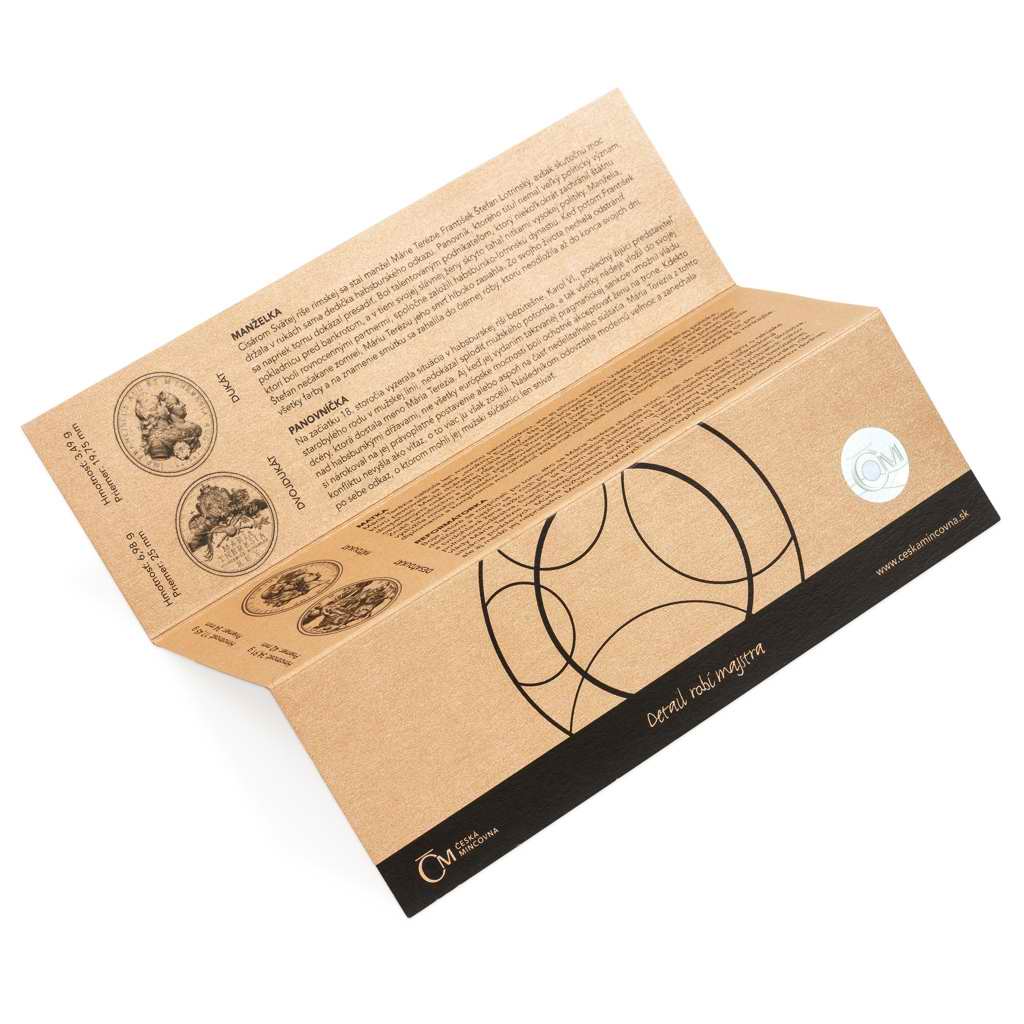
The complete set of ducats is stored in a luxurious wooden case accompanied by a special certificate of authenticity, which explains the significance of Maria Theresa’s various roles. Only 80 collections have been issued.
https://ceskamincovna.sk/en/ducat-series-sk-2024-maria-theresa-set-of-four-medals-proof-456-18463-d/
– Ancient Egypt, Nefertiti – Treasures of Ancient Civilizations VII. (academic sculptor Ľudmila Cvengrošová)
Czech mint
struck, one-sided
50 mm
patinated silver Ag 999
42 g 500 pcs
The medal, designed as part of a set of 23 single-sided medals entitled Great Human Creations (2016-2017), was issued in 2024 as the obverse of the Niue 2 Dollar silver coin in the Treasures of Ancient Civilizations series.
The relief of the seventh silver coin in the series, which represents the treasures of ancient civilizations, features many of the landmarks of ancient Egypt.
- If preserved depictions are believable, Queen Nefertiti, wife of Pharaoh Akhenaten, engaged in activities intended for men – driving off enemy troops and presiding at ceremonies. At the height of the Egyptian empire, she was considered the most powerful woman in the world. But even after three millennia, she is remembered primarily as a mesmerising beauty, thanks to a bust made of stucco and coloured limestone during the Era of 18th Dynasty.
- Ramesse II.belonged to the greatest rulers of ancient Egypt.This 19th dynasty pharaoh, who ruled his empire for sixty years, was a warrior who spread culture and left behind a number of breathtaking monuments. The most famous is his Great Temple at Abu Simbel, whichunlike other Egyptian monuments was not built of stone blocks, however, it was carved directly into the rock mass. While the statues outside the temple are eye-catching for their size, the statues inside were placed so that the sun’s rays would only hit them twice a year – at the spring and autumn equinoxes.
- The largest religious complex in ancient Egypt was Karnak. The entrance to the main temple, which was dedicated to the sun god Amon, was guarded by an alley of sandstone statues. These majestic sphinxes were given the body of a lion, butyou would miss typical human faces. Instead, they boast the head of a ram, which was Amon’s sacred animal. Each sphinx holds the figure of a pharaoh in its paws, which shows that the ruler – probably Ramesses II – was under Amon’s protection.
The reverse side of the commemorative coin made by the academic sculptor Ľudmila Cvengrošová presents a detailed depiction of the bust of Queen Nefertiti, the Great Temple in Abu Simbel and the Sphinx Alley in Karnak. A portrait of Rameses II of Abu Simbel completes the composition. As the licence to issue commemorative coins of the Czech Mint is granted by the Pacific island of Niue, theobverse side bears its necessary attributes – the national emblem, the nominal value of 1 DOLLAR (NZD) and the year of issue 2024.
Our products are usually stored in protective capsules, but in this case we have made an exception. Since the coins from the Treasures of ancient civilizations series stand out in high relief, we want to give you the opportunity to touch one! In addition to the patina, the silver mintage is also covered with a special protective film that will secure that it does not lose its shine…
Treasures of Ancient Civilizations I – The rock city of Petra, the cauldron from Gundestrup and the flying horse from Kan-su (February 2023)
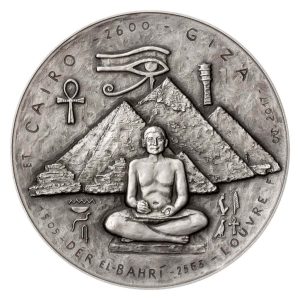
Treasures of Ancient Civilizations III – the Pyramids of Giza and the statue of a seated scribe (September 2023)
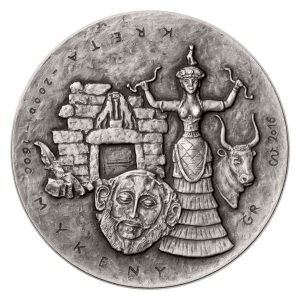
Treasures of Ancient Civilizations IV – Crete, Mycenae, Minoan and Mycenaean Cultures (November 2023)
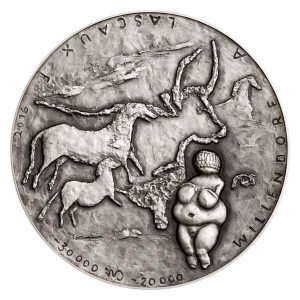
Treasures of Ancient Civilizations V – the Venus of Willendorf and the Lascaux cave paintings (February 2024)
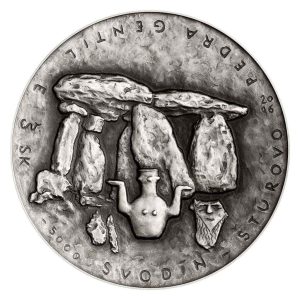
Treasures of Ancient Civilizations VII – Ancient Egypt, Nefertiti (September 2024)
Treasures of Ancient Civilizations VIII – ancient Rome (November 2024)
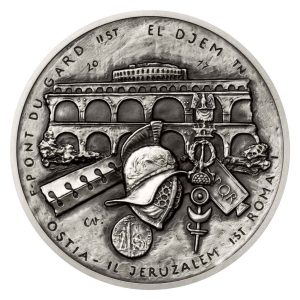
Sketches of a set of 23 single-sided medals Great Human Creations (2016-2017):
– 100th anniversary of the minting of the Czechoslovak 5-halier coin from 1924 (Mgr. art. Martin Sabol)
Kremnica Mint, state-owned enterprise
struck, two-sided
34 mm/60 mm
Gold Au 999/1000, PROOF – 100 pcs, numbered, 34 mm, 31.1 g;
Silver Ag 999/1000, rhodium-plated – 70 pcs, numbered, 60 mm, 149.5 g;
Silver Ag 999/1000, patinated– 200 pcs, numbered, 60 mm, 149.5 g; Tombac MS90, patinated – unlimited mintage, 60 mm, 120 g.
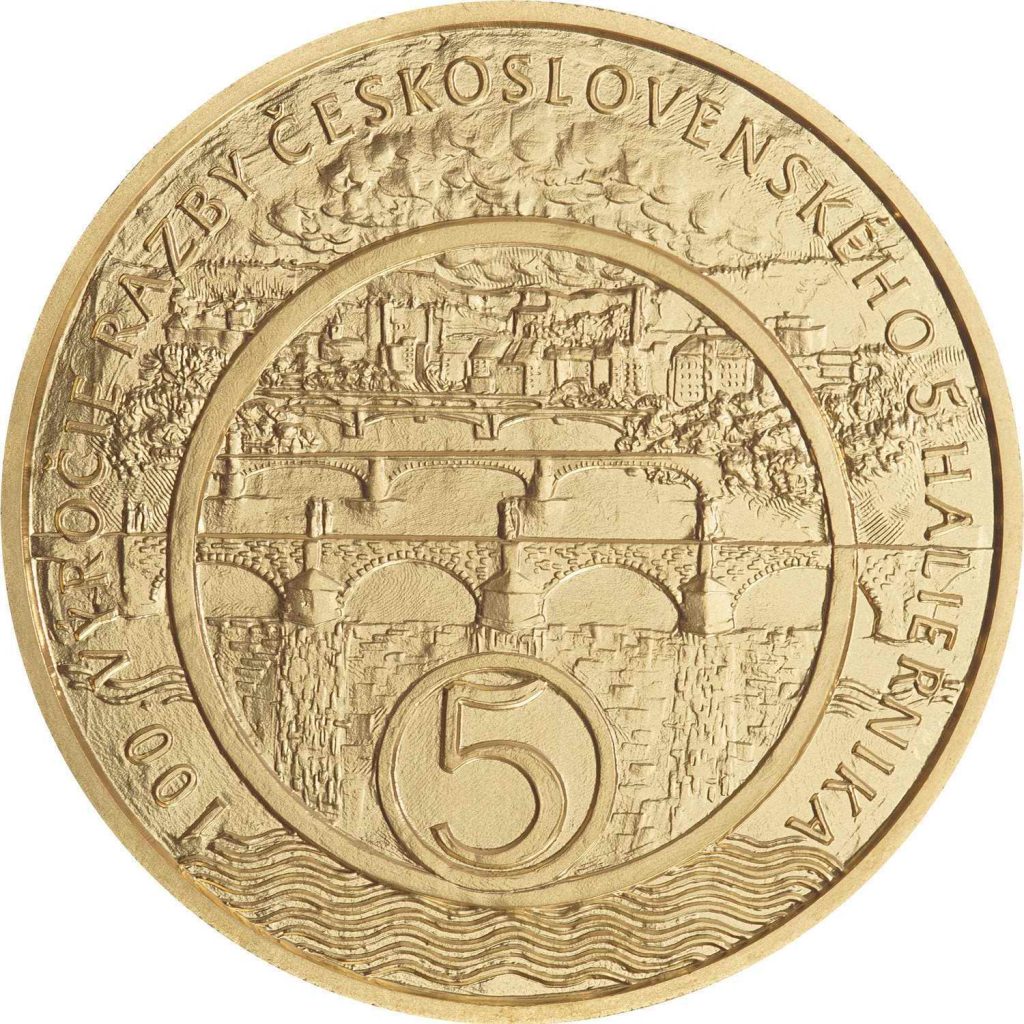
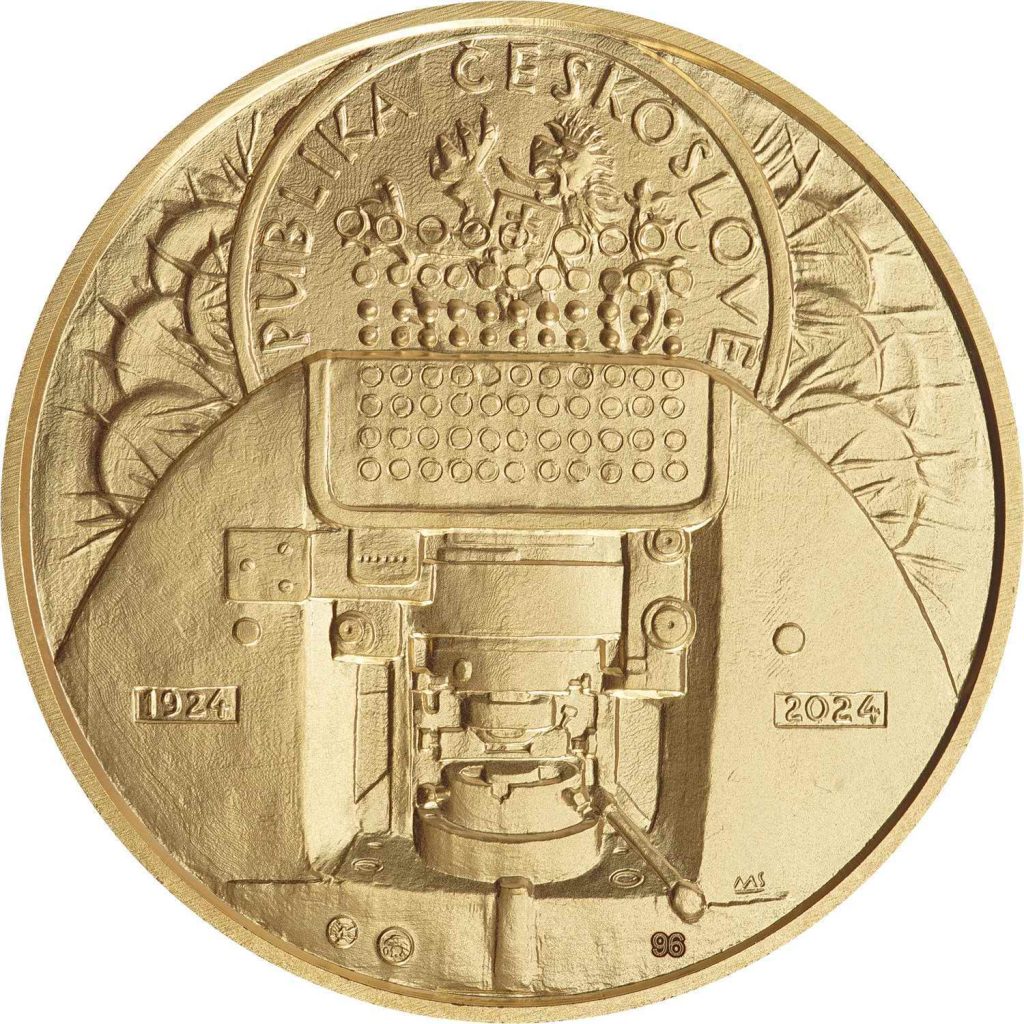
A medal dedicated to the most mysterious Czechoslovak coin, the rare 5-halier from 1924, which was captured in circulation during the First Czechoslovak Republic.
The medal commemorates the 100th anniversary of the minting of the Czechoslovak five-halier coin from 1924.The establishment of Czechoslovakia on October 28, 1918, led to the need for monetary reform, which was undertaken by Finance Minister Dr. Alois Rašín. On May 29, 1922, Professor Otakar Španiel submitted designs for the five-halier, two-halier, and ten-halier coins, and after modifications, the design for the five-halier coin was approved for mass production. By the end of 1923, 40 million coins had been minted, of which 2.2 million were handed over to the banking office in 1924.The five-halier coin from 1924 is now considered the rarest Czechoslovak circulation coin, which increases its attractiveness among collectors. The unclear reason for its minting and the exact number of coins minted contribute to its cult status.
Gold Au 999/1000, PROOF – 100 pcs, numbered, 34 mm, 31.1 g
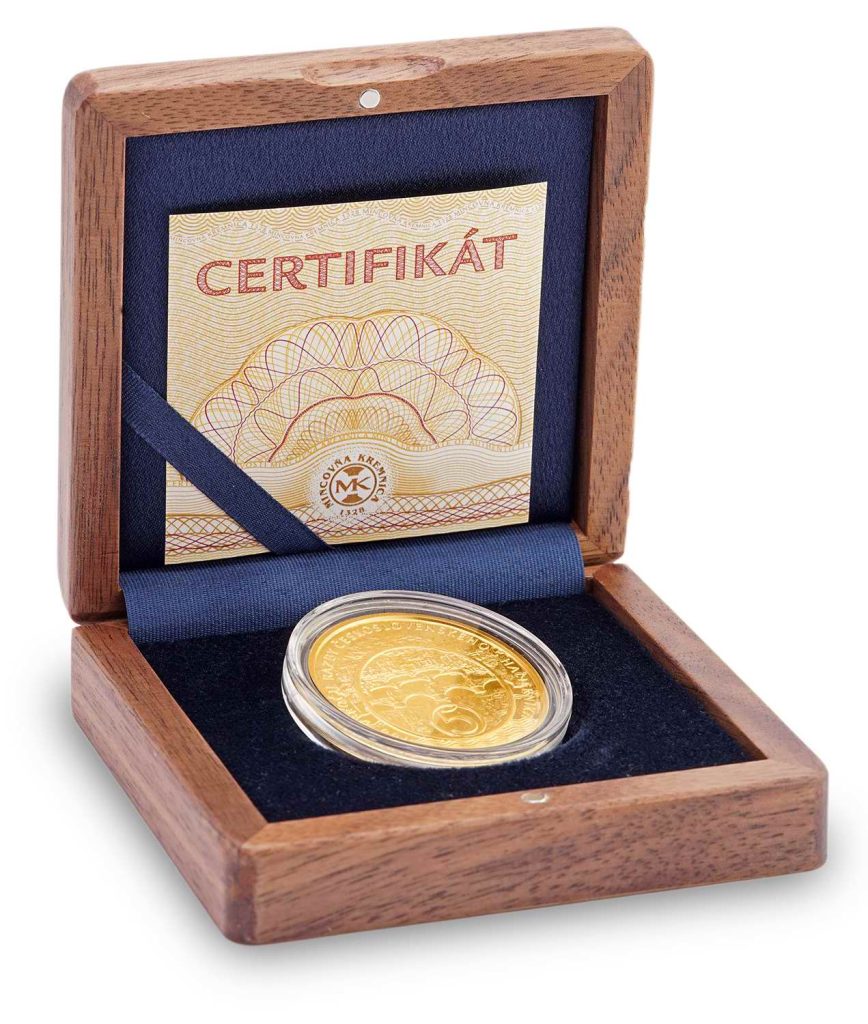
https://www.mint.sk/en/eshop/gold-medal-100th-anniversary-minting-czechoslovak-5-haller-1924
Silver Ag 999/1000, rhodium-plated – 70 pcs, numbered, 60 mm, 149.5 g;
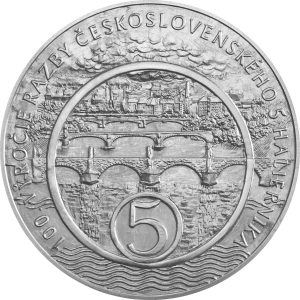
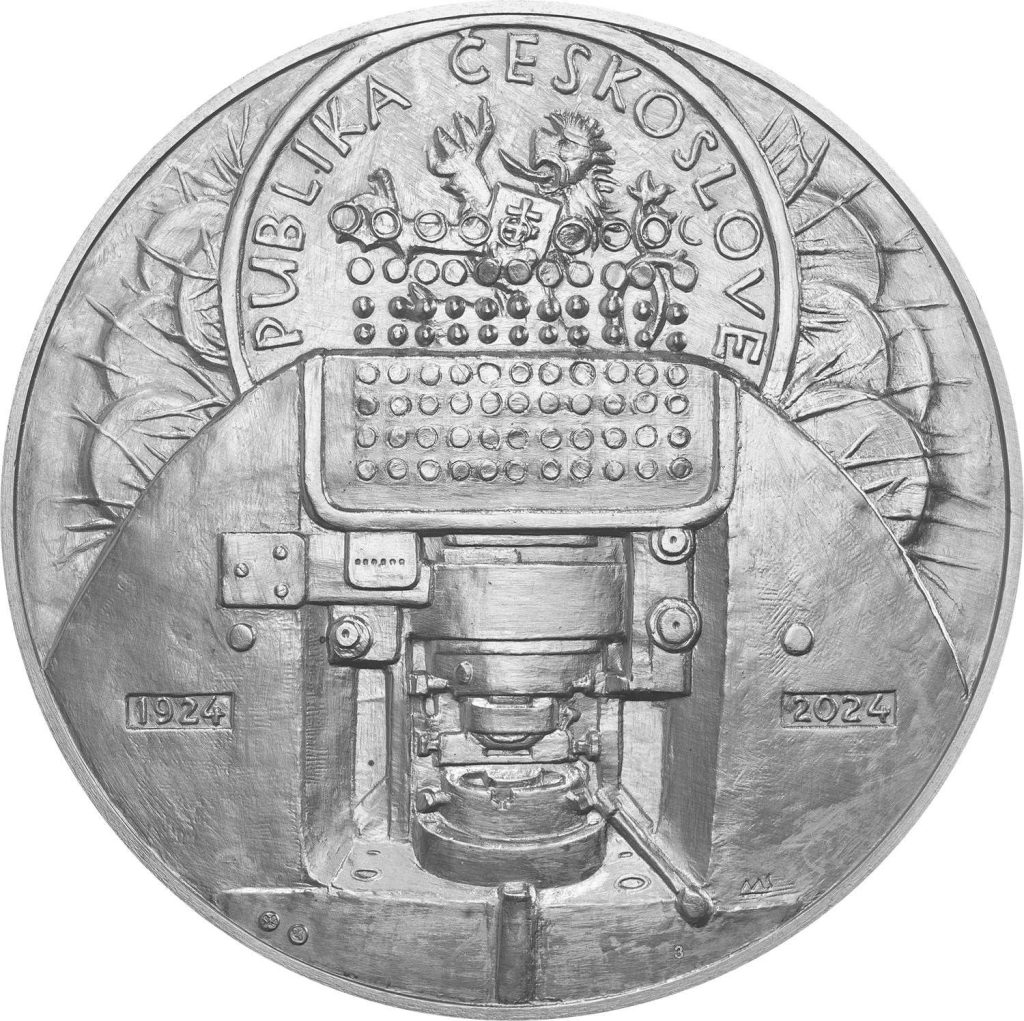
https://www.mint.sk/en/eshop/silver-medal-ro-100th-anniversary-minting-czechoslovak-5-haller-1924
Silver Ag 999/1000, patinated – 200 pcs, numbered, 60 mm, 149.5 g;
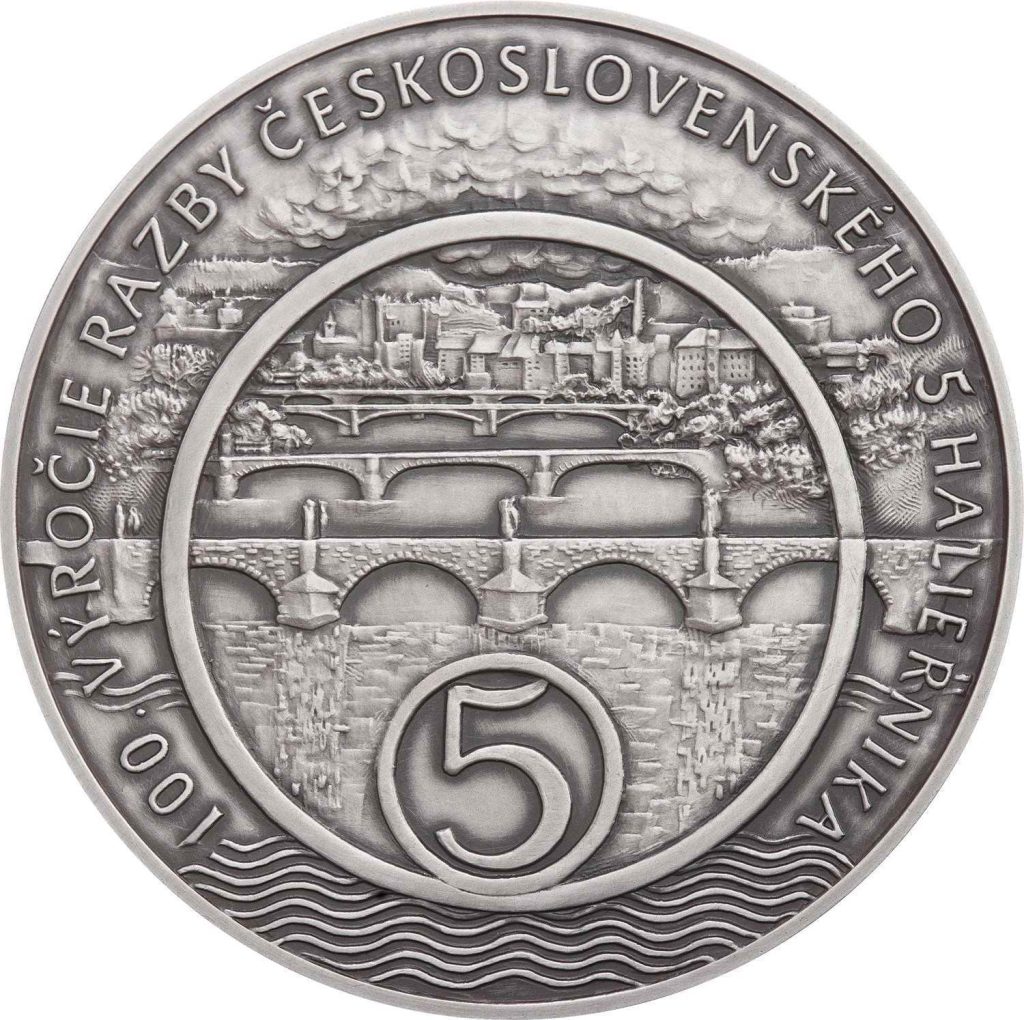
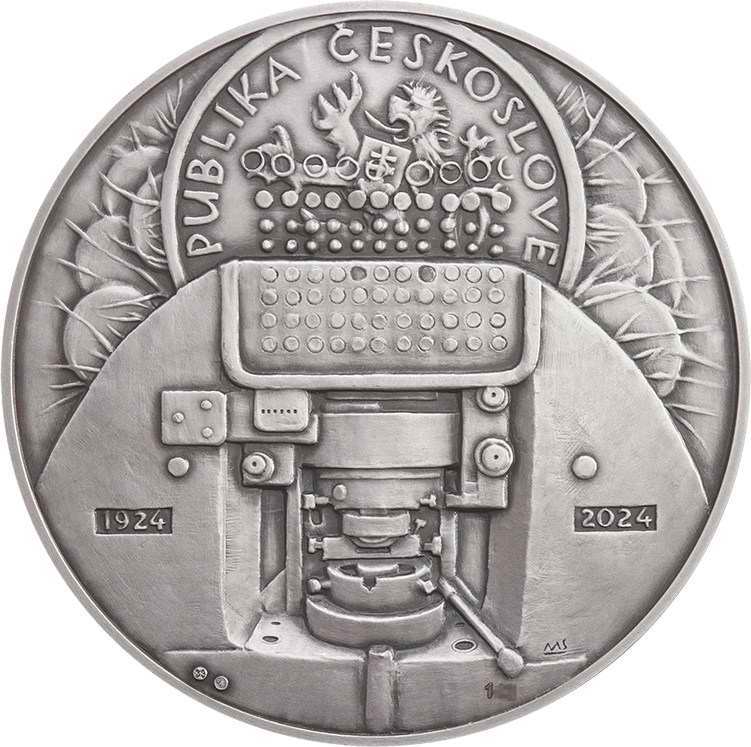
https://www.mint.sk/en/eshop/silver-medal-100th-anniversary-minting-czechoslovak-5-haller-1924
Tombac MS90, patinated – unlimited mintage, 60 mm, 120 g
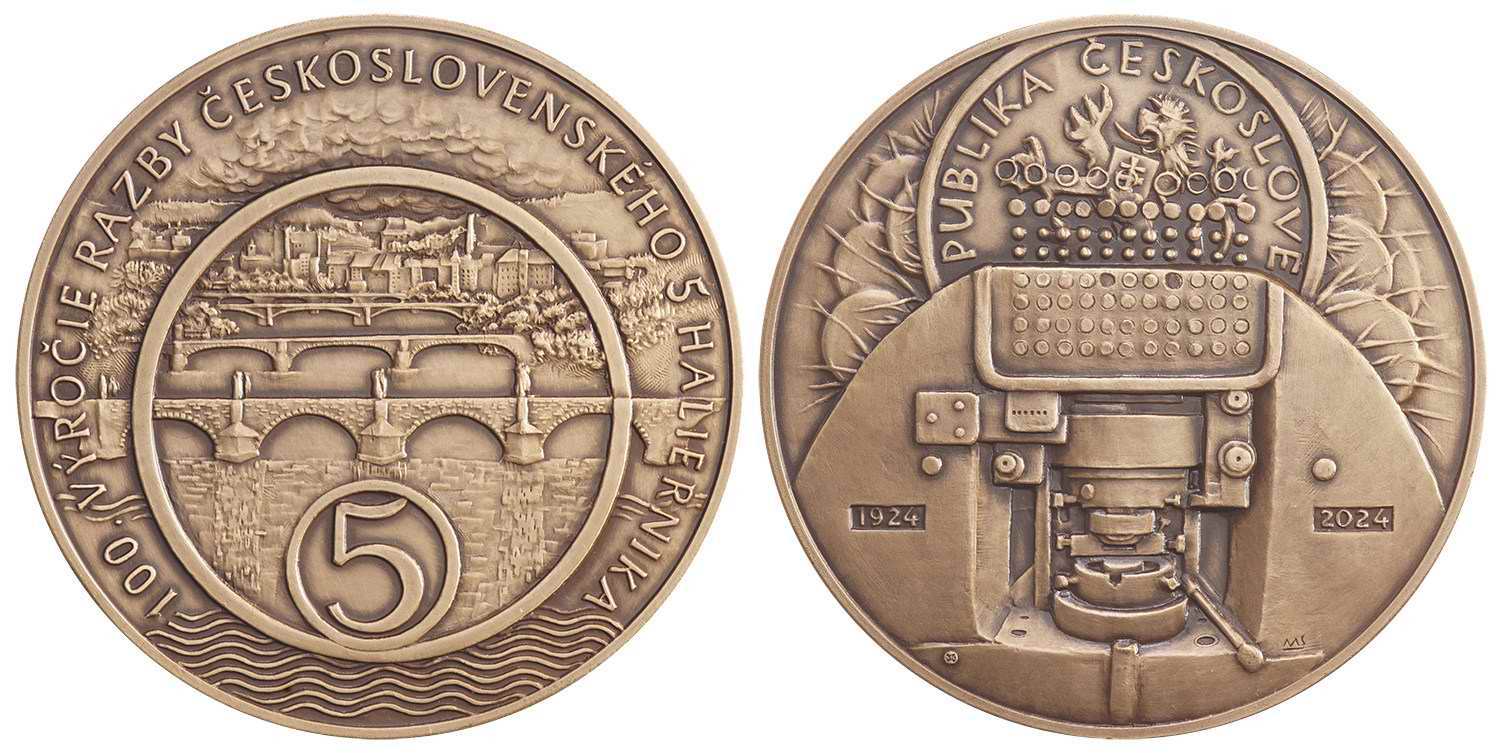
https://www.mint.sk/en/eshop/brass-medal-100vyrocie-razby-ceskoslovenskeho-5-haliernika-z-roku-1924
– 50th anniversary of organized numismatics in Humenné 1974-2024, Štefan Sciranka, (first) chairman of the numismatic club in Humenné (Mgr. art. Tomáš Tulis, Wiliam Schiffer)
Slovak Numismatic Society at the Slovak Academy of Sciences – branch Humenné
Mincovňa Kremnica (Kremnica Mint), state-owned enterprise, 2024
Tomáš Tulis (2023), Wiliam Schiffer (2001)
struck, one-sided
50×50 mm (klippe)
Ag 999/1000 – 35 pcs, patinated tombac MS90 – 40 pcs, patinated silver-plated tombac MS90 – 25 pcs
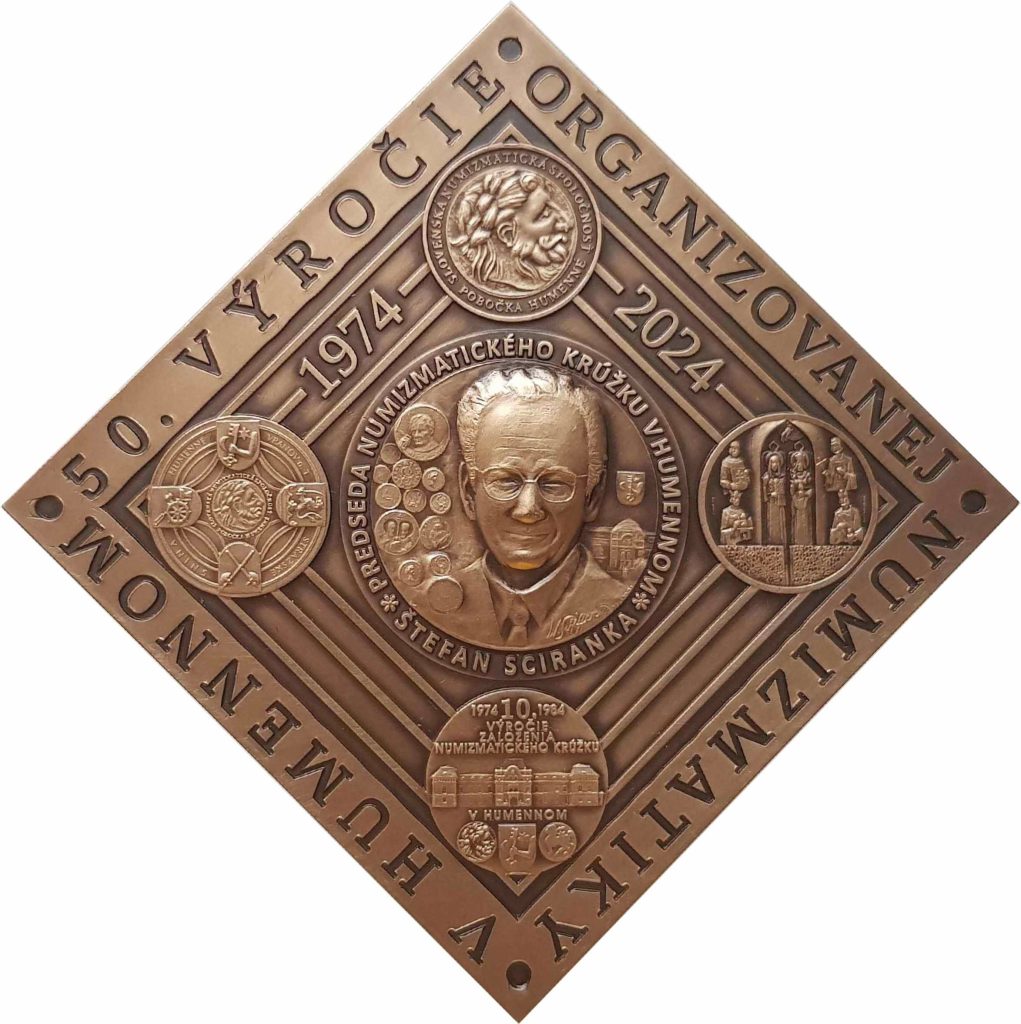
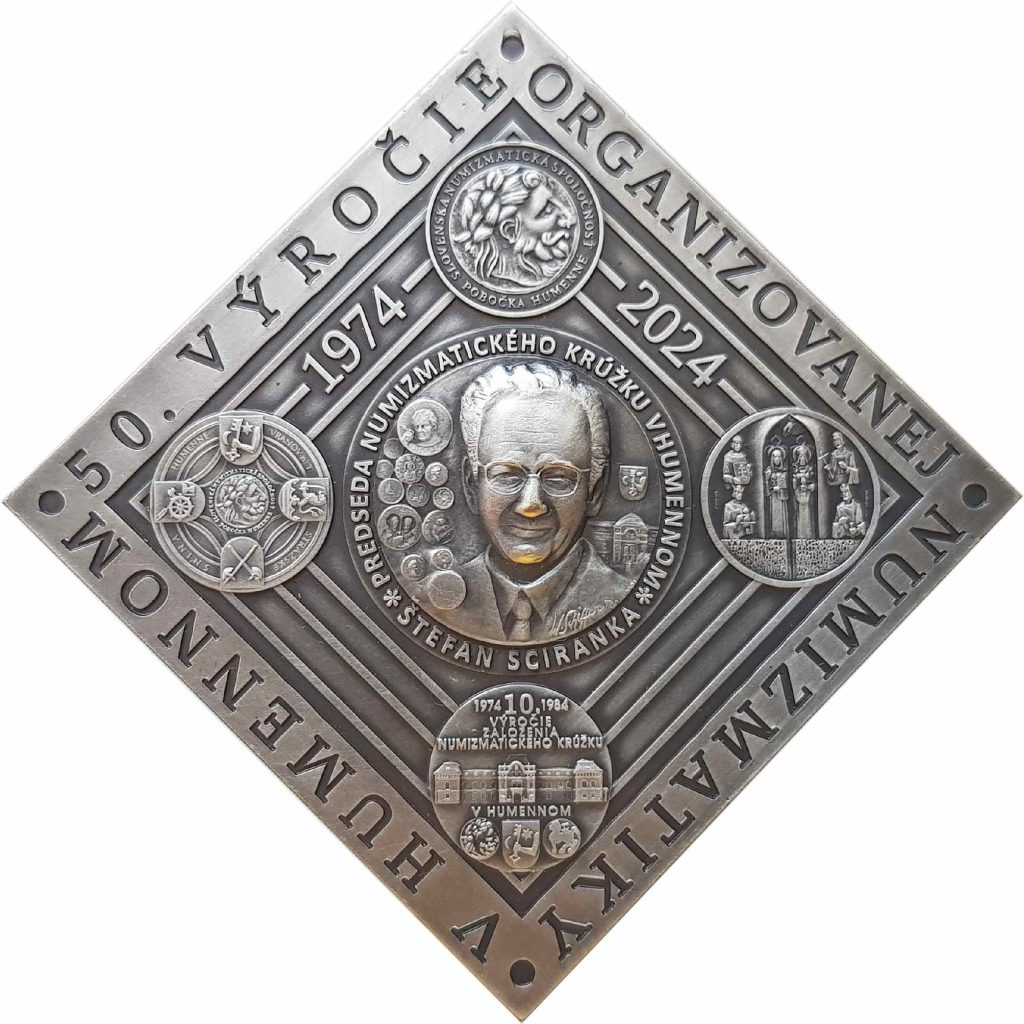
Klippe commemorating the 50th anniversary of organized numismatics in Humenné 1974-2024 features a central portrait of Štefan Sciranka, the first chairman of the numismatic club in Humenné, surrounded by medals from the Humenné numismatic club, which has been a branch of the Slovak Numismatic Society at the Slovak Academy of Sciences since 2008.
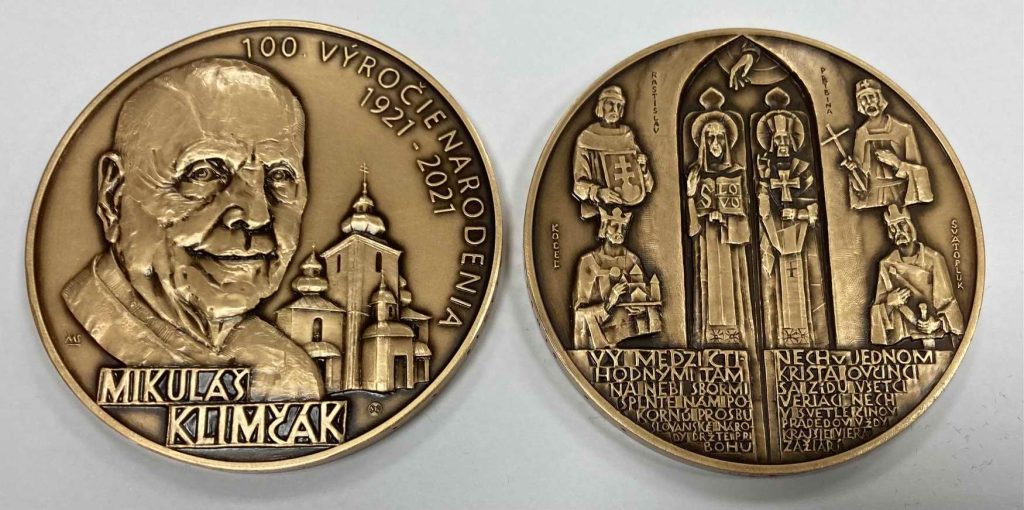
The single-sided clip is a composition of one central medallion with a portrait of Štefan Sciranka by William Schiffer, three medals (below, the obverse of the medal issued on the occasion of the 10th anniversary of the founding of the numismatic club in Humenné (1974-1984), dominated by the Renaissance castle in Humenné and the coat of arms of the town; on the left, the reverse side of the 2019 medal commemorating the 85th anniversary of the unveiling of the statue of General Štefánik in Humenné, which features the coats of arms of four towns (Humenné, Vranov nad Topľou, Snina, Strážske) around the branch logo in a circle; on the right, the reverse side of the 2021 medal commemorating the 100th anniversary of the birth of painter and sculptor Mikuláš Klimčák, dominated by the figures of St. Cyril and Methodius from the stained glass windows of the Roman Catholic Church of All Saints in Humenné and the half-figures of Pribina and Koceľ on the left, Rastislav and Svätopluk on the right) and at the top a token with the official emblem of the branch and the male head (Zeus) from the obverse of a coin originating from a mass find of Celtic-Dacian coins from the vicinity of Humenné (Ptičie), which was issued by the branch, or rather the circle of the Slovak Numismatic Society in Humenné.
The central medallion with the portrait of Štefan Sciranka is a plaster model created by master William Schiffer in 2001 in Paris for the Humenné numismatic branch, from which the medallist of the Kremnica Mint studio, Tomáš Tulis, created this commemorative medal – klippe in 2023.
In addition to the portrait of Sciranka, Schiffer’s original model also features two of Schiffer’s medals on the left-hand side – Ján Hollý and St. Cyril and Methodius, as well as various historical coins, below them the coat of arms of the village of Dechtice (a silver bird with a golden cross on its head), district of Trnava with the historical name Dugce and the year of the village’s founding 1258, on the right side below the coat of arms of the town of Humenné the facade of Humenné Castle, the former seat of the Druget dynasty, built in the Renaissance style and rebuilt in the Neo-Baroque style after it became the property of the Andrášiovci family. Today, it is a national cultural monument together with the adjacent park and houses the Vihorlat Museum. It is one of the largest and most extensive castle-type buildings in Slovakia.
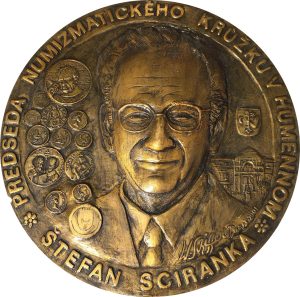
Photo: klippe Peter Kočvara; plaster model of Štefan Sciranka by William Schiffer from 2001 – Slovak Numismatic Society in Humenné branch; text Peter Kočvara, Ladislav Panoc (Slovak Numismatic Society– Humenné branch)
– Gustáv Kazimír Zechenter Laskomerský – Personalities of Slovak Towns (Mgr. art. Martin Sabol)
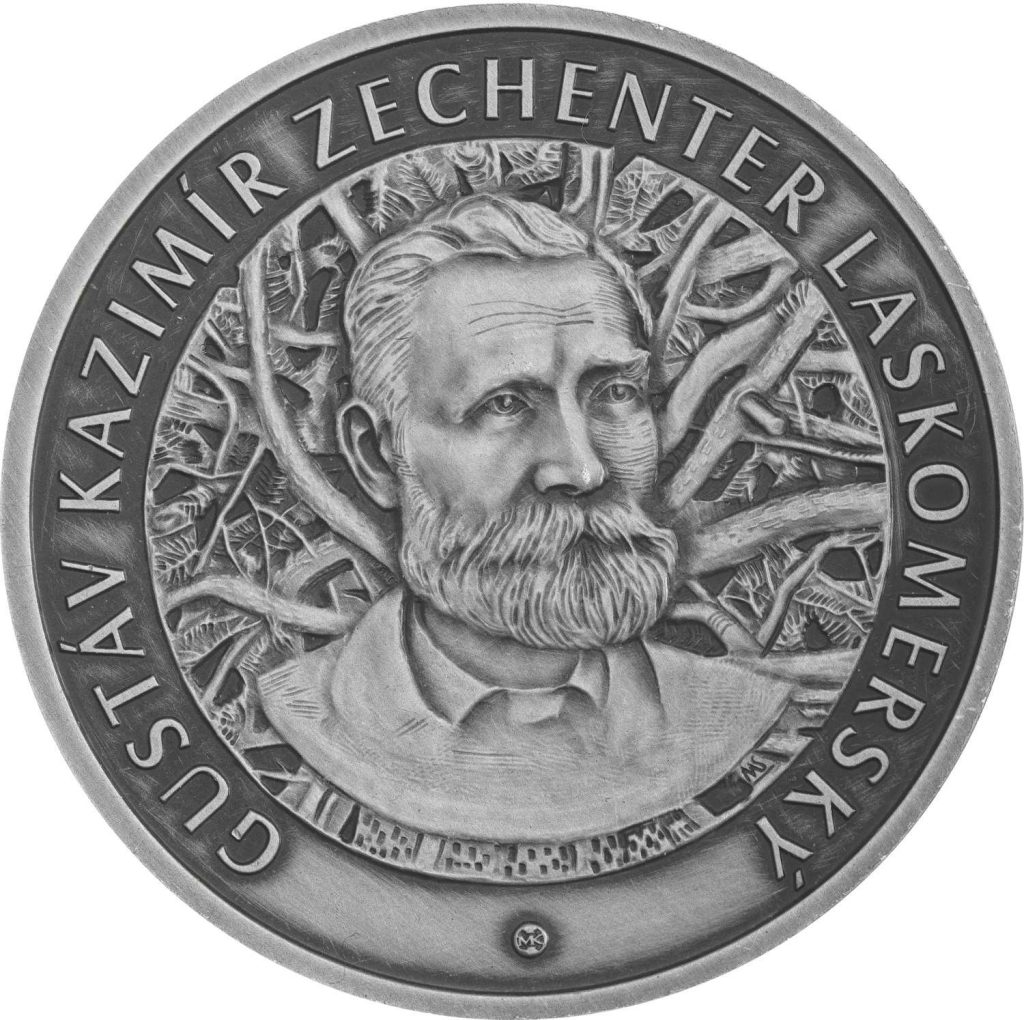
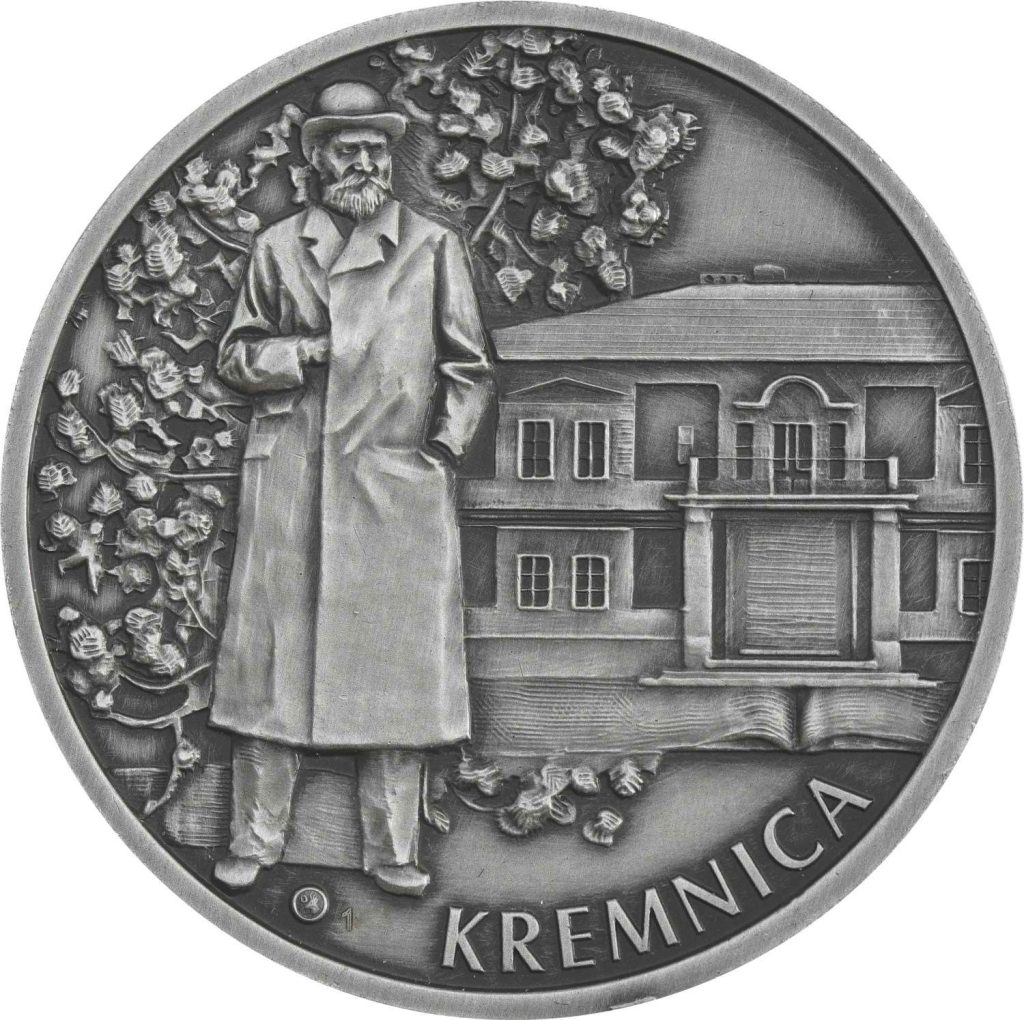
Mincovňa Kremnica (Kremnica Mint), state-owned enterprise, 2024
Struck, two-sided
34 mm
Material: patinated silver Ag 999/1000
150 pcs limited and numbered mintage
20.4 g
Silver medal awarded to Gustáv Kazimír Zechenter Laskomerský, Slovak prose writer and journalist, who worked in Kremnica for many years. He was a co-founder and member of the Matica Slovenská committee, as well as co-organizer of the Slovak Museum Society.
https://www.mint.sk/en/eshop/silver-medal-personalities-slovak-cities-kremnica-gustav-kazimir-zechenter-laskomersky
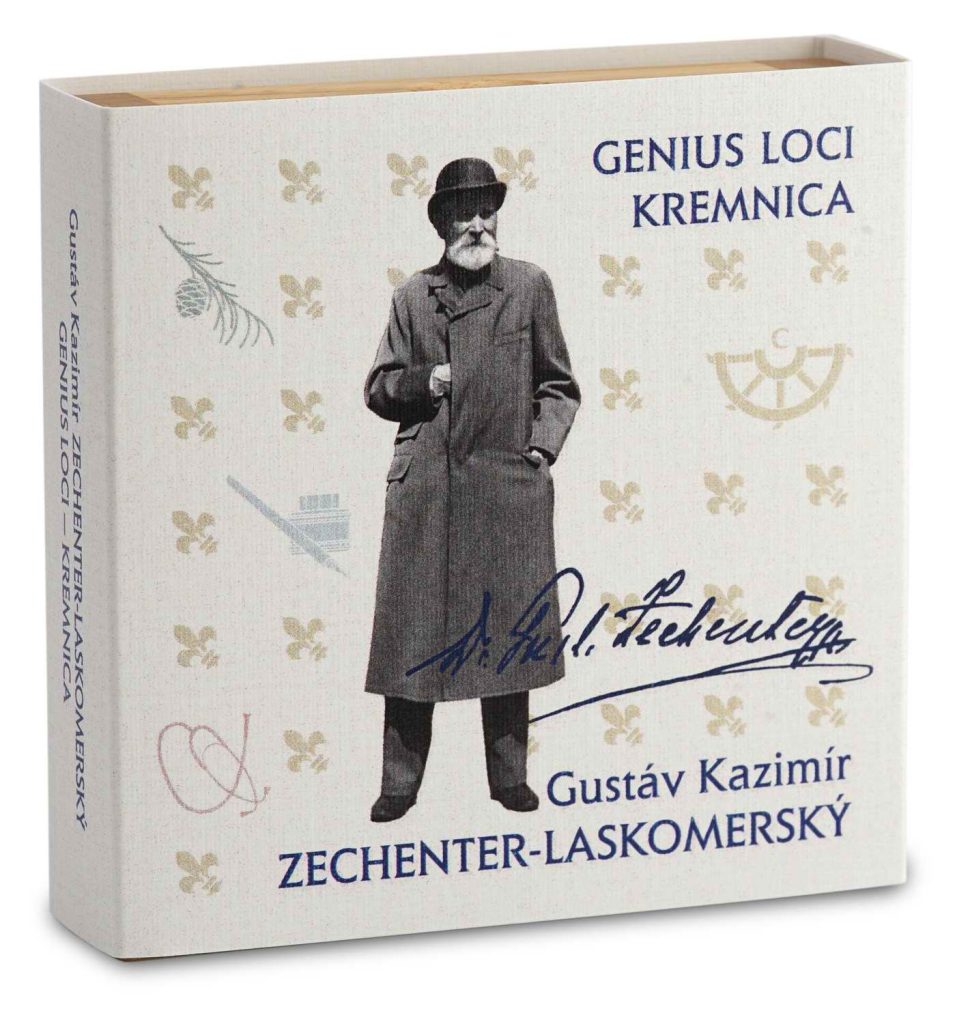
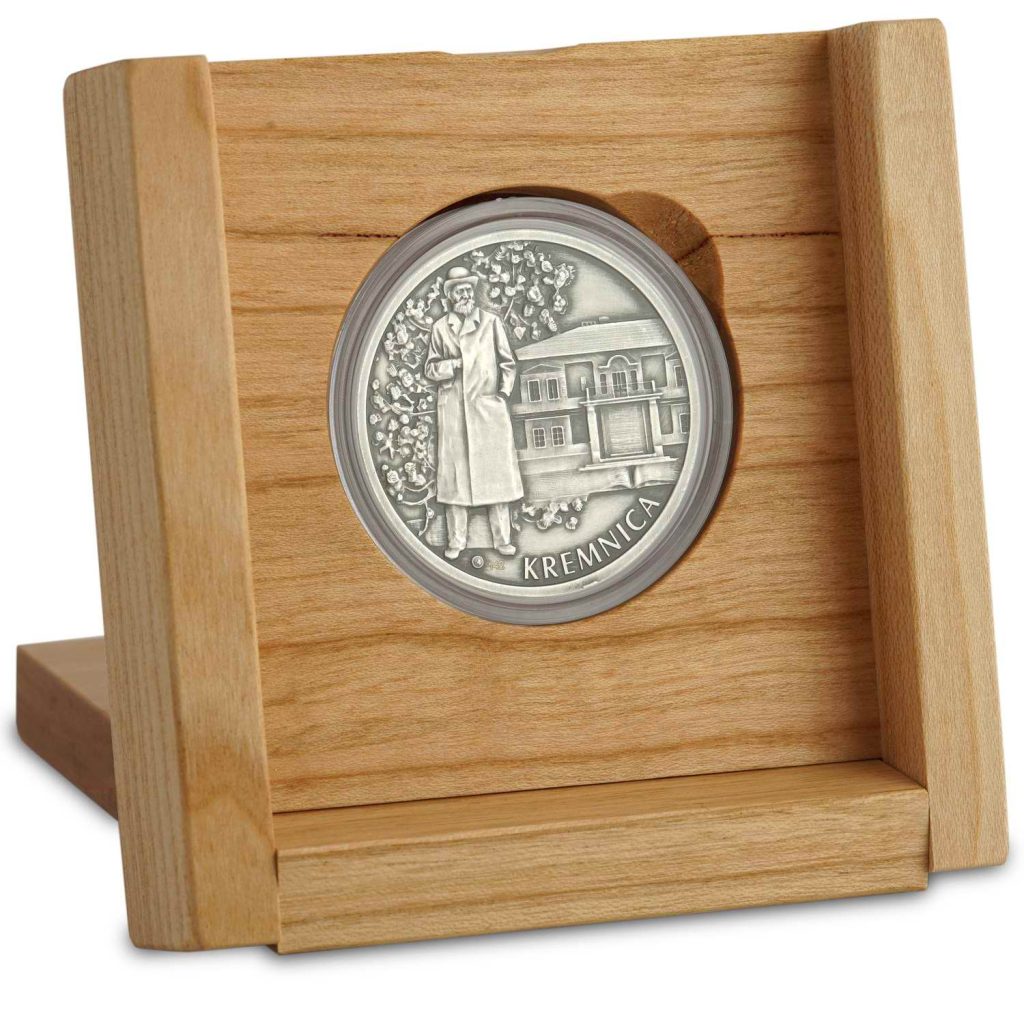
Gustáv Kazimír Zechenter-Laskomerský
(* 1824 Banská Bystrica — † 1908 Kremnica) – physician, prose writer, publicist, author mainly of short humorous genres and travelogues
Gustáv Kazimír Zechenter Laskomerský was born on March 4, 1824, as the youngest child in the family of a mining official who became the administrator of the smelter in Ponická Huta in 1829.Gustáv attended elementary school there, but after his family returned to Banská Bystrica, he studied at the local Catholic grammar school (1832–1840).He continued his studies at the academy in Vacov and at the Faculty of Philosophy in Budapest, where he transferred to medicine in 1842, which he subsequently completed in Vienna (1850).
He first practiced medicine in Banská Bystrica (1850–1853) as a county doctor, then continued for 15 years as a mining and forestry doctor, and from 1868 until his death (August 20, 1908) he worked and lived in Kremnica. He died at the age of 84 and is buried in the local cemetery.
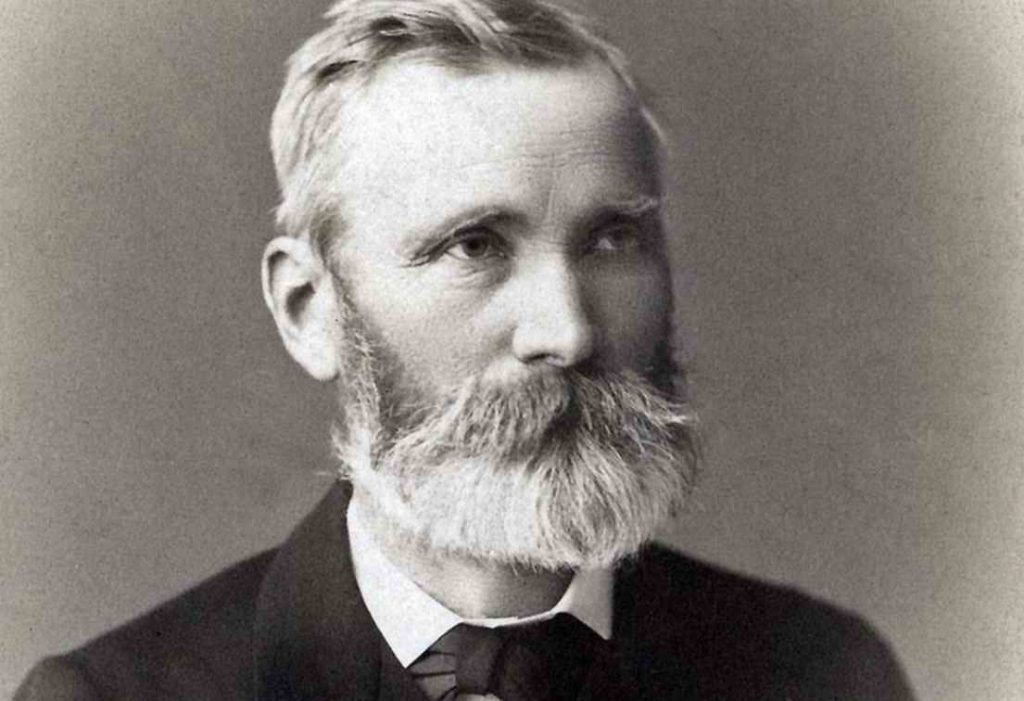
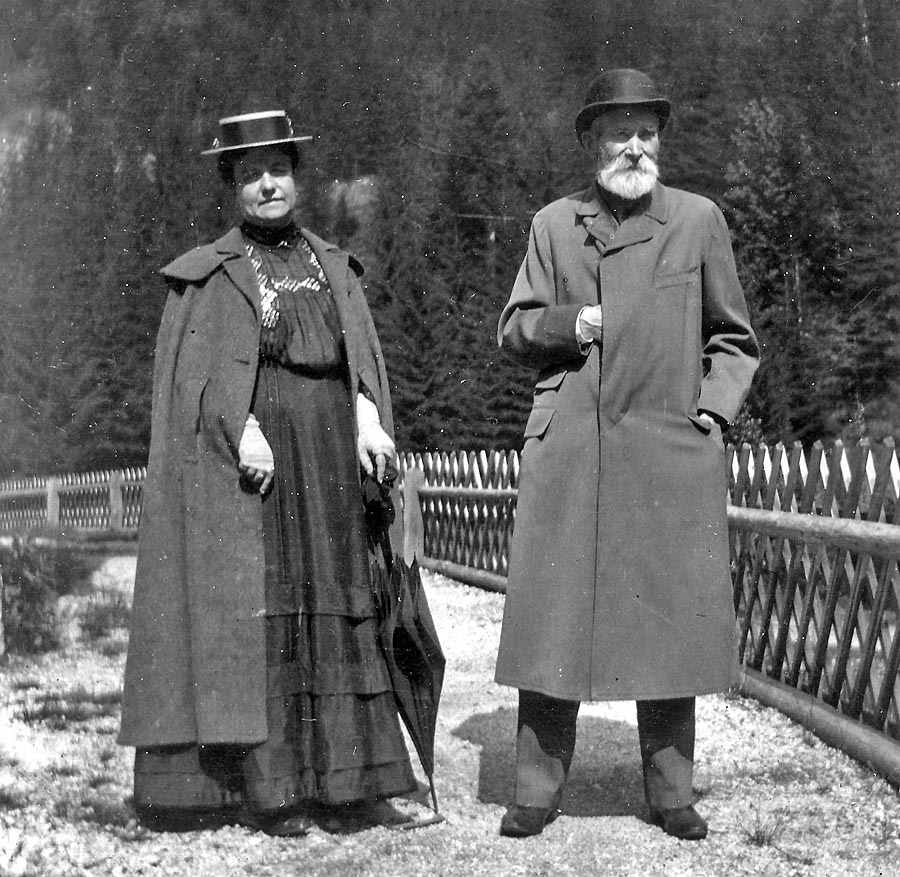
Portrait photo and photo with his wife, which served as a model for the medal
During the Štúr movement, he was a leading figure in the national emancipation movement. While still a student in Vienna, he participated in the revolutionary movements of 1848/49 as a member of the academic guard. He also played an important role in the years of the memoranda and the Matica, was a co-founder and member of the Matica Slovenská committee, co-organizer of the Slovak Museum Society, and a supporter of Czech-Slovak mutuality (his friendship with Czech national writer Božena Němcová played a special role in this).
He was also literarily gifted, making his mark especially in prose, which was not lacking in his famous humor. His work can be classified as belonging to the period between Romanticism and Realism. He began by writing satirical articles for periodicals, using verbal and situational comedy in his works, but without neglecting the plot. He began by writing satirical articles for periodicals, using verbal and situational comedy in his works, but without neglecting the plot.
In his travelogues, he focuses not only on his experiences and adventures, but also on the interpretation of artistic monuments and an overview of the history of individual cities. However, his most significant literary work is his autobiography, which was last published in 1956 under the title Fifty Years of Slovak Life.
He uniquely captured not only his personal experiences and events, but also the nationwide movement through his contacts with its leaders (Ján Kollár, Štefan Moyses, Ľudovít Štúr, Janko Francisci, Ján Chalupka, Samo Chalupka, and many others). He thus provided a detailed picture of Slovak social and political life in the second half of the 19th century.
But Zechenter’s activities did not end there – he was interested in geology, mineralogy, crystallography, speleology, and botany. He published the results of his research and observations, as well as popular science articles and scientific studies from various fields, in the domestic and foreign press. He maintained personal contacts and corresponded with leading natural scientists. From 1860, he was a member of the medical section of the Bratislava Natural Science Society, and from 1867, he was also a corresponding member of the Kaiserlich-Königliche geologische Reichs-Anstalt / Geological Institute in Vienna.
Zechenter also enjoyed painting, which he used to illustrate his own literary works. He often painted portraits of family members and friends, drawings, and, to a lesser extent, oil paintings of still lifes and scenes from everyday life, which are primarily of documentary value.
Source: Jana Borguľová: Gustáv Kazimír Zechenter Laskomerský sa narodil pred 200 rokmi (www.bystricoviny.sk)
– Jakob Bogdani (Marek Lukáč, Master of Arts)
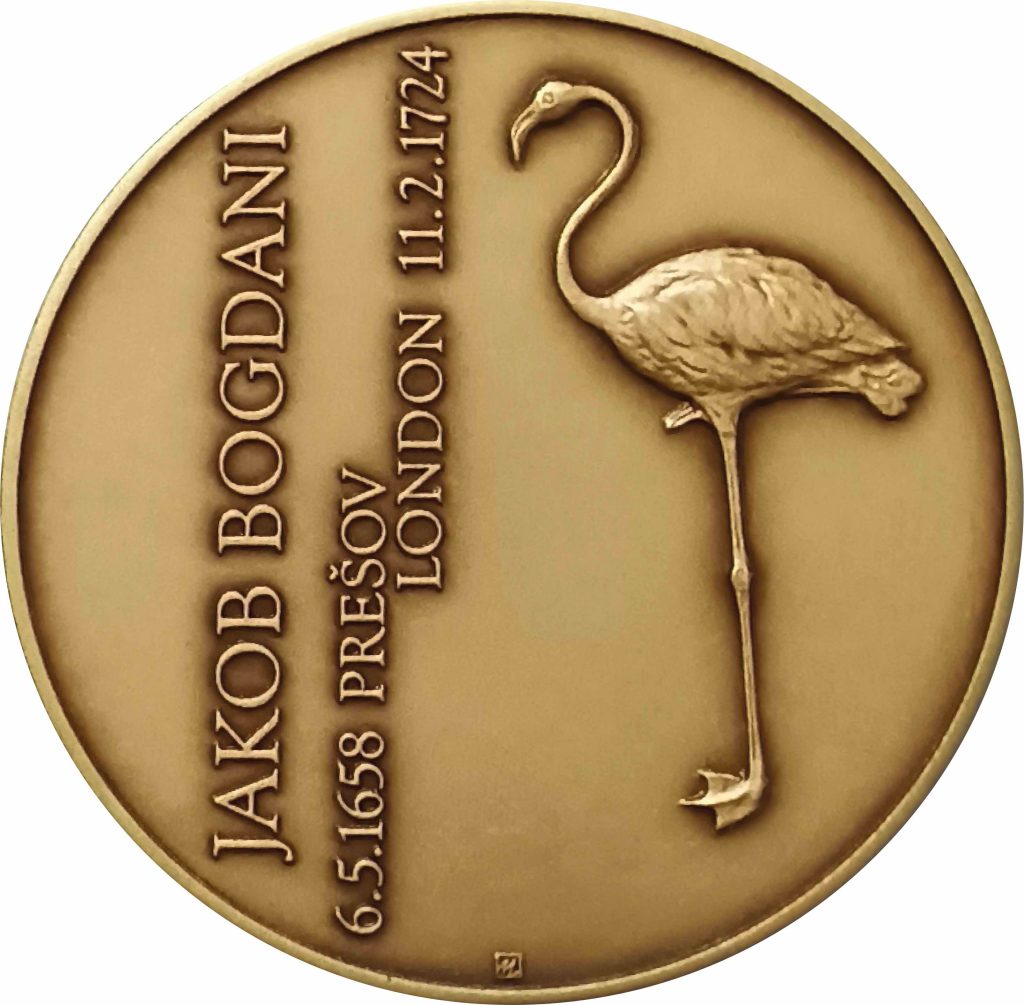
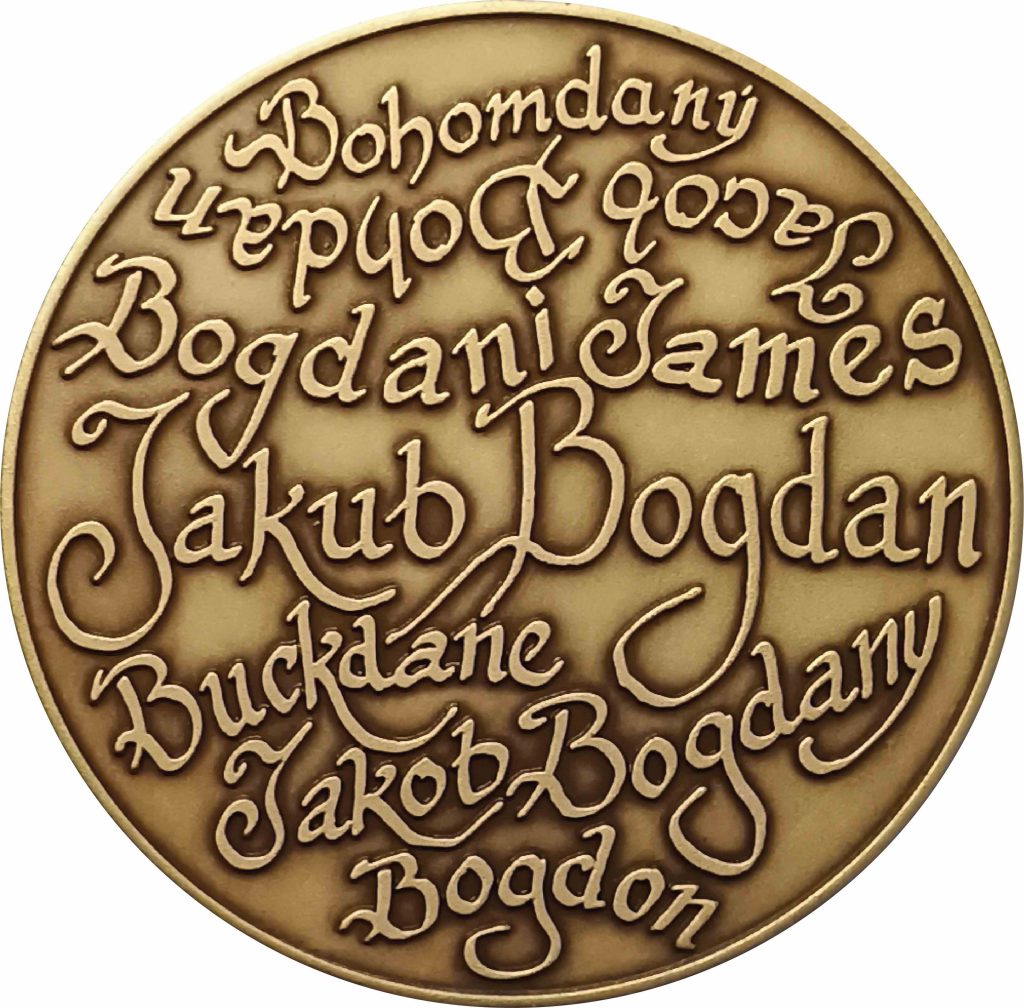
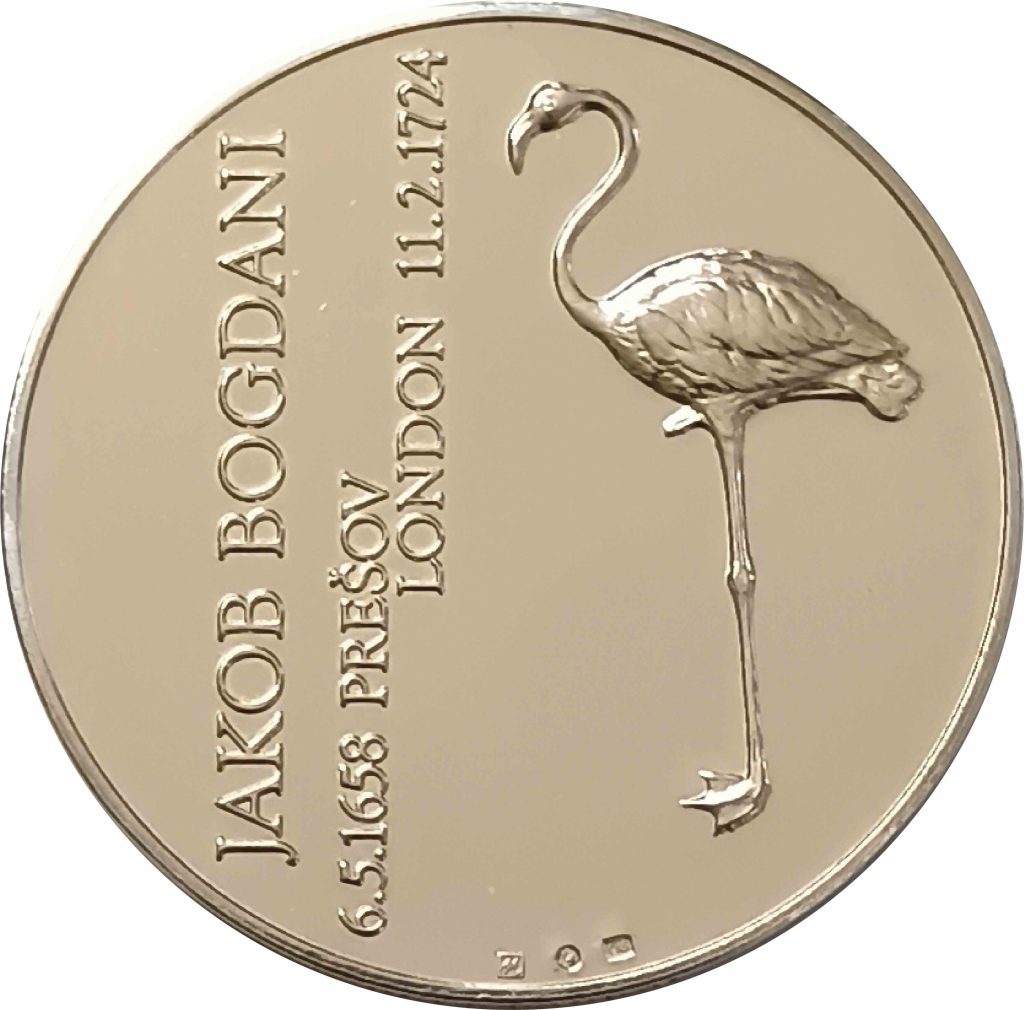
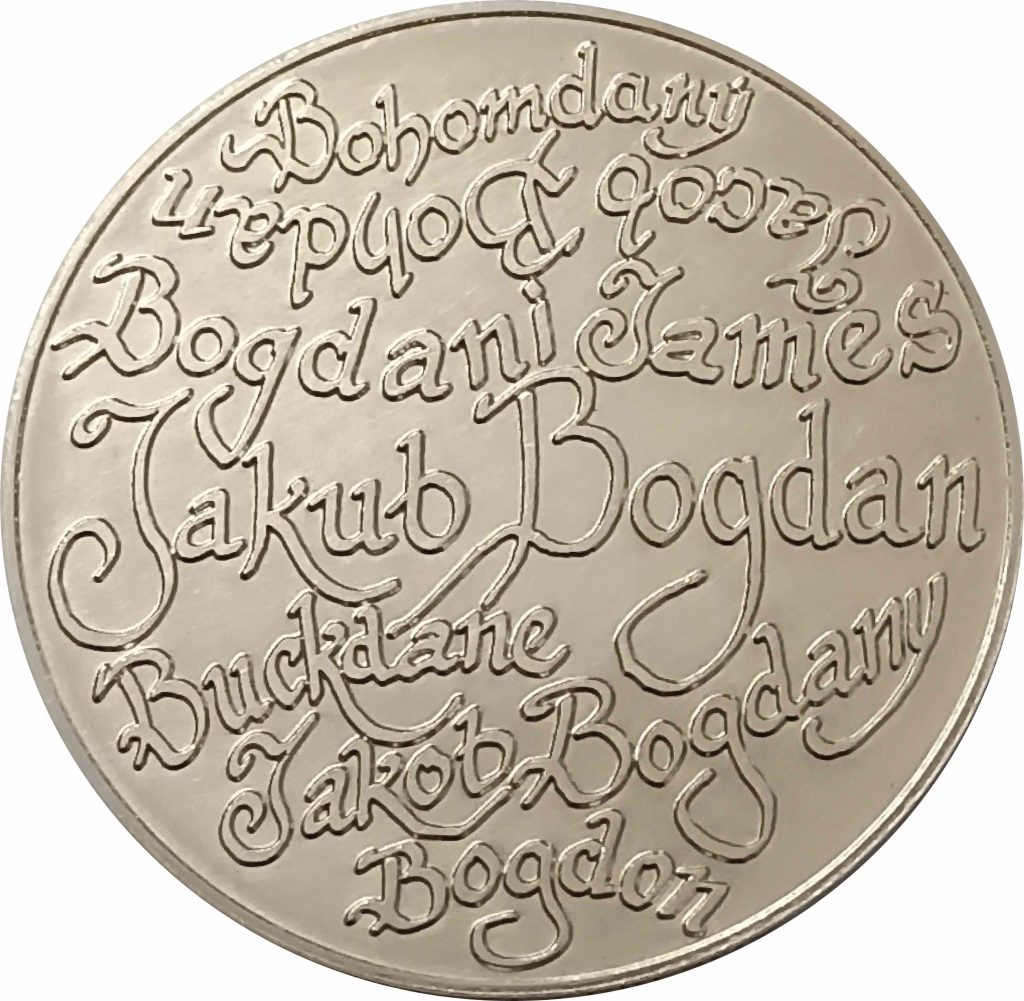
Slovak Numismatic Society at the Slovak Academy of Sciences – branch Prešov
Castax Slovakia, s.r.o., Trenčín
Struck, two-sided
50 mm
Ag 999 – 37 pcs; MS90 – 64 pcs
Jakob Bogdani (Jakub Bogdan, Jacob Bogdány) (May 6, 1658, Prešov – February 11, 1724, London), Baroque court painter to the English kings; Jakob Bogdani was born in Prešov in a house on Hlavná Street 5 to the family of Lukáš Bogdani, master of the painters’ guild. At the age of about 20, he left for Vienna and later Amsterdam. After four years, he left for London, where he quickly became court painter to King William III of Orange. Bogdani is famous for his paintings of still lifes and exotic birds and plants.
Private Collection
© Rafael Valls Gallery, London, UK; out of copyright
“Jakub Bogdány is one of the most important artists ever, especially when it comes to the Baroque period. He originally came from Prešov, but due to the Reformation, he ended up in the Netherlands and then in England, where he worked for the high aristocracy, including William III of Orange and Anne II.” (historian Patrik Farkaš).
More here From royal palaces to Slovakia: Iconic work of art unveiled in gallery (noviny.sk)
Marek Lukáč, magister sztuki/Master of Arts (* 29.02.1972 Prešov), artist, painter, designer, graphic artist, photographer in Prešov. He studied graphic design at the Academy of Fine Arts in Krakow, specializing in free graphics, and received his diploma in the Lithography Studio under Prof. Roman Źygulski.
Author’s website: www.lucamaro.sk
He is also the author of a medal commemorating the 50th anniversary of the founding of the Slovak Numismatic Society at the Slovak Academy of Sciences (minted by the Kremnica Mint, issued by the Central Committee of the Slovak Numismatic Society at the Slovak Academy of Sciences, 2020).
– Ľudovít Štúr – Štúrovci (Mgr. art. Martin Sabol)
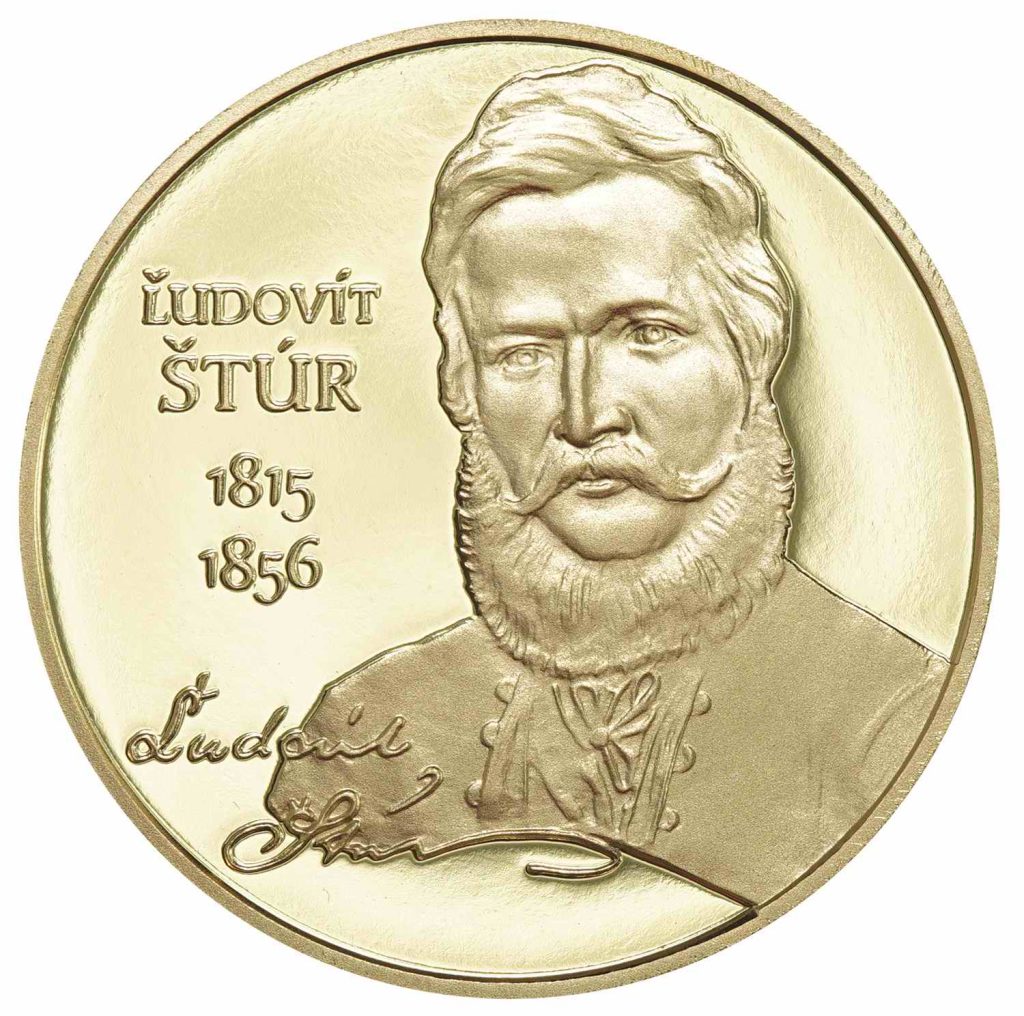
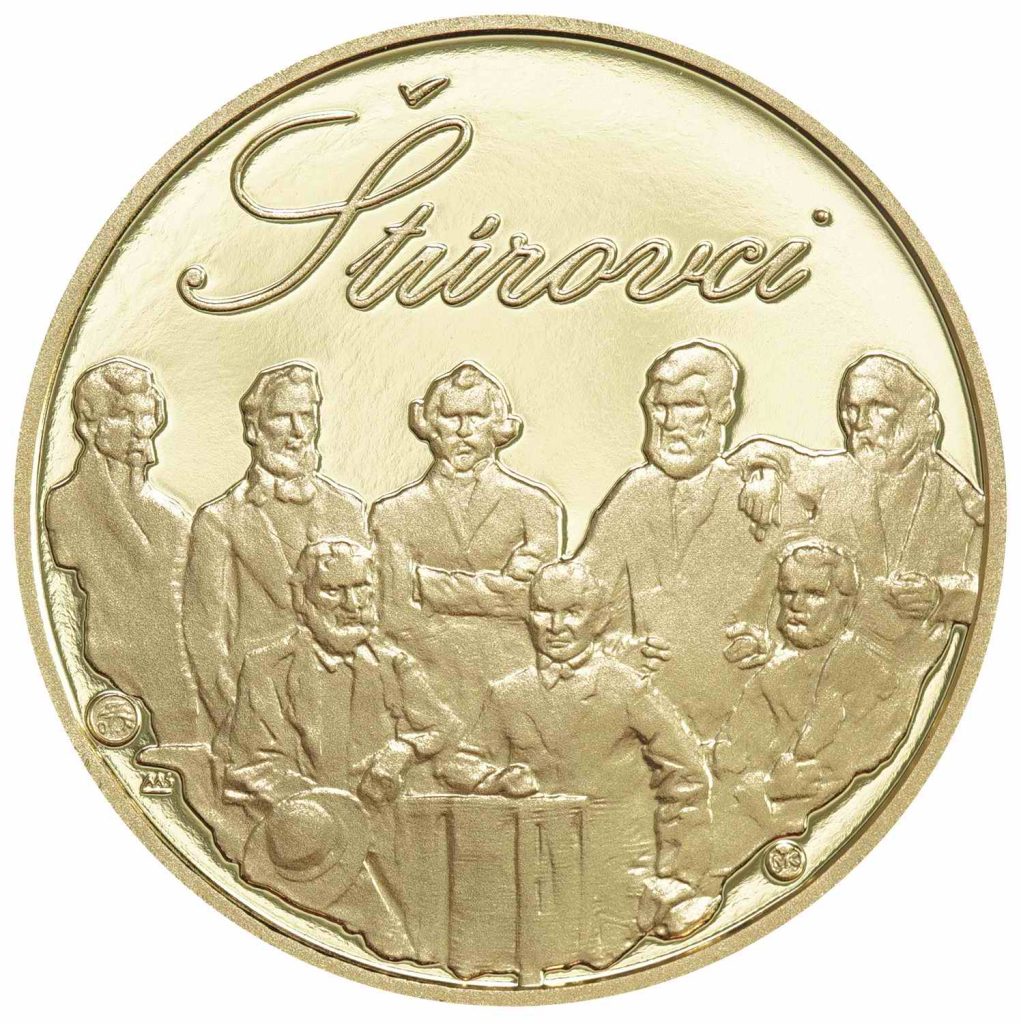
Mincovňa Kremnica (Kremnica Mint), state-owned enterprise, 2024
Struck, two-sided
34 mm / 23 mm
– tombac MS90, gold plated, glossy, proof like,
34 mm, 19.4 g;
– silver Ag 999/1000, PROOF, rose gold plated, 34 mm,
20.3 g, 300 pcs;
– gold Au 999/1000, PROOF, 23 mm, 7.7 g, 200 pcs
A series of commemorative medals dedicated to the Štúr group, the main current of the Slovak national movement in the mid-19th century, named after its main representative, Ľudovít Štúr. The most prominent members of this movement were Samo Chalupka, Andrej Sládkovič, Janko Kráľ, Ján Botto, Janko Matúška, Michal Miloslav Hodža, and Jozef Miloslav Hurban.
Gold-plated tombac MS90
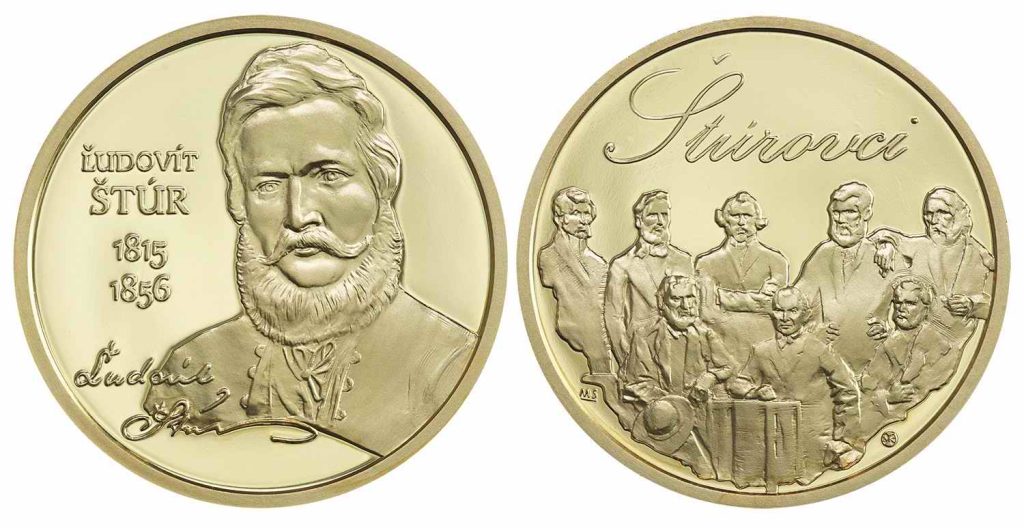
https://www.mint.sk/en/eshop/brass-medal-serie-sturovci-ludovit-stur
Silver Ag 999/1000, PROOF, rose gold plated
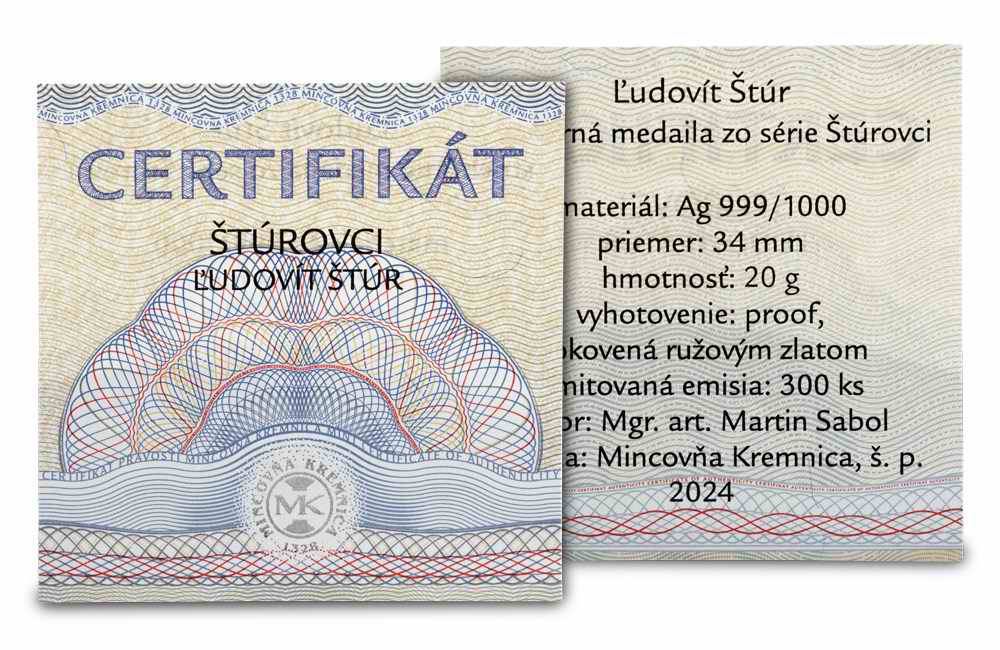
https://www.mint.sk/en/eshop/silver-medal-pink-gold-plating-sturovci-ludovit-stur
Gold Au 999/1000
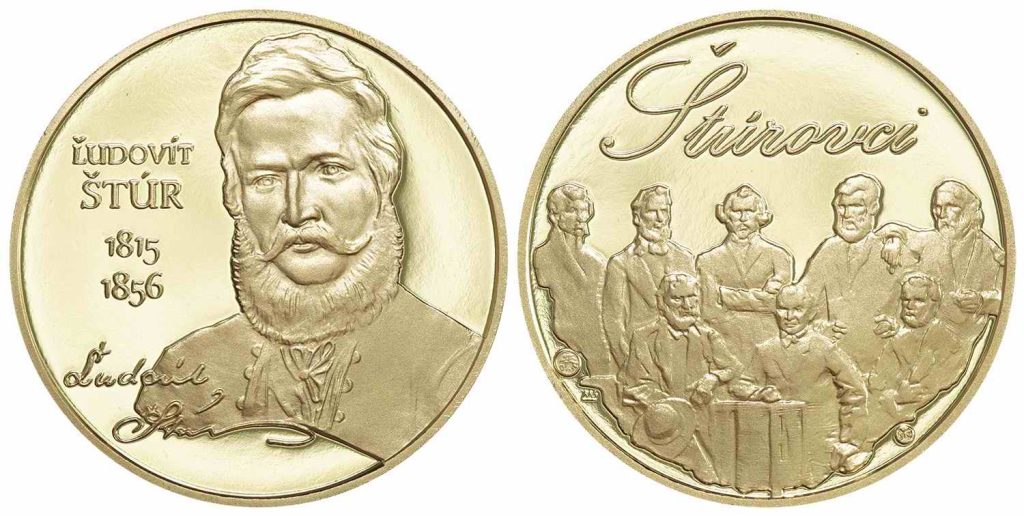
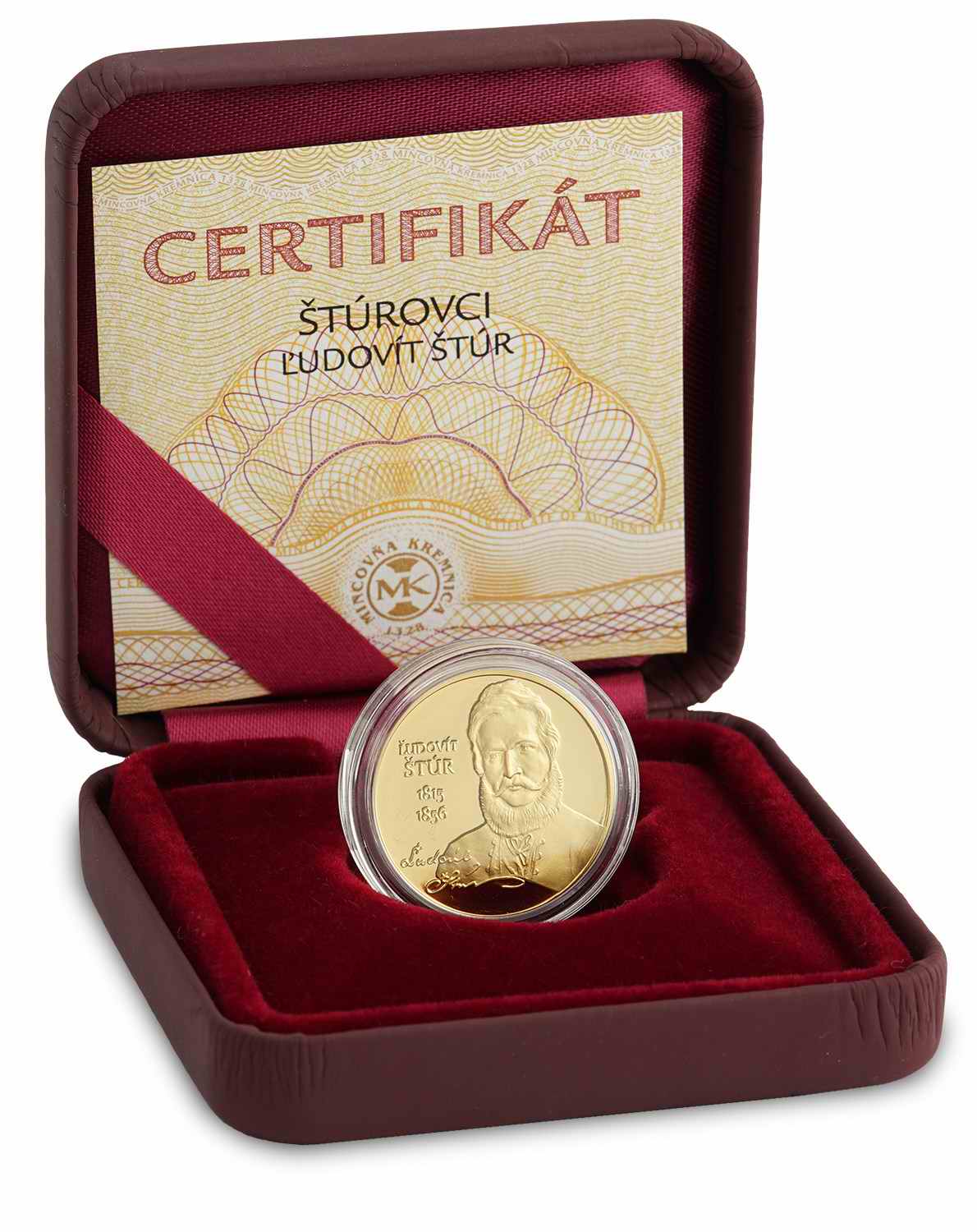
https://www.mint.sk/en/eshop/gold-medal-sturovci-ludovit-stur
– Jozef Kroner – 100th anniversary of his birth (Mgr. art. Roman Lugár)
Mincovňa Kremnica (Kremnica Mint), state-owned enterprise, 2024
Struck, two-sided
34 mm / 23 mm
Material:
– tombac MS90, gold plated, glossy, proof (like),
34 mm, 19,4 g, 200 pcs, numbered;
– silver Ag 999/1000, PROOF, 34 mm,
20.3 mm, 300 pcs, numbered;
– gold Au 999/1000, PROOF, 23 mm, 8 g, 200 pcs, numbered
Actor Jozef Kroner made a significant contribution to national cinema, theater, radio, and television, and is one of the most important figures in Slovak culture. He was born on March 20, 1924, in Staškov (Čadca district). In 2024, we will commemorate the 100th anniversary of his birth.
For his leading role in the film Obchod na korze (The Shop on Main Street, 1965) by directors Ján Kadár and Elmar Klos, he received an award for acting at the 1966 Cannes International Film Festival. It was the first Czechoslovak film to win an Academy Award (Oscar) for Best Foreign Language Film. In addition to the award for the film, Oscars were also awarded to the lead actors, Jozef Kroner and Polish actress Ida Kaminska. However, the communist regime at the time did not allow Jožka Króner to travel to the capitalist USA, as it considered it dangerous and did not want him to come into contact with the American environment and possibly take the opportunity to emigrate. Moreover, when director Kadár emigrated to the USA two years later, Obchod na korze was banned from screening in Czechoslovakia.
He excelled in many films and series that are still popular today, such as folk comedies Pacho, hybský zbojník (Pacho, the Bandit of Hybe, 1975) and Slovácko sa nesúdi (Moravian Slovakia Doesn’t Judge, 1978, 1984), fairy tale Soľ nad zlato (Salt Above Gold, 1982, in the role of a jester), Tisícročná včela (The Thousand-Year-Old Bee, 1983; Director: Juraj Jakubisko), etc.
Gold-plated tombac MS90
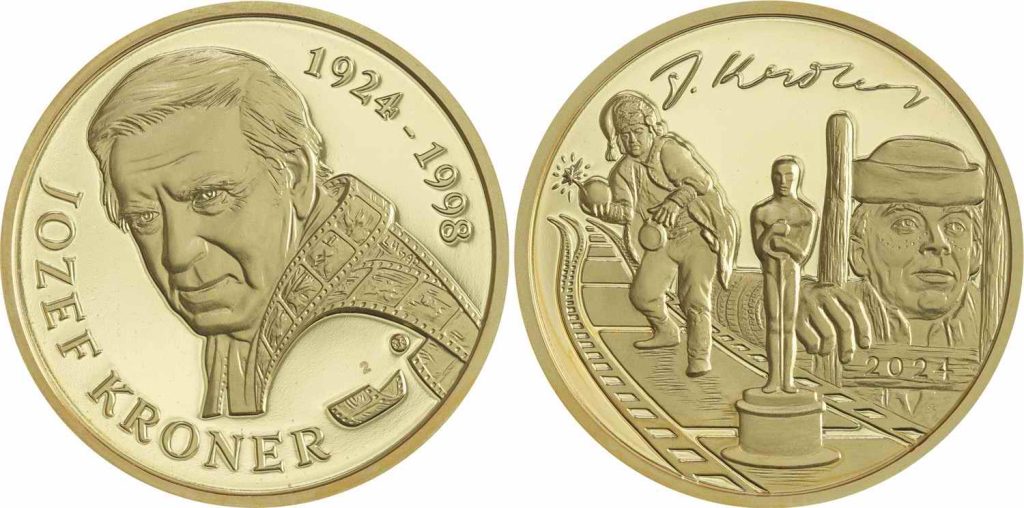
https://www.mint.sk/en/eshop/brass-medal-jozef-kroner-100th-anniversary-his-birth
Silver Ag 999/1000
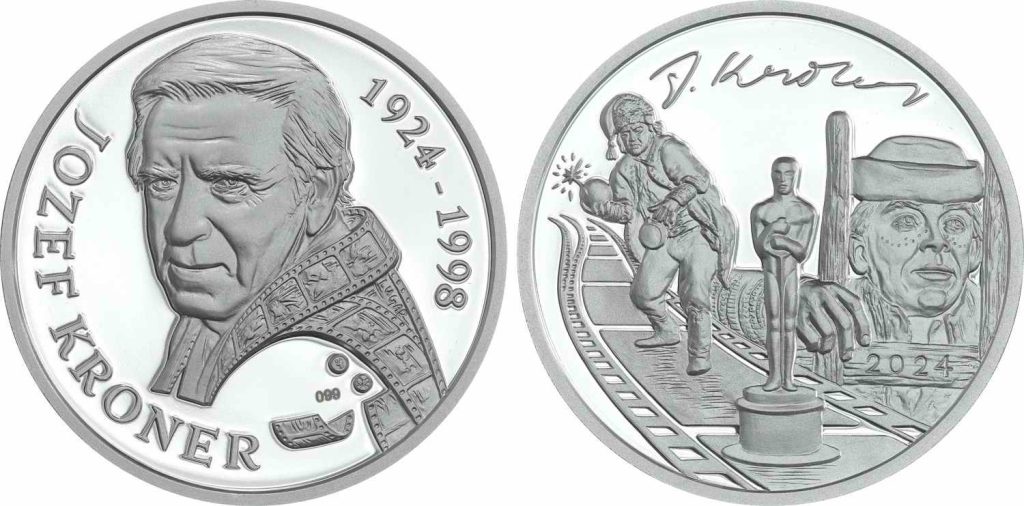
https://www.mint.sk/en/eshop/silver-medal-jozef-kroner-100th-anniversary-his-birth
Gold Au 999/1000
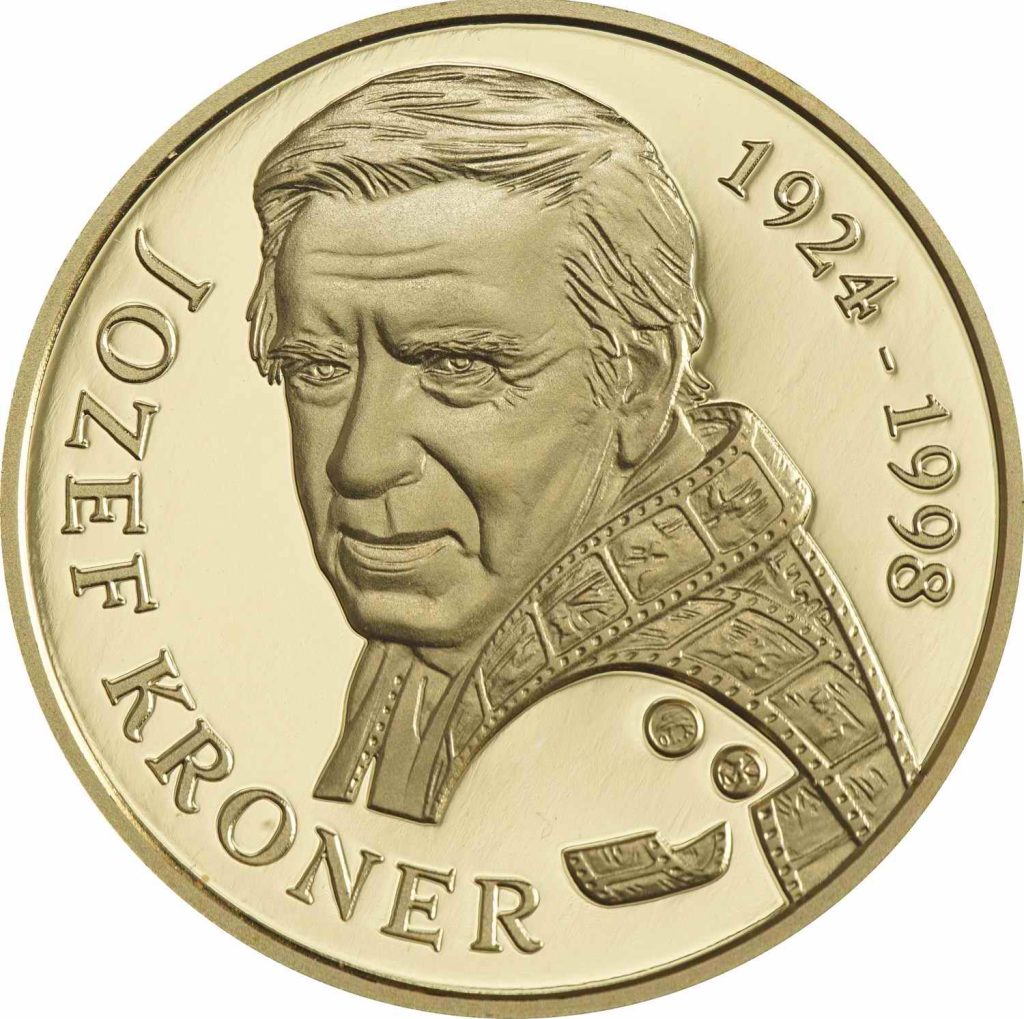
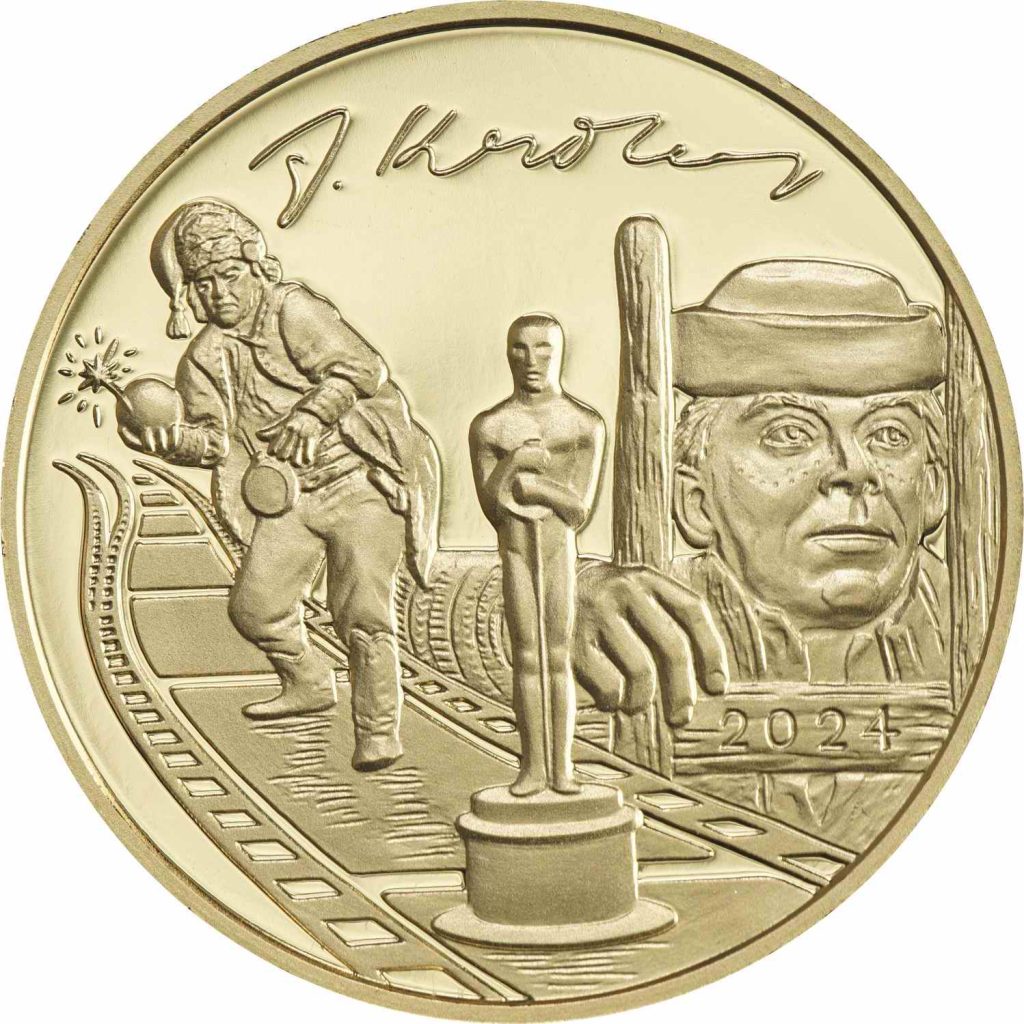
https://www.mint.sk/en/eshop/gold-medal-jozef-kroner-100th-anniversary-his-birth
– A Pleasant Surprise (Mária Poldaufová)
Producer: Peter Bukovský, 2024
cast, bronze
one-sided
110 mm
A pleasant surprise in the shaft with the help of a good Permoník.
Permoníks were mythological spirits of rocks and rock gnomes living in the underground realm of the powerful god Permon, who has his mining kingdom in the mining tunnels. According to old mining legends, these gnomes knew the locations of underground gold and silver deposits, but only revealed them to miners who deserved to know.
They look similar to the gnomes we know from fairy tales. Their clothing is similar to that worn by miners in ancient times. They wear shoes with wooden soles, a miner’s shirt with a wide collar, and a piece of leather tied around their hips. Permoníci wear a pointed hood on their heads, which they can use to make themselves invisible whenever they want. All they have to do is pull the hood over their faces and they disappear. He can see and hear everything, but is invisible to the human eye. 👀
He is described as a small human being, about the size of a three-year-old child (with long legs and a chin that reaches his elbow), with the face of an old man and a long white beard. The four fingers on both hands are very characteristic. They guard metal deposits and take care of them. They tend to be cunning, sometimes cruel and evil towards humans, until humans discovered their weakness – their long beard.
He is characterized by physical abnormalities, cruelty, gluttony, and cannibalistic tendencies. His help and warnings usually belonged to miners working in mines, and he could warn them of cave-ins or dangerous shafts. However, his main domain is underground treasure, so he often rewards someone for a service with gems or by directing them to treasure.
Just as he rewards, he can also harm. This is usually done out of malice or revenge for disparagement and damage caused. The beings known as mountain gods can take many forms in folklore, from hunters to dry tree spirits. As they move, they create a whirlwind around themselves and can help people (usually by helping the poor with material gifts or teaching them healing and herbalism), or play with them (destroying and overturning people’s things, forcing them to listen to various sounds), or punish them for misdemeanors and bad behavior.
And just like miners in those ancient times, each permoník wears a lamp filled with magical oil that never burns out hanging from his thumb. Permoníci are very active and dust off hidden treasures, repair cracked rocks, and carve paths through underground passages. When a permoník taps a rock with his silver hammer, the rock obediently opens before him. And when he passes through the rock, it closes behind him.
The underground world of miners, with its dark corners lit only by the flickering light of oil lamps, concealed many mysteries and sparked the imagination. Thanks to this imagination, the character of the permoník was born. In the traditional mining environment, he was a small demonic creature with human form, features, and characteristics. In folk beliefs and fairy tales, it was often confused with a dwarf or a goblin. However, the domain of the permoník was the underground, where they lived in large communities and moved unnoticed through the mine tunnels and galleries. They guarded and protected underground treasures, digging for ore and precious minerals alongside the miners. The permoníks understood the difficult and strenuous work of the miners and helped them wherever they could. In return for being treated well, they often showed the miners where to dig to find rich ore veins and warned them of danger. The miners greatly appreciated the good services of the dwarves, maintaining their favor with small gifts and repaying them by warning them before each blast in the mine.
The medal ettented for Slovakia to the XXXVIII FIDEM Munich 2025 World Medal Exhibition of Modern Art Medals, which optional theme is: Our myths, our roots
– Footprint Under the Clouds (academic sculptor Alojz Drahoš, PhD.)
Alojz Drahoš, 2025
145 x 13 mm
glass, cast
The author used lead-free optical crystal and cut glass for the glass medal Footprint Under the Clouds.
The whole world is under the clouds: everything that is happening and that exists on our planet. Living and non-living nature, as well as the traces left here by humans. Our activities are mostly not in harmony with nature, quite the contrary. Humanity must come to its senses in order to leave a positive mark for future generations and pass on a viable planet to them.
The medal ettented for Slovakia to the XXXVIII FIDEM Munich 2025 World Medal Exhibition of Modern Art Medals, which optional theme is: Our myths, our roots
– Garden of Eden (Mgr. art. Miroslav Hric, ArtD.)
„Garden of Eden“
Lithuanian Mint
struck, one-sided
40,4 mm x 48,2 mm x 20,2 mm
silver 999/1000
100 pcs
It is more than just another story about the Garden of Eden. For us, as a mint, it represents a significant achievement – a unique half-apple-shaped creation with a complex design crafted using a multi-level minting technique. The shape, in particular, is what we are most proud of, as it showcases the professionalism and expertise of our craftsmen, honed over many years of practice.
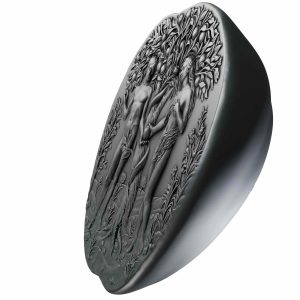
“Garden of Eden,” depicts the pivotal moment of humanity’s fall, when Eve, tempted by the ancient serpent, hands the forbidden fruit to Adam. This dramatic scene is a popular motif in Western art, religious thought, and philosophy, retelling the biblical story for each new generation.
In the Garden of Eden, where the first humans lived in blessed conditions, they were allowed to eat from all trees except one – the Tree of the Knowledge of Good and Evil. However, the devil, disguised as a serpent, deceived Eve by claiming that people would become like God if they ate the forbidden fruit. After taking a bite, Eve offered it to Adam. They then realized they were naked and sewed clothes from fig leaves. As a punishment for disobeying the command, Adam and Eve became mortal and were expelled from the beautiful Garden of Eden.
The “Garden of Eden” convincingly captures the shape of a real fruit. Despite its appearance, it is crafted without casting techniques! The impressive shape of this pure silver coin is achieved through a multi-step minting process.
This striking coin attracts attention both for its shape and its content. It will especially appeal to enthusiasts of religion, history, and philosophy. Yet, at its core, it speaks to each of us, as it tells a story about the entire human race.
“But the serpent said to the woman, “You will not certainly die! For God knows that when you eat from it your eyes will be opened, and you will be like God, knowing good and evil.”
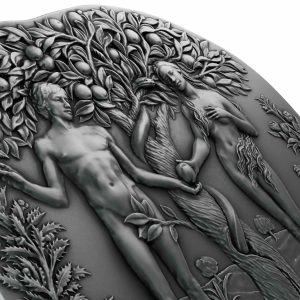
Issued as the obverse of the silver coin “Garden of Eden” 5000 CFA Francs Republique de Camoroun
Author’s website

Návrhy na nominácie na Medailu roka 2024 bolo možné poslať do 15.4.2025 prostredníctvom tohto formulára, príp. na e-mail MedailaRoka@medailerskyklub.art
Potrebné sú základné identifikačné údaje:
- názov medaily, autor, zadávateľ/objednávateľ, výrobca, spôsob/technológia
výroby (razba, odlievanie), rozmery, materiálové vyhotovenia a počet
kusov, popis medaily a ďalšie informácie viažúce sa k medaile pre
uverejnenie v rámci predstavenia na webstránke, sociálnych médiách a
pod. - sprievodnú foto averzu a reverzu
Doplnkovo ďalšie sprievodné informácie a fotografie a ilustrácie, napr. z pozadia medaily alebo o autorovi, vydavateľovi a podobne
Kvalifikačné kritériá na nominované medaily:
– stolová medaila (nie závesná na stuhe)
– medaila bola vydaná/vznikla za rok 2024,
– od slovenského autora, vyrobené na Slovensku alebo so slovenskou témou
– vzniklo viac identických kusov (technikou razenia, odlievania)
– rozmery min. 37 mm a max. 200 mm v jednom rozmere,
– nejedná sa o mincu (zákonné platidlo s uvedenou menou a nominálom na prezentovanej ploche)
– stolová medaila (nie závesná na stuhe)
VÝHERCOVIA LOSOVANIA CIEN
Výhercovia losovania cien ankety Medaila roka 2024. Srdečne gratulujeme!
-> Ceny si je možné po dohode prevziať osobne v Bratislave, vyzdvihnúť v predajni Českej mincovne (Suché mýto 1, 811 03 Bratislava) alebo nechať poslať
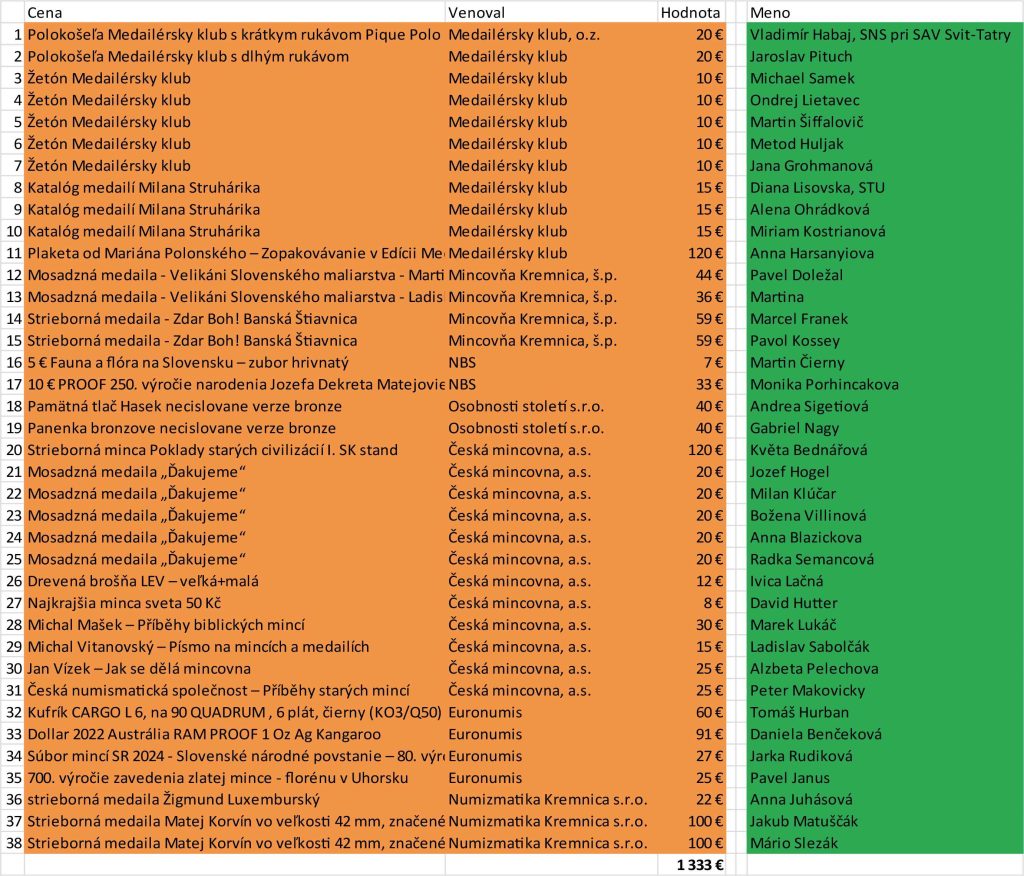
Výber prebiehal randomizovaným spôsobom v exceli
-> Z celkového počtu 852 hlasujúcich malo 767 (90 %) záujem zúčastniť sa losovania o jednu z 38 hodnotných cien.
Šanca získať cenu teda bola takmer 5 % (4,95 %, 38/767).
CENY DO ANKETY
Zo všetkých hlasujúcich s platnou e-mailovou adresou vyberieme náhodným výberom výhercov, ktorí obdržia jednu z 38 zaujímavých cien v celkovej hodnote vyše 1300 €, ktoré venovali do ankety: Česká mincovna SK, s.r.o. (12 cien v hodnote 335 €), Medailérsky klub, o.z. (11 cien v hodnote 255 €), Numizmatika Kremnica s.r.o. (3 ceny v hodnote 222 €), EURONUMIS s.r.o. (4 ceny v hodnote 202 €), Mincovňa Kremnica, š. p. (4 ceny v hodnote 198 €), Osobnosti století s.r.o. (2 ceny v hodnote 80 €), Národná banka Slovenska (2 ceny v hodnote 40 €)
Priemerná hodnota jednej ceny je 35 €, maximálna 120 € (Strieborná minca Poklady starých civilizácií I. SK stand – venovala Česká mincovna SK a Plaketa od Mariána Polonského – Zopakovávanie v Edícii Medailérskeho klubu – venoval Medailérsky klub), minimálna 7 € (Zberateľská 5-eurová eurominca Fauna a flóra na Slovensku – zubor hrivnatý – venovala Národná banka Slovenska)
Ďakujeme!
Hlavná cena:
- 1x strieborná minca Poklady starých civilizácií I. – skalné mesto Petra, kotlík z Gundestrupu a letiaci kôň z Kan-su (venovala Česká mincovna SK, s.r.o.)
Ľudmila Cvengrošová je poprednou slovenskou sochárkou, ale aj vášnivou cestovateľkou, ktorá navštívila pamätné miesta po celom svete. Svoju lásku k umeniu, cestovaniu a všetkým ľudským kultúram zhmotnila do podoby pamätných mincí Českej mincovne. V reliéfe prvej striebornej mince z cyklu, ktorý predstavuje poklady starých civilizácií, sa objavuje skalné mesto Petra, kotlík z z Gundestrupu a letiaci kôň z Kan-su.
- Staroveké mestá boli budované v blízkosti riek, ktoré im poskytovali dostatok vody. Petra však vyrástla v skalách Arabskej púšte, kde je núdza o každú kvapku. Jordánske mesto napriek tomu dokázalo prekvitať, za čo vďačilo vynaliezavosti národa Nabatejcov. Títo schopní obchodníci nazhromaždili obrovské bohatstvo, ktoré im umožnilo vystavať množstvo dych vyrážajúcich skalných domov, chrámov, amfiteátrov a hrobiek. Zo všetkého najdôležitejší bol však ich geniálny zavlažovací systém. Vyčerpané karavány vezúce vzácny tovar do Európy neverili vlastným očiam, keď uprostred pustatiny narazili na záhrady, vinice, fontány a dokonca obrovský bazén.
- Druidi mali v keltskej kultúre mimoriadne postavenie. Zastávali funkciu kňazov, veštcov, sudcov, básnikov, liečiteľov a učencov. Vykonávali tajuplné rituály, pri ktorých používali najrôznejšie nástroje – od kosákov po harfy. Takým posvätným predmetom bol aj kotlík z Gundestrupu. Bohato zdobená strieborná nádoba udivuje kvalitou remeselného vyhotovenia a bohatou umeleckou výzdobou. Dánsky poklad ukazuje vyobrazenie keltských symbolov, zvierat, obradov a božstiev – napríklad najvyššieho boha Dagdu, ktorý do svojho kúzelného kotla ponára mŕtveho bojovníka, aby sa mohol znovu zrodiť.
- V mnohých svetových kultúrach je kôň uctievaným symbolom. Niet divu – je elegantný, a predsa silný, pracovitý, a napriek tomu neskrotný. V úcte ho mali aj starí Číňania, čo dokazuje ohromujúca bronzová soška, ktorá pochádza z provincie Kan-su. Toto umelecké dielo predstavuje ideál ušľachtilého zvieraťa, ktoré je rýchlejšie než vietor. Kôň letiaci prudkým cvalom je dokonale vyvážený – tri nohy má vo vzduchu a štvrtou končatinou sa dotýka prekvapene letiacej lastovičky. Anatomicky ide o skutočne čistokrvné plemeno s názvom fergana, ktoré svojimi kvalitami prekonali všetky ostatné ázijské kone a vyslúžilo si priezvisko „nebeské“.
Dielo sochárky Ľudmily Cvengrošovej predkladá detailné vyobrazenie troch pamätihodností. Skalné mesto Petra je zastúpené chrámom, ktorý je známy ako Pokladnica. Z výzdoby kotlíka z Gundestrupu si autorka vybrala scénu znovuzrodenia. Letiaci kôň z Kan-su je vyobrazený v celej svojej kráse – vrátane podstavca v tvare lastovičky. Pretože licenciu k vydávaniu pamätných mincí Českej mincovne poskytuje tichomorský ostrov Niue, mincová strana nesie jeho nevyhnutné atribúty – štátny znak, nominálnu hodnotu 2 DOLLARS (NZD) a rok vydania 2023.
Naše výrobky sa zvyčajne uchovávajú v ochranných kapsulách, ale v tomto prípade sme urobili výnimku. Keďže mince zo série Poklady starovekých civilizácií vynikajú vysokým reliéfom, chceme vám dať príležitosť dotknúť sa ho! Okrem patiny je strieborná razba pokrytá tiež špeciálnou ochrannou vrstvou, ktorá sa postará o to, aby nestratila svoj lesk…
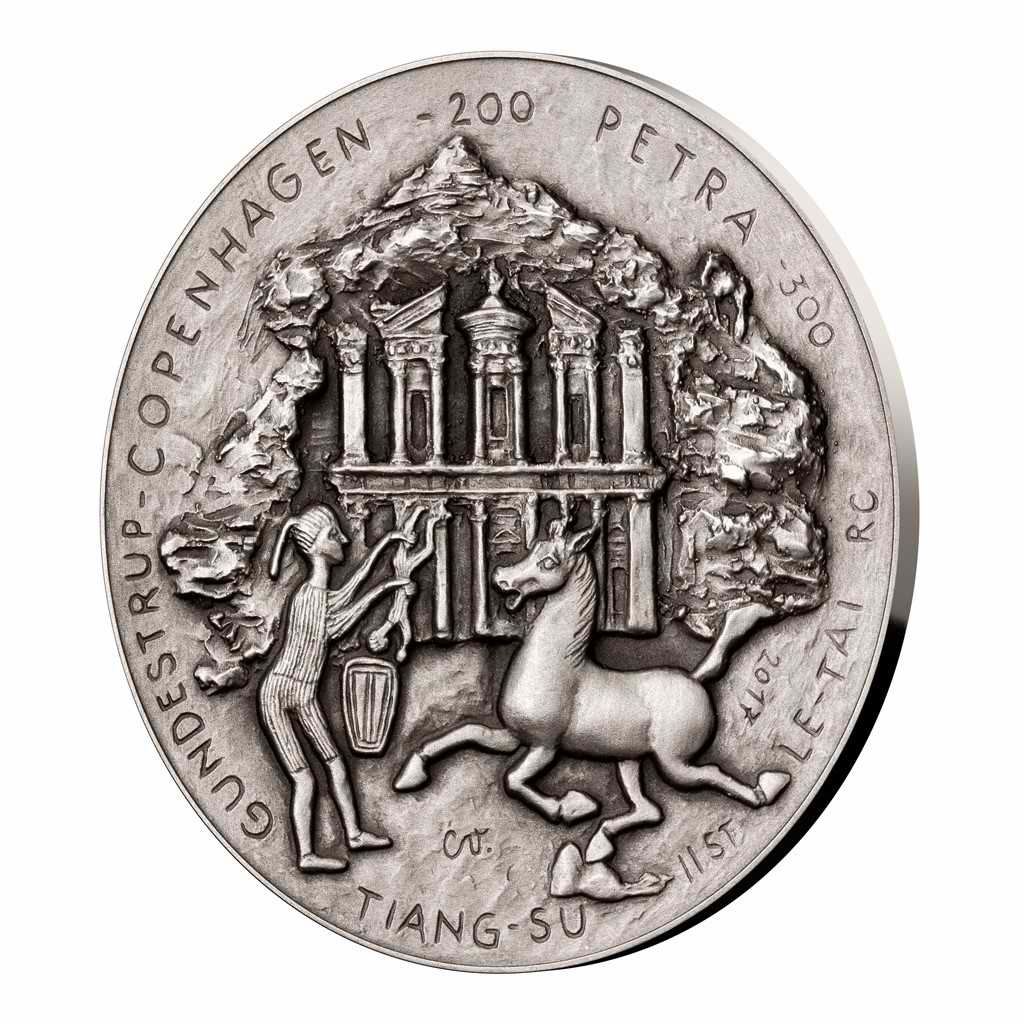
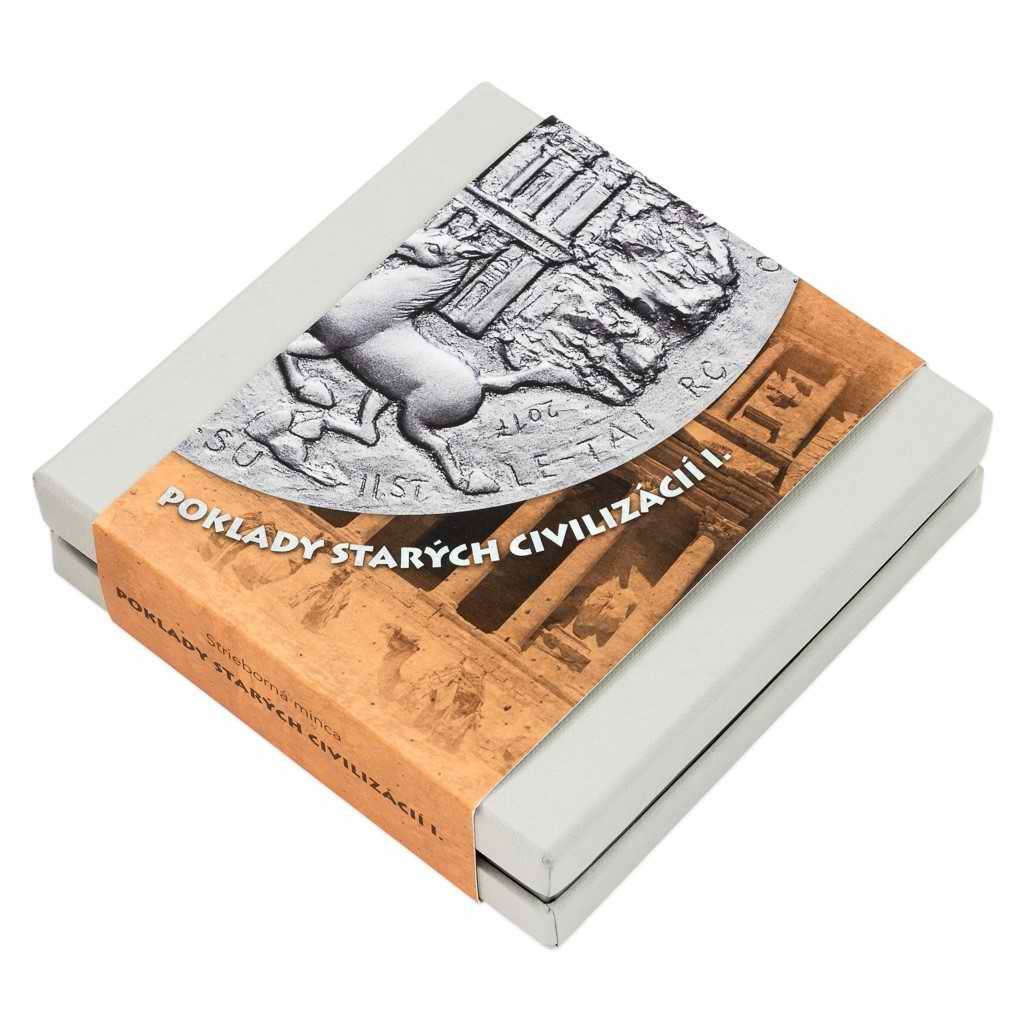
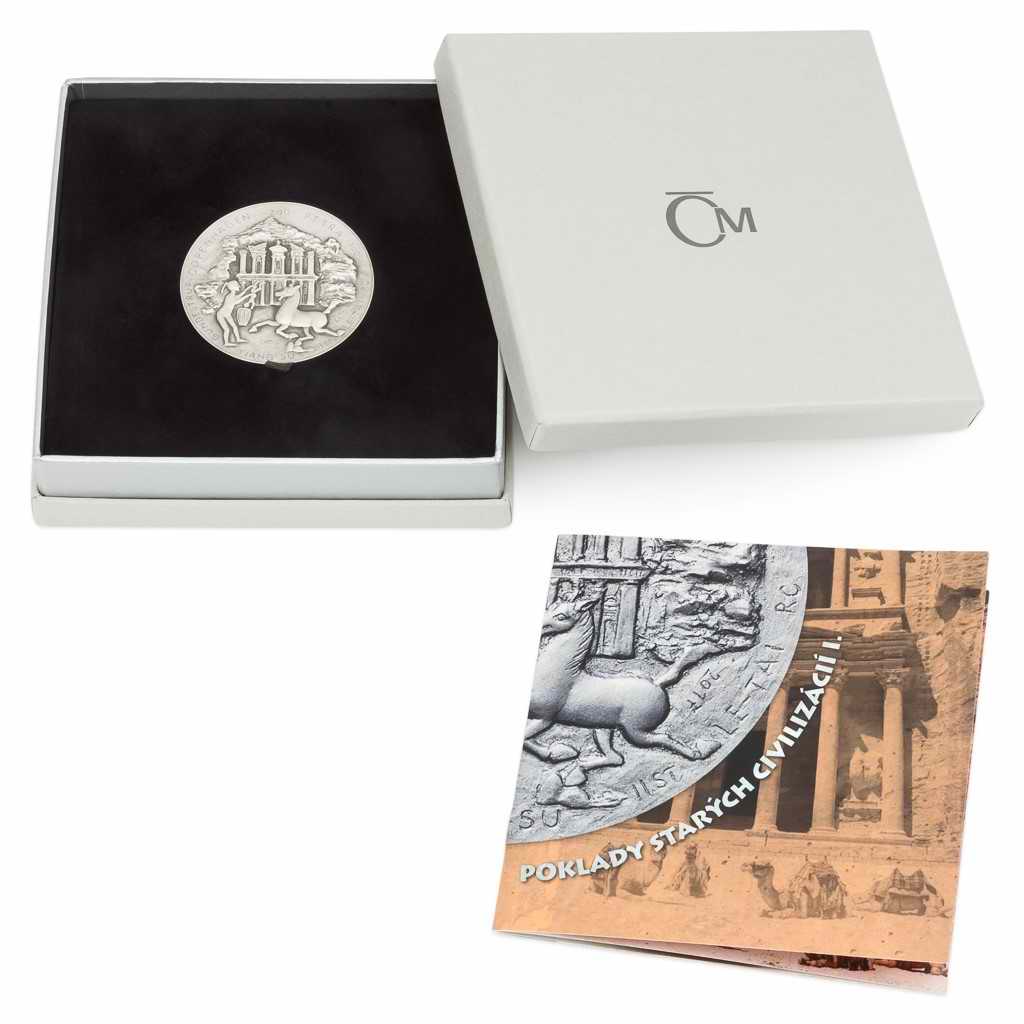
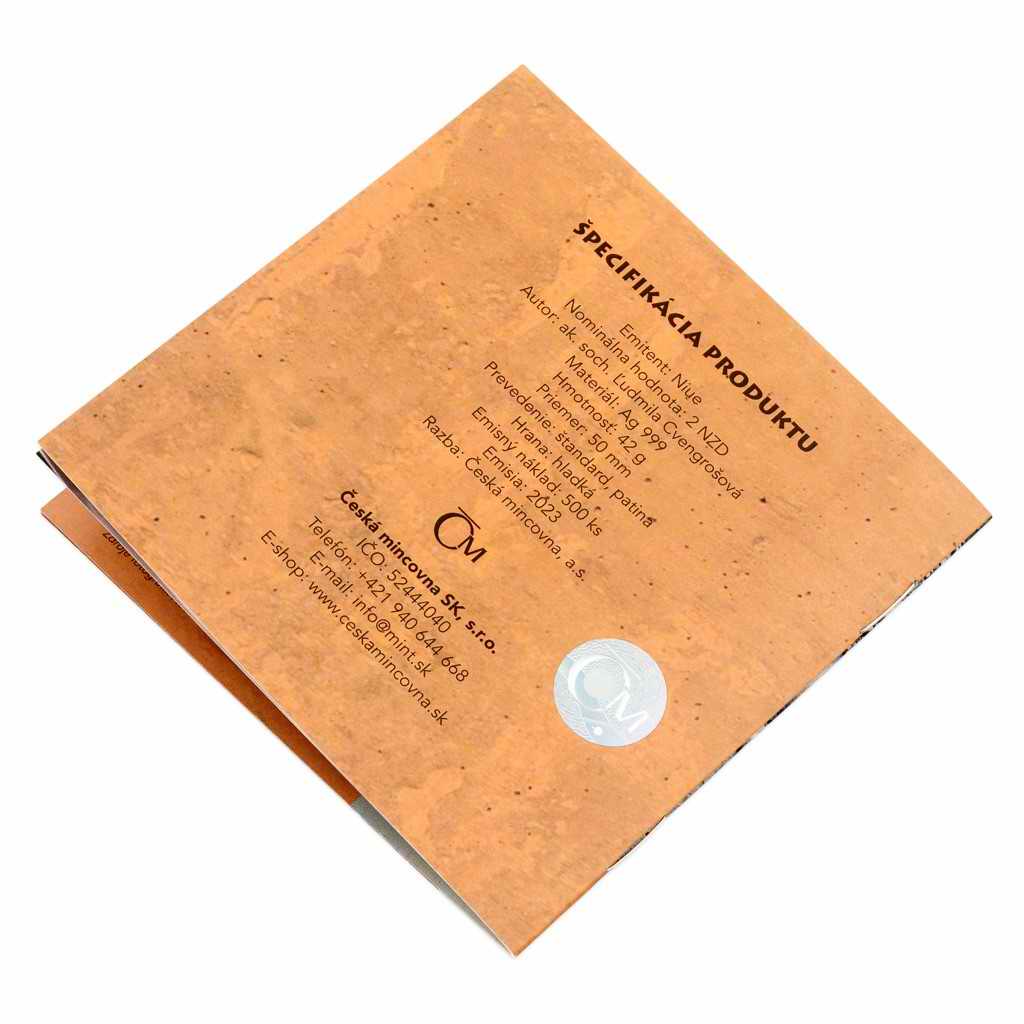
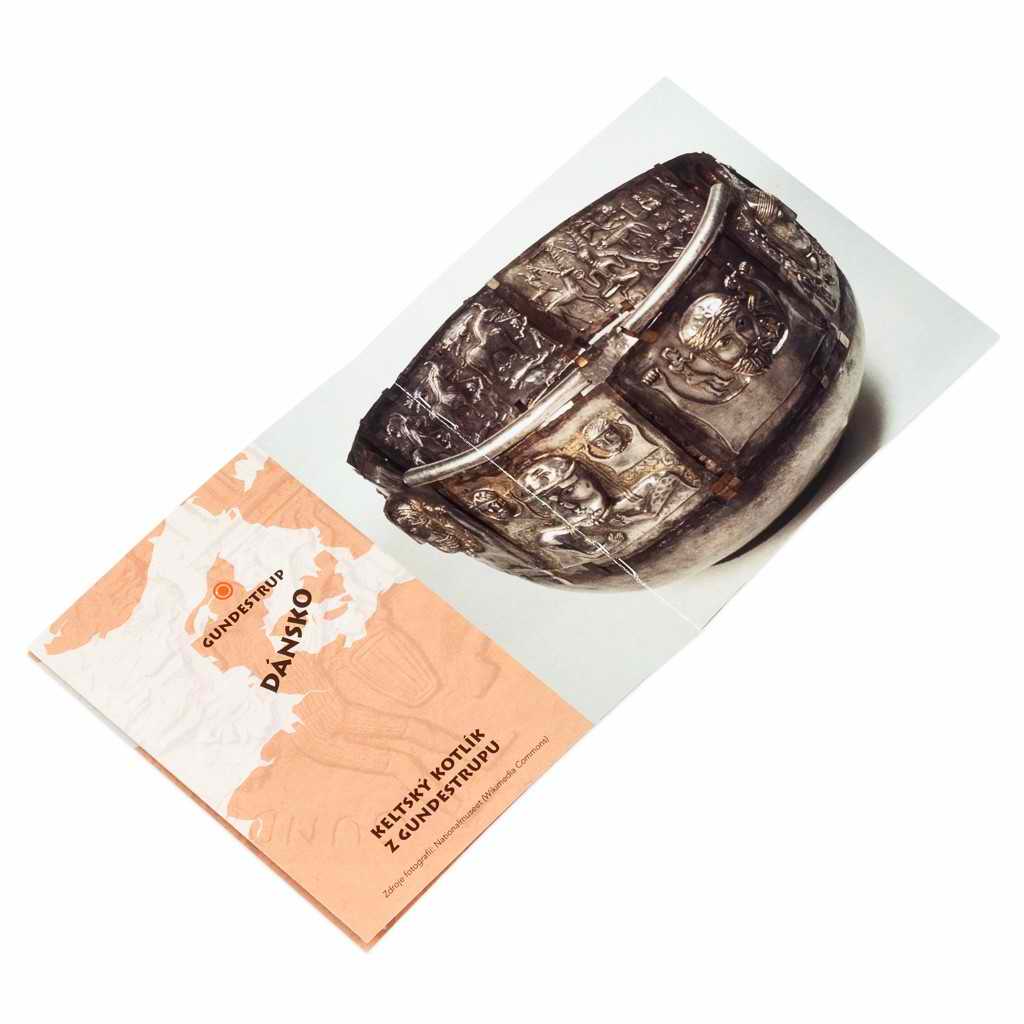
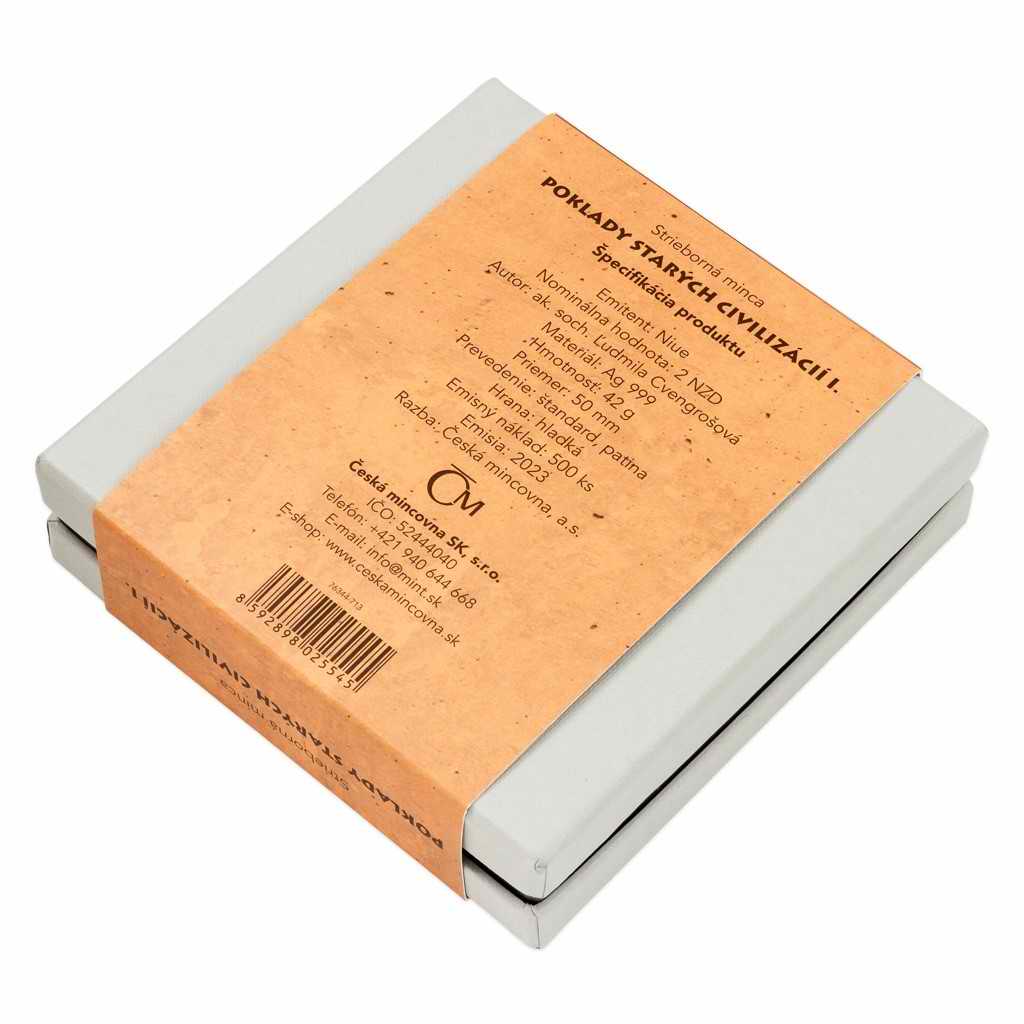
https://ceskamincovna.sk/sk/strieborna-minca-poklady-starych-civilizacii-i-sk-stand-2642-16855-d
- 2x strieborná medaila Veľká pečať Mateja Korvína – 42 mm – značené ako skúška! (venovala Numizmatika Kremnica s.r.o.)
razená, obojstranná
42 mm
Ag 999/1000 (patinované starostriebro)
25 g
Značené ako skúška!
Strieborná medaila zobrazujúca historickú Veľkú pečať Mateja Korvína a jeho dobový portrét vyhotovená z 999/1000 striebra o váhe 2 trójske unce (62 g) s povrchovou úpravou staré-striebro.
Matej Korvín pochádzal z rodu Huňadyovcov. Bol uhorský a chorvátsky kráľ, rakúsky vojvoda a od roku 1469 si nárokoval aj titul českého kráľa. V roku 1465 založil v Bratislave Universitas Istropolitana a v roku 1480 aj univerzitu v Pešti. Za jeho vlády došlo k ekonomickému a kultúrnemu rozkvetu krajiny. Do uhorského kráľovstva za jeho vlády prenikali myšlienky humanizmu a renesancie.
Autor:
Drahomír Zobek (averz) – Numizmatika Kremnica s.r.o.
Mgr. art. Roman Lugár (reverz) – medailér ateliéru Mincovne Kremnica
https://numizmat.sk/sk/aktualne-razby/velka-pecat-mateja-korvina-strieborna-medaila
https://numizmat.sk/sk/aktualne-razby/velka-pecat-mateja-korvina-auag-sada
Efekt starostriebra je špeciálna povrchová úprava pri ktorej je zachovaný žiarivý lesk striebra a zároveň tmavou patinou zvýraznený reliéf. Pre požadovaný efekt je ručné patinovanie a leštenie každej medaily časovo a technicky náročnejšie.
Ďalšie ceny:
- 1x medaila Martin Benka – Velikáni Slovenského maliarstva (venovala Mincovňa Kremnica, š. p.)
Mincovňa Kremnica, š.p.
Branislav Ronai
razená, obojstranná
80 mm
Patinovaný tombak MS 90
Náklad: bežná emisia – bez limitu
Hmotnosť: 306,7 g
Séria pamätných medailí predstavujúca najznámejších slovenských maliarov všetkých dôb. Medaila z edície – Velikáni slovenského maliarstva s motívom zakladateľa moderného slovenského výtvarného prejavu Martina Benku. Narodil sa 1. septembra 1888 v Kostolišti. Okrem toho, že bol významný slovenský maliar, venoval sa gobelínovej tvorbe, scénickému výtvarníctvu, hudbe a husliarstvu. Pri tvorbe sa inšpiroval krajinou, ale i tvarovou a farebnou krásou ľudového výtvarníctva.
Averz obsahuje podobizeň tohto Benkovho portrétu a reverz reprodukciu jeho diela Ľudia a hory, 1941
Martin Benka
https://www.mint.sk/eshop/mosadzna-medaila-velikani-slovenskeho-maliarstva-martin-benka
- 1x medaila Ladislav Medňanský (venovala Mincovňa Kremnica, š. p.)


Mincovňa Kremnica, š.p.
Branislav Ronai
razená, obojstranná
80 mm, ~280 g
patinovaný tombak MS90
Séria pamätných medailí predstavujúca najznámejších slovenských maliarov všetkých dôb. Medaila bola vyrazená v atypickom priemere a veľkosti. Medaila z edície ‚,Velikáni slovenského maliarstva‘‘ s motívom predstaviteľa impresionizmu, Ladislava Medňanského. Narodil sa v roku 1852 v Beckove. Bol krajinárom európskeho významu. Jeho krajinárske maľby sa vyznačujú melanchóliou, nostalgiou a majstrovským zachytením svetla.
Na reverze medaily je vyobrazený obraz Dedina pri potoku (okolo 1875, výška 34,0 cm, šírka 31,0 cm)

Ladislav Medňanský (Mednyánszky) (* 23.04.1852 Beckov – 17.04.1919 Viedeň), maliar slovenskej krajiny šľachtického pôvodu pochádzajúci z Beckova, súkromné hodiny maliarstva mu dával viedenský akvarelista Thomas Ender, umelecké vzdelanie získal na Akademie der bildenden Künste v Mníchove a na École des Beaux-Arts v Paríži, mal ateliéry v Budapešti aj vo Viedni, pochovaný je na budapeštianskom cintoríne Kerepes.
Pochádzal z bohatej rodiny, no peniaze ho nikdy nezaujímali – svoj majetok rozdal známym a chránencom. Najviac ho priťahovali hraničné situácie, ľudia žijúci na okraji spoločnosti, ktorých mnohokrát zobrazoval ako vystavených jej surovému a krutému pôsobeniu. Pocit odvrhnutia totiž sám dokonale poznal a stal sa akýmsi jeho prekliatym kronikárom.
Jeho diela sú vystavené v Slovenskej národnej galérii, v Maďarskej národnej galérii, ale aj v kaštieli v Strážkach (Spišská Belá).
https://sk.wikipedia.org/wiki/Ladislav_Medňanský
Ladislav Medňanský – Slovenská národná galéria SNG
https://dennikn.sk/3493040/ladislav-mednansky-mednyanszky-laszlo-madarsky-maliar-slovenskej-krajiny-bol-to-madar-alebo-slovak-8/

https://www.mint.sk/eshop/mosadzna-medaila-bp-velikani-slovenskeho-maliarstva-ladislav-mednansky
- 2x strieborná medaila Zdar Boh! Banská Štiavnica (venovala Mincovňa Kremnica, š. p.)
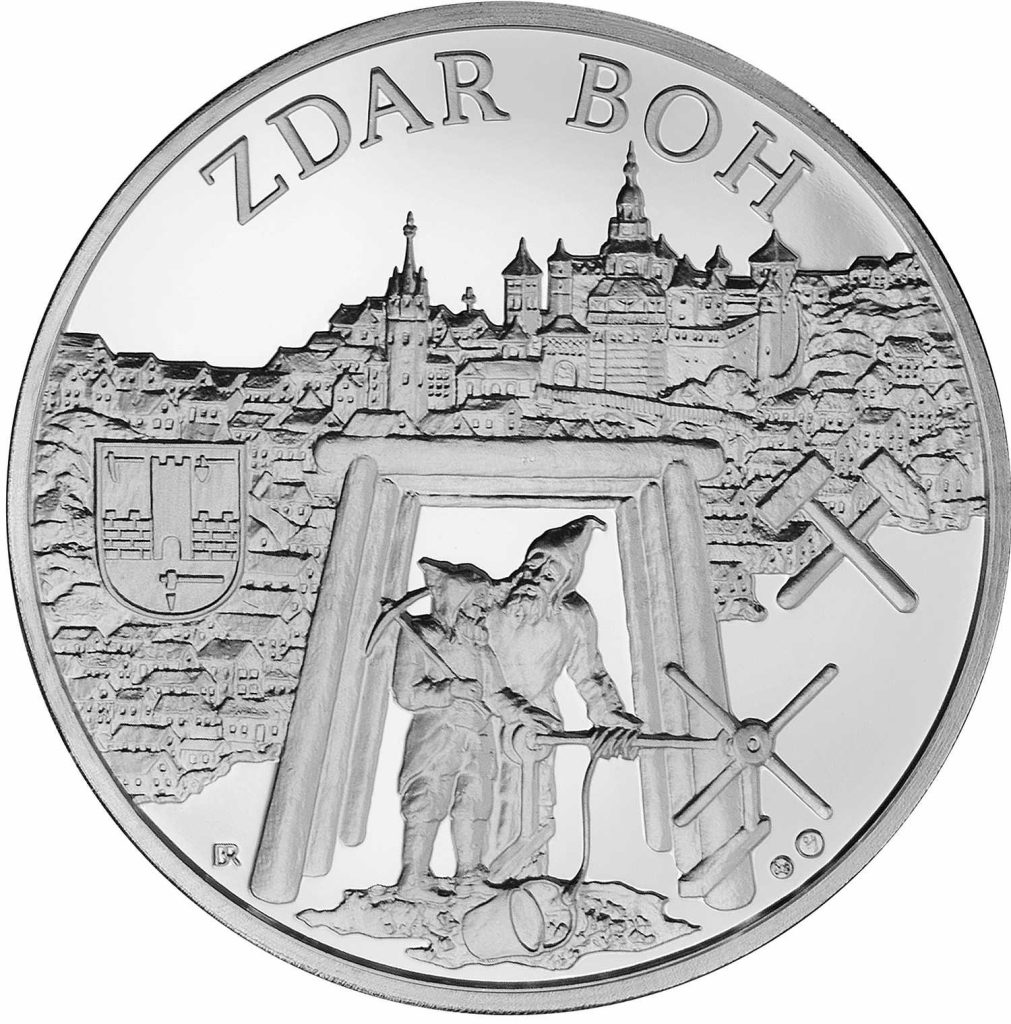
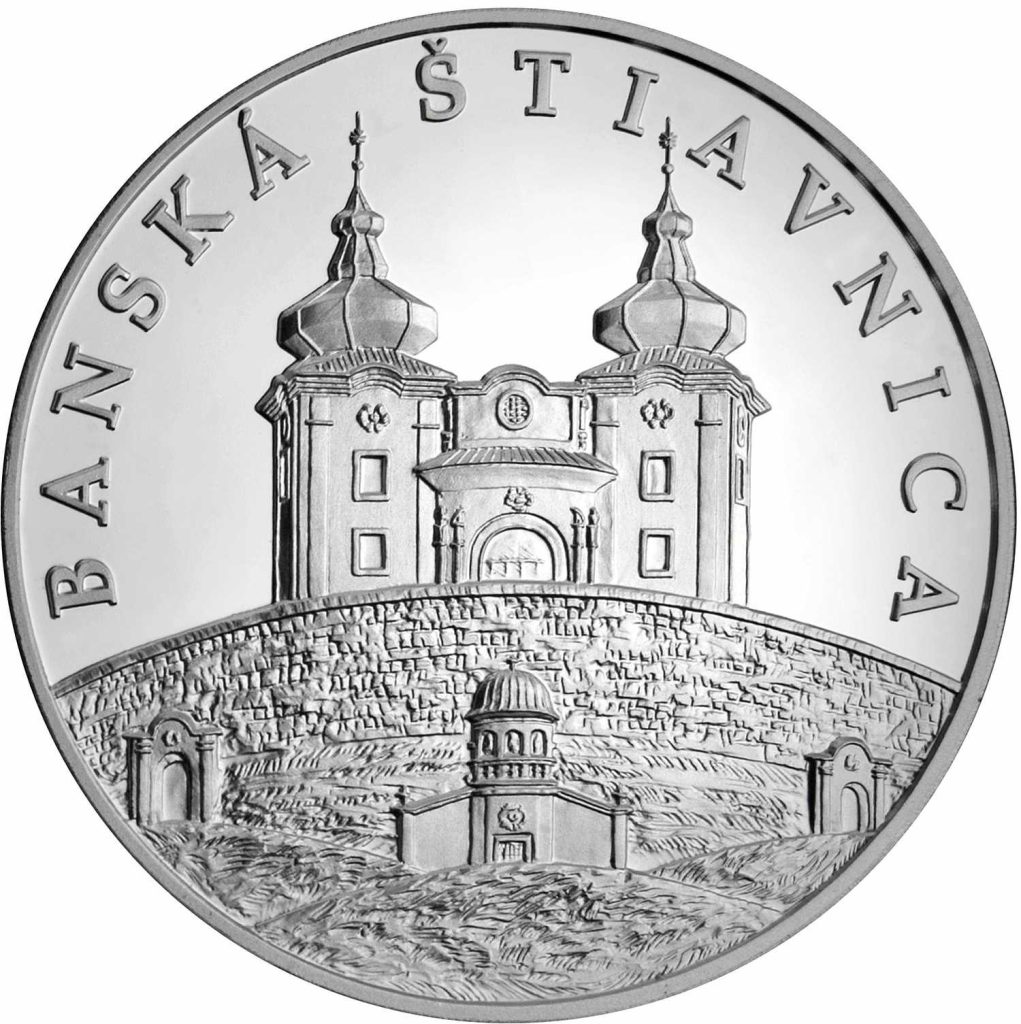
Striebro Ag 999/1000, PROOF
40,00 mm
32 g
Autor: R. Lugár, B. Rónai
Strieborná medaila s motívom Banskej Štiavnice – historického mesta, ktoré je známe svojou banskou činnosťou a ťažbou striebra.
Na medaile je okrem obľúbenej kalvárie zobrazený aj pozdrav baníkov – Zdar Boh!
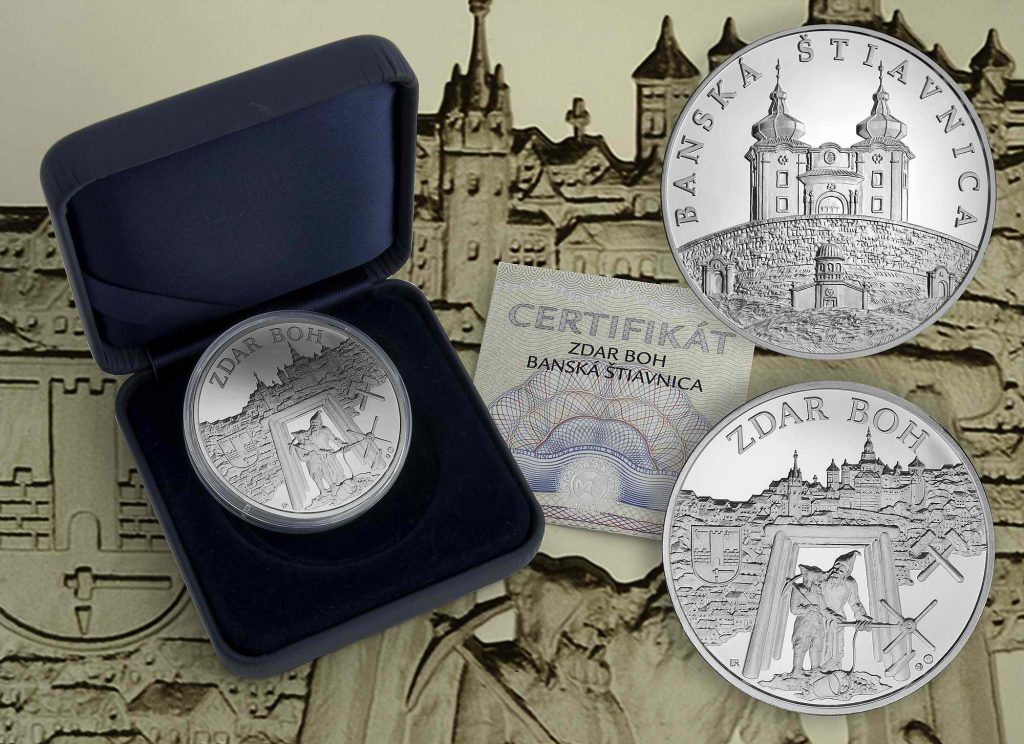
https://www.mint.sk/eshop/strieborna-medaila-zdar-boh-banska-stiavnica
– EURONUMIS s.r.o., predajca numizmatického materiálu – kamenné predajne Žilina, Bratislava, internetový obchod, facebook, Instagram
- 1x kufrík CARGO L 6, na 90 QUADRUM, 6 plátov, čierny (KO3/Q50) IN (venoval EURONUMIS s.r.o.)
Obsahuje: 6 plátov na 15 mincí /50x50mm
Vonkajšie rozmery (D/Š/V): 407 x 245 x 95 mm
Kufrík na mince CARGO L6 na kapsule alebo rámčeky na mince 90 QUADRUM. Vrát. 6 plátov, každý na 15 mincí v (50×50 mm) kapsuliach alebo rámčekoch na mince QUADRUM.
https://www.euronumis.eu/Kufrik-CARGO-L-6-na-90-QUADRUM-6-plat-cierny-KO3-Q50-IN-d3068.htm
Materiál: striebro Ag 999/1000
Priemer: 40 mm
Kvalita / Quality: PROOF
Hmotnosť: 1 Oz (31,133g)
Nominál: 1 Dollar
Emisia / Issue: 2022
Hrana: vrúbkovaná
Náklad / Mintage: 5 000 ks
Autor: Jody Clark
Balenie: Minca v kapsli, certifikát, etua, papierový prebal
Výrobca: Royal Australian Mint
https://www.euronumis.eu/Dollar-2022-Australia-RAM-PROOF-1-Oz-Ag-Kangaroo-d32573.htm
Súbor slovenských obehových euromincí s ročníkom razby 2024 „Slovenské národné povstanie – 80. výročie“
https://www.euronumis.eu/SADA-2024-Slovensko-BU-Slovenske-narodne-povstanie-80-vyrocie-d39088.htm
https://www.euronumis.eu/SADA-2025-Slovensko-BU-zavedenia-zlatej-mince-florenu-d42399.htm
EURONUMIS s.r.o., predajca numizmatického materiálu – kamenné predajne Žilina, Bratislava, internetový obchod, facebook, Instagram
- 2x pamätný list vo forme bankoviek – ANTONÍN PANENKA a DOMINIK HAŠEK – bronze (venoval Osobnosti století s.r.o.)
Bronzové nečíslované verzie, ktoré nie sú určené na predaj.
Súčasťou sú aj kartónové dosky s bronzovou potlačou. Jedná sa o pamätné listy futbalovej legendy ANTONÍNA PANENKU a hokejovej legendy DOMINIKA HAŠKA.
Info: https://www.osobnostistoleti.cz/
E-shop: https://www.legendary-cards.cz/c44-pametni-listy-sportovci
5x mosadzná medaila „Ďakujeme“ (venovala Česká mincovna SK, s.r.o.)
Česká mincovna
MgA. Martin Dašek
Mosadz
37 mm
24 g
Vojna, choroby, … – všade tam, kde ľudia trpia, pomáha Červený kríž. Podporte jeho charitatívne aktivity spolu s nami! Pamätná medaila sa pýši výnimočným príbehom.
Dobové konvencie diktovali, aby sa vydala a venovala sa materským povinnostiam, ale Angličanka šľachtického pôvodu Florence Nightingalová, ktorá sa narodila pred rovnými 200 rokmi, sa rozhodla, že svoju lásku a starostlivosť venuje celému svetu. Do dejín vstúpila ako priekopníčka ošetrovateľstva, ktorá zachránila mnoho životov vo vojnových lazaretoch aj civilných nemocniciach. Z prelomových metód preslávenej „dámy s lampášom“, ako ju prezývali ranení vojaci, čerpáme dodnes a nie je bez zaujímavosti, že žena, ktorá sa dňom i nocou starala o potrebné, inšpirovala založenie Červeného kríža…
Averzná strana razby, ktorá je dielom medailéra MgA. Martina Daška, predkladá portrét Florence Nightingalovej inšpirovaný dobovou fotografiou, jej meno a životopisné údaje 1820 – 1910. Na pozadí je umiestnený symbol Červeného kríža. Reverznú stranu potom bezo zvyšku vypĺňa slovo DĚKUJEME vo veľkom počte svetových jazykov.
Z ceny každej predanej mosadznej medaily 2,80 eura venujeme Slovenskému červenému krížu, ktorý je patrónom emisie a ktorý by bez inšpirácie nezištnou ošetrovateľkou možno nikdy nevznikol. Nákupom prispejete na dobrú vec a zároveň rozšírite svoju zbierku o mimoriadny kúsok. Pokiaľ chcete sa poďakovať niekomu, kto vám pomohol v ťažkých časoch, potom môžete medailu použiť ako darček – pre tento prípad je umiestnená do špeciálneho balenia, kam je možné vpísať venovanie…
https://ceskamincovna.sk/sk/mosadzna-medaila-dakujeme-456-13864-d/
- 1x drevená brošňa LEV – veľká+malá (venovala Česká mincovna SK, s.r.o.)
Cena najmä pre českých priateľov:
Nehanbíte sa dať na obdiv svoju hrdosť a lásku k vlasti? Potom si na hruď pripnite veľkú drevenú brošňu s motívom českého leva!
Ručne vyrobená brošňa vznikla v spolupráci jabloneckej Českej mincovne a libereckej spoločnosti Wooden Land. Moderne poňatý vlastenecký motív je tvorený geometrickými tvarmi. Z tmavej hrivy vystupuje svetlá levia hlava, na ktorú je nasadená kráľovská koruna.
Elegantný módny doplnok aj drobný darček, ktorý poteší, môžete pripnúť nielen na sako či šaty, ale aj na batoh. Neodýmový magnet je pevný, ale šetrný – brošňa sa vám nestratí a zároveň nepoškodí látku.
V našej ponuke nájdete aj menší variant tejto brošne.
https://ceskamincovna.sk/sk/drevena-brosna-lev-velka-410-16893-d
- 1x najkrajšia minca sveta 50 Kč (venovala Česká mincovna SK, s.r.o.)
Mnoho odborníkov si myslí, že žijeme v ére, ktorá zažije koniec fyzických platidiel. Niektoré krajiny majú k tomuto scenáru už blízko a existuje reálna možnosť, že aj my jedného dňa budeme mať v peňaženke len platobnú kartu alebo si jednoducho vystačíme s mobilným telefónom. Nie je to škoda? Veď české peniaze patria k svetovej špičke. Dôkazom je päťdesiatkoruna, ktorá je najkrajšou obežnou mincou planéty.
Česká mena sa zrodila súbežne so samostatnou Českou republikou v roku 1993 a okamžite na seba strhla pozornosť numizmatickej verejnosti. Ešte toho roku totiž česká minca s najvyššou nominálnou hodnotou – päťdesiatkoruna – získala prestížne ocenenie nakladateľstva Krause Publications pre najkrajšiu obežnú mincu na svete. Jej čaro spočíva v kombinácii prepracovaného vlasteneckého reliéfu z dielne akademického sochára Ladislava Kozáka, ktorý už, bohužiaľ, nie je medzi nami, a originálneho bimetalového vyhotovenia. Hlavným materiálom mince je magnetická oceľ – na medzikruží plátovaná a galvanicky pokovaná meďou, v strede plátovaná zliatinou medi a zinku v pomere 75:25.
Averznej strane mince dominuje český heraldický znak v podobe dvojchvostého leva. Opis uvádza nominálnu hodnotu 50 Kč a krajinu vydavateľa ČESKÁ REPUBLIKA. Reverzná strana patrí hlavnému mestu Praha. Zoskupenie jedinečných historických stavieb – Karlovho mosta, Národného divadla, Kostola sv. Mikuláša a Pražského hradu s Katedrálou sv. Víta – je obklopené latinským príslovím PRAGA MATER URBIUM (Praha, matka miest).
Minca, ktorá neprešla obehom, je zasadená do špeciálneho balenia, ktoré hovorí jej príbeh (v anglickom jazyku).
https://ceskamincovna.sk/sk/najkrajsie-minca-sveta-50-kc-389-17794-d/
- 1x kniha Michal Mašek – Příběhy biblických mincí (venovala Česká mincovna SK, s.r.o.)
Výraz biblické mince působí na první pohled jako označení jasně definovaného souboru nominálů z časově přesně omezeného úseku a platící na jednom území. Zájemce však při bližším studiu zjistí, že se jedná o roztříštěné a navzájem nesouvisející skupiny ražeb různých mincovních systémů, platících na územích, která přecházela z jedněch rukou do druhých, a které mnohdy jen nepřímo či po složitém přepočtu navazovaly na předchozí nominálové řady.
Rok vydania: 2021
Jazyk: Čeština
Väzba: Měkká
Počet strán: 440
Váha balenia: 705 g
Zjednodušeně lze říci, že se jedná o podobnou změť ražeb, jaká byla emitována v českých zemích od počátku ražby mincí (od 10. století) až do současnosti s přihlédnutím na geopolitické změny, kterými náš stát procházel. Příběhy biblických mincí přinášejí svému čtenáři přehled ražeb, o kterých jsou v Bibli zmínky, společně s komentářem souvisejících starozákonních a novozákonních událostí. Pro zájemce o mince a jejich sběratele je připojen přehledný katalog.
- 1x kniha Michal Vitanovský – Písmo na mincích a medailích (venovala Česká mincovna SK, s.r.o.)
Počet strán: 304
Väzba: tvrdá
EAN: 9788072775828
Jazyk: český
ISBN: 978-80-7277-582-8
Hmotnosť: 0,40 kg
Dátum vydania: 2. júna 2020
Vydavateľstvo : Nakladatelství Libri
Přední český medailér a sochař navazuje na svou předchozí publikaci Heraldika na mincích a medailích (2017), věnuje se tentokrát tématu písma a nabízí nový pohled na numismatické památky. Písmo sleduje po stránce obsahové i umělecké. Vybrané příklady mincí a medailí s písmem jsou řazeny chronologicky podle období jejich vzniku od antiky až po moderní dobu, s akcentem na starší dějiny, dávné panovníky a zaniklé říše. Čtenář se dozví mnohé rovněž o technikách ražení mincí, řemeslném zpracování či osobách s mincovnictvím spjatých. Text doprovází bohatý ilustrační materiál ke každé popisované minci. Součástí knihy je také slovníček odborných pojmů.
- 1x kniha Jan Vízek – Jak se dělá mincovna (venovala Česká mincovna SK, s.r.o.)
V roce 2018 uplynulo rovné čtvrtstoletí od vzniku České republiky, české měny a také České mincovny. Oběžné mince se v Jablonci nad Nisou začaly razit 1. července 1993 a u příležitosti 25. výročí tohoto okamžiku vyšla speciální vzpomínková publikace s názvem „Jak se dělá mincovna“.
Jan Vízek, zakladatel a první ředitel České mincovny, vás ve svých memoárech nechá nahlédnout pod pokličku společnosti, která je dnes zodpovědná za ražbu všech mincí pro potřeby České republiky. Podělí se s vámi o radosti i starosti spojené s jejím budováním, představí vám její klíčové osobnosti a bez obalu vás provede ranou historií novodobého českého mincovnictví – od zdánlivě neuskutečnitelného snu až po celosvětový úspěch.
https://ceskamincovna.cz/kniha-jak-se-dela-mincovna-456-11347-d
- 1x kniha Česká numismatická společnost – Příběhy starých mincí (venovala Česká mincovna SK, s.r.o.)
Úplný název: Příběhy starých mincí, Ke 100. výročí založní České numismatické společnosti
Vydáno: 2019
416 stran, 175 × 250 mm, brožovaná vazba
Jazyk: česky, shrnutí anglicky
ISBN: 978-80-7422-728-8
Publikace obsahuje 43 kapitol, ve kterých je čtenář formou samostatných článků z per předních znalců seznamován s nejrůznějšími numismatickými tématy. Jako červená nit se příběhy vinou dějinami od 7. století před Kristem, kdy ražené mince poprvé spatřily světlo světa, až do moderní současnosti. Doporučená literatura pro všechny zájemmce o historii a numismatiku, které baví číst příběhy, o kterých přinášejí mince a medaile svědectví až do dnešní doby.
- 5x propagačná medaila Medailérsky klub (venoval Medailérsky klub, o.z.)
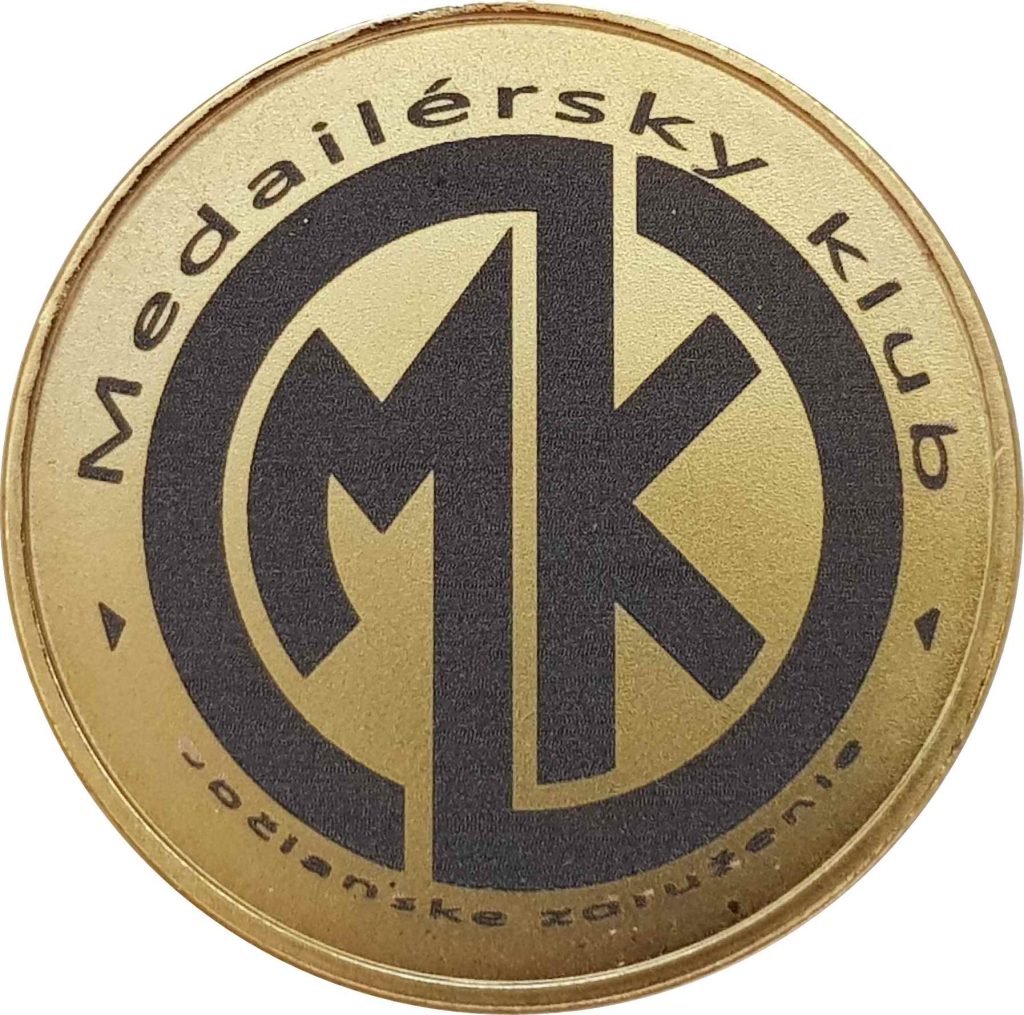
Materiál mosadz, priemer 40 mm, vrúbkovaná hrana
Vyrobil: Ing. Ján Baranovič
- 3x katalóg medailí Milana Struhárika (venoval Medailérsky klub, o.z.)
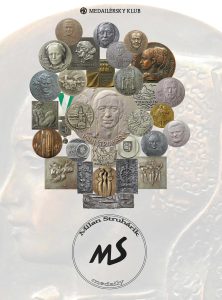
K 90. výročiu narodenia výnimočnej osobnosti slovenského umenia,
akad. sochára Milana Struhárika z Nového Mesta nad Váhom, vydal Medailérsky klub, o.z. súpis/katalóg jeho medailí, vrátane vybraných diel z jeho sochárskej tvorby z bronzu a obľúbeného dreva:
„Milan Struhárik medaily“
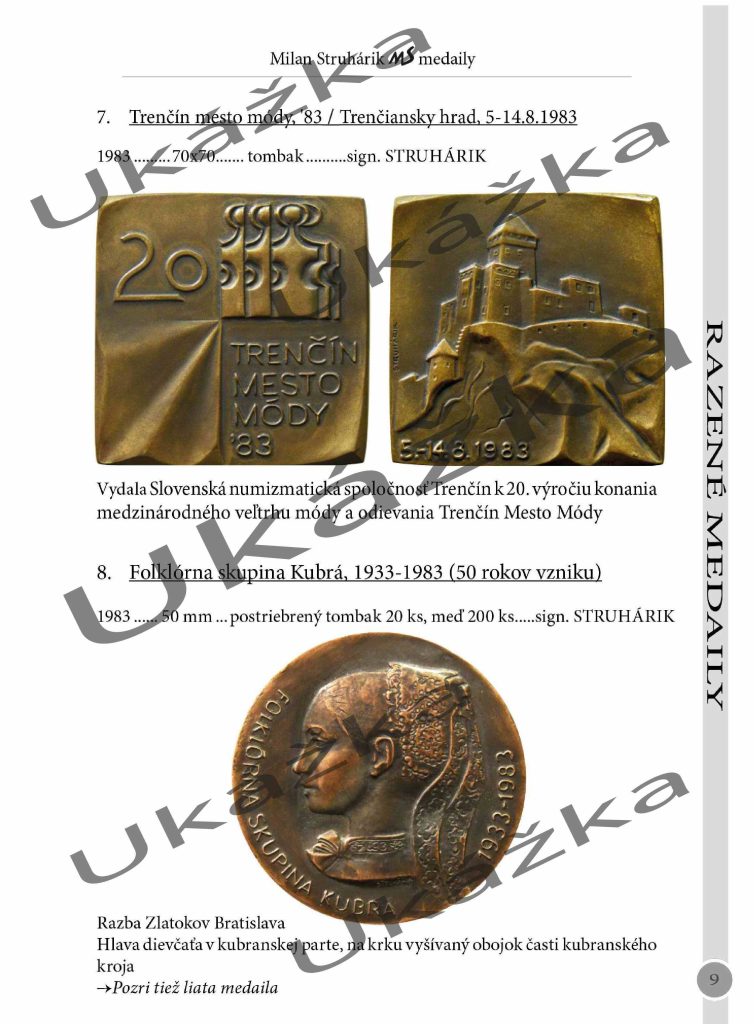
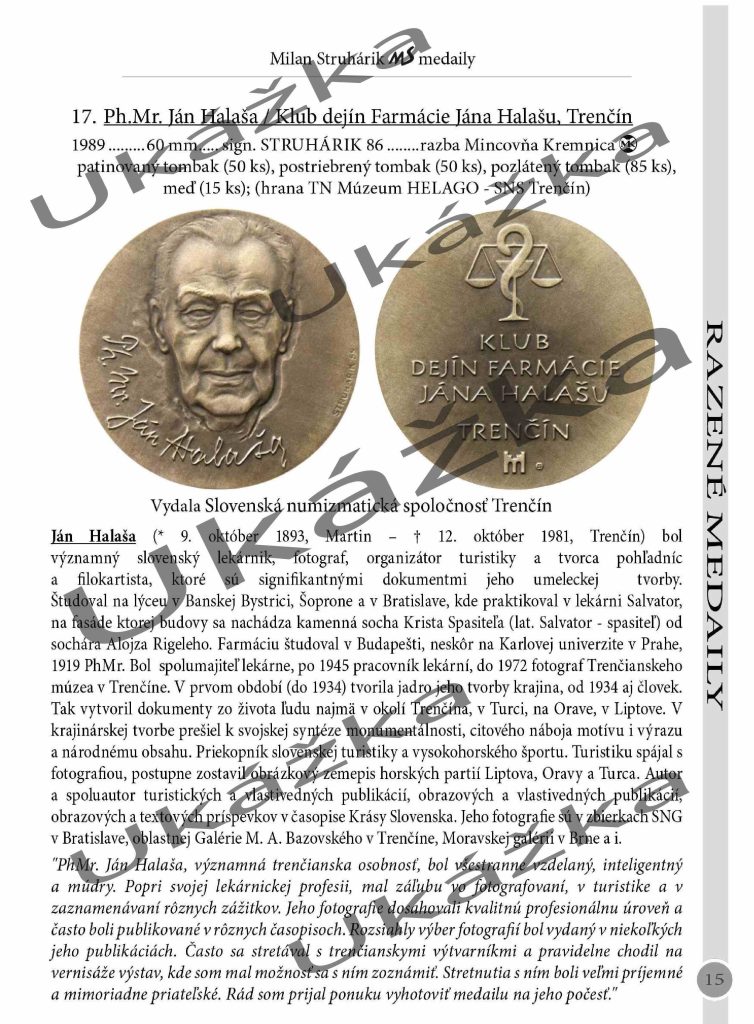
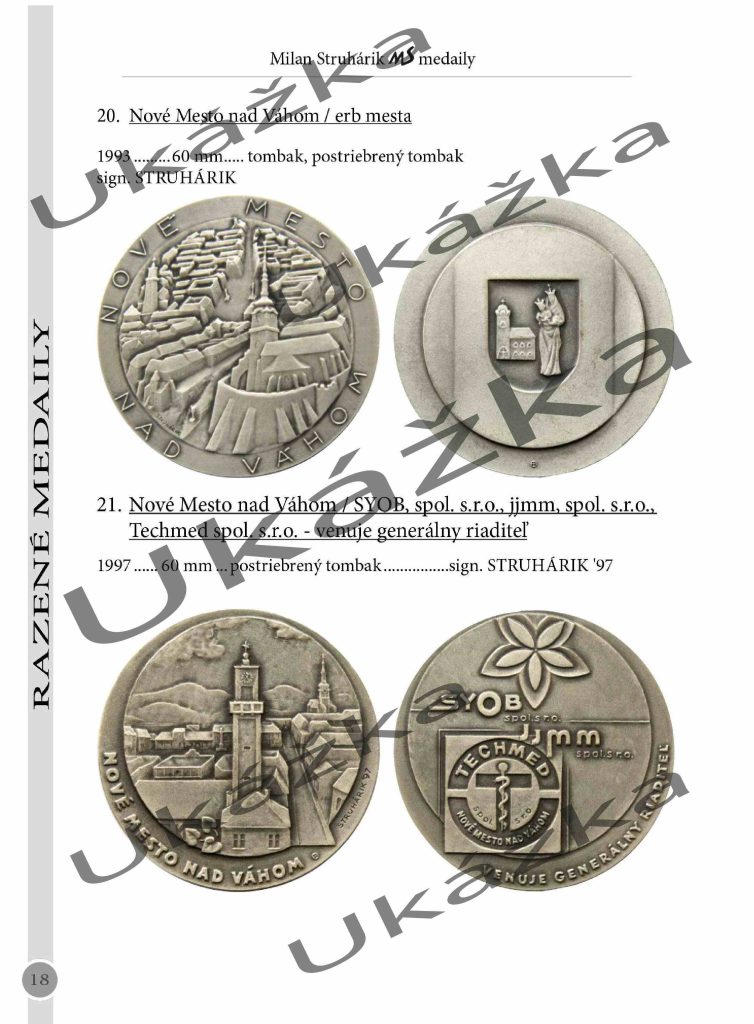
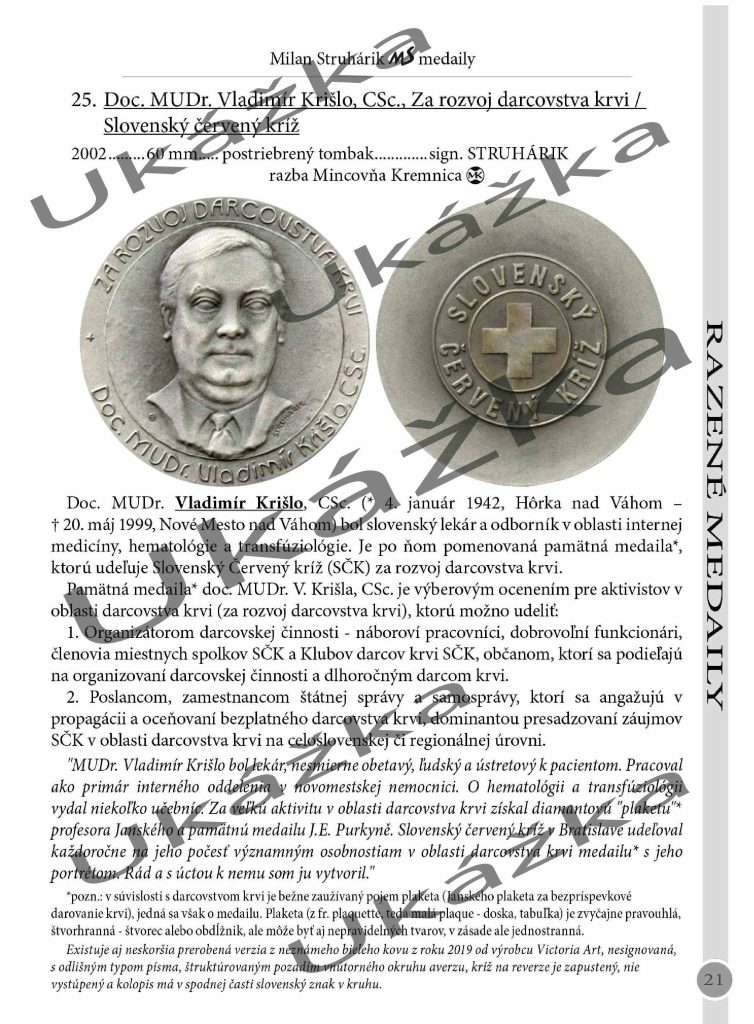
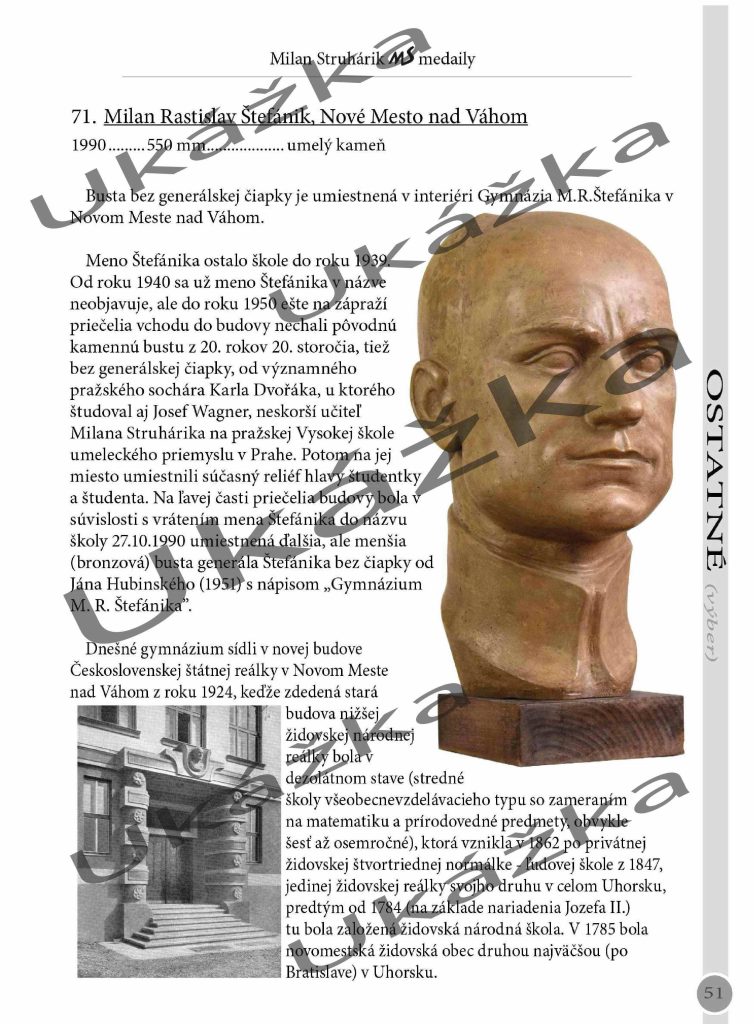
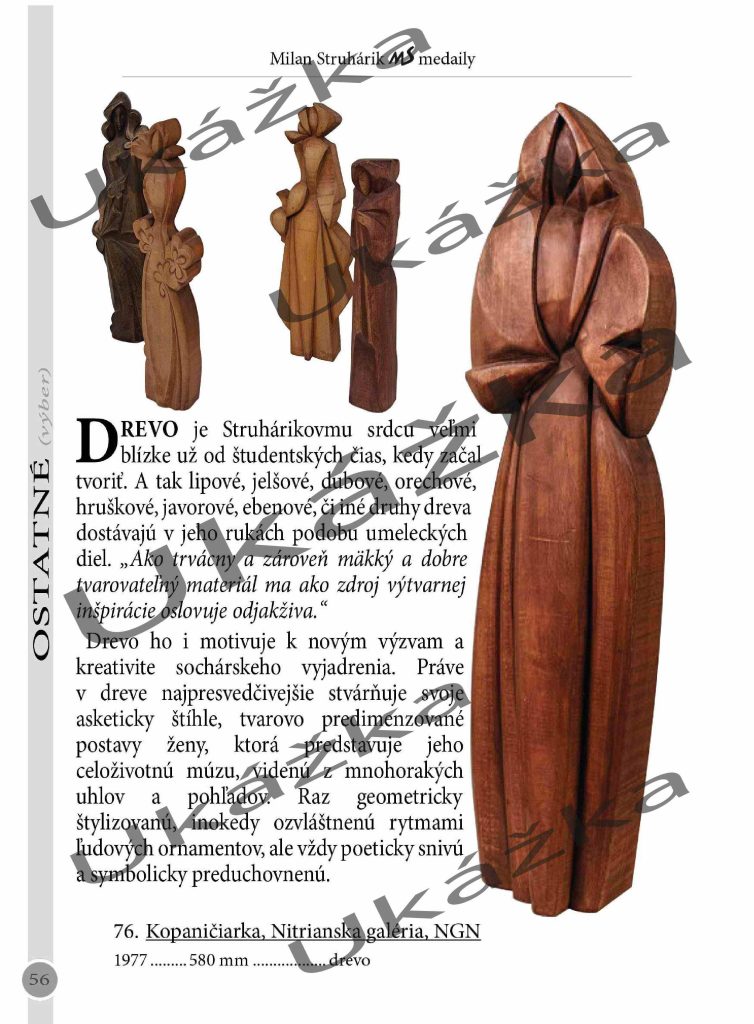
Súpis obsahuje kompletný prehľad jeho razených a liatych medailí, ako aj výber ďalších diel z jeho ťažiskovej sochárskej tvorby (drevené plastiky, busty/pomníky s bustami, sochárske realizácie v architektúre, pamätné tabule). Milan Struhárik sa preslávil najmä svojím jedinečným prístupom k drevu, ktoré považuje za svoje najvýznamnejšie umelecké médium.
Aj keď medailérskej tvorbe sa venoval príležitostne, vytvoril dosť pozoruhodných medailí venovaných najmä svojmu kraju a jeho osobnostiam, ktoré ho svojím významom však prekračujú. Jeho medaily nie sú síce tak známe a rozšírené, sú však o to viac pútavé a zaslúžia si našu pozornosť. A práve preto má táto publikácia za cieľ zmapovať a priniesť verejnosti jeho výnimočnú medailérsku tvorbu.
https://medailerskyklub.art/katalog-milan-struharik-medaily
- 1x plaketa od Mariána Polonského – Zopakovávanie v Edícii Medailérskeho klubu (venoval Medailérsky klub, o.z.)
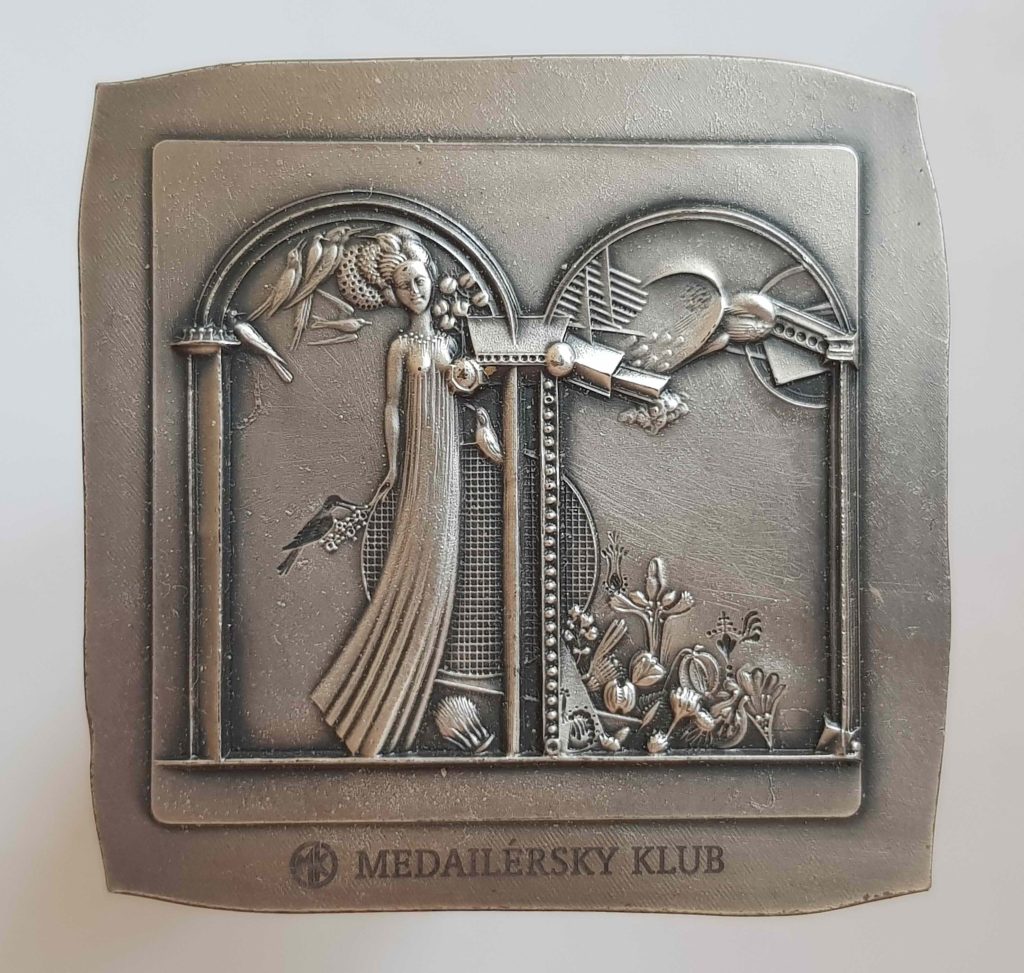
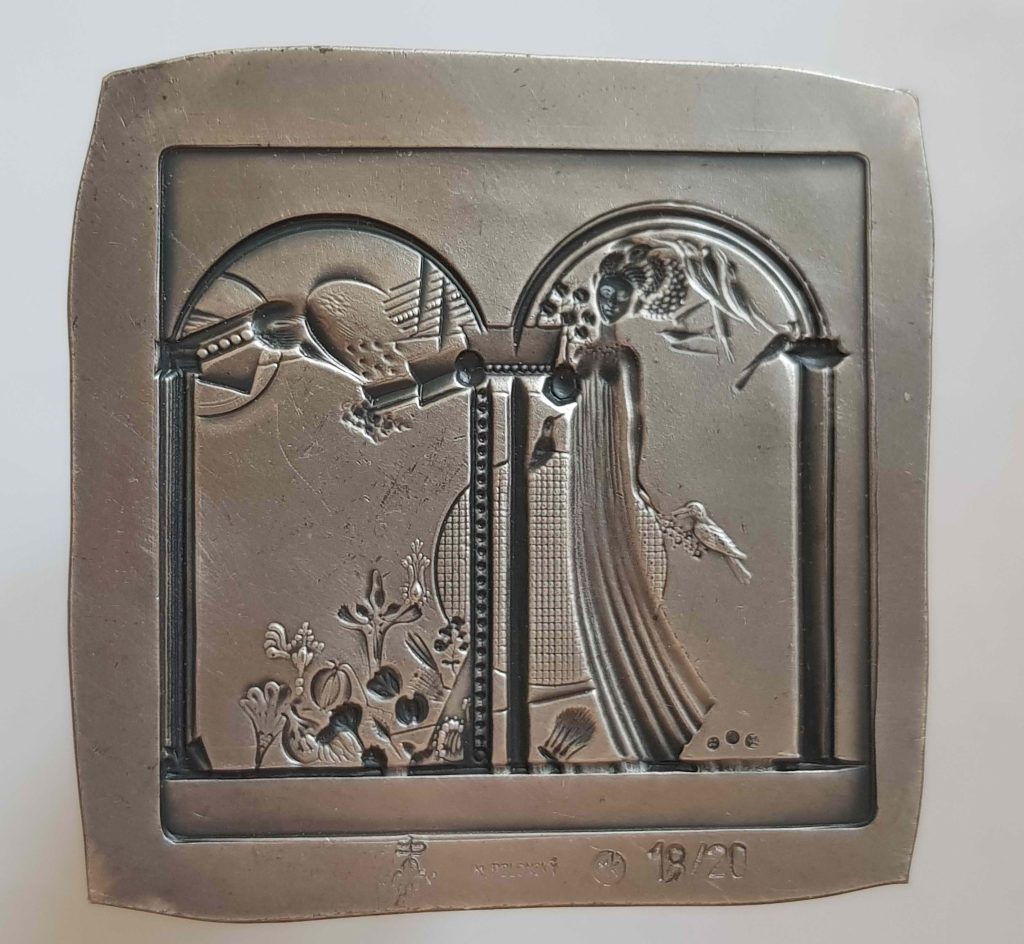
– autor Marián Polonský 1995,
– razba Mincovňa Kremnica 2022,
– postriebrený tombak,
– ~65×65 mm (motív 50×50 mm v ručne frézovanom otrepe), obojstranná (reverz je negatívom averzu, s malými rozdielmi),
– v limitovanej edícii Medailérskeho klubu 2022, 20 ks – nepredajné ,
– číslovaná a s puncom autora a Medailérskeho klubu na zadnej strane plakety,
– autorom podpísaný certifikát.
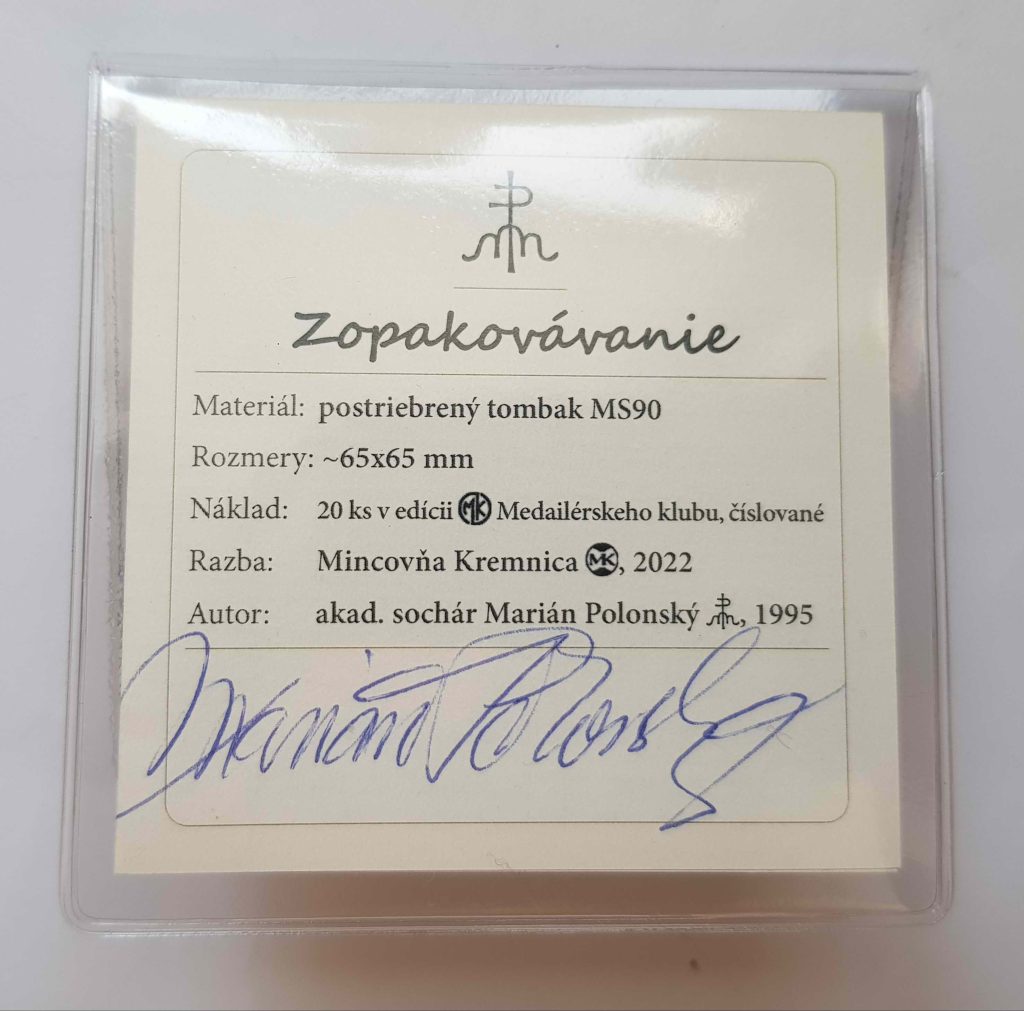
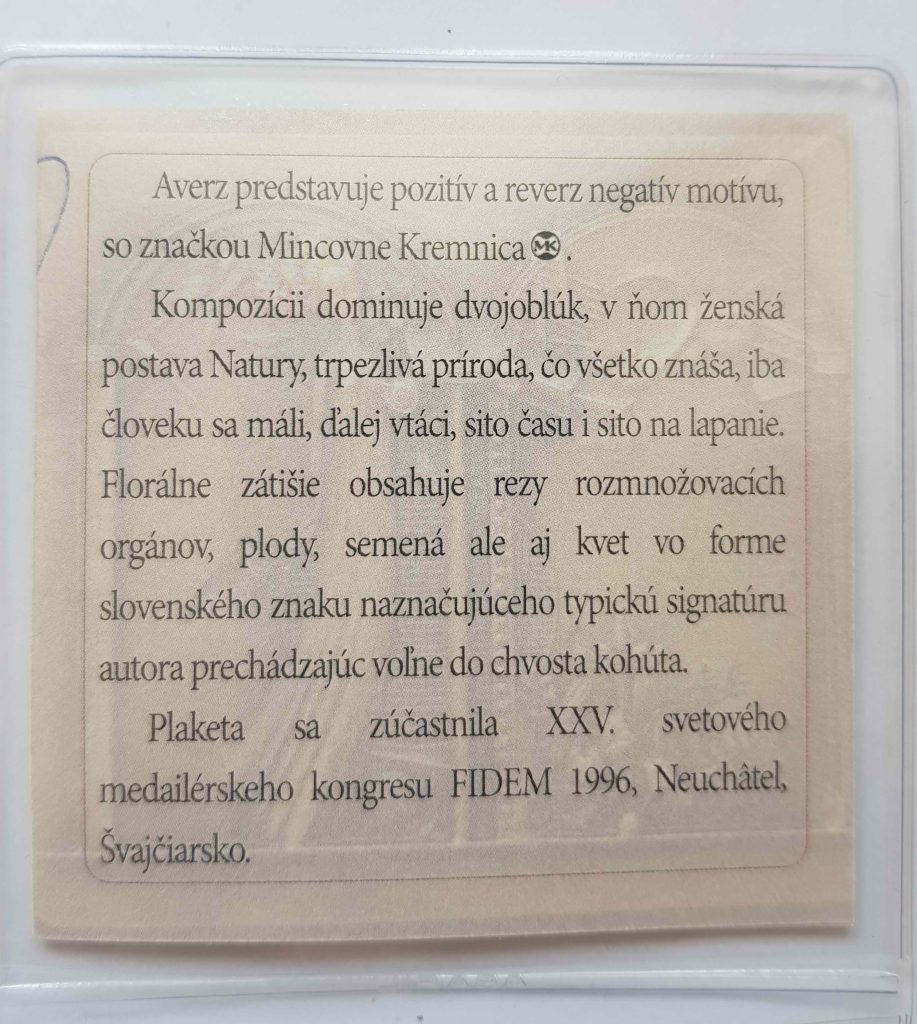
Averz predstavuje pozitív a reverz negatív motívu, so značkou Mincovne Kremnica
Plaketa Zopakovávanie bola v tombaku a s príslušným označením udeľovaná účastníkom stretnutia zberateľov a tvorcov exlibris European Exlibris Meeting, Bratislava 1995;
Zúčastnila sa tiež XXV. svetového medailérskeho kongresu FIDEM 1996, Neuchâtel, Švajčiarsko.
https://medailerskyklub.art/nase-medaily/#Zopakovavanie
– slonovinová šedá
– veľkosti M-2XL
https://medailerskyklub.art/polokosela-medailersky-klub
- 1x polokošeľa s dlhým rukávom (venoval Medailérsky klub, o.z.)
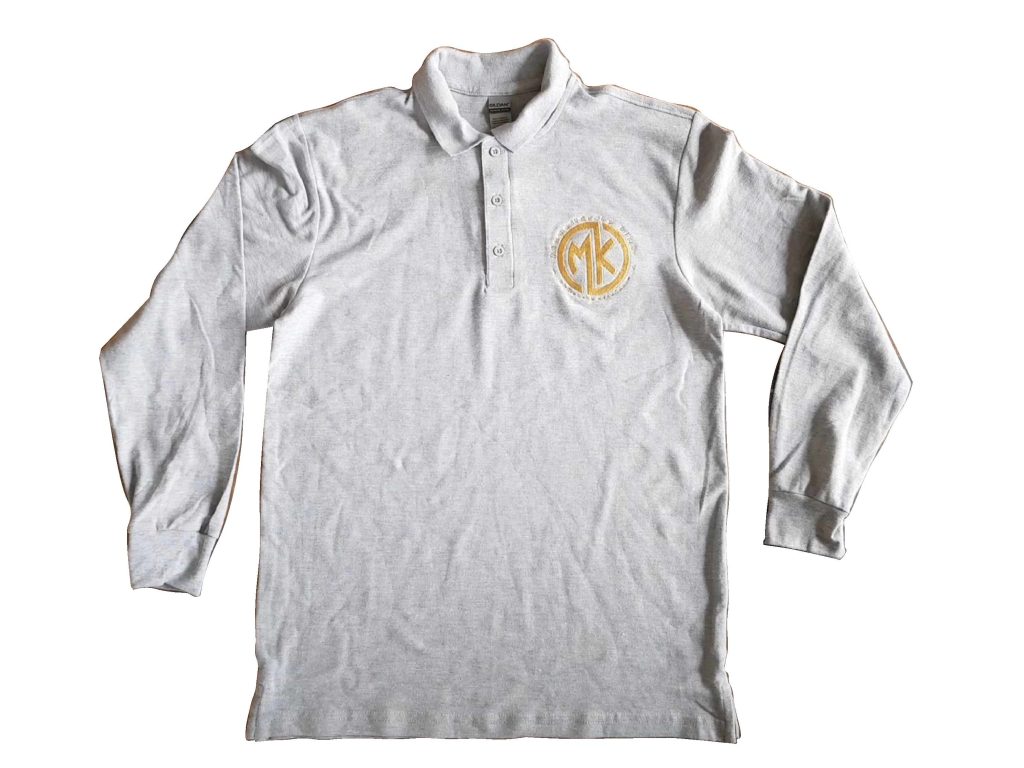
– farba svetlo-šedá (rs sport grey) veľkosti M a 2XL / čierna XL
https://medailerskyklub.art/polokosela-medailersky-klub

Žigmund Luxemburský bol brandenburský markgróf, sväto-rímsky cisár. Kráľ český, rímsky a lombardský. Žigmund počas svojej vlády obmedzoval obchod cudzích kupcov, zakazoval vývoz drahých kovov, rozširoval a obnovoval mestské výsady (Bratislava, Košice, Bardejov). Najväčším nepriateľom Žigmunda Luxemburského bola Osmanská (Turecká) ríša. Preto v roku 1408 Žigmund založil spolu s manželkou Dračí rád. Poslaním členov rádu bola ochrana kresťanstva a boj proti Turkom.
Strieborná medaila je umiestnená v bubline v krabičke s certifikátom.
Materiál: Ag 925/1000, patina
Hmotnosť: 7,7 g
Priemer: 26 mm
Autor: Drahomír Zobek
Limit: 300 ks, číslované
Vyrazila: Numizmatika Kremnica s.r.o.
https://numizmat.sk/sk/strieborne-medaily/strieborna-medaila-zigmund-luxembursky-patina
- 1x zberateľská eurominca – 10 € PROOF 250. výročie narodenia Jozefa Dekreta Matejovie (venovala Národná banka Slovenska)
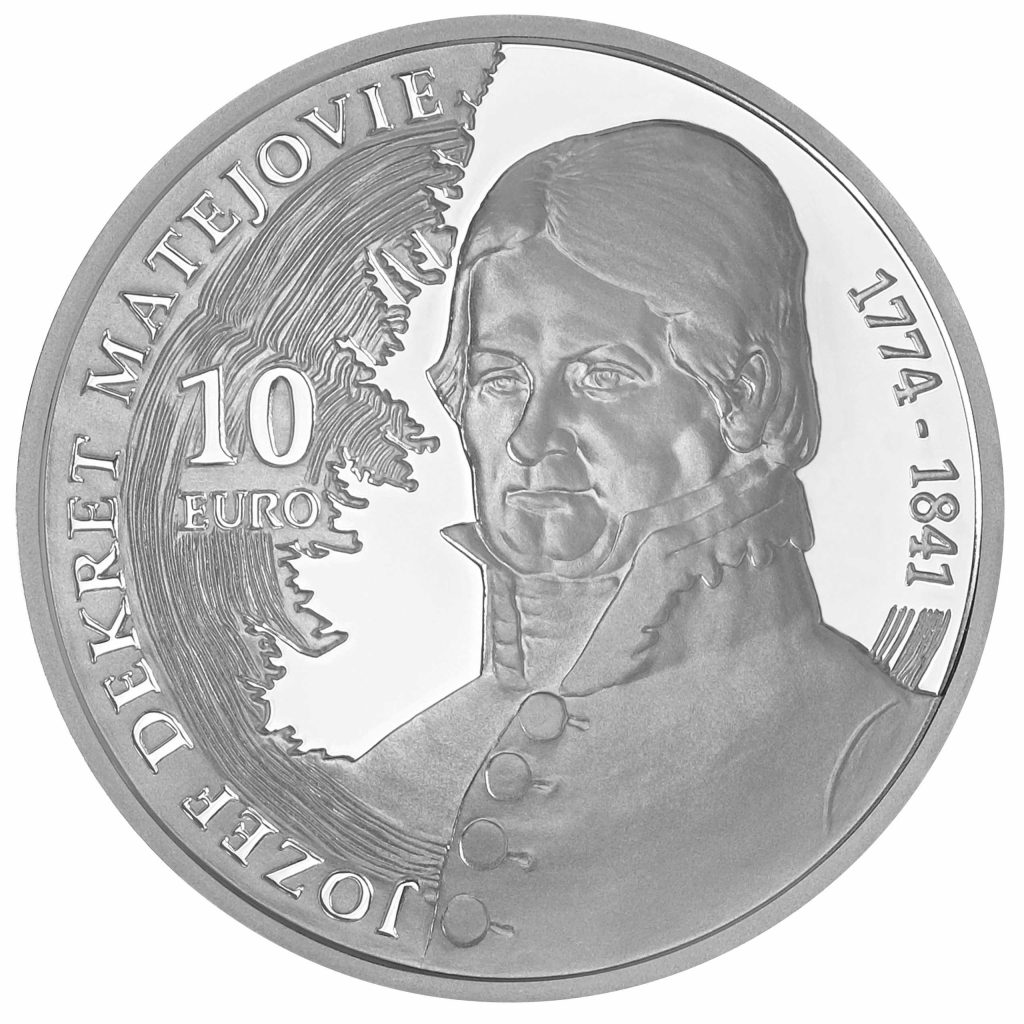
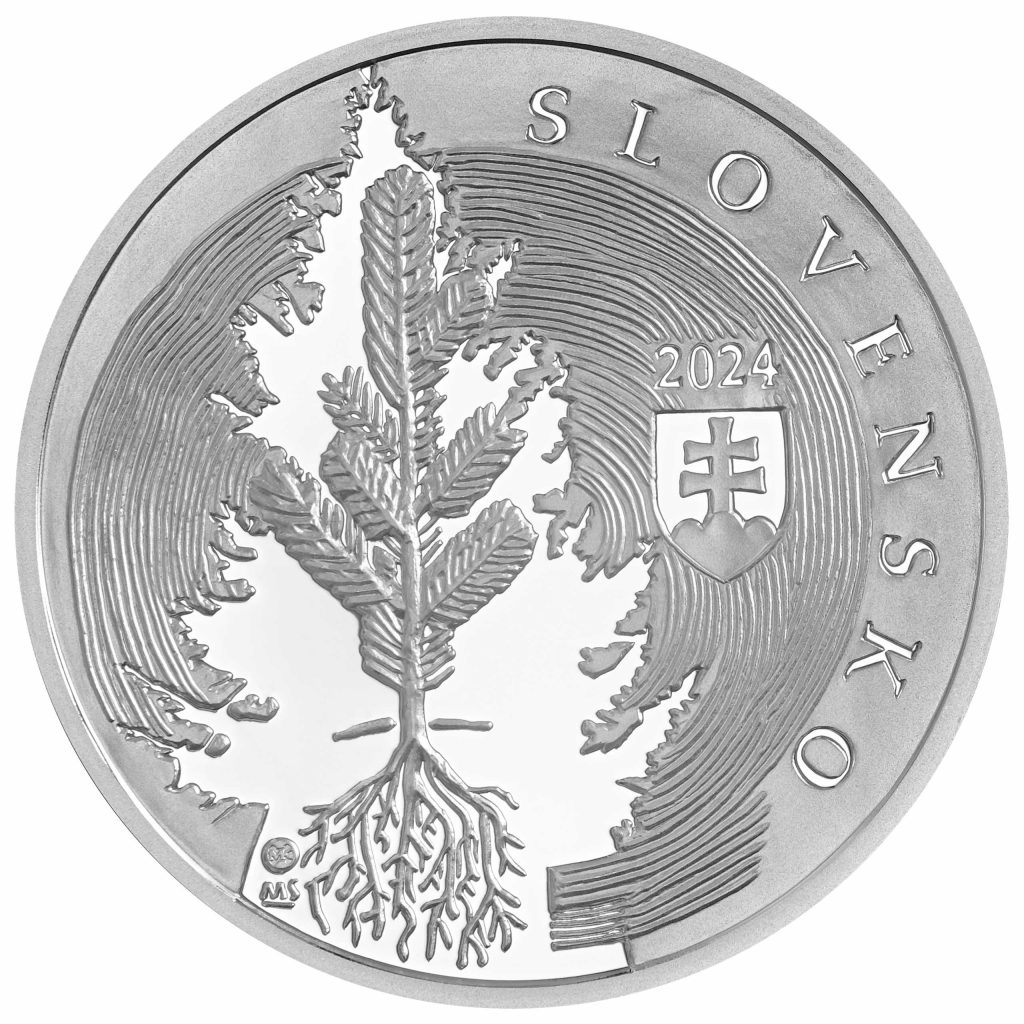
| Autor: | Mgr. art. Martin Sabol |
| Materiál: | Ag 900, Cu 100 |
| Hmotnosť: | 18 g |
| Priemer: | 34 mm |
| Hrana: | • PRIEKOPNÍK METÓD OBNOVY LESOV NA SLOVENSKU |
| Výrobca: | Mincovňa Kremnica, š. p. |
| Rytec: | Dalibor Schmidt |
| Náklad: | 3 900 kusov v bežnom vyhotovení 8 600 kusov v proof vyhotovení |
| Emisia: | 22. 5. 2024 |
Jozef Dekret Matejovie (12. 7. 1774 – 18. 1. 1841) sa narodil v Dobroči, Čiernom Balogu. Pochádzal z prostredia spätého s lesom a prácou v lese. Položil základy racionálneho lesného hospodárstva a zásadným spôsobom sa pričinil o zachovanie slovenských lesov. V 19. storočí bolo drevo na strednom Slovensku hlavnou stavebnou a energetickou surovinou pre hutnícky priemysel. Jeho ťažba a spracovanie boli dôležitým zdrojom obživy obyvateľstva. J. D. Matejovie si uvedomoval aké katastrofálne následky má neriadené ťaženie lesov pre prírodu aj spoločnosť a úspešne zmenil dovtedajšiu nevyhovujúcu prax. Od roku 1809 robil pokusy s obnovou lesného porastu. Zakladal prvé lesné škôlky a luštiarne, zamedzoval aj tvorbe holorubov. Pre podporu prirodzenej obnovy lesa a tvorbu zmiešaných porastov presúval ťažbu do iných lokalít. Ďalšiu úsporu drevnej hmoty zabezpečil napríklad aj zužitkovaním odpadu z rúbanísk. Od roku 1838 sa pod jeho vedením podarilo zalesniť takmer štyritisíc hektárov holín.
Popis euromince
Lícna strana:
Na líci zberateľskej euromince je vyobrazený kruhový prierez kmeňom stromu v kompozícii so siluetou ihličnatého stromu a sadenicou. Vpravo od siluety je medzi letokruhmi štátny znak Slovenskej republiky, nad ktorým je letopočet 2024. Názov štátu SLOVENSKO je v opise v pravej časti mincového poľa. Značka Mincovne Kremnica, štátny podnik, ktorú tvorí skratka MK umiestnená medzi dvoma razidlami a štylizované iniciálky autora rubovej strany zberateľskej euromince Mgr. art. Martina Sabola MS sú pri koreňoch sadenice.
Rubová strana:
Na rube zberateľskej euromince je v kruhovom priereze kmeňa stromu umiestnená silueta časti ihličnatého stromu, vedľa ktorej je portrét Jozefa Dekreta Matejovie. Napravo od portrétu sú v opise letopočty jeho narodenia a úmrtia 1774 a 1841, ktoré sú oddelené grafickou značkou. Vľavo od siluety je medzi letokruhmi v dvoch riadkoch nominálna hodnota zberateľskej euromince 10 EURO. V ľavej časti mincového poľa je v opise nápis JOZEF DEKRET MATEJOVIE.
- 1x zberateľská eurominca – 5 € Fauna a flóra na Slovensku – zubor hrivnatý (venovala Národná banka Slovenska)
| Autor: | Karol Ličko |
| Materiál: | mosadz MS63 |
| Hmotnosť: | 19,1 g |
| Priemer: | 34 mm |
| Hrana: | vrúbkovaná |
| Výrobca: | Mincovňa Kremnica, š. p. |
| Rytec: | Dalibor Schmidt |
| Náklad: | 50 000 kusov v roku 2024 dorazba 5 000 kusov s letopočtom razby 2024 Na propagačné účely NBS bolo 1 500 ks zberateľských euromincí adjustovaných do zelenej etui. |
| Emisia: | 2. 7. 2024 |
Zubor je najväčším európskym suchozemským cicavcom. Svojou postavou pripomína hovädzí dobytok. Hlava je pomerne krátka, zaoblená, telo i chvost sú pokryté hnedou srsťou. Predná časť tela je mohutnejšia ako zadná. Zvýrazňuje ju tiež srsť, ktorá je na prednej časti tela predĺžená. Silné a duté rohy sú charakteristickým znakom oboch pohlaví. Sú trvalé a rastú s pribúdajúcimi rokmi. Aktívny je predovšetkým za šera, čomu má prispôsobený aj zrak. Zo zmyslov má najlepšie vyvinutý sluch a čuch. Dožíva sa približne 35 rokov. Zubor je živočích spoločenský, samotársky žijú zvyčajne iba staršie samce. Typický je život v 8 až 13 kusových čriedach. Zubry sa živia najmä zelenými a drevnatými časťami rastlín, vetvami, kôrou a lístím. Obľubujú mladšie lesné porasty s bohatým podrastom. V zime je ich základnou potravou ostružina, kôra stromov, krov a suchá tráva, ktorú vyhrabávajú spod snehu. Pôvodný areál zubra sa rozprestieral takmer v celej Európe. Na Slovensku dnes žije vo vysídlenej časti územia Národného parku Poloniny približne 70 jedincov zubra hrivnatého.
Popis euromince
Lícna strana:
Na líci zberateľskej euromince je zobrazený samec zubra hrivnatého v kompozícii so stromami v pozadí a s padnutými konármi v popredí. Vpravo od kompozície je štátny znak Slovenskej republiky, nad ktorým je letopočet „2024“. V ľavej časti mincového poľa je v opise názov štátu „SLOVENSKO“. Značka Mincovne Kremnica, štátny podnik, ktorú tvorí skratka „MK“ umiestnená medzi dvoma razidlami, a štylizované iniciálky autora zberateľskej euromince Karola Lička „KL“ sú v spodnej časti mincového poľa.
Rubová strana:
Na rube zberateľskej euromince je hlava zubra hrivnatého. Nad ňou je nominálna hodnota zberateľskej euromince „5 EURO“. V hornej časti mincového poľa je v opise slovenský názov „ZUBOR HRIVNATÝ“ a spodnej časti latinsky názov „BISON BONASUS“. Názvy od seba graficky oddeľuje vetvička s bukovými listami a bukvicami.
https://nbs.sk/bankovky-a-mince/eurove-mince/zberatelske/fauna-a-flora-na-slovensku-zubor-hrivnaty/

STATUTE OF THE MEDAL OF THE YEAR AWARD
1. Definition of the award/label:
– Medal of the Year
2. Organizer:
– Medailérsky klub, non-profit organisation
3. Medal Nomination Conditions:
– medal has been issued/created in the given year
– by a Slovak author or made in Slovakia or with a Slovak theme,
– multiple identical pieces were created (by striking/minting, casting, …)
Definition of a medal for the purposes of the poll/competition:
– dimensions min. 37 mm and max. 200 mm in one dimension,
– it is not a coin (legal tender with currency and denomination),
– a table medal (not hanging on a ribbon)
4. Medal of the Year Committee
4.1 The Medal of the Year Committee (hereinafter referred to as ‘the Committee’) is a body composed of experts and professionals
4.2 The purpose of the Commission is to act as an expert advisory body, e.g. in the selection of the nominations submitted and in the actual voting for the Medal of the Year.
5. Process:
– 1. nomination submissions, 2. selection of nominations for voting, 3. voting/poll, 4. evaluation of winner(s)
5.1 Proposals for nominations
Anyone can submit their nomination proposals. The nomination must include the required details with at least the following information necessary for proper identification of the medal, together with an accompanying photograph of the obverse and reverse, if applicable:
– name of the medal, name of author(s), manufacturer, customer, material(s) (all known variants – designs and finishes, such as patinated tombac, silver-plated tombac, bronze, silver, copper, …), mintage (number of pieces), dimensions (in mm), method of production (striking/minting, casting, …), as well as additional information such as a description of the medal or other interesting information.
Proposals can be sent in the manner specified by the organiser (online form, e-mail). The organizer reserves the right to request additional data or better photographs, as well as at its discretion not to consider all nominations, especially if they do not contain the required elements, even without giving a reason.
5.2 Selection of nominations for voting
From all the nominations submitted, the organiser or the committee shall select, at its discretion, the entries for voting. According to the nominations sent in, the organiser/commission reserves the right to create individual categories of medals (according to size, production technique, etc.).
5.3 Voting
Voting consists of a public vote/poll and, eventually, a vote of the committee. Anyone can vote in the public vote/poll and only once, repeated responses will not be taken into account; the last response will be considered a valid vote.
Voting takes place remotely by means of an online form or ballot papers and it is necessary to fill in the e-mail address and the required information.
5.4 Evaluation of the winner(s)
The winner(s) in each category, if applicable, will be selected based on the number of votes cast by the public (and, eventually, the committee, either according to a specified proportional key or separately).
6. Other
6.1 Prizes
The competition may award prizes of value to the voting participants; these prizes are not claimable, the organiser will select the winners at its discretion in an anonymous manner (by draw/computer) and the organiser will not consider any objections. Prizes of a value not exceeding EUR 350 per prize or prize are exempt from the Income Tax Act.
7. Final provisions
By participating in this survey, each participant agrees to the terms and conditions set forth herein or elsewhere in the survey.
The Organiser reserves the right to determine all conditions and procedures (e.g., in selecting nominations for medals, candidates for the committee, voting, the method of selecting and announcing winners, drawing prize winners, etc.) or assessing compliance with the conditions set out in these rules, and at the same time is not obliged to take into account any objections or comments at its discretion.
THANK YOU!


